The Superseded Room
The annex at Fendham was clearance work, the kind you price per skip and regret per skip. Three floors of a district council office that had spent two years merging into a bigger authority, emptied of everything except the paper nobody had digitised yet — and the paper was our problem. Demolition started the Monday after. Our contract said empty by Friday four o’clock or the retention money started bleeding.
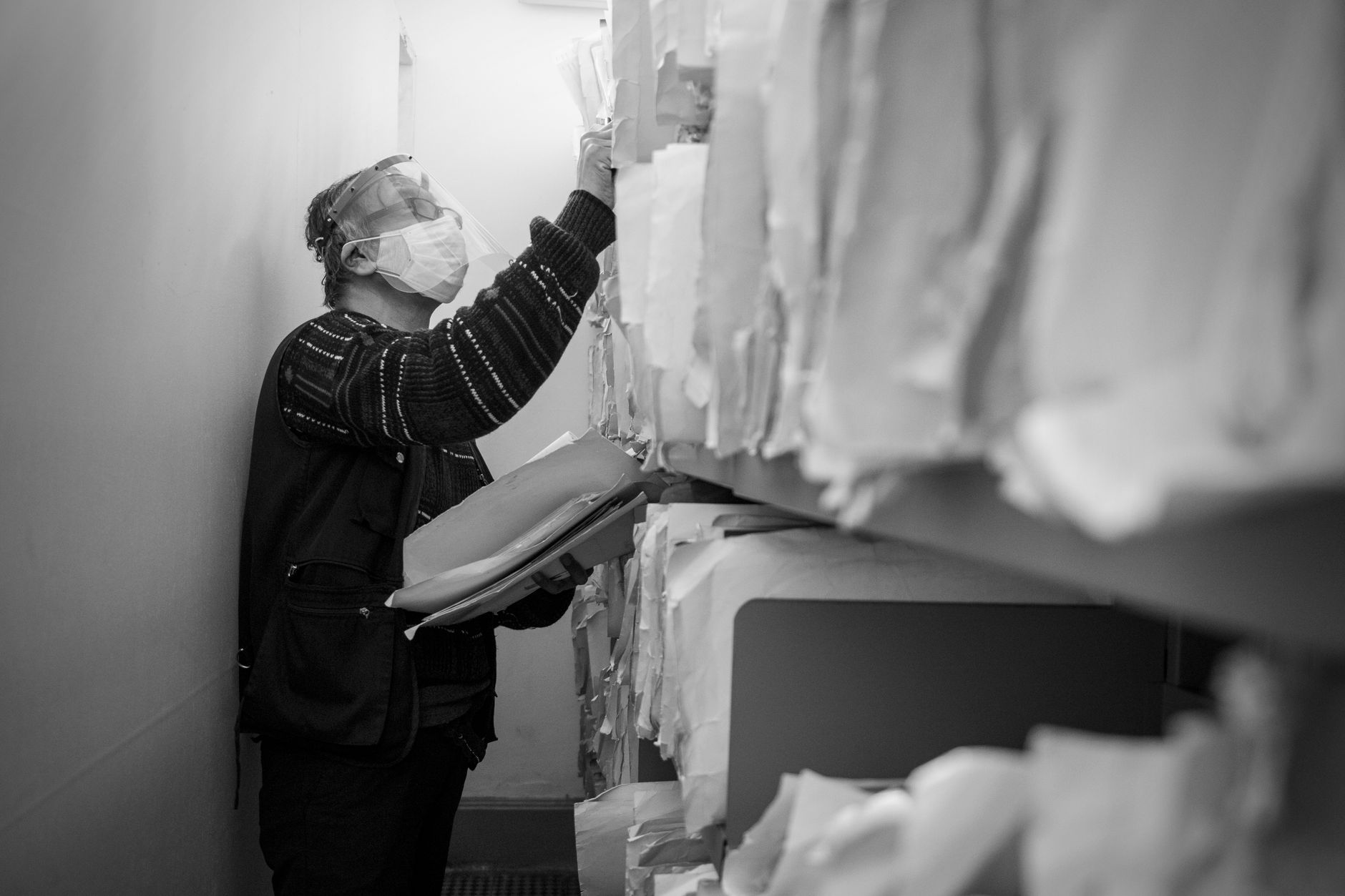
Third floor, far end, past the tea point: a door with a brass plate that said SUPERSEDED. Inside, shelf after shelf of dead records — rate books, planning duplicates, photocopies of photocopies — and along the far wall a grey steel cabinet with a combination lock the facilities manager opened himself.
His name was Colyer. He walked the job with me on the Monday, handed over the keys, and then told me the three rules the way you tell a man where the isolator is. No ceremony.
Anything loose goes in the bags loose. Don’t sort it, don’t stack it, don’t tidy it.
Nothing gets collated. Not by you, not by your lads, not by the agency girls.
The far cabinet stays shut unless I’m standing there.
I asked what was in the cabinet. Registers, he said. Superseded ones. I asked what the rules were for, and he looked at me the way you look at a scaffolder who’s asked why the harness.
“Honestly? I had them off Denzil, who had my job before me, and he had them off the firm that cleared this place in ninety-eight. You’ll want to laugh. Everybody laughs. Then you’ll bag it loose, because it’s my name on your sign-off.”
I laughed. In my defence, it was Monday, and the room was just a room — sixty foot of shelving, dust like icing sugar, one window painted shut.
Bag It Loose
By Wednesday we were behind. Two skips short of the ticket, a pallet truck with a bent fork, and the agency had sent six temps where I’d asked for eight, every one of them freshly shown a forty-minute video about data protection. That was the trouble. Mixed paper can’t go to pulping unsorted — not council paper, not with the public’s details on it — and the environmental officer who came round Wednesday dinnertime said the loose bags were a breach. Sorted crates, or a written explanation to the authority. He was pleasant about it. They always are.
So we sorted. Just the loose stuff, just the third floor, me and the temps at the long tables with the crates — rate books with rate books, planning with planning, the alphabet doing what the alphabet does. It went quick. I remember saying it went quick.
First thing wrong was the corridor. The annex corridors forked at the tea point — I’d walked the Y of it on Monday and signed a fire plan with fifteen rooms on the third floor, my initials in the corner. Wednesday half-four, walking back through with the manifest, the fork was gone. Straight run, tea point on the left, no Y. I stood there long enough for one of the temps to ask had I got lost.
The fire plan by the lift said fourteen.
I got my own copy out of the cab — the Monday one, signed. Fifteen rooms. I compared them on the bonnet of the van like a man checking a lottery ticket. Same datestamp, same drawing number, one fewer room on the wall copy, and the ink on the wall copy had the faded look of paper that has hung there for years. My copy was the fresh one.
There’s a thing that happens on jobs when something goes wrong and you cannot afford it to be wrong. You put it in a pocket. Council’s fire plan, you tell yourself, councils print the wrong thing all the time. I cracked on.
The Far Cabinet
Thursday I opened the far cabinet. Not to defy Colyer — he was off-site, and the environmental officer was coming back Friday nine with the authority’s compliance woman, and the cabinet sat on the manifest as unverified contents, and I had a deadline. That’s the whole of my defence, it’s true, and it was still the stupidest thing I did.
Inside: ledgers, going back further than the annex did. Taped to the inside of the door, a sheet of graph paper with a column of figures in biro going down twenty years. Dates, then numbers. The last entry was ninety-eight, the clearance Colyer had mentioned. The number beside it was eleven.
Underneath, smaller, the same hand:
Whatever you bag in order, you take out of the world. The loose stays loose
or it goes somewhere. Count the tellers, add yourself, write it down.
Eleven tellers as of ninety-eight. I did the arithmetic the way you do it on jobs, backwards off the dates: one a year, near enough, sometimes two. Rules handed on. Rules kept.
I tried it with one stack, deliberately that time. Twenty-odd letters to one address, all the same date, all the same wording, one signed and one not — the kind of duplicate a clerk’s tired pen makes. I squared the edges, clipped them, set them straight in a crate. Then I walked to the window, which had been painted shut on Monday, on Wednesday, on Thursday morning.
The sash stood half a foot open, the paint on the frame scored white where a hundred hands had lifted it.
I shook the stack loose, threw the clip in the bottom of a bag, and stood breathing like I’d run upstairs.
The window stayed open. That was the worst of it, if you want the truth. Nothing else moved, no door slammed, and I could not tell you which way the mercy ran.
Fourteen Rooms
We finished Friday at half two. Everything loose went loose. I signed the compliance chit with a rider about bagged-paper handling that the environmental officer accepted because it was raining and he wanted his dinner, and Colyer signed off the retention without argument. The skips went. The cabinet went on the last load, graph paper and all.
Except it didn’t, quite. I’d written on the sheet first, at the bottom, in my own pen: twelve. Me. I photographed it, put the photo in the job file, and dropped the original in with the ledgers, because the note says write it down and the note has never once said keep it.
Here is what I know. The third floor of Fendham annex has fourteen rooms. It had fourteen when the compliance woman walked it, fourteen on the demolition survey, fourteen in the photographs the authority took for the archive. My Monday fire plan — signed, dated, in my job file next to the graph-paper photo — says fifteen. Both pieces of paper are in the cab of the van as I write this, and I’ve stopped asking which one is wrong, because one of them isn’t wrong. One of them is just from further back.
A stack went to the confidential waste on Thursday morning before I understood the rules. Twenty-odd letters, squared and clipped and collated, gone to pulping in somebody’s wagon. One room’s worth, as near as I can reckon it. I can’t prove that number. You count what you bagged, not what’s left.
So now, when I price a clearance — any clearance, offices, schools, a depot two counties away — I put it in the quote. Three lines, after the section on lead and asbestos, before the signature. Bag it loose. Collate nothing. One cabinet stays shut till the client’s own man opens it. Clients take it for a superstition I kept off some old boy I trained under, and I let them, because that’s what it looked like when Colyer gave it to me, and what it must have looked like when Denzil gave it to him.
Rules nobody tells stop working. That’s not a figure of speech. That’s the finding.
You’ll want to laugh. Everybody laughs.