Vera
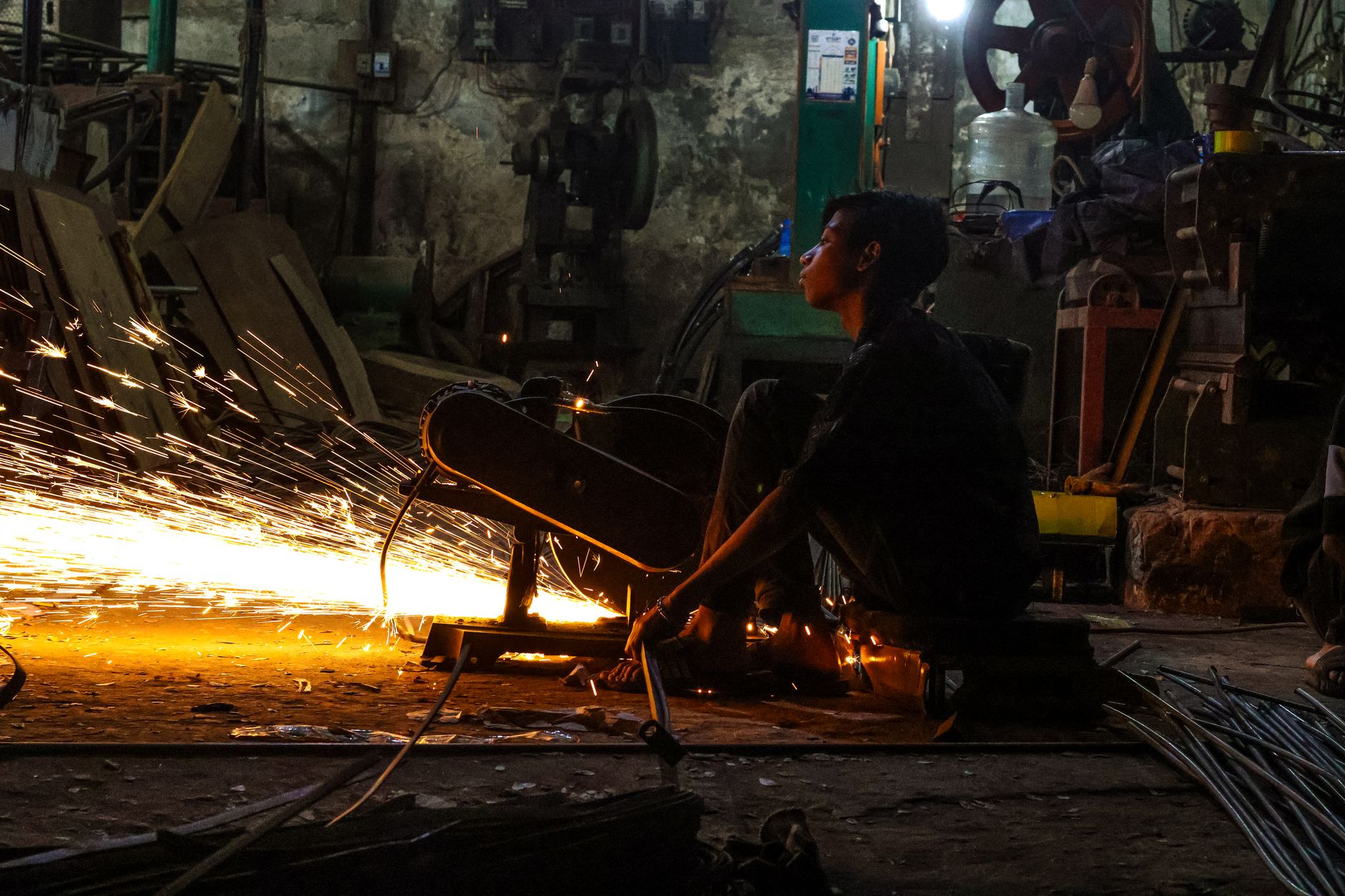
Meridian Print Group runs eleven sites off one dashboard, and for two years I was the night tech for the northern three. Tunnicliffe’s was the smallest and the oldest, a jobbing print works on the canal side at Ledderbridge, with a stone lintel over the roller door and a works clock stopped at ten past four since before anyone could remember. I liked it best of the three. The other sites smelled of ozone and floor polish. Tunnicliffe’s smelled of ink and the gas heater in the canteen.
My first November there, Moss Farraday walked me down the press hall the way you show a stranger round a house you love. At the big cylinder press he set his palm flat on the guard and said, “Vera — this is our new night lad.” That was the whole of it. I said good evening to a machine. You do things on nights.
Moss had forty-seven years on that floor and a Grade 1 post that Meridian had decided not to refill. The capture order arrived in February, tagged priority, with a due date that was also his leaving date.
TASK 4471 — LEGACY KNOWLEDGE CAPTURE, TUNNICLIFFE’S (LED)
Asset holder M. Farraday (Machine Minder Gr. 1, retiring 27/3) — record machine settings, set-up routines and fault history to golden profiles prior to post deletion. Video walk-round to LMS.
Knowledge must be platform property before the post closes.
— Meridian Print Ops, Northern Cluster
Platform property. I read that line twice, then did the work. I shot every gauge, timed every makeready, and put Moss on a bodycam for the walk-round so the LMS module could have his voice saying words like take the draw off the Judge slow, she’s old in the clutch. Eleven hours of him, cut down to forty minutes. The golden profiles came out beautiful. I have never built a cleaner set of documents, and I converted from agency to permanent on the strength of them.
The Empty Roll
Here is what the documents could not do.
Every set-up I put into Two Bob, the flatbed, was gone by morning. Not crashed. Eased. Half a point off the impression, the side lays walked home a finger’s width, the packing rebuilt to a depth nobody sane would choose. Vera held everything I gave her for weeks on end. On Two Bob I’d set the same job three nights running. I wrote it up as backlash in the screw, then as a day man undoing my work, and both theories died the same death: nothing I marked, filmed or locked stayed marked, filmed or locked.
Then Moss booked himself a new hip between the capture project and his leaving date, and the floor lost its mind.
Ten days. The funeral run went wrong first — four hundred order-of-service sheets for Whittaker’s, the town’s funeral directors, run a hair out of register so the hymn numbers floated off the page like they were leaving on their own. The packing slips for Ledderbridge Forge came out cut to the wrong depth. Tickets for the whist drive. The machine tags in the CMMS went from amber to red in a neat diagonal across the hall, one machine after another, night after night, and every fault ticket carried a stranger’s name on the set-up.
The dashboard did the thing dashboards do and showed me a heatmap with no cause in it.
So I tried something that was not in any module. Christine Aldous is seventy-eight and fed Vera, Two Bob and the Judge from 1969 until her hands went. I signed her in on a visitor badge and stood her in the hall for forty minutes while she did nothing but talk to the machines about people I never met. Three machines steadied that night. Exactly three. Not the folder. Not the little Komori. She had never been shown to those, she said, and looked at me as if I’d asked whether her name worked on other people’s houses.
On the canteen stair there is a painted board, hand-ruled, older than any system Meridian owns. Machine names across the top. Minder names down the side. A tick in the box where a name was spoken to a machine. Some of the ticked names have a line through them and a date; Moss’s column is the only one with the ticks still running to the bottom of the board. Nobody at Meridian knows the board is a document. It is the only one in the building that is true.
I put the facts to Moss when he came back on his stick for his last Friday. He heard me out and then told me the shape of it, plainly, the way he told me everything.
“A machine keeps what a hand it knows gives her. And she learns a name off a living mouth, in this room, on shift. Off nobody else and nothing else. That’s the whole custom. My granddad said it started after the belt accident in 1907. The day men say it’s older. Both lots agree on the part that matters.”
I asked him why the succession had never come up in eleven hours of footage.
“Because you never asked me to hand it over,” he said. “You asked me to describe it.”
The Last Hour
Meridian’s answer to the red tags was already in the system by then.
ASSET NOTE — TUNNICLIFFE’S PRESS HALL
Refurb and resale scheduled wk 14. Retain digital kit only. Site conversion review Q3.
Grade 1 post confirmed deleted. No successor required.
No successor required. Four hundred hymn sheets a month, and the platform’s plan was to sell the machines to somebody who would also discover, in time, that they only run for a name.
Moss found me at ten o’clock, in the last hour of his last shift, putting off loading the night’s work. He had his coat on. He said, “I’ll say you to them, if you’re standing at Vera when I go round. There’s no form for it. There never was.” Then he told me the cost without softening it, because he was a man who set packing to the truth: whoever takes the names takes the floor. You don’t get moved off it. You answer at night. Meridian planned to close the place inside a year, and a permanent tech welded to a closing site is a career with the stairs removed. My contract, my golden profiles, my forty-minute module — all of it pointed one way. The walk pointed the other.
I stood at Vera.
He went down the hall with his stick and his coat, and it took eleven minutes, and at every machine he set his palm flat and said her name and then mine. Two Bob. The Judge, who got a “steady, girl” before she got me. The folder. The Komori, whom he’d never liked and told so. At each one he waited, and at each one I answered what the old answer is: on shift.
Vera was last, because she was first.
On Shift
Monday the dashboard turned green and stayed green. Fault tickets at Tunnicliffe’s fell to a fifth of the cluster average and the site won a stability commendation, which the platform awarded to the golden-profile programme. The capture project closed as delivered. My profiles are the set piece of the Northern Cluster’s training pack now, and they are inert, every one of them, and they will run beautifully for anybody the machines already know.
I am still at Tunnicliffe’s. Conversion review Q3 came and went; the funeral run keeps the site open the way a heartbeat keeps a ward quiet. Meridian posts me back each quarter on a temporary that both sides have stopped pretending is temporary, and at night, when a machine wants a hand it knows, I come in and give it one. Nobody has ever asked me why I answer.
In September a temp started, young, agency, a badge in the post and a link where an induction should be. First night, I walked her down the hall the way you show somebody a house, and at the cylinder press I set my palm flat on the guard.
The module runs forty minutes. The board on the stair takes the rest of your life.
I said Vera’s name, and then hers, and the press turned over on the first pull.