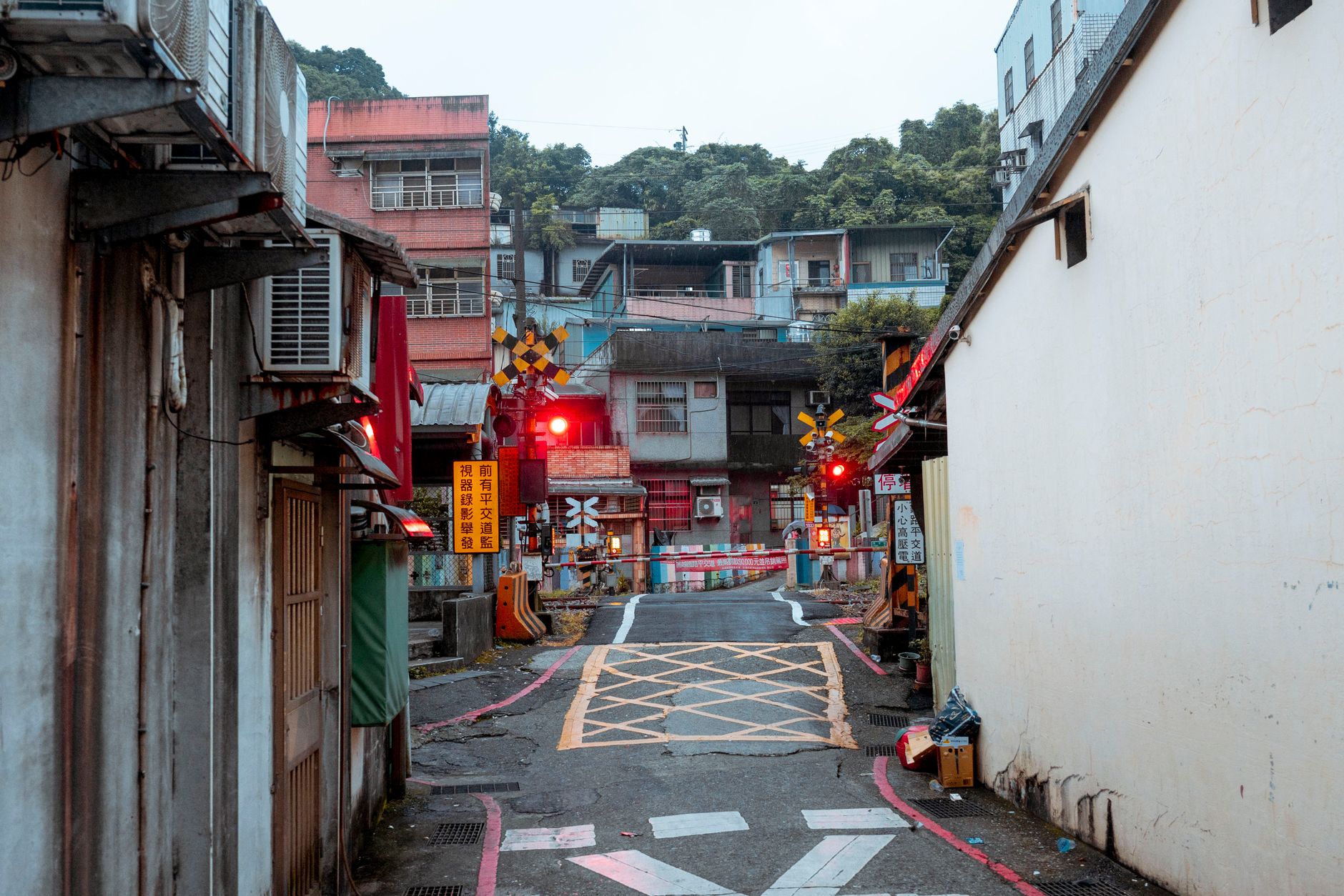
The Break Room
The cold store ran at minus twenty-two, and by the end of a shift your fingers had stopped believing in coins. You clocked out at 23:40 and ran for the Bayline shelter outside the gate, and if you made the 23:52 the coast road home took twenty minutes. Miss it and you walked an hour and a quarter, and your boots steamed on the stairs until gone two.
I lived at Harbour Terrace. Stop eleven of fourteen.
Marek had eleven years of nights in him and knew which pallets lied about their weight. Between the vending machine and the rota board he gave new temps the rules of the Seven the way other men discussed the weather. Sit forward of the rear arch in winter; that axle kicks. Left side in summer; the vents only reach the left. Then the third rule, with his back to the break-room door and his voice down at the level of the fridge:
The route retires stops. Not cancels — retires. A stop stops being a stop, and then it stops having been one. The map reprints itself, the shelter goes, and the hedge grows through the slab like it’s had forty years. So you don’t count stops on the Seven. And if you can’t help counting, you keep the number in your teeth. You don’t say it where the route can hear you.
My cousin Deni counted. Thirteen, he told the driver, coming back from the cash-and-carry with two boxes of foil trays. Three weeks on, the shop on Wrenfield Lane was a gap between two houses, drains still turning the corner, and nobody on that street could say what had stood there. Deni could. Deni walks past on Fridays and says the name of the shop under his breath, the way you’d feed a dog you’d wronged.
Agency kids filed it as local colour. Every coast town salts a few stories for strangers. I’d have filed it there too, except Marek’s version moved. The shop faced the crossing one week and stood by the laundrette the next; the details swam. The number thirteen never did.
Thirteen
The old timetable lived folded into the seat frame on the Seven, four folds under the current one: a laminated strip in Bayline’s brown ink, dated the spring before I was born, listing fourteen stops from the depot to Old Ferry. Fourteen names, and a footnote in a typist’s hand. Service subject to withdrawal where demand fails.
I rode with the strip in my jacket a week before I counted. The estate. The gasworks bend. The school. At Ferry Steps: shelter, pole, timetable drum with its plastic window. Then, where the strip said WRENFIELD LANE in brown capitals, the hedge stood out to the kerb — thick-trunked, older than the road paint, rooted in gravel so pale nothing had crossed it in decades.
Thirteen.
I held the number in my teeth to Harbour Terrace, through my front door, into the dark.
Colin drove the Friday Seven and peeled an orange at the terminus while the coach ticked itself cool. “Does the Seven still do Wrenfield Lane?” I asked.
He worked a segment loose with his thumb. “Retired.”
“Since when?”
He looked at me the way you look at a man asking the time in a town with no clock. “Since always, now.”
The frame at the shelter listed thirteen stops that night, tired in the creases, faded like a thing read for years, and it had always listed thirteen. At the library terminal the council’s planning pages held no application for a stop on Wrenfield Lane, and no refusal either; the register ran the street hedge to kerb with no footway at all. I had a photograph on my phone from June, the sea from the top deck past Ferry Steps, and the hedge ran green and ancient through the background of it. The phone offered it up without shame, correct about everything except the week I remembered taking it.
What They Served
The phone box at the bottom of Ferry Steps went next. A rectangle of tarmac one shade newer than its neighbours, four bolt holes in the corners, paving slabs cut short where a door had swung. No box on the street, no box in any listing, one rectangle the exact size of an absence. Then the laundrette on Wrenfield Lane, bricked up and painted the colour of the houses, drains gurgling round a corner nothing stood on.
Every week, one more.
I rode on my nights off to watch the count, which is not a sentence I ever said out loud. Marek found me checking the strip against the window and shut the break-room door with two fingers.
“You’re counting.”
“Thirteen,” I said, and his face went the way a dropped tool goes still.
He told me about Deni again, and this time the shop faced the crossing for certain. This time I heard the version under the version. Every telling of Marek’s carried a phone box at the bottom of Ferry Steps — never the point of the story, standing in the background the way weather stands in a story about a funeral. When I asked him, straight out, why he kept mentioning a phone box, Marek looked at his hands.
“Stefa rang me from that box. Fridays, before mobiles.” A pause the length of a Friday. “Ride like a passenger. Passengers arrive. Counters remember. You want to arrive.”
I meant to.
Harbour Terrace
September thinned the 23:52 down to four of us, then three. On the 9th of October I reached for the bell past Ferry Steps and the rail above the window gave my thumb bare metal: a hole, two wires curled back into it like clipped hair. The annunciator skipped without a hitch in its cadence. “Ferry Steps,” Colin said, “then Old Ferry,” the way you’d climb a staircase that had never had this step in it.
“Harbour Terrace,” I said.
“Retired.”
“I live there.”
“Stops first,” he said, and pulled out, indicator ticking. “Then whatever they served.”
I rode to Old Ferry, because there was nothing else to ride. The terminus clock said 00:14. I walked the coast road home in forty minutes, past the hedge keeping its forty years at Wrenfield Lane, past the newer rectangle at Ferry Steps, and the terrace stood at the end of it: twelve houses, brass numbers, my key still turning. The pole and the shelter had gone from opposite the sea wall. The gravel where they stood was pale and untracked. In the morning the frame at what people still called the bus stop listed twelve, and the electoral roll still had me at Number 9, on a street the register’s map ran to the sea wall with no stop ever having been.
In the break room that night a new temp asked about the last bus, and Marek got as far as the second rule.
“The third one’s mine now,” I said, and gave her the route. Wrenfield Lane, and the shop that was and wasn’t. The phone box. The laundrette. The crossing. Harbour Terrace, stop eleven, retired the 9th of October. “When it retires a stop you used, you carry it. You tell it with the rest. That’s the whole job.”
She laughed. They laugh, at first; the town salts its stories for strangers. Marek didn’t. He took the marker off the rota board and wrote HARBOUR TERRACE under the laminated strip I’d taped inside the door, in the space below the phone box and the laundrette, each name in a different handwriting.
The strip stays in the door. New names go under it, and stay told.
I walk home now, forty minutes along the coast road, boots steaming on the stairs at one. Coming past Ferry Steps I say them under my breath — the lane, the shop, the box, my stop — the way you’d feed something you’d wronged. The telling brings nothing back. It holds the hedge. Twelve stops on the printed strip, and the twelve are holding, and nobody else on the Seven remembers what the thirteenth was for.
That’s my stop now.