Tanner’s End
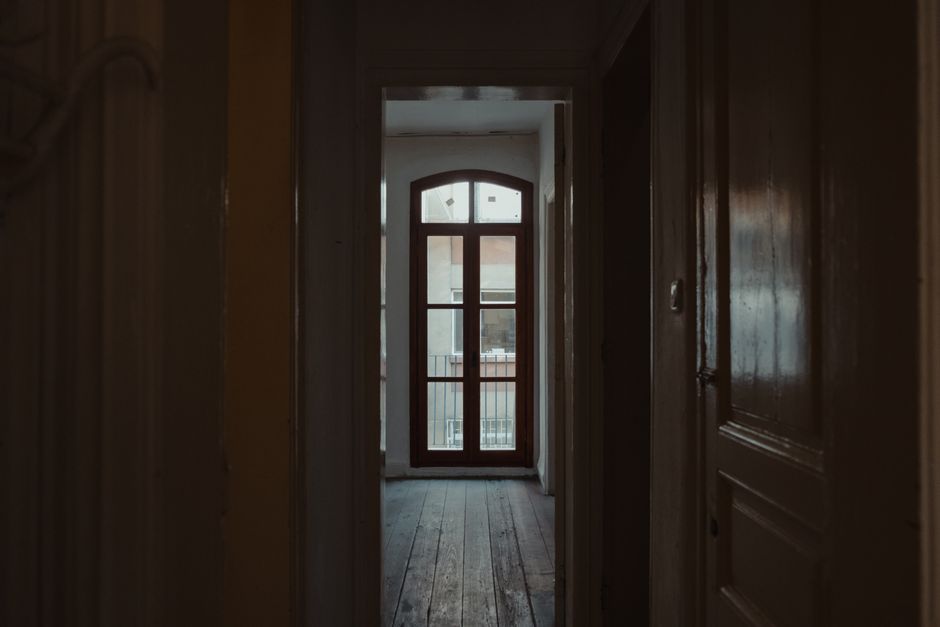
We bought the house off a deceased estate because it was cheap and because I was eight months pregnant and done with losing bidding wars. A 1920s semi at the bottom of Tanner’s End, Corverton. Three bedrooms, a hallway long enough to park a car in, black-and-red quarry tile that held the cold like a church floor. The vendor was a nephew in Adelaide who had never seen the place. He sold it wardrobes and all.
In April I had nine days of leave left, and one project. Ben was eleven months old and still waking twice a night in our room. My job is home claims — storm, subsidence, escape of water — so I price other people’s disasters for a living, and I know what a failing roof sounds like long before it comes through a ceiling. I wanted the cot in the small back bedroom, the blackout blind up, and my son sleeping twelve hours by the time I went back on shifts. Nine days. Anyone can hold a line for nine days.
The first gathering was on a Thursday, with a wind warning out for the Derwent valley. I put Ben down at seven, went to bed at eleven, and woke at some grey hour with the ceiling wrong. Not our ceiling. Ours has a water stain shaped like Kent. This one was plain plaster, high, the meter cupboard open below it and a coat hanging off the door, and my face was at mattress level on the hall floor.
The mattress had come out of our room. Not carried — dragged, corners folded the way we’d folded them getting it through the front door in March. Ben’s carrycot sat between our two mattresses with the duvet over all three of us, tucked at the foot, tight, the way you tuck a thing you expect to be cold. The front door was on its top bolt. We never used the top bolt.
Rob said he’d done it in his sleep. Both of us, and a nine-month-old, and a double mattress, and two latched sash windows, and a bolt at head height. I let the explanation stand, because the alternative didn’t have a shape.
The Incident Book
The second gathering was hail, eleven nights later. The third was the storm that took the slates off the Methodist hall. I started keeping a record in the back of my claims notebook, because a pattern you don’t write down is a feeling, and feelings don’t pay out.
26 Apr, 02:40 approx. Gathered. Hail on Cann Road from 05:10 — three claims that morning, one of them mine.
7 May, 01:15 approx. Gathered. Slates off the hall roof by 04:00.
19 May, midnight approx. Gathered. Wheelie bin through the Chens’ fence, bus shelter gone.
Three entries and the lead time was already doing something I didn’t like. The first gathering came hours ahead of its weather. By May we were being moved the night before, then two nights before. I checked my own file against the Met Office the way an auditor checks a ledger she already knows is cooked. Whatever moved us wasn’t reading the forecast. It was pricing risk on a return period no kitchen calendar has ever needed.
Ben stopped crying when it happened. That was the part I filed nowhere. Eleven months old, lifted out of sleep, and he’d go down in the carrycot in that dark hall like a coin into a slot. Rob took to sleeping with the door wedged by a chair — “so I can feel it try,” he said — and I lay in our room doing the house’s slow arithmetic in my head, moved Ben’s cot back beside us, and told nobody why.
The Horse Chestnut
The night of the chestnut there was no warning out at all. Still air, the swallows high, nothing on any map between us and the Atlantic. We were gathered at half one — two mattresses this time, not three. Rob’s door stayed shut, chair under the handle, and whatever keeps this house didn’t open it. It took me and Ben, and it left him.
The tree came down at ten to five. The Pollards’ horse chestnut, a hundred years of it, split at an old pollard cut and fell across the gap between the houses, through the small back bedroom roof, ceiling, cot. The cot came apart like kindling. My assessor — a man I’ve worked claims with for six years — stood in that room with his clipboard and used the technical term, total loss of room contents, and I stood beside him in the doorway with Ben on my hip and agreed, in the wording, while the thing I actually thought was: it read that tree before the tree had started.
Rob left in June. He’s a scaffolder; he trusts load calculations and his own hands, and he said he would not live under something that rearranges his family in the dark and calls it care. He was right on both counts, and I let him go, because of the door. It could have moved the chair. It chose not to. It gathers the willing, and only the willing, and I had lain awake enough nights by then to know which one of us I was.
Still Weather
It is the twenty-third of June as I write this, and we have been gathered three nights running. Ben walks himself to the hall at bath time now, thirteen months old, dragging his blanket to the spot under the stairs, and I bring the mattresses down after him, because that is where we sleep when it asks.
21 Jun. Gathered. No verifiable event.
22 Jun. Gathered. No verifiable event.
23 Jun. Gathered earlier, 22:40. Air still. No forecast. No claim within nine miles. Confidence: total.
I did the testing for a while — slept in my own bed like knocking on wood, waited to be moved or not moved, kept the columns straight. I’ve stopped needing the test. Somewhere out ahead of us there is weather with my name on its paperwork and the house has already read it, the way it read the tree, and my son sleeps twelve hours a night, every night, warm, tucked in, kept.
When he’s old enough, I’ll tell him the truth of it plain: we were saved. Then I’ll watch his face and see whether he forgives this house the way I have — or whether he understands, sooner than I did, that to be kept and to be kept are the same word, to the thing doing the counting.