The Nine O’Clock Run
My grandfather drove the mail over Harthwaite Fell for thirty-one years, and when he retired he left one page of instructions in the bookings diary for whoever took the route after him. The diary lives in the depot, a portacabin behind the pump at Netherbridge, and the page is still there under three strips of yellowed sellotape.
Between the stones, let the carried go first.
— T.M., 1963
My father added his line underneath in biro, the year he took over the school run:
That stretch is soft shoulder and black ice. Nothing more to it.
I added nothing. In 1999 I was twenty-three and I had driven the Friday night service for two winters, which in my own arithmetic counted as knowing the road better than either of them.
That October, Edwin Alderson died above Harthwaite. Seventy-one years on the same acre of wet ground, and his heart stopped in the byre between the milking and his supper. His wife, Iris, had ridden the minibus down to the valley market every fortnight since before I was born. She phoned the depot at nine that night. The chapel at Netherbridge had him, she said, and she wanted to sit the first night beside him, the way it was done — and the sitting wants beginning before midnight.
Fourteen miles of fell road, most of it single track with passing places. If we rolled by quarter past eleven I’d still get four hours’ sleep before the five o’clock mail. Every sum I did that night came out on the side of hurrying. That’s the part I keep coming back to, twenty-odd years on. Not one choice I made was the stupid one on paper.
The Lower Stone
Iris sat in the front seat with her coat buttoned to the chin and her handbag flat on her knees, and she dozed off somewhere past the second cattle grid. The fog came up to meet us the way it does when the valley breathes out at night, thick enough that high beam threw a wall of it back at the windscreen.
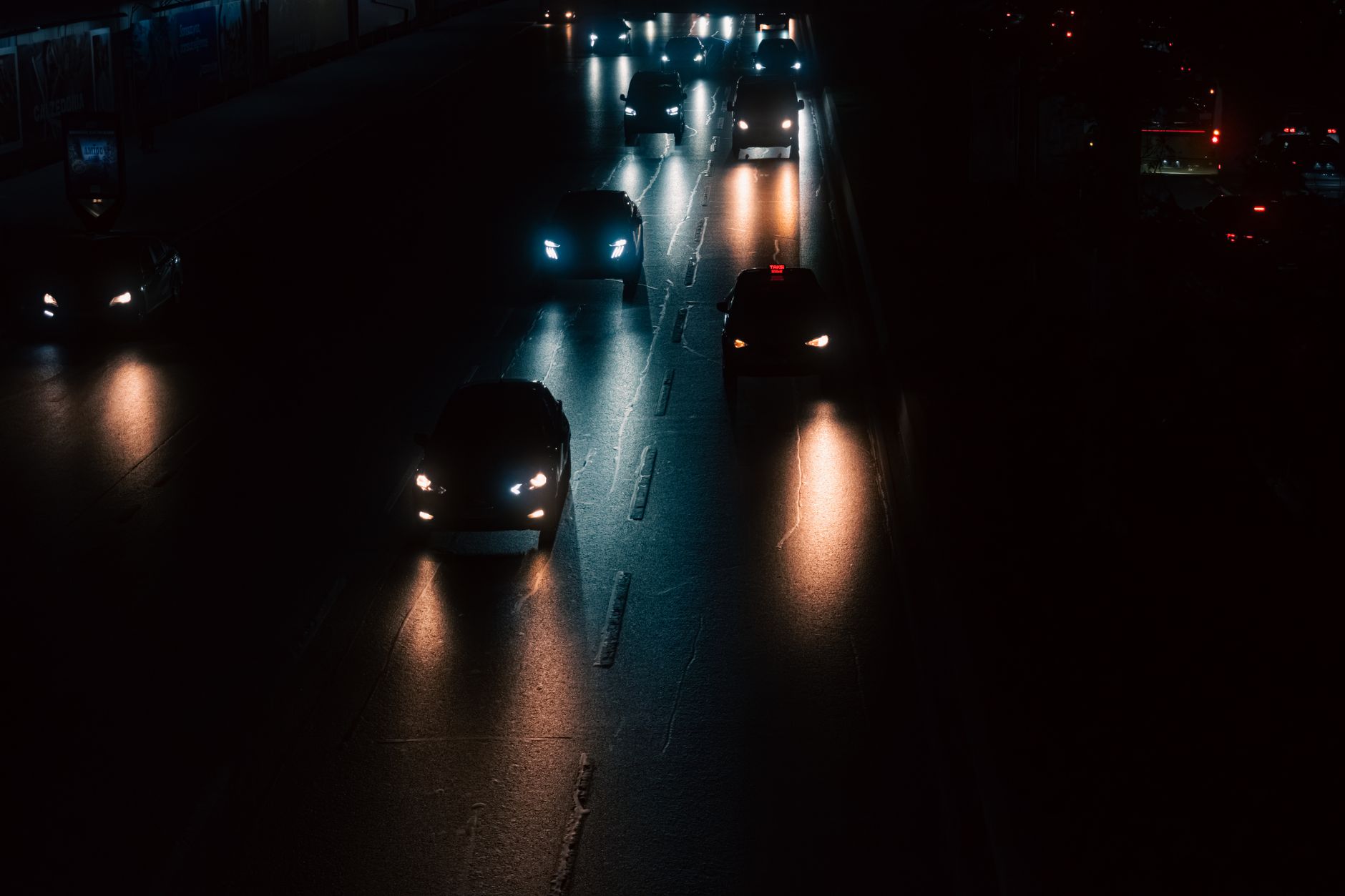
The flatbed showed at the head of the Long Straight, walking pace, hazards off, its load under a tarpaulin roped at the corners. Cairns’s truck. The undertaker at Netherbridge kept a flatbed for the hill farmers the way his father had before him. I hung back and counted the passing places.
The road widens half a mile on, by the Lower Stone — a flat slab standing in the verge with a cross cut into it, worn so shallow you can only find it by angling your headlights along the ground. A resting place. Coffins coming down from the top villages used to be set down there while the bearers got their wind, and the bench-cut in the slab is still there under the moss if you know to look.
Let the carried go first.
I sat behind that truck for ninety seconds with the chapel clock running in my head, and then I did the sums a young man does. Straight road under the fog. Nobody coming. I dropped into second and went by at the stone with a foot of verge to spare.
Three things, in order. The cab curtains were drawn. The brake lights didn’t come on until the truck had already stopped, well short of the slab, and the hazards never came on at all. And in the mirror the two Cairns men climbed out not by the doors but over the tailgate, and took up a position at either end of the load and stood there, hats on, the way men stand at a graveside.
Iris woke as the road bent for the plantation. “Are we behind him or before him?”
I said we’d passed Cairns’s flatbed going down slow, and said it like nothing, because to me it was nothing.
The wipers ticked four times before she answered. “Which side of the stone?”
“Just past it.”
She looked down at her handbag. “Then he’s down, and he’ll not be lifted again tonight.” Then, kindly, which was the worst of it: “You weren’t to know, lad. It’s not your rule. It’s the carriers’.”
I didn’t ask. Twenty-three, five o’clock mail, four miles of fog left between us and the chapel — asking would have made me late for something.
First Light
The chapel was dark when we got there and the yard gate stood open on its chain. Iris found the wrong key twice under the porch, then the right one, and the smell inside was cold wax and chrysanthemums. Kneelers stacked on the front pews. The velvet pads on the trestles worn pale where boxes had rested down the years.
No coffin. Just the trestles, and a hassock with E.A. pinned to it in her sister’s handwriting.
The vestry phone rang at half past midnight. Old Cairns had keys to the place going back forty years, and Iris spoke to him first, and then she put the receiver against my ear without a word.
“The men set him down at the Lower Stone.” A pause, the scratch of him lighting something. “You know it as well as I do. What’s set down on a stone stays till light.” Another pause, longer. “They tell me the rope went slack when you pulled past. Slack, and the truck hadn’t braked. Slack like the load walked forward on its own.” Smoke going down the line. “But ropes do that.”
I rang my mother from the call box and a man called Syd did my mail.
We went back up. We came on the flatbed from below with our lights underneath it, and the two men were still stood at the corners of the load, not speaking, and Iris got out and stood with them, so I killed the engine and sat while the heater ticked itself cool. She came back for her handbag at two and dozed against the window with her coat pulled up over her arms. Neither bearer sat down all night. Not once did they touch the load, or lean on the truck, or each other. Somewhere past three it got through to me that they weren’t waiting for morning. They were waiting for light.
They lifted him at first light — the four of us and a shepherd who’d come off the fell with his dog — and they carried him the last half-mile not on the road but on the old path, the one the tarmac was laid over, through the wet gate and the plantation, because that stretch had never been carried by engine and wasn’t going to start that morning. I took the minibus down empty and met them at the lychgate. The grave couldn’t be opened again until Monday — ground crew on the other job at Marley, the vicar at his daughter’s — and a body that has waited on its stone waits another day. That’s the custom too. Iris had known it before I was born.
She rode home Sunday evening, front seat, handbag on her knees. “You did right to hurry,” she said. “You did. But the road was carrying him first, and you can’t overtake the road.”
The Third Line
I still run the fell route. My father’s line is under the sellotape and my grandfather’s under that, and last winter the firm took on a lad of nineteen who drove like the road owed him money, and I wrote the third line on the diary’s front page and left the book open on the counter for him.
If something slow is between the stones at night, wait at the Upper Stone until it’s gone from view. You’ll lose ten minutes and you’ll never know what for.
He asked what it was for. Soft shoulder, I told him. Black ice. Nothing more to it.
And when the valley families bring their own down — which they do, still, every time, the ones that can — they leave the cars at the Lower Stone and walk the last half-mile on the path, in whatever weather, and every driver who meets them waits with his engine off. All of us. For no reason any of us would put into words.