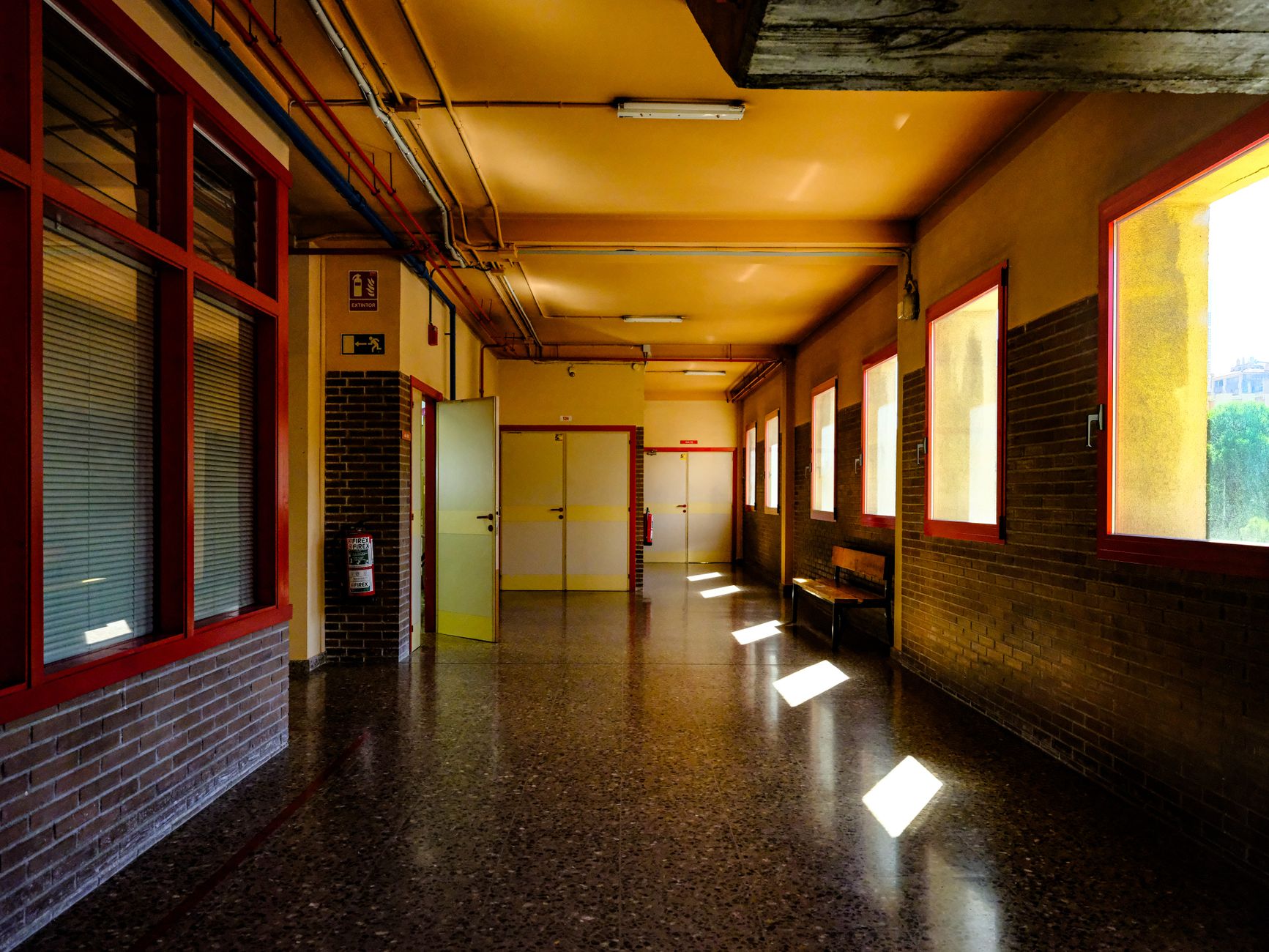
I worked the night counter at the Halloway Records Annex the summer I turned twenty. Nineteen ninety-four. The annex still ran on paper then — card catalog, mimeograph ghost in the air, a Mr. Coffee that had scalded the paint off its own hotplate — and I ran it from six in the evening to six in the morning, five nights a week, banking money toward tuition at State.
The counter stretched the width of the lobby, and halfway along it, at chest height, a brass slot opened into the closed stacks. Twice a night, sometimes three times, a bell over the slot buzzed and a finished transfer slid out: a certified copy, a stamped duplicate, once in a while a death record somebody downtown needed filed by morning. You took the pages, entered them in the counter log, stamped the entry, laid them in the outgoing tray for the day shift. The duty sheet Mr. Ruiz left me put it in four lines.
Slot deliveries: receive, log, stamp, tray.
Do not wait for the courier.
Do not open the stacks.
I never saw the hand that did the delivering. Knuckles on brass, a dry slide of paper, and by the time I looked up the bell had already quit. Mr. Ruiz called it the receiving slot, same as the duty sheet did, and told me it had been there longer than the building. Don’t worry about it, he said. Everybody did.
I didn’t worry. That’s what the time and a half was for.
Three Minutes
In July I lost three minutes.
The buzz came at 1:12 — I know because the stamp machine prints the time on everything it touches, and the entry said 1:15. Between the bell and the stamp, nothing. Not a gap like dozing; dozing leaves edges. This was a clean splice, one breath of bell and then the smell of ribbon ink and the pages already squared in the tray, my signature in the received-by column still wet enough to shine.
I started keeping count on the back of my timesheet. Three minutes. Then seven. Then seven again, which for some reason was worse than eight would have been. The deliveries kept their schedule, two a night, three on Thursdays after the county board met, and each one cost me a little more of the clock. By the last week of July I was losing forty minutes at a stretch, and I came back to myself with the taste of dust in my teeth and the soles of my sneakers gray. The stacks have concrete floors under forty years of paper dander. I never went in. The door at the end of the counter stays locked; the day clerks hold the key.
In August I taped over the slot. Duct tape, three strips, pressed down with a thumbnail. I knew it was a stupid move while I was doing it, and I did it anyway, because the alternative was walking out at 6 a.m. with my jeans gray to the knee and no memory of the walk. In the morning the tape lay rolled on my desk like a spent firecracker, and the log showed four entries received and stamped on schedule, in my handwriting, initialed, correct.
That afternoon, in the diner across the courthouse lawn, my right hand copied a column of figures from my coffee receipt onto the back of the placemat. I had not asked it to. My hand finished the row, set the pen down, and waited, patient as a bank teller, while I sat breathing through my mouth.
The First Line
Mrs. Delgado worked days, thirty years in, kept a jar of peppermints for the genealogists. I asked her about the slot the way you’d ask about weather. She unwrapped a peppermint and looked at the counter for a while.
“That counter passes down with its log,” she said. “Not with the personnel file. The log. Whoever signs the first line of a new book holds the post. Yours was opened in 1968 by a man named Corrigan, and it’s been added to since. Never closed.” She folded the wrapper into a small square. “I don’t touch that book. I’d start my own, if I ever wanted the post. I’ve never wanted the post.”
There were blank log books in the supply room, marbled covers, paper thin as onionskin. I took one that night, opened it to the first ruled line, and signed my name. Then I stamped the page, because the machine prints the time on everything it touches, and I wanted the time on record. 11:52 p.m., August 19th.
The bell buzzed at 1:15, on schedule. I was there for it. Knuckles on brass, the slide of paper, my own hands logging and stamping, start to finish, every second of it mine, and I remember thinking the way you think at twenty: a problem solved at 1:15 in the morning stays solved. The losses stopped. After that I stood my post awake and whole, took delivery, stamped, initialed. By Labor Day I had told Mr. Ruiz I’d train a replacement before school started.
He said there was no replacement yet. He said somebody was coming to interview, and could I sit in, since I knew the counter best.
September
She was maybe nineteen, sweater sleeves pushed to the elbow, a résumé typed on somebody’s home computer with a crooked left margin. Good student, needed her evenings free around a lab course. I had the interview questions in my blazer pocket, ordinary ones, and I remember unfolding them, and I remember my mouth starting to move with none of them on it.
“You start Monday,” my mouth said. Warm, unhurried, a voice with some of Mr. Ruiz in it and some of the building. “The stamp machine’s friendlier than it looks. It prints the time on everything it touches.”
I sat and listened to myself hire her. My hands were busy while it talked. They had found the new book — mine, opened 11:52 p.m., August 19th, first line signed — and they were ruling its final line, straight and true, and filling in her name and Monday’s date in a hand that was mine and always had been. Then they closed the cover and squared it with the others.
The slot has two ends. The counter takes; the stacks give. Twice a night, sometimes three, somebody back among the shelving squares the pages and feeds them through, and whoever holds the counter signs a new book whenever one opens. I had signed mine. The gaps had not been taken from me. They had been mine, on loan back — the job letting me borrow my own hands while it waited to see whether I was staying.
I trained her Monday. I logged her first deliveries, stamped them, initialed, correct. At noon I hung my blazer on the hook by the locked door, and I unlocked it with the key that had been in my pocket since August 19th, and I went in.
The floors are dust. The shelves run back farther than the lobby is long. At the far end of aisle forty the brass shows its other face, brighter than the lobby side, polished by use. She works the counter now. A bell buzzes, twice a night, sometimes three.
I feed the pages through.