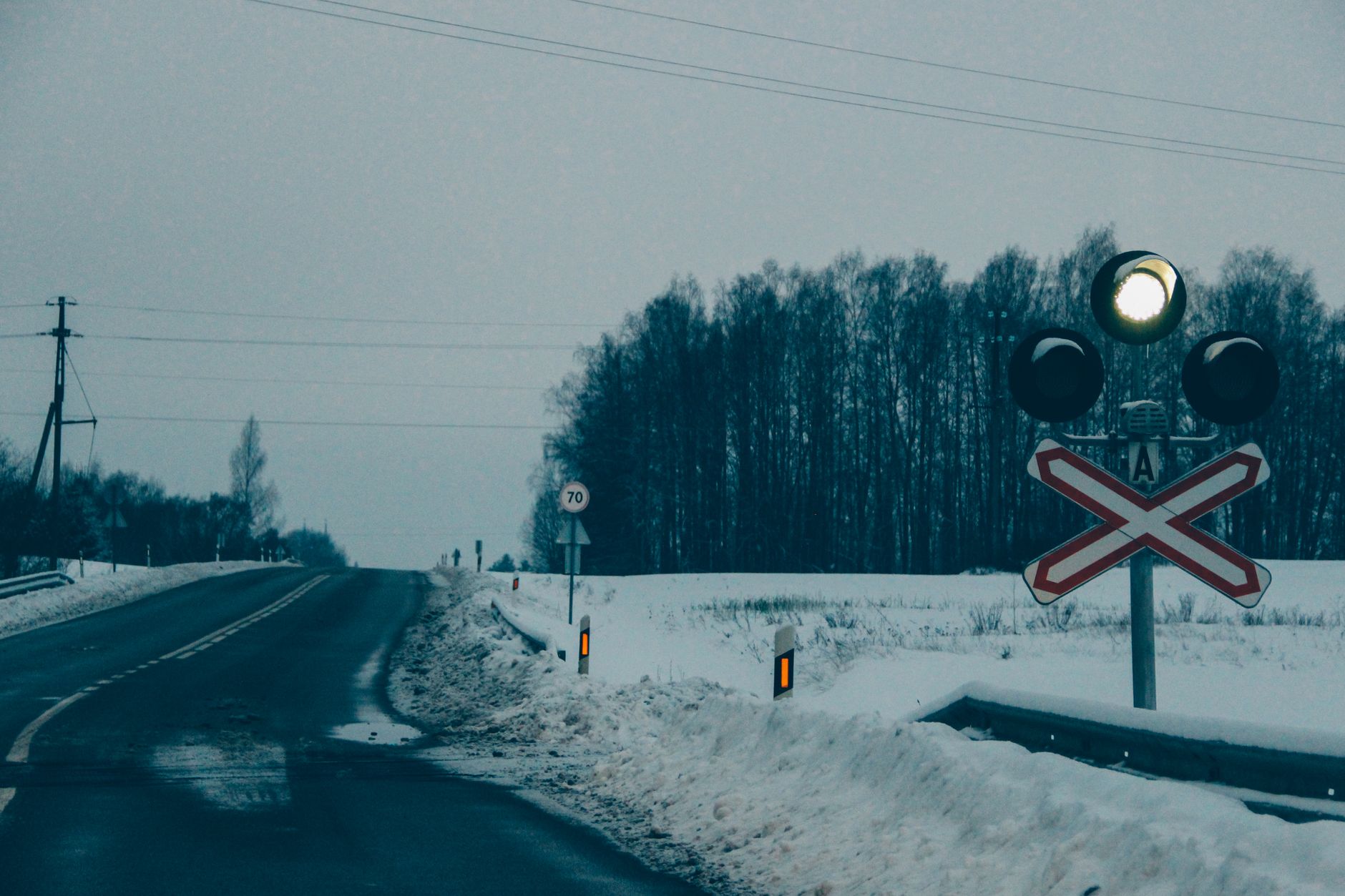
The Nine O’Clock Joke
There’s a stretch of Route 9 between the Reservoir Diner and the Mason’s Ferry town line — four miles of causeway, water on both sides — and if you ask anyone in town about it, they’ll tell you the same joke. The road gives you your minutes back. Leave the diner after close, drive it alone, and you get home with time you didn’t have. Ten minutes, sometimes fifteen. Nobody makes a ceremony of it. It’s just a thing the road does, like frost heave in March.
Britt told me my first week back. I’d moved home after ten years away for a technician’s job at the water utility, and I was still driving like an outsider, checking mirrors too much, braking for deer that hadn’t stepped out yet. She was elbow-deep in a chlorine pump when she said it.
“You’ll see. Just don’t make a thing of it.”
“Make a thing of it how?”
“You’ll see.”
The joke has rules, the way town jokes do. You have to be alone in the car. It has to be after the diner locks up — nine-forty, ten. And you have to live here. Merchants passing through get nothing; Britt’s cousin hauled beer over that causeway for two years and never gained a minute. But if it’s your road, if you’re coming home, the road pays you back for the day the drive took out of you.
I laughed. She didn’t.
Eleven Minutes
Callouts kept me on that stretch at night. Main breaks don’t schedule themselves, and half our infrastructure sits on the far shore, so twice a week I crossed at eleven, midnight, one in the morning, windows down, the lake ticking against the riprap.
In September I started recording my drives. Not because of Britt — because I was tired, and I wanted to hear myself sing along with the radio, which is a thing you do alone at that hour whether you admit it or not.
The third recording did it. I played it back over coffee, and there I was: engine noise, my terrible version of a song from 2009, mile markers read aloud out of a habit left over from training.
Mile three-four.
[nine seconds of continuous engine tone]
Causeway gate, town line.
Those two points sit eleven minutes apart at highway speed. On the file they sit nine seconds apart. No dropout, no hiss, no seam in the engine note — the audio runs continuous, like tape cut and respliced by somebody very good at it.
And here’s the part people get wrong when I tell this, so I want it precise. I don’t remember a gap. I remember all eleven minutes. The fog marker with the dead light, gulls asleep on the second pylon, a fox on the shoulder by the culvert with something pale in its mouth. I can walk through the whole drive, minute by minute, and the recorder says four of those minutes don’t exist.
I ran it three more nights. Nine minutes, fourteen, once as little as six. My memory never had a hole in it. Only the record did.
Silt
The utility teaches you to trust instruments over your own head, so I went looking for something physical.
Tires first. After a gain night, the tread carried a pale gray mud that dried to ash. Road grime in a dry week should be dust and tar. I bagged a sample and carried it to Dave at the co-op extension, who put it under the kind of microscope schools still keep, then looked at me over the rim of his glasses.
“Water-laid silt. And not off your shoulder gravel — this came up from depth. Anaerobic. Smells of sulfur when it’s wet. Am I right?”
It hadn’t rained in three weeks. The causeway drains onto clean riprap.
The second thing rode in my left wheel well: a strap of weed, rubbery, dark, with little bladders down its length. I keyed it out at the library between shifts. It grows at a fixed depth in still water, twelve to twenty feet down, where the light goes thin.
The librarian watched me copy the page. When I told her the plant’s name, she nodded like I’d ordered the usual.
“My mother knew a man who dredged for the county,” she said. “He said his trucks always came back light. A load leaves the bottom, and a load of minutes comes home with you.” She stamped my copies. “That’s how he said it. I was eight.”
The map room had the rest. Before 1961, Route 9 didn’t cross the valley at all. It went around — nine and a quarter miles of switchbacks through what’s now lakebed, past a hamlet called Mason’s Ferry at the bottom of the draw, drowned when the dam closed. The causeway is four miles. The old road is still down there. Graded, oiled, posted at 35 the whole way around.
I did the arithmetic once and then stopped. Nine and a quarter miles of switchbacks at 35 works out to about eleven minutes.
The Third Post
A better person would quit driving the causeway at night. Understand why I didn’t: it’s the only road home. That’s the whole trick. Everybody in Mason’s Ferry crosses that water, and after a while the gains are part of your pay, like the lake smell in October. You’d sooner give up the ferry — the ferry that isn’t there anymore — than the minutes.
In February the utility got the dredging survey back for the intake rebuild: forty plates of bottom photography, silt fans, drowned timber, the tops of foundations. I was filing copies when I stopped at plate nineteen.
The old road, of course. It runs along the floor of the draw like a scar — the grade, the cut, the line of guardrail. I caught myself with a pen in my hand, marking the plate for the crew.
Wrong. The posts are wrong. Eight-foot centers — that’s not how the county set them. And the third one below the culvert is bent double. We reported that twice and nobody came.
I never drove that road. It went under three years before I was born. There is no we.
I couldn’t say any of that to Britt, so I came at it sideways. Asked whether she ever dreamed about the old road. She said no — but she knows the switchback past the quarry carries a hairpin that hides behind the shoulder, and you have to downshift before you see it. She never drove it either. Neither did her mother. The road went under in 1961, and the county never rebuilt it anywhere but underwater.
Nobody in this town heard the legend from anybody. That’s what I finally understand, and it’s why nobody finds it strange. We all remember the old road, the way you remember a place from when you were small — pieces of it, a curve, a guardrail, the smell of a cut bank in rain — and a little more of it every year.
The road doesn’t give minutes back. It trades them. Eleven minutes of your night buys eleven minutes of a road that no longer exists, installed so gently you’d swear it was yours.
I still drive it. Last week I remembered the mailbox at the drowned store — red, door sticking, a hardware-store sticker on the side.
The store’s owner died in 1998. His mailbox sits on the counter at the diner. It’s red. The door sticks.
I’d never looked at it before.