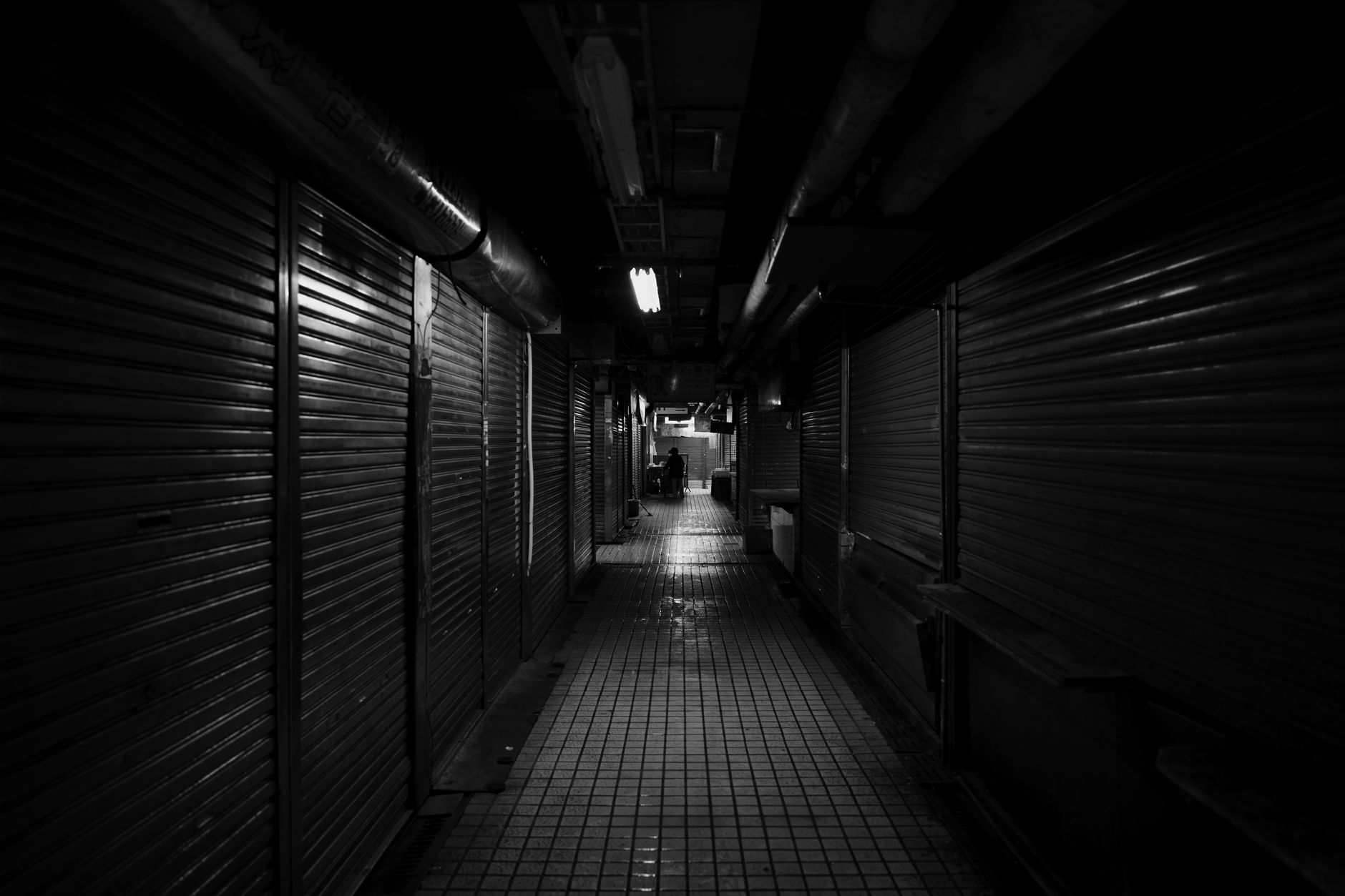
Ronnie’s Rule
Ronnie taught me the count on my third night, the way you teach somebody to lock a till. You walk the cage lines with the scanner, you tick the sheet, and at half five you count what’s left and sign the bottom. Barrowgate ran on it. Twenty-two trucks out, forty thousand parcels a night, one sheet of paper proving the maths.
“Rule of the house,” he said, chewing a match. “Count comes up one short, you write overs and you go home.”
“Overs.”
“Overs.”
“And if it’s actually gone?”
“It’s overs.” He spat the match into a drain grate and left it there.
I did six months on nights at Barrowgate through an agency called Castleton’s. They put you on the books permanent after Christmas if your sheets were clean, and I wanted the books, because permanent meant the deposit on a flat in town and the end of sleeping on night buses between my girlfriend’s place in Stockport and the yard. Clean sheets. That was the whole ask.
I’d have laughed the rule off except for Wakefield. A mate of Ronnie’s at the Wakefield shed wrote the other word on a Friday — the word you don’t write — and by Monday the gate house had no record of him, the wage clerk had no card, and his locker stood open with a comb in it. Ronnie tells it as a laugh. All the older lads tell it as a laugh, and it is a funny story, at that. Nobody at Barrowgate writes the other word.
One Short
The first shortage was a pallet of cat litter. Thirty-nine bags where the sheet said forty, discontinued line, sat in the corner of C-block since spring. You couldn’t give it away. Somebody had, apparently.
The next night the spare key to locker 12 was off its hook. The hook stayed. The tag stayed, “SPARE” in melted biro.
The night after, the second clock was gone from the canteen wall. One nail, one circle of clean plaster where a clock had hung since at least the nineties, and every one of the forty lads on nights could tell you the time it used to say, which was four minutes fast. Nobody could tell you where it went. Two doors into that canteen, a camera on each, and cameras only ever cover doors. Nothing carried a clock out of a door.
Then the chock went from under the north bay ramp and a Polish agency driver found out when his trailer rolled a foot with him half under it. Half a metre either way and this is a different story. After that, management cared.
Head office sent a woman called Isabel with a clipboard and a lanyard, and she said shrinkage until the word meant nothing. Stock audit. Tool audit. Locker audit. The lads stood in line and let her count their spanners and said nothing at all, and every night the count came up one short, and every night the sheet got signed overs in seventeen different hands, and Isabel’s audit found nothing, because there is no entry in a ledger for a wall clock that has always been there and now isn’t. You cannot audit an absence. She left after a fortnight. The shortages stayed.
The 1987 Book
The site office keeps everything. Boxes of old timesheets back to the seventies, wage books, paper counts from before the count went onto a screen anywhere. I went in on my dinner hour to look for my own September — the agency had lost a week of my hours and I wanted proof — and I found the books, and after that I stopped eating much at work.
The runs are easy to find once you know the shape. A month of nights, every single one a single item short. Stock at first. Then fittings. Then, in the older books, other things — a gate pass, a clock card, a fuel card for wagon 9. Every run stops the same night: the sheet where somebody wrote the word. You can tell the word from the shake in the writing. And the sheet after it carries a name that appears nowhere else in that book, or any book, and the runs that follow it are signed by other hands.
22/10/87 — count 1 short. Signed overs.
23/10/87 — count 1 short. M. Ashworth, word entered.
24/10/87 — count 1 short. Sheet unsigned. No Ashworth on the wage book.
Forty years of runs, always somebody new doing the writing, always a name missing after. The lads all know a version. There’s the Wakefield one, and a Runcorn one, and a lad at the Barton swings tells one about a cold store. Same shape. Friend of a mate, always. Always told as a laugh, always with the rule folded inside it like a fishhook: count it overs.
The Word
Isabel’s report went in, and in March the agency called me to the portacabin. Two of them, plus the transport manager with his arms folded. Twenty-two pounds a week of unexplained stock over five months, and my name on every count sheet for the shift concerned. They were obliged, they said, to record the discrepancy properly. The word had to go on the sheet, in writing, signed. The permanence conversation, the one they’d promised, would follow once the record was straight.
I thought about M. Ashworth’s shake. I thought about the comb in the locker.
I wrote it.
Half five, the count came up one short, and this time the sheet went into the tray with the word on it in my writing, and I signed underneath, and I went home on the 3A and slept like a stone.
The next night the gate didn’t know me. My pass beeped red. The portal at Castleton’s had no file under my name; the girl on the phone was very sorry, was I perhaps thinking of the Warrington branch? My timesheets were in my bag, every week since September, countersigned by the transport manager, and the wage book at Barrowgate held my writing on a hundred nights, and none of it added up to a person. The clock card rack carried a card with my start date on the tab and nothing printed on the card. The transport manager, arms folded again, maintained to my face that they’d taken no one on in September. Not cruel about it. Puzzled, like a man asked to account for a stranger.
Ronnie got me through the gate. Twenty years a chargehand, he put his own pass on the reader and his hand on my shoulder and said he’s with me, he’s one of ours, and the gaffer on the barrier waved me in, because forty lads on nights know their own. That’s the thing about a depot. The paper says what it says. The lads know what they know.
I still work it. I load what the sheets say, I drive the pallet truck, I take my breaks. Ronnie lends me fifties off the books and writes it on the back of a fag packet — £200 now — and never mentions it in daylight. Some nights the count comes up one short and some nights it doesn’t; when it does, I sign overs, in the neatest writing I own.
Last month they started a new lad on cages. Nineteen, lives in Penketh, laughs at everything. Third night, I was teaching him the count, and he asked the question.
“And if it’s actually gone?”
The fork went quiet. Forty men, one dinner hour, nobody chewing.
“It’s overs,” I said. “Always overs.”
He laughed. I did too, the first night.