The Moss Road
I came home the last week of June in 1993 with six weeks off the sites and one job on the books: three hundred loads of turf off the family bank, cut, footed and drawn home to the rick before the weather turned. Granny was seventy-eight that summer and she measured her winters in turf. My father had a ruined shoulder and a worse opinion of the moss, so the bank was mine, and the ganger in England had promised me the loft conversions if I was back by the middle of August.
The custom came with the breakfast. You cut a sod, you lifted it out, and before it went on the sledge you laid your thumb flat on the fresh face where it had grown. A second, no more. Granny had done it all her life, and her mother before her, and nobody had ever told me why, any more than anybody tells you why you touch a gate. On the first morning Granny stood at the road gate and watched me take the first three sods, and I thumbed all three faces because she was watching.
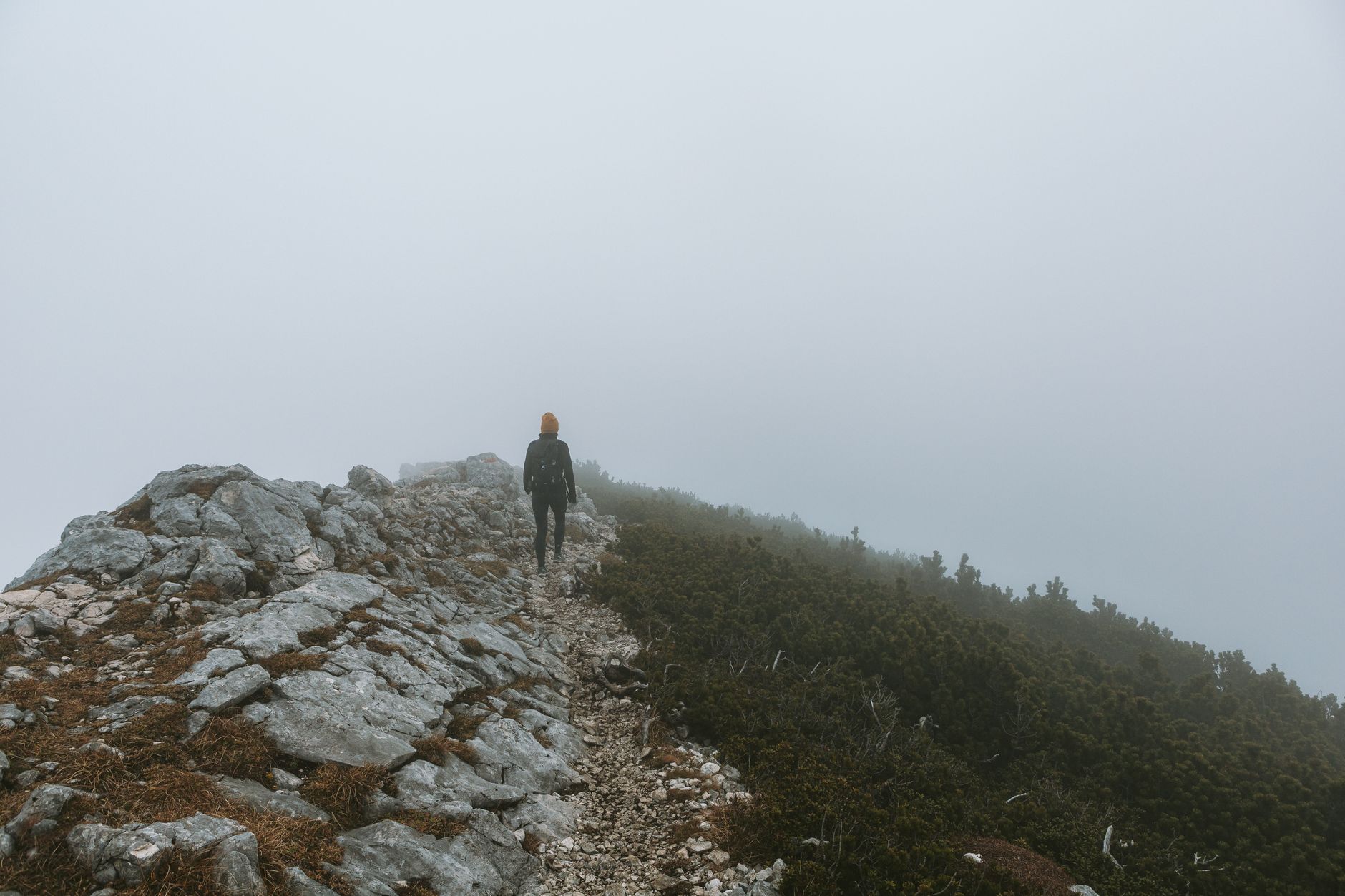
The bank lies two fields up the Moss Road, a long brown cutting in the hill with the grass run wild along its top. The upper half was spent that year — grey turf, crumbly, full of rushes, sods that came up light and sour. The good black ground was all in the end face, deep and solid. And deep in that face was the line. Every bank on the moss has one. The old men had cut down to it a lifetime back and stopped, and the stopping was in the family the way the land was in the family: you cut to the old men’s line, and no farther.
The radio promised a fortnight of dry weather and I had a ferry booked for the twelfth of August. Working the upper bank honest, alone, I would not make two hundred loads, let alone three. On the third day I did the arithmetic twice, standing on the breast of the bank with the sleán in my hand. Then I stepped down past the line and opened the end face.
Past the Old Men’s Line
The first sod below the line weighed twice what the upper ground did, black and tight as turf gets, clean fuel, the sort the rick wants. The second came easier. By the fifth the spade was going in along a seam I had not cut, opening the face as if the ground had been scored there overnight, waiting for a blade to read it. I told myself the frost had been at it. Frost does that to a face; it opens the joints.
I was putting up a hundred loads a day by the end of that week. The sledge ran heavy and I ran light, and there is no work on a building site that balances you the way banking turf does — the whole day one long repeat: tread, cut, lift, thumb, toss; tread, cut, lift, thumb, toss. My footing never went. Each time I stepped down onto fresh ground my boots found flat standing exactly a stride apart, like a floor under the skin of the bog, laid out for a man cutting at just my reach.
The faces stayed warm. That was the part I kept off. June ground is cold to the knuckle all day, but every face I thumbed was blood-warm and slower to cool each morning, until by the second week the thumb held its second on the peat and came away certain the face had pressed back. Once, in the tail of the afternoon, the face under my thumb was warmer than the thumb. I stood with my palm flat on the ground a long moment, the way you steady a tool that is still running. Then I cut on. The tally wanted feeding.
Three hundred and forty loads I banked before the fog came in off the hill on the Saturday night.
The Tally Stick
Granny keeps the rick’s count on a tally stick older than my father, a notch to a load, ten notches to a row. Sunday morning she was at the stack early with the stick and her shawl, and she called me out in a voice I had heard only for funerals.
The rick had fallen. Not spread — settled straight down inside its own walls, the top rows gone, the stack a hand lower than the evening. The yard gate was locked and the dog had slept the night through on the step. A seam of wet crossed the yard gravel, the width of a barrow wheel, out the gap in the hedge and up towards the moss.
Nobody had robbed us. Robbers take the dry sods off the top, and the top rows were all still there. What was gone came from the middle of the stack, from the heart of it, the way heat leaves a mug. My father sat up till three with the lamp and the dog. By morning the rick was down another course and a half, the wet seam had dried, and Granny stood at the stack with the tally stick laid along her forearm.
She read me the figure. I remember it exact; I have cause to.
“Two hundred and ninety-eight, and not a sod more. Your great-granny kept this stick before me, and the stick never once argued with the bog. Three hundred was never ours to cut, love. We hold this bank. Hold is the word. We never owned it.”
Two hundred and ninety-eight was the family figure, older than anyone living could account for. The rick held exactly that by morning, and it never moved again — not through the worst of the January gales, not until it was drawn down burning the following spring.
Cool to the Thumb
I missed the ferry. There was nothing else to be done about it; the words had been said and the account was what it was. On the Monday I went up the Moss Road and cut the honest breast the way the old men had, sideways into the upper ground, a shallow step at a time, and every sod of it fought me. The seams were shut. The spade bound at a hand’s depth and had to be wrung loose, the footing gave under me, and a day’s cutting filled a sledge and a half. Ground that had opened for me like a book for a fortnight had closed like one.
I thumbed every face that fortnight. Not because Granny was watching now. Because my thumb knew what it was signing, and I could not cut on and leave the faces unsigned, any more than you could cash a man’s cheque and tear the counterfoil.
On the last day, dressing the top of the end face, my boot struck stone a foot under the peat. No stone belongs in a bank. I dug it out with the spade and both hands: a flat slab the size of a dinner plate, and on the underside, cut deep and clean, a P, and the year 1911, and the old men’s mark beneath. My great-grandfather’s boundary stone. It was set at the corner of the cutting in his day, on dry ground at the edge of the moss. I found it a foot down, and three yards inside the bank. The bog had come that far in eighty years, and the line the old men cut to had been set off that stone, and the stopping was never superstition. It was a survey, renewed every cut, in thumbprints, by tenants.
My father sold the place in 2004. The neighbour’s machine opens the moss now in a day and a half, cutting down to the mineral and piling the whole age of the bog in black cliffs along the drain. Nobody thumbs anything. A machine has no thumb.
I kept the bank. Four acres of the original turbary, held out of the sale on my one condition, and I take my fortnight there every summer still, cutting with the sleán my great-grandfather forged the head for. My sons have the sense to work indoors. They believe the custom is mine, and in a way they are right, and it is the only part of the arrangement that is mine at all.
The face I cut is a span wide every July. I have measured it with the sleán handle, year on year, and it opens no further however deep I take the ground, and it never closes. Cool, wet, level as a shelf. I cut the family’s two hundred and ninety-eight and not a sod more, and I thumb every fresh face as it comes. And if the bog is counting — and I have forty years of tally sticks that say it is — then it holds my mark on file beside the P of 1911, one tenant among tenants, the signature renewed each summer in living skin.