The Dog on Line 14
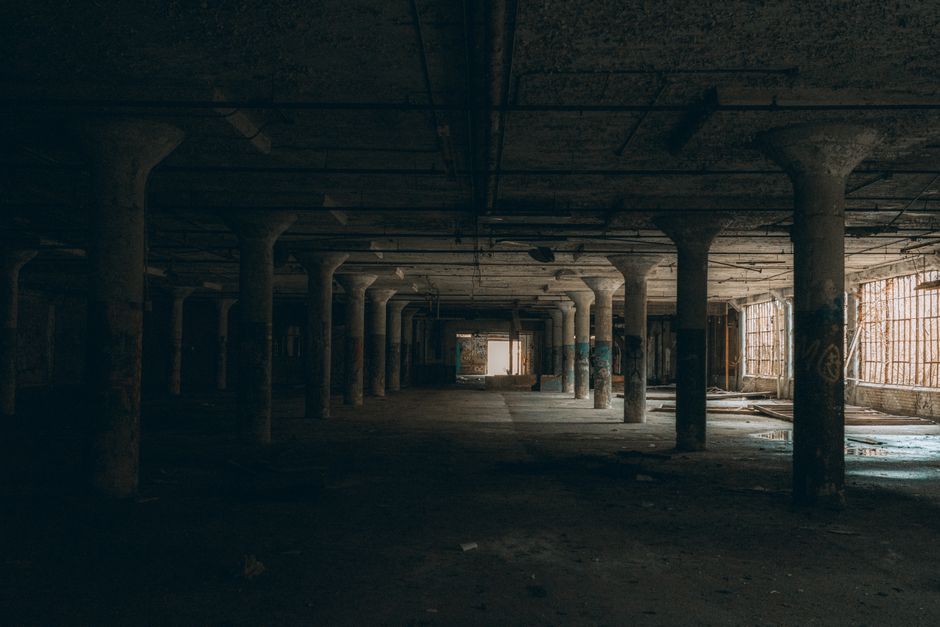
The Ormonde goes dark every June. Pantomime money runs the winter, summer lets the house breathe, and for fourteen weeks the building belongs to whichever flyman the management can afford to keep on. That year it was me. Relief rate, one set of keys, the dock and the grid and forty-one linesets to answer for, and an insurance survey in September that would decide whether the refit money came through. Clean summer, confirmed deputy in the autumn. That was the whole plan.
Line 14 was the first thing Reg Teller showed me the winter before he retired. A batten hung at full out, sixty feet above the boards, dressed with a painted cloth — a wood at dusk, green gone the colour of pond water, trees the width of a bus. The rope dogged at the pin rail with the handle hammered flat, so it could not creep.
“Dogged is dogged,” Reg said, and tapped the chalk board beside the rail. G. WOOD — DO NOT RIG, in letters the colour of old teeth, struck through twice and rewritten under the strikes in three earlier hands, four re-chalks going back to 1934. “She stays out. You don’t rig her, you don’t strike her, and every night at lockup you put your hand on her rope.”
Why?
“Because she comes down if you don’t.”
I laughed. He didn’t. Thirty-one years as deputy does something to a man’s jokes.
The Tally Book
The weight store lives under the fly-floor stairs: cast-iron bricks racked like library books, each with a stencil number and a brass poundage stamp gone brown. Bricks go out to productions on the chain tally, a canvas book hung on a nail, columns for out and back with initials against every line. The survey wanted a count, so in the first week of June I counted. Two hundred and fourteen on the rack. Two hundred and fourteen in the book.
Third week of June, the rope came up slack of the dog at lockup. Not much. A hand’s width of light under the handle.
Rope stretch, I decided. Old hemp does that.
But the tally was out by one. Two hundred and thirteen on the rack, nothing in the out column, and when I lay on my back on the boards with a torch and looked up line 14’s arbor, the arbor that should have run empty — the cloth is light and she has always flown out unballasted — there was a brick sitting in the cradle.
The safety chain was buttoned over it. Whoever loaded that cradle knew how a cradle is loaded.
By the middle of July there were nine bricks and the batten was two feet lower than her chalked trim, and every night the line below the dog drew up tighter, and every night the dog held. A locked system does not move. The rope ran through my fist at lockup taut as a guy wire, and at seven in the morning the wood cloth hung another finger’s width closer to the boards, patient as weather.
I did the sums a flyman does. She wasn’t creeping down to land. Not at that rate, not for decades of creep. She was loading herself. Every brick on the arbor side was over-haul, weight waiting for the moment the dog came off, so that when she came in she would come in all at once, forty feet of steel and iron arriving like a dropped guillotine.
I reported none of it. A summer with an incident in the book was a summer without the deputy’s post.
Land Her in Light
The archive cupboard under the dress-circle stairs holds the prompt books back to 1911. The Green Wood, summer season 1934, Bellingham tour. Act Three, change 14-Q: fly out G. wood — T.V. — and under the cue, in pencil, in the flyman’s own hand:
If she must ever come down, land her in light. Never land her dark. — T.V.
The house incident book had the rest in one line, 11 August 1934: During the Act Three change, head flyman T. Voss went up with the cloth and did not come down. The company struck town the next morning. The cloth stayed rigged, flown out, dogged. The chalk order under the entry is the same order Reg gave me, in the same four words, and every deputy since 1934 has handed it on like a pipe wrench.
I sat on the prompt shelf a long time with that margin note. Land her in light. I was still holding it in my head in August, when the de-rig contractor’s telehandler came through the dock doors with the strike order in the driver’s glovebox — all pre-war flying to be out before the surveyor’s photographer arrived — and the photographer wanted the grid lit, every working light on the board, borders and foots, the deck turned white as a first night for his tripod.
They struck the house cloths first, clean as sewing. Line 14 was last, past ten at night, the lights still up because nobody had got around to killing them. The driver swung the boom in over the stalls to take the cloth’s weight and misjudged his reach, and the boom head caught the batten sixty feet up and bucked it.
I was at the rail with my fist on the dog before the shout finished. Below me, on the white-lit boards, a works lad I didn’t know the name of was coiling slings directly under her, staring up into the lights with his mouth open, and the batten was jumping at the boom’s rhythm like a fish on a line, and I understood the choice with a clarity I have not had before or since. Hold the dog and let the machine tear her down in its own time, snapping, sixty feet of tube and iron onto the boy. Or take the dog off and spill her through my own hands, and land her on my terms.
On a lit deck.
T.V. had written it out for me seventy-nine years early. Land her in light. Never land her dark. A stage is a stage while the light is on it, and what the light shows an audience can only ever be scenery.
I dropped the dog and let her run.
Hemp through split gloves, the whole weight of a loaded arbor hissing across my palms, my arms pumping to keep her short of free fall — four seconds that took the skin of both hands and smelt the way the grid smelt in 1934, I expect. She came down flat and whole, a curtain arriving at speed and stopping, the boom head clear, the crash rolling around the empty house like applause.
Dust in the working light. The boy on his back among the slings, whole, swearing at the driver.
And on the boards, folded on itself under a hundred lamps, the Green Wood. Canvas. Paint. Grommets and a foot of rot at the hem, trees and a painted moon, sixty years of dust rising off it. Scenery, and nothing in the world but scenery. Whatever rule had held that cloth since August 1934 had been satisfied by the terms of its own stage, and it lay there under the light being looked at, which is all scenery has ever been for.
Up in the cradle afterwards I counted twenty-two bricks, chained in, cold. The tally book stood twenty-two bricks out. There were no initials against any of them.
Sixty-Two Kilos
The strike went into the survey file without a single line against the house. The cloth was folded, bagged, and weighed out with the rest of the scrapped scenery — the contractor sells it by weight to a props dealer off the M1 — and I stood at the dock with my hands bandaged to the wrist and watched the driver’s scale settle.
Sixty-two kilos.
I have weighed every cloth in that building. The Green Wood runs forty, wet.
Twenty-two bricks of cast iron make up the difference, and the difference rode out of the Ormonde in a hire van as saleable property, because that is what a lit landing makes of anything: stock. Scenery under light. And a dealer’s rack is unlit, and the dealer buys for theatres, and every theatre that fancies a painted wood at dusk will bring it in low over the boards, and the first landing in a new house is always, always done in the dark, for the fit-up, before anyone thinks to light anything.
The driver held out the delivery note on a clipboard. My signature line sat under the weight.
The deputy’s post, the refit, the autumn season with my name on the fly floor rota — all of it sat on the far side of that signature, and on the near side sat a story about a haunted cloth that would have ended every one of them. I signed. He tore off my copy and drove away into the ordinary night.
The survey passed. The grid is motor now, push-button, forty-one linesets and not a dog among them, and the chalk board went to a skip. My palms healed rough as rope and better for the work.
The delivery note lives in my drawer with the tally book, which is twenty-two bricks out and closes on no one’s initials. The dealer’s phone number is printed along the top of his header, and every month since August I have meant to ring it and tell him to keep that cloth under light. Every month the season opens instead, the calls come in, the deck fills up with work, and the number stays where it is — and somewhere off the M1, in the dark of a storage rack, sixty-two kilos hang waiting for a house with no rule about it at all.