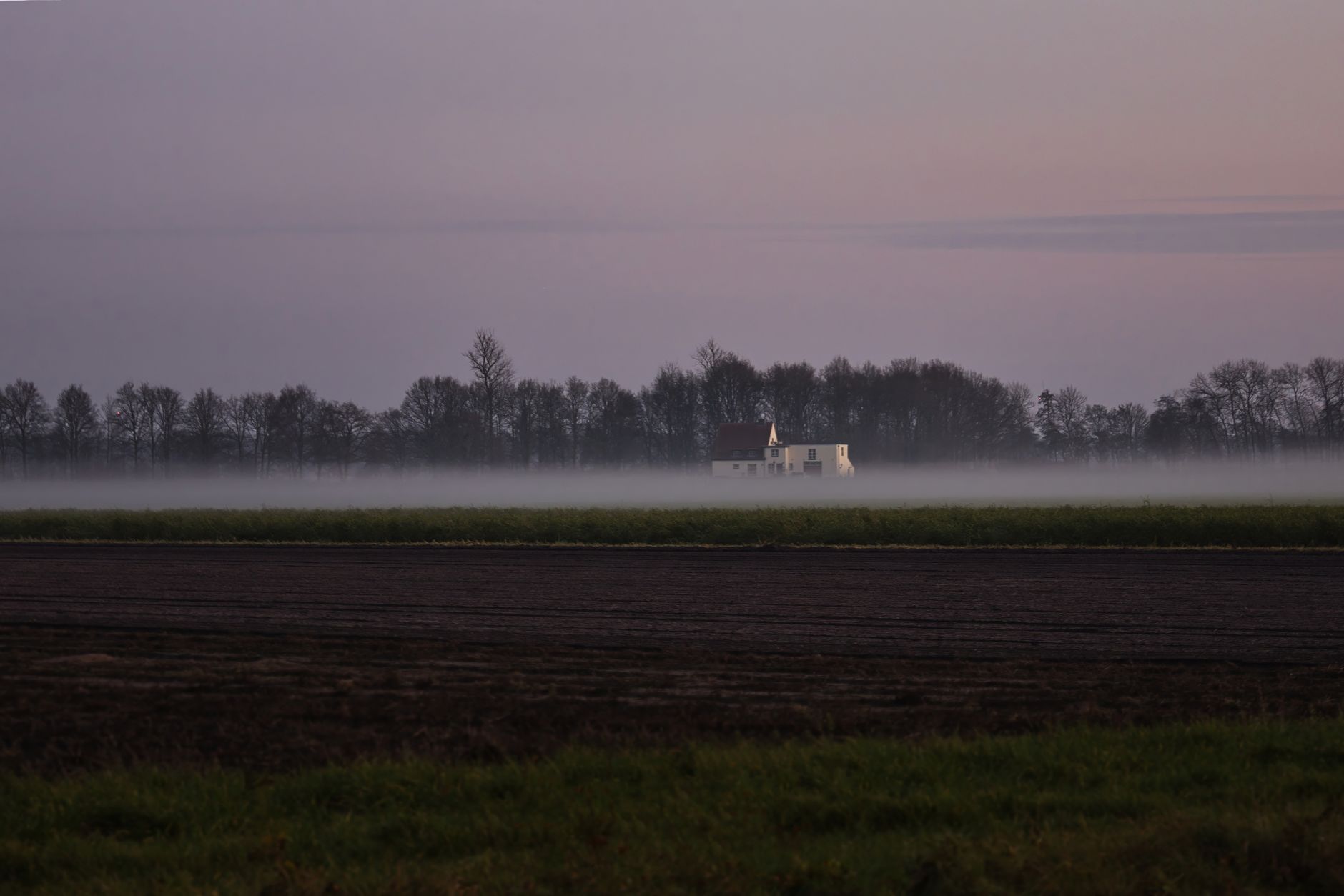
I review geocache listings for the southern counties on Sundays, unpaid, which mostly means telling people they can’t nail Tupperware to war memorials. Guideline Eight: respect the location. The queue was eleven deep and I wanted it empty by Friday, because Friday was the train to Keswick and our tenth anniversary, and Moira had already bought the flask.
The complaint that wouldn’t clear sat at the top. Cloot Well — Harper’s Craig, hidden in 2014 by a visitor from Eindhoven, adopted by nobody, found 611 times.
The message was three lines from a username I didn’t know:
You should look at this one. The rags are gone and there’s a box in the well. I don’t think it’s ours.
Ours. Cachers say that about the strangest things.
The Niche
I grew up in Kirkmaire at the bottom of the strath. The well sits in a hollow under the Craig where the forestry stops, a rock basin the size of a kitchen sink with a hawthorn behind it, and when I was a bairn that hawthorn hung with strips of cloth — pillowcases, a tartan tie, one memorable football sock — because that was the custom. You brought a rag for whatever ailed you. You tied it, you said your piece, and you took nothing away.
My grandmother’s version was shorter.
A word at the well costs a rag. Naebody speaks there for nothing.
Saturday I walked up the forestry track. The hawthorn hung bare. In the basin’s niche, where the water leaves for the beck, a plastic ammo tin sat squared to the edge like it paid rent. Inside: two keyrings, a polished stone, a dinosaur, a plastic soldier, a roll of log sheets fat as a raffle drum. Six hundred and eleven signatures.
The spring itself ran a finger’s depth below the lip, quieter than I had ever known it in October, and I stood a while doing what anyone does with a wrong thing in a right place. I blamed the dry summer. Then I took the log sheets home in my rucksack, because they were saturated and the guideline says owners replace wet logs, and there was no owner.
The Beck
Wauchope farms the two fields below the Craig. I stopped at his gate on the way down and got ten minutes about his troughs — the beck at half its width, the float valves clicking dry by noon, his cows on the piped field supply that was never meant to run in autumn. SEPA had no abstraction notice upstream. Nobody had.
That night I did what I do for a living, which is put two sets of numbers side by side and wait.
The listing publishes its finds with dates. The council publishes the beck’s gauge at the Kirkmaire bridge. I laid find counts against water levels going back to the spring of 2014, and the two lines ran together like railings on the same stair. A spike of finds over the Easter holidays, and the gauge stepped down. Forty-one finds in July, and the gauge stepped down. No rainfall pattern in it. No drought curve. Just signatures.
Six hundred and eleven of them, and every log sheet said what each one had been:
TFTC! Lovely spot, very magical. Took the keyring, left a dinosaur. SL
Found it with the kids — left 50p, took the lucky stone. Log nearly full, owner needs to visit!
Nothing to trade so just signed. Great view!
Just signed.
The custom never died because people stopped being sad. It died because grief got a car park. A word at the well costs a rag, and six hundred strangers had stood at the basin with a biro and said their piece for nothing, each one certain the well was scenery, and the well had met every word the only way left to it.
Water.
Equal or Greater
I archived the listing from the queue screen. That is the reviewer’s whole lever: unpublished means no new finds, and it takes one click.
The logs kept coming for eleven days — people work from old tracklogs, from screenshots — and the gauge kept stepping down, and I understood that archiving stops the spending the way closing a till stops the takings. The money already out stays out.
So I walked up again and carried the tin home.
My father’s cousin Ida keeps the old things for our side, and she never asked why I wanted to know. She said the rags were credit, laid up over generations, and the well had spent them first — the hawthorn going bare the way a battery goes flat — before it ever touched its own water. She said what my grandmother had said, in the same words. Then she added one thing more.
It has to have carried somebody. New cloth is nae payment. Would you hand a stranger a coat off a rail?
Cloth that has carried someone.
I own twenty-two garments that fit me, counting socks as pairs, and that evening I sat at the kitchen table with the log sheets and a tailor’s chalk and ruled an old shirt of my father’s into strips, one per signature, and got forty before the cloth gave out. Six hundred and eleven, minus forty.
The well took them by dusk. A strip tied for the man from Eindhoven who started it, a strip for the family with the lucky stone, a strip apiece for names in three inks, and that week the spring rose against the lip by the width of my thumb. I measured it twice a day. I do this for a living; I can’t help it.
The listing went back up under my own account in March. Not as a box — as a virtual, the old kind, no container and nothing to trade, a place you visit and answer for. The question that scores the find is printed on the page and it has never changed:
How many rags hang from the hawthorn, and is the number higher than on your last visit?
They climb up now and count the tree and log the number. Some of them leave strips, and I’ve stopped guessing which — the lad in the full waterproofs, the woman with the walking pole and the hip scar, the family that drove two hours and tied a sunhat ribbon. The count goes up.
I still pay the backlog. Four hundred and nine left at the spring’s own reckoning, which counts some signatures heavier than my spreadsheet does, and the wardrobe knows it; Moira buys me shirts two at a time and asks nothing, though she hemmed the first batch of offcuts into a quilt, and we sleep under forty words’ worth of strangers’ trouble, if you like.
The trade rule sits on the listing page, the same line I enforce every Sunday in a queue of eleven, word for word:
If you take something, leave something of equal or greater value.
I wrote it out for the listing without thinking. Then I stood at the stone a long time, because the well had that rule first — and in three hundred years of rags, it never once settled for equal.