The March Gather
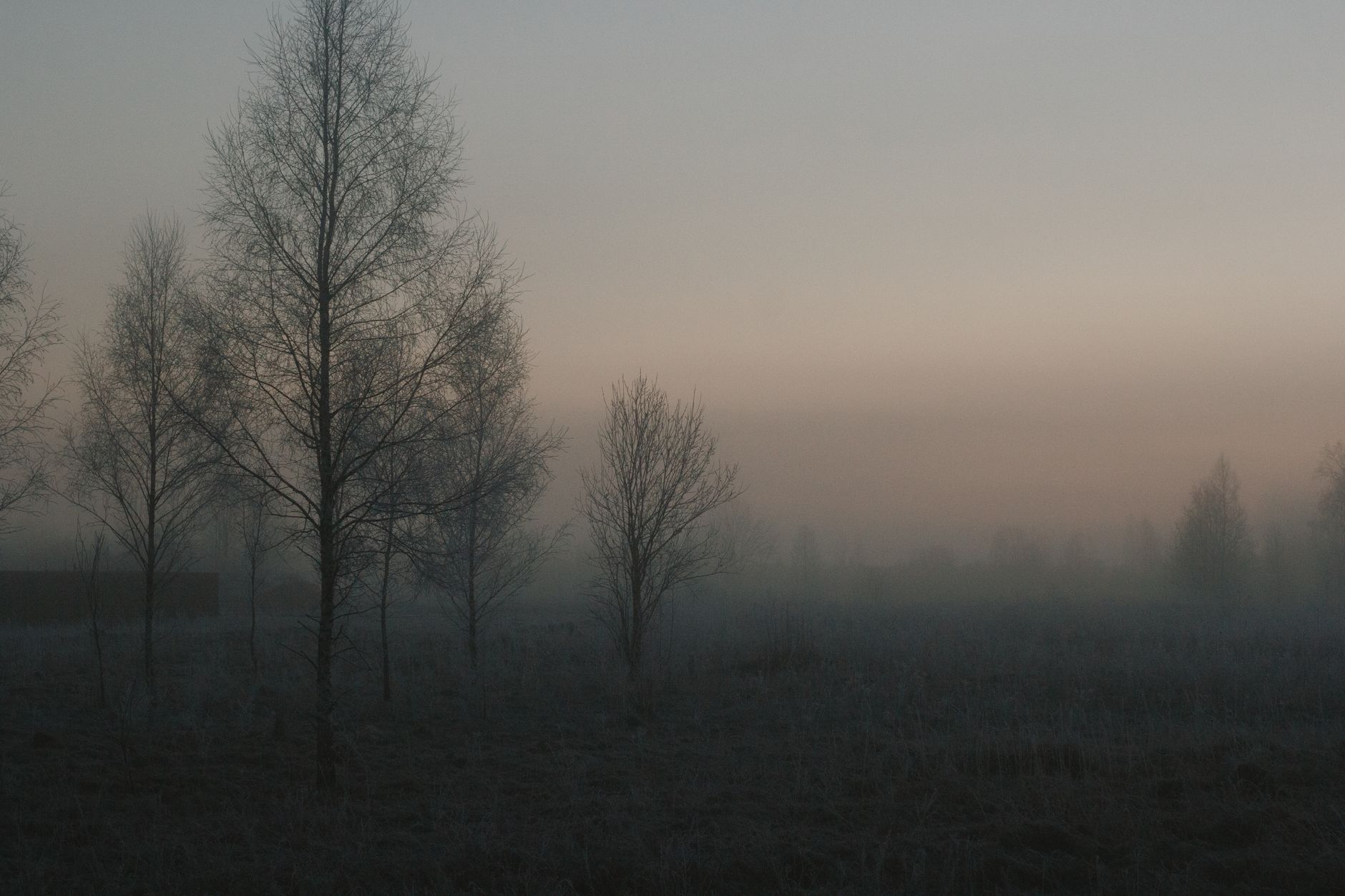
The forecast gave us until dark. Four hundred ewes were still on the top, Michael had the two dogs and I had the stick, and the fog came down at two in the afternoon, flat as a lid.
We knew that ground like the yard at home. You gather downhill ahead of weather — quiet and wide, that’s the whole art, two men and two dogs and no hurry in you. The ewes had swung to it nicely and the first batches were at the intake wall when the other whistle came.
Not ours. Ours is short-short-long, off the fingers. This was in the fog itself, no direction to it, low, and every ewe on the top turned uphill together, the way a gate shuts.
The dogs went out to them and came back to heel with their ears down. A dog that won’t work is a serious thing on a fell in March, and Michael was already walking, so I walked too. You don’t send four hundred ewes up into hard weather on their own. You go.
The fog drummed. Twice it leaned on me going past. Warm. It smelled of wool and winter.
We were gathered. I want to put it plainer than that and I can’t. The flock swung to the high hollow under the cairn and packed tight, the drumming stopped, and warmth came up out of the wool like the top of a stove, and Michael and I were in the middle of it. Bedded. That’s the honest word. Two stray lambs pressed in among the ewes with the fog lying over the whole lot of us like a cover put on.
I want to say we hid. We were put.
Michael was fifteen. Somewhere in the night he stood up. The track wall showed darker in the grey, two hundred yards downhill, and he set off for it, and something turned him. Not caught him. Turned him — body across the line, patient, no temper in it, the way you turn a bolter at a pen gate. He came back into the wool. He went again. Turned again, gentler than a dog and bigger than the shed. The third time I got up to bring him in myself and I was turned too, firm as a five-bar gate and warm as a byre, and I did what a sensible man does when the pen shuts. I stopped fighting and let the flock close over the pair of us.
At first light the flock was gone and the drumming was gone and I lay in the open with dew on me. I found Michael at the edge of the hollow, three hundred yards above the track. He lay in the bracken facing uphill, jacket done up, wool grease worked into both sleeves where he’d been turned, and turned, and turned.
I carried him down to the wall and sat with him till my father came up from Dowrigg with the neighbours. Nobody asked where we had slept. My father looked at the sleeves, then at the hollow, then took his cap off.
At the house my mother stripped my wet things off me, and there on my right shoulder was a mark. Blue raddle. A bar and two clots. No flock in the valley carried it — I knew every mark on that fell the way you know your own handwriting. My mother went at it with turps, then paraffin, then nothing at all, saying less and less. It held all summer like a good mark should. By August it was a ghost. On the first fog of October it was blue again.
What My Father Said
He farmed below the wall for twenty-two more years and never once tried to tell me what it was. In his last winter he had me sit by the bed and gave it to me the way he’d given me the tractor keys, no ceremony:
You’re hefted now. Same as the ewes.
Stay below the wall in gathering weather.
Caught out, don’t run. Bed down and let it fold you. Running is what kills.
And don’t leave the fell for good. It fetched your great-grandfather’s brother back from Whitehaven, and it set him down at the fell gate, and he was dead when it set him down.
There’s a stone in Harlsbeck churchyard, 1868, that reads set down at the fell gate and nothing else. I went through the register one wet spring and found three more men across ninety years, all found on the tops, all facing uphill. The parish paid for those stones. It knows what it’s keeping.
Carlisle
After the funeral I lasted four years on my own. My sister wanted me off the fell, near her in the town, and her boy was ready to take the top flock, so I did the sensible thing. I let the farm to him and bought a bungalow on the east side of Carlisle with a square of lawn and a view of other bungalows.
First hard fog of the November, ten in the morning, I walked to the shop for a paper.
I walked into the fog on my own street.
I came to myself at the fell gate at Dowrigg on the dawn of the third day, standing up, hands greased with wool, boot soles worn through. There’s forty miles of fell between that gate and Carlisle. It fetched me home like a stray tup off the moor, kept me walking through two nights, steered me the way you’d steer a beast along a lane, and set me down at my own gate with the light coming.
My sister had the police out. When I rang from the phone box she cried down the line, and after that she never asked me again where I’d been. Not at Christmas. Not once.
I sat that winter and did the arithmetic the way you do it for stock. It hadn’t punished me. You don’t punish a ewe for walking through a gap; you mend the gap, or you fetch the ewe. It had fetched me. It would go on fetching me, however far, however old I got, gentle as weather the whole way, and one winter it would set me down at the gate like the man on the stone, done up and facing uphill. I sold the bungalow at a loss and came home below the wall, and that was my life agreed to: the farm lane, the town, the fell inside the wall, and no further. I stopped pricing holidays.
The Smit Stick
This year past I did what I’d never dared in thirty-odd years. I stayed below the wall the whole year round. Fog came up the valley twice in the spring and I watched it stand at the wall like cattle at a gate, and it went away. The mark faded. By June it was a ghost; by October it was gone, and my shoulder was my own skin for the first time since I was twenty-five.
You’ll think I was free.
First hard fog of November came right down to the door, first to touch the step since I don’t know when. On the step, in front of the latch, sat a fresh pot of raddle with the fat still soft, and a smit stick cut from hazel, bark shaved back, the end shaped to a bar and two clots. No maker. The fog stood off the gate the way a dog stands off a pen, waiting on the sheep to walk through themselves.
I stood a long while with the pot in my hands. I thought about Michael and his sleeves. I thought about forty miles and my boot soles, and my sister’s face down the phone line. I thought about my nephew, who is young and strong and doesn’t yet know which whistle isn’t ours, and what a fetch like that would do to a man with a young family. Then I thought about it at its own scale, which is the scale of weather: it had decided its stray would be kept right without the handling. A pot of raddle against a walk of forty miles, every autumn, for the rest of my life.
That’s not a bargain. That’s husbandry.
I dipped the stick and marked myself at my own door, right shoulder, bar and two clots, the way I’ve marked ten thousand ewes. The fog went up off the gate like a dog told that’ll do.
I keep it fresh now, myself, every autumn. I go up the top in October in any weather I like, and it lets me; a thing well marked is a thing let be. It’s easier on us both.