Both Accounted
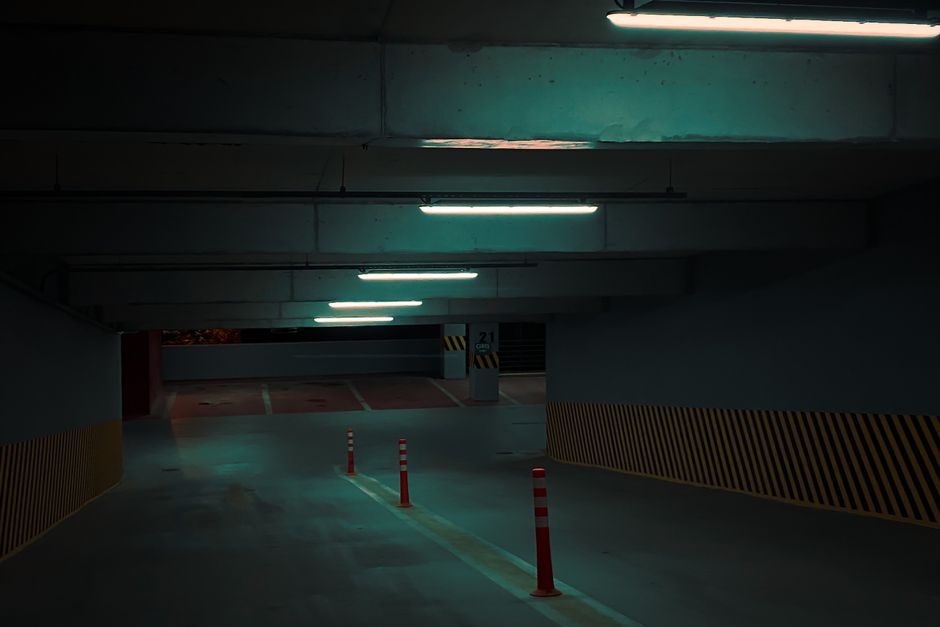
Col went up the basket and I stayed on the ground. Twenty years, and it never changed. He worked the lantern; I footed the rig, chocked the wheels, walked the cone pattern out and back. Between us we kept four hundred columns alight from dusk to dawn, every street the borough would own up to.
The check came at ten past ten, first round of the night. County control on the radio: Nine, confirm both accounted. Col answered. Senior man answers. He’d been answering since 1971 — four years before I ever set foot in the yard — first with old Mick Fenn, then with me, and I never once wanted it otherwise. You learn where you stand. You stand there.
That winter the yard went out to tender. The borough wanted shot of its lighting the way it wanted shot of everything, and the talk in the hut was that the contractor would keep routes and shed men. In January I’d passed my platform medical on the quiet — my own idea, up at the Buxton clinic on annual leave — so that when the lists were drawn, Lighting Nine would show two certified hands. One unit, two certs. Harder to halve. I meant to tell Col when it was done.
His granddaughter came on a Tuesday in February, six weeks early. Derby. The word came up to the yard at half nine, while he was still signing out the rig. Twenty-six years without a shift off, and he’d have run the round first and driven over after. I took his keys off him at the tailboard and sent him up to that ward smelling of sodium and wet wool.
Control don’t care for stand-downs. A one-man Nine is a form with no second line, and forms with no second line come back with queries. So at ten past ten I keyed the handset and answered the check myself, for the first time in my life.
Nine. Both accounted.
It went out calm as that. A kindness, sized to fit a radio.
The Flood of ’89
The solo round ran smooth. Too smooth, I thought at the time — every depot gate open before I reached it, every fault exactly where the card in the column door said it would be, the whole borough laid out like a room already walked through. Once, at the subway columns on Croft Lane, my own handset clicked and a voice said receiving half a beat behind mine. Duplex bleed, I told myself. The county sets did that near the mast.
We ran it lopsided through February while the baby fought — Col on the hospital runs, me taking the odd round single-handed. Eleven, all told. Each night, the check, and my answer, and that half-beat click.
When we were back two-handed, the overlap started. Both reaching for the card in the column door at once. Both saying receiving. Both stepping left at the tailboard. He laughed it off — getting old together, he said, like married folk. I laughed too. It was that or stop the truck.
The first thing to go was the flood of ’89. The Saturday after we were properly paired again, I rang him to settle something — whether the water had come as far as the tax office or stopped at the arches. We’d gone out in a punt borrowed off the rowing club, live cables down everywhere, lanterns floating past us in the road like dropped coins. I could remember the punt existed. He could remember the rowing club. Past that, neither of us could get. The water, the cables, the lanterns lifting past the shop fronts: gone, like a page read so many times the print has lifted off it.
Tuesday night, footed at the foot of Slack Lane, it all played back. Whole. The river smell filling the cab, Col’s arm round a column to keep his feet, me laughing till I couldn’t foot straight. Every bit of it, running between log-on and log-off like it was kept somewhere lit.
I said, “Remember the flood.”
He said, “Aye.” Quiet. He was holding the same reel of it I was.
Neither of us said the obvious thing, which is that we’d each rung the other on Saturday and found nothing.
The Christening
His daughter was christened at St Aidan’s in ’77, my first winter on the yard, and I stood godfather. There’s a photograph of it on Col’s mantelpiece: me holding her, twenty-six and terrified, his mother-in-law’s hat on the chair beside me like a second guest. The fact of standing godfather I still had. The day itself — the font, the do at the Railway, the speech I made — had gone wherever the flood went.
I tested it, and I’ll put the test plain. At home, of an evening, off the clock: photograph only. On shift, footed at Barker Gate where the granddaughter night had started: the whole do played out, warm and complete, down to the hymn his mother-in-law demanded twice.
Whatever the sign covered, it kept. And it was widening what it covered. The darts final — team name Nine, trophy still on his shelf — went in by March. Our one holiday together, Blackpool in ’92: gone from both of us by April. Our wives could still talk Blackpool across a tea table. We’d nod along like men hearing about a place we’d once driven past. Each man’s own past stayed put — my father’s funeral, my honeymoon, my twenty-year war with the council tax, all still mine, right where I’d left them. Only the shared went. The friendship was being paid into the unit, and the unit paid it back out an hour at a time, on the clock.
Col went into control about it before I did, and a clerk read him off the log:
Lighting Nine. Two-handed, continuous. 1971 to date.
His name and mine on every line, including the eleven February nights only one of us had walked. Both accounted, in my voice-print, eleven times over.
Split the Sign
I went in myself in April and asked for the sign to be split. Nine-A, Nine-B. Two single men, two clean lines.
The controller was decent about it. He said a split retires the unit — that’s the arithmetic. The sign, the rounds book, the log, the whole continuity: retired means retired, and everything the unit holds goes with it. “You’d be two separate men,” he said, “with nothing between you but what you can remember.” He looked at me while I counted what that came to.
I withdrew the request at that desk. I want that plain. No second attempt, no appeal. Twenty years is not a thing you sign away to save the parts of it you can hold in a house.
The contractor took the routes in May. They kept Nine. Col’s hip went the same month — the platform medical pulled him off the baskets, and he retired on the decent terms they were giving the old men to clear the books. They offered me a supervisor’s post. Days. A badge, a van, an office with a kettle in it. Everything I’d been angling for since January, handed over at exactly the wrong price.
I told them I was a night man. They wrote it down as a preference.
I run the Nine round now with a lad from the agency, twenty-two, up the basket because my cert says I like the ground. Between ten past ten and half six, the whole twenty years plays whenever I want it. The flood. The christening, hymn and all. Col’s face the night his granddaughter came. I can stand in it up to my neck, on the clock.
Off it, we ring at Christmas. Four minutes, this year. Two men listening for a shift to start that neither of us is on.
The check still comes at ten past ten. I answer for both of us.
By the sign’s books, it’s true.