The Machine in the Lobby
There is a rule at Marthrow Town Hall that no noticeboard carries. Take your ticket from the desk. Never from the machine.
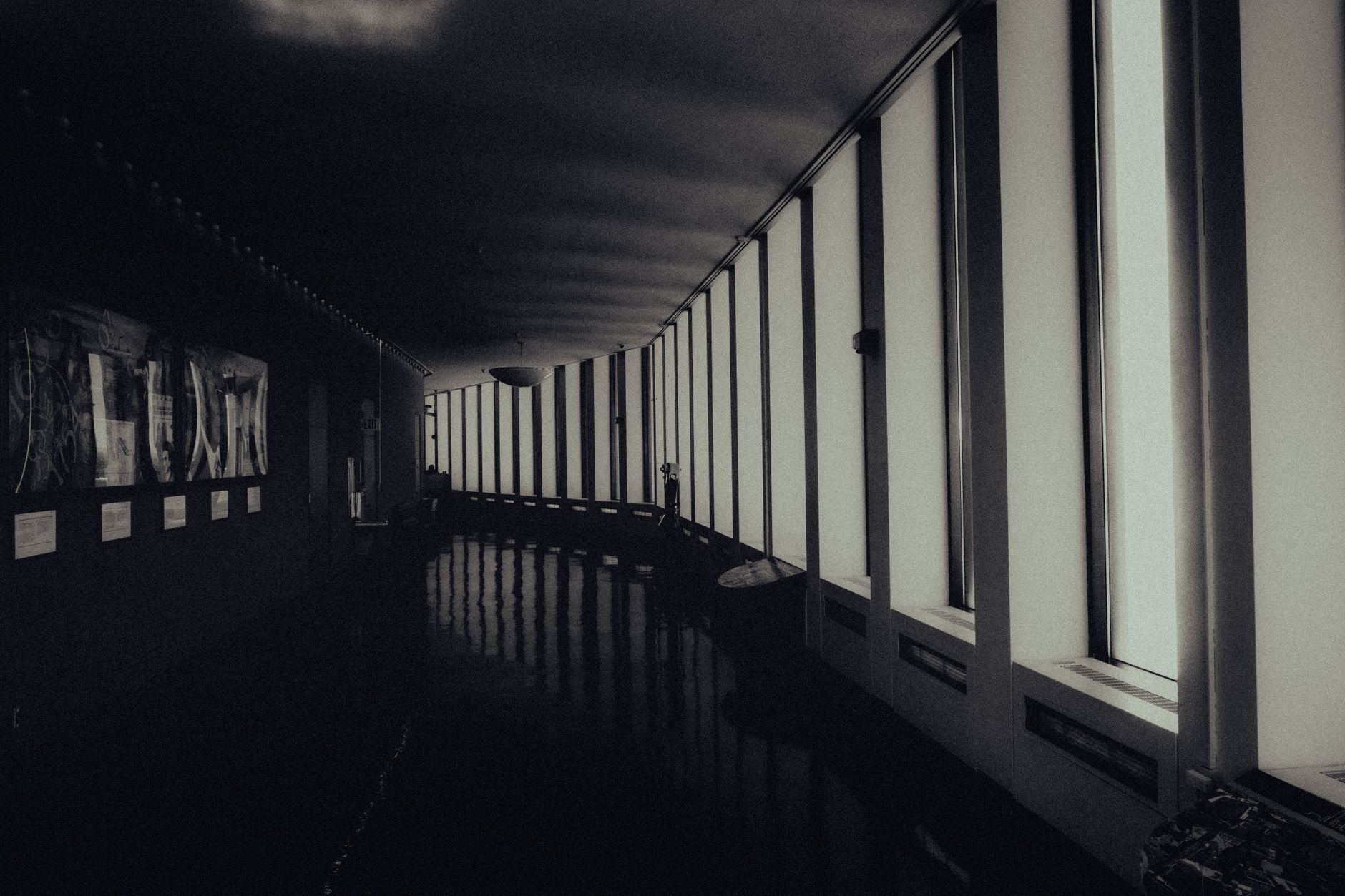
The machine came with the building and stayed when the magistrate’s court left in 2003. Iron case, brass lip where the tickets tear off, a paper roll behind cloudy glass, a flap along the top that shows the number being called. The electric works were cut the week the counter went digital, and that ended nothing, because the movement is clockwork and clockwork does not read the refurbishment schedule. It stands by the barrier with its cable coiled at its foot like something waiting to be claimed.
Ruth in the archive gave me the rule my first week of running lodgements for the firm. She had it from the caretaker, who had it from a porter who swore he watched the 1977 call: a man in a donkey jacket answered 2916 at seven minutes to five on a Friday, went through the door behind the counter with the commissionaire, and came out four minutes later carrying his hat in both hands.
“If it clicks while you’re waiting,” Ruth said, “that isn’t your business. Take your documents to the desk, get your stamp, go home on time.”
I filed that under the same heading as the fourth-floor lift and the tea that never runs out at funerals. Office lore. Every workplace keeps a room it doesn’t clean.
The Draycot Street Objection
The refurbishment took the ticket terminals out in October, and on the last Friday of the month the desk was down to handwritten chits and a queue that bent twice past the barrier. I had the Draycot Street objection in my bag: twenty-three signatures against a three-storey block on plot 118, where the new gable would stand nine feet from my grandmother’s kitchen window. Cut-off was 4:30. At 4:12 the queue held eleven people, the counter held one officer, and the chits had run out somewhere behind the partition.
The machine clicked while I stood reading the notices. Once. Dry, like a knuckle on wood. The flap said 3401.
I looked at the flap, then at the clock, and did the arithmetic busy people do, which runs on minutes and nothing else. I put my palm under the brass lip and pushed the tab.
3447.
The roll was fresh. Someone had loaded it, and nobody at that counter would admit to loading it. At 4:15 the ticket went into the lodgement with the signatures, and the officer copied the number into the reference box without being asked.
“Old run,” he said. “It’ll sit with the parcel.”
Stamp. 4:19. Acknowledged. I was down the steps before the reference sank in, because it was not 3447 with this year in front of it. It was 3447 with a year behind it. M/1961/3447.
The 1961 Volume
Tuesday’s post brought the firm a letter typed on a machine with a lifted r.
REOPENED MATTER M/1961/3447 — DRAYCOT YARD, PLOT 118
Attendance of the interested party is noted. Determination will follow disposal of outstanding matters on the parcel.
I had noted no attendance. I said so to the letter, and then, because I am what I am, I checked the register. Our objection: acknowledged. The application: suspended. No column anywhere offered a reason for either.
On Wednesday the counter clerk called me Miss Mee. I corrected her. She apologised without lifting her eyes, wrote it again the same way, and pushed back a slip that said it too, in her hand. Miss E. Mee, interested party.
Nan’s maiden name is Mee. She was born in the end cottage. On the phone that night she said her grandfather once waited out a whole morning at the town hall over the yard and was sent home uncalled; weeks later a letter arrived to say the matter had been dealt with in his absence. He kept that letter. She keeps it now, in the tin with the christening cards, and I heard her set the tin down without opening it.
Ruth pulled the 1961 ticket ledger out for me on Thursday, unprompted, which should have been warning enough on its own. Columns for NUMBER, ISSUED, CALLED, PRESENT. The row for 3447 read 14 March 1961, 22 March 1961, and a blank, with adj. s.d. pencilled in the margin.
“Adjourned sine die,” she said. “Without a day. People hear it as finished. It means no day was fixed.” She turned the ledger so I could see the pages before it, forty years of numbers, every blank in the PRESENT column matched later by a fresh issue date in ink as old as the first. Nothing adjourned ever closes. “It isn’t ahead of us, love. That’s not the trick of it. The trick is it never left.”
Seven Minutes to Five
The residents’ group needed the acknowledged copy for their appeal window, and the desk shuts at five, so on the Friday I went back at half four and stood at the barrier while the lobby emptied. The workmen’s radio died somewhere above us. At 4:43 the machine clicked, and the flap said 3447.
“Room three.” The late-desk clerk was nineteen at most, hi-vis over his hoodie, working through a meal deal by the door. He didn’t look up either. “You’ll be the party?”
The room held two chairs, a desk lamp, and a grey file tied with string that had been retied many times. He read from it in the voice they use for departure boards.
Objection to structures exceeding one storey over the yard adjoining numbers 1 and 2, Draycot Cottages. Paragraph four: the undertaking given and to be kept, that the yard and the air above it shall remain below the level of the first-floor windows of the said cottages.
“Do you maintain the objection and the undertaking at paragraph four?”
I thought about the gable, nine feet of it. I thought about the morning E. Mee sat downstairs in this building and waited for a call that had gone out seven minutes before anyone arrived. “I maintain it.”
“Sign as party. Print your name under.” The pen was ordinary. The paper took the ink the way blotting paper takes it, held it dark for a second, then let it sink down to the brown of the rest of the page. He stamped DETERMINED across the corner, carried the file to the stack, and untied nothing on the way.
“You’ll be called again when there’s business on the parcel,” he said. “They’ll write to you. Or you’ll hear it. Mind the barrier.”
The application was refused in March. The notice ran to four lines and cited an outstanding undertaking on the parcel, registered 1961, and Nan cut it out for the tin. The yard is still a yard. The window still gets the afternoon.
I lodge by post now; the desk stamps post same as anyone. On Fridays I cut through the lobby on my way to Nan’s and read the flap the way other people check departures. 3402, all spring. Two numbers since March, and the ledger’s last full year called six in a single month, so I have stopped doing the arithmetic in years.
There is no column for how long the roll is. Ruth has looked. The paper is original to the machine, the machine is original to the building, and the building, so far as anyone can prove, is original to the town.
I have told one person, the way you do. She asked what the rule is now, and I gave it back in Ruth’s voice: never take a ticket, and if it clicks while you’re waiting, that isn’t your business — finish, get your stamp, go home on time. It holds. But I keep my ticket in the tin at Nan’s, next to a letter from 1961, and on the quiet Fridays, when the light over room three is on and the flap sits between numbers, I can’t swear the rule was written for the queue at all.