Line Nine
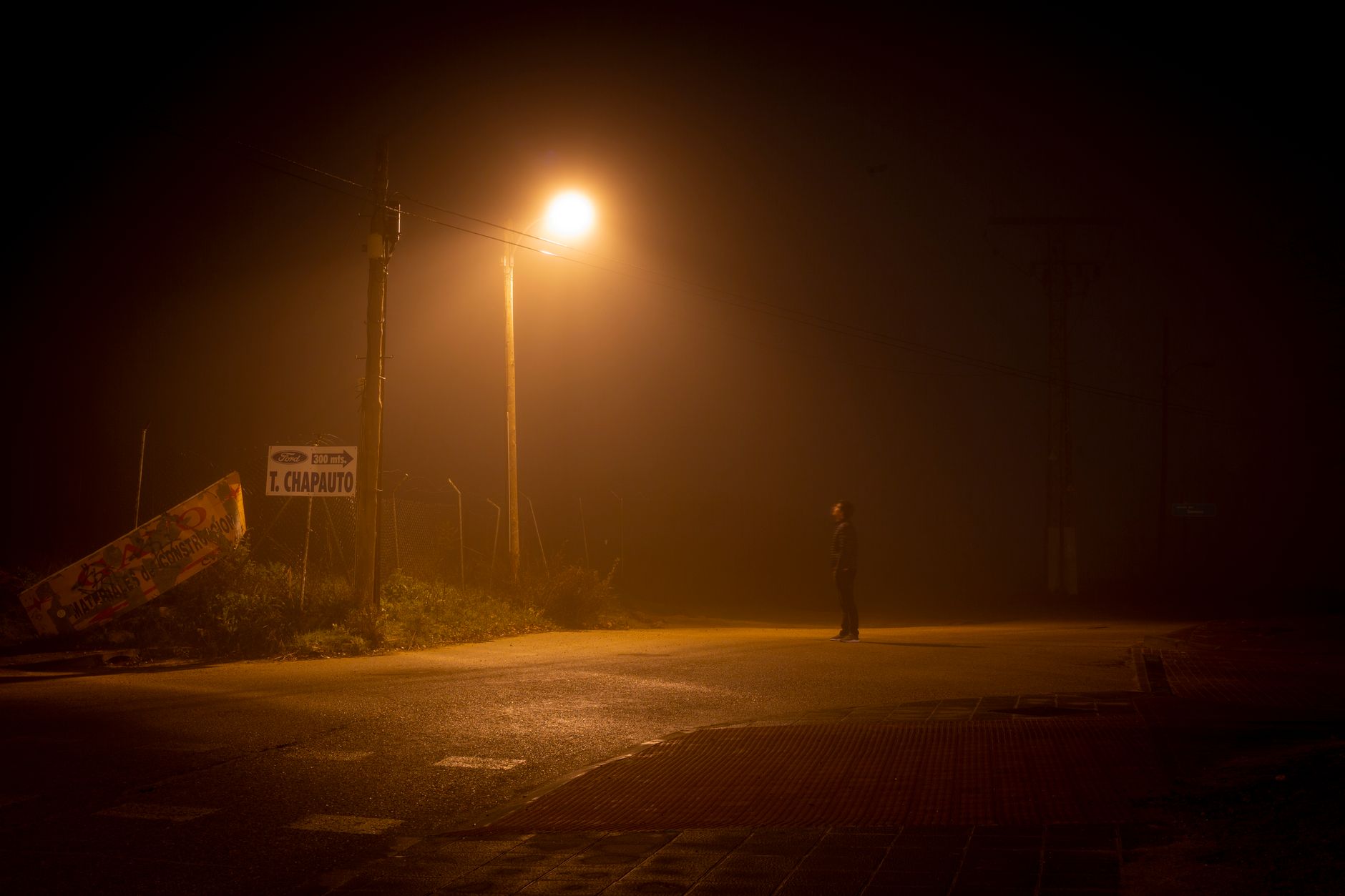
The email came on the first Tuesday of November. Subject: Fell 2 — Incomplete Treatments. Inside there was a map of my route done in green, and on the top stretch, where the road climbs out of Weirclough and crosses Slape Edge, a red dash.
Slape. It’s an old word round here. It means slippery.
I’d run Fell 2 three winters and never treated that stretch. Neither had Vic Hollins, who ran it thirty-one years before me and handed it over with one instruction: salt to the marker stone, turn. The new telematics box didn’t take instructions. Spinner speed, ground temperature, tailgate camera — every frost morning the satellite looked at bare tarmac up on the Edge and wrote missed treatment in its ledger. Three flags put a mark against my name. The KPI review was the fourteenth of November, and in April the fell route went permanent: days, home by seven. I’d told my wife that was us straightened out.
That night I salted it.
Narrow up there. Dropped edges, no passing places, the moor coming at the headlights. I ran wet salt at forty kilos a lane-mile, the spinner singing, and thought nothing except that the dash would turn green in the morning.
The dash turned green. And at four, running back down, my lights picked the stretch out clean. Dry. Both lanes, the verges, the wall bottoms. Not washed — gone. Two tonne of salt doesn’t dissolve in four hours of hard frost, and it doesn’t blow into a wall with no wind. I sat at the marker a minute with the engine ticking, then came down the long way and said nothing at the depot. A grown man doesn’t stand at the board at shift change and talk about disappearing grit.
The Book Under the Seat
The flags stayed off. That was the trouble — the box loved the Edge now. So I kept treating it, and the mornings started coming back wrong.
Footprints, first. Down the middle of the running edge, pressed clean into the salt crust where the damp had set it. Bare feet. An adult’s weight — the heel of each print had gone deep into frozen hoof-mud where the line crossed the gate apron at Home Close. One set, coming down. I paced it to the shooting gate and told myself ramblers. Ramblers, in November, barefoot on the top of Slape Edge at minus four.
Then Rennie’s ewes. Five of them at the Home Close wall, kneeling. Forelegs folded under, heads up, frozen like that, every one facing the road. Sheep die lying over on their sides when they die of cold. They don’t kneel. Rennie stood a long while with his hands in his jacket and then said the frost had done it, because Rennie is sixty-two and alone and there was nothing else in the valley to say.
I took a stone in the hopper on the twelfth, and while I was under the body with the torch, a book dropped on my head. Taped to the seat base. A blue route book, FELL 2 stamped on the cover, one line a winter, three different hands, back to 1947.
- Run all winter. She got to the chapel. Paid the lamplighter. Road shut itself.
- Frosts. To the marker, turned.
- Same. V.H.
The back page was Vic’s ballpoint, written plain as a lorry check:
Frost to Candlemas — treat to the marker, turn.
Never set foot on Slape. She counts treated nights.
Don’t look for her in the mirrors.
Folded inside was a cutting gone brown at the creases.
LAMPLIGHTER FOUND ON SLAPE EDGE. Thomas Ferriby, 61, of Weirclough, was found at the county boundary stone on Thursday morning. The road, which had carried traffic all winter, froze over the same night and remained closed until March.
Nine fields from the marker to the chapel wall. After that I counted treated nights off against what the mornings brought, because I couldn’t not. The line of her walked one field further down every night the salt went on. Past the shooting gate. Past the quarry bend. The blackthorn in the strip above the wall budded, then broke green in December, in a band the width of one walker; above the band and below it, the hedges stood bare. On the ninth night the prints reached the chapel wall, and the paper van driver told the depot he’d take the Slape turn no more, and didn’t say why, and nobody asked him twice. Past the wall is Back Weirclough, and I started taking the long way into town.
I did what the back page said. To the marker, turn, eyes on the white line. In the mirrors the road behind was only ever the road. I pulled the nearside one round anyway, so it showed me the sky.
The Marker
The coldest weekend of the year came in the third week of December, minus nine in the forecasts, and on the Wednesday a main burst under the valley road and took the A-road out. That left Slape. The depot was told to run it open round the clock — treatment hourly, fuel tankers escorted over the Edge — and the county engineer came on the phone saying the word resilience until it meant nothing at all.
I unplugged the spinner loom in the yard and reported a fault. The box had watched me do it, and said so, and they stood me down pending the data. They called Meridian Highways, whose nearest gritter was forty minutes out with a driver called Danny who had never put a wheel on Slape in the dark.
I rang Vic. He asked how many treated nights. I counted them out to him — nineteen — and the line went quiet long enough that I checked he was still there.
“Stay in,” he said. “I’ll go up.”
I drove up anyway. Parked this side of the marker and stood at the stone with the engine off, because standing at home would have been worse. Around midnight the Meridian beacon came over the crest, orange going and coming, a spinner working under it. The sound stopped somewhere above me. The beacon held still on the hill a long time, and then it went dark. I rang Vic’s mobile until the cold walked my fingers, and I stood at that stone till the sky went grey, and I did not step past it.
Meridian’s driver had walked down into town through the night, white as paper. He told them an old feller had come up the middle of the road swinging a torch, reached in and shut the spinner off, and said the road was closing. Danny was twenty-two and forty miles from home, and he did the sensible thing and walked down.
Rennie came up with the dog at first light and we went past the stone together. The gritter stood square across the carriageway a hundred yards up, spinner dead, and behind it Vic’s old pickup. A line of salt crossed the road at the marker, poured by hand out of the hopper, thick as a windowsill, one set of boot prints going up to it and none coming back. Vic sat against the stone with his coat buttoned to the neck and his cap on his knees, gone the grey of the morning, and there was no frost on him anywhere.
The road glazed over by noon. A thumb thick in six hours of dry cold — carriageway failure, barriers, no argument from the county. Slape Edge closed for winter, and her line ended at the chapel wall, and I have done the arithmetic a hundred times since and it never comes out different. Nineteen treated nights of mine put her in the town. One keeper took her back.
Candlemas
My suspension evaporated when the burst-main inquiry started looking at the burst main. I’m on Fell 2 yet. There’s a box on the van that says every metre of that route is treated, every frost night, and I enter it myself, at my kitchen table, before the run. Nobody audits at three in the morning. The road shows what I let it show.
I salt to the marker and turn. Once a week I stop, get out, and pour a double handful over the stone. The salt is gone into the grass by the next pass, the same way it always went off the running edge, and I don’t study that overlong. The book rides under the seat with my line added now, in my hand, under where Vic’s was:
2025-26. To the marker, turned. V.H. paid. Road shut.
In April I got the permanent route. Home by seven. My wife says the winter took years off me, and I let her believe it was the shifts.