The October Revision
The revision came through in the second week of October 1999, mimeographed at the city office and pinned to the crew-room board with one line struck through in red pen: from the 11th, the 23:14 down would no longer halt at Mizunoe.
Halts at Mizunoe are discontinued. No boardings recorded.
Thirty seconds a night. Okabe from operations rode the first run under the new timetable to see it obeyed. He wrote in the margins of everything, including the weather. In spring there would be transfers, and a conductor with a clean winter behind him could ask for the city line.
At Katabami an old man in a rain cape caught my sleeve at the door. A face like the ridge paths, all weather and no shade.
“It stops tonight, doesn’t it,” he said. “At Mizunoe. It always stops on the fourteenth.”
“There’s nothing at Mizunoe,” I said, and said it well, in the flat voice of a man who knows his timetable, because Okabe was two steps behind me with his pen out.
The old man looked at my hand on the door lever. Then he stepped back and stood in the rain without getting on.
Okabe wrote something.
Eleven Lanterns
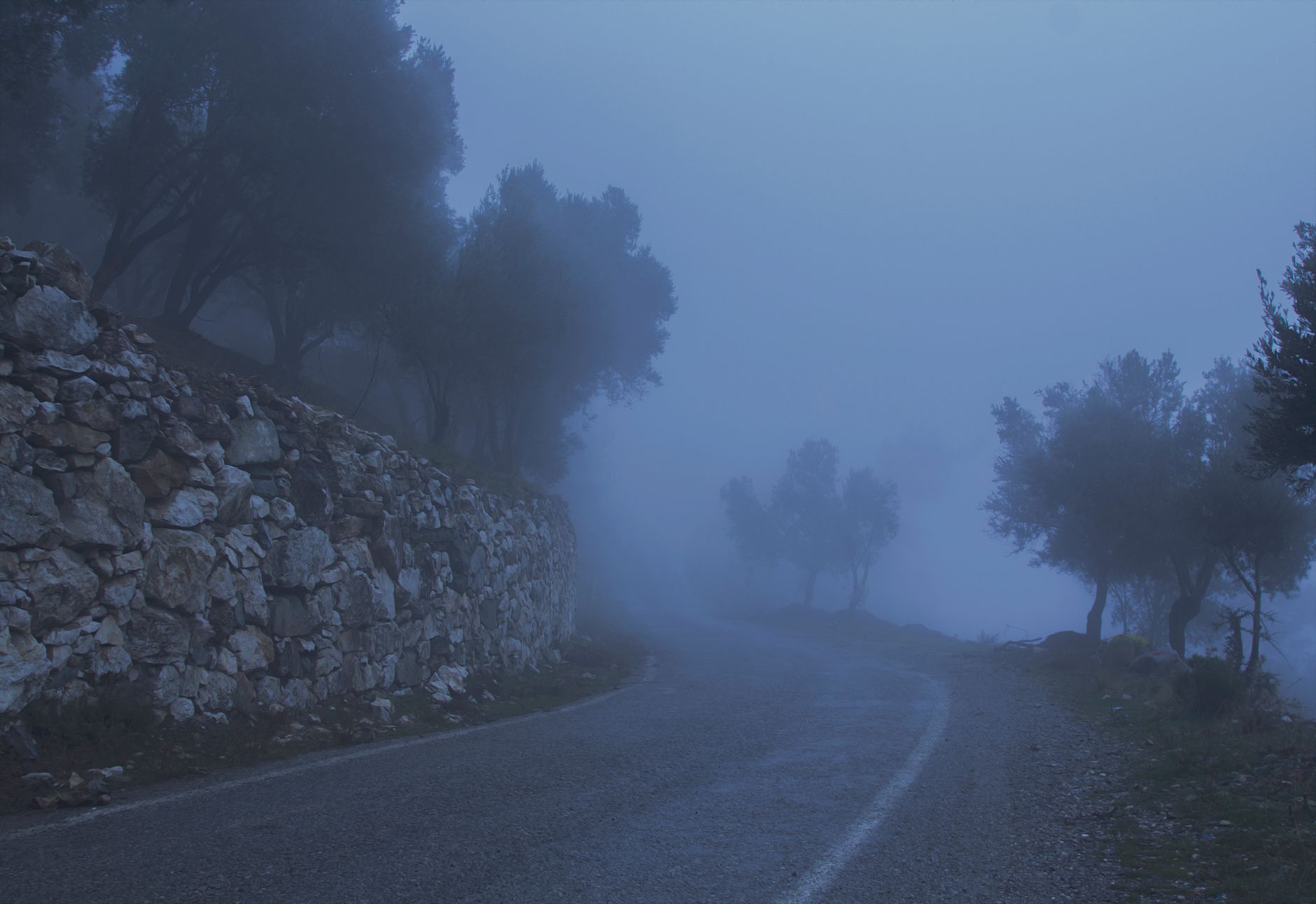
Mizunoe is a plank platform at the end of a ridge path, an hour’s walk from the road. One lamp standard, no bench, no shelter. My grandmother lit that lamp on the fourteenth of October for fifty-one years. Before her, her father. Before him, a man the notebook calls only Older Brother, lost at the dam works in 1934.
The railway paid her nothing. In the railway’s books nothing was lit; there was a working rule older than anyone who could explain it, that the last down train halted thirty seconds at Mizunoe, and there was an old woman the valley assumed was sentimental about it.
Her notebook lived in the kitchen drawer, string-bound, soft with age.
14 Oct. Wind off the dam. Eleven lanterns. All away by 23:46.
14 Oct. Rain from early. Eleven. The old one waited apart. Went at the last.
14 Oct. Frost. Eleven.
Eleven, eleven, eleven. Fifty-one fourteenths of October, and never ten, and never twelve.
She went into the prefectural hospital on the ninth. On the tenth the revision was posted. Back in September she had said to me, the fourteenth, take the lamp, you know the path, and I had said yes the way you say yes in September, when the thing is small and far away and belongs to somebody else.
On the fourteenth I was on Okabe’s train with my tally book, being the conductor the city office could approve of. The lamp at Mizunoe stayed dark for the first time in fifty-one years.
One More Than the Count
A tally is paper. You walk the car, you count heads, you count tickets, the numbers agree, you sign. On the 19th they didn’t agree. Nineteen tickets, twenty heads.
The twentieth stood where the doors would have opened in the years when they opened at Mizunoe. A good dark suit, dry shoes, dry shoulders, on a night the wipers could barely keep up. At Yaito he got off with the living and went up into the town. Nobody on this line owns a suit like that.
The next week the gap was two.
By December it was five, and I had stopped pretending the arithmetic would mend itself. A woman in summer cotton on a night of hard frost. Two men in the shapeless indigo of dam labourers, a cut of clothing I knew from my grandfather’s photographs and from nowhere else. They never sat. They took the straps like men waiting out a shift, and they got off where the living got off. The stationmaster at Yaito lost his brother in the spring. In January the brother rode four nights running, and after that the kiosk stayed dark.
Nobody counted but me. That is the whole of what a tally is: a private agreement between one conductor and a piece of paper. I could have written nineteen heads as easily as twenty, and for a while that was a comfort. What a man can falsify, a man can ignore.
In January my grandmother was down to yellow skin and the hospital’s paper blankets. When I ran out of things not to say, I told her about the fourteenth. About the suit. About the gap, which was six by then.
She looked at the window a while.
“The dead of this valley were promised one ride a year,” she said, “on the night the year turns cold. The company gives the stop. We give the light. Neither half is any use alone.” She moved the blanket off her wrist with an effort, the way she used to lift the lamp’s glass chimney. “You didn’t take the light.”
“I was on the inspection run.”
“You were seen,” she said. Which was worse, and true.
She died in February. We buried her in her railway cap. She had asked for it in a voice the nurse said was not to be argued with.
The Keeper’s Hand
In spring the transfer list went up and my name was on it, city line. I took my name off. Nobody asked twice. The stationmaster had his own reasons for leaving the kiosk dark.
In April I wrote to the city office asking that the halt be restored, one night a year, thirty seconds. The reply came in June, under a section chief’s seal:
Mizunoe halt has no lighting, no inspection record, and no staff. A stop cannot be authorized. There is no facility at that location.
I know what stands at the end of the ridge path, and so did the men who wrote the working timetable in 1902, and it cost them thirty seconds a night to know it.
On the fourteenth of October I walked out with the lamp and lit it at ten. Clear night, wind still. When the 23:14 came down the valley I stood where she stood and swung the lamp the full arm-swing, the old signal, the one that means stop, you are wanted.
Ueda slowed. Fifteen years of halting at that platform is in the wrists; the body obeys the old timetable. The carriage lights slid along the planks at walking pace. Every strap was held. Standing room, in a car whose tally that night was nine.
The doors stayed shut. He was crying, he told me later, watching the logger box, doing a married man’s arithmetic. Fifteen kilometres an hour through the curve, and gone.
The notebook’s last year says eleven lanterns. Last night I counted thirty. The old man from Katabami stood at the back of the platform in his rain cape, dry. At the head of it, apart from the rest, my grandmother held a lantern up against the wind with both hands, the way you do for a train you mean to catch. The rest have learned to take any ride going — ordinary trains, living stations, the road on foot. She won’t. She was the keeper. She is waiting for the one that stops.
14 Oct. Clear. Thirty lanterns. None away.