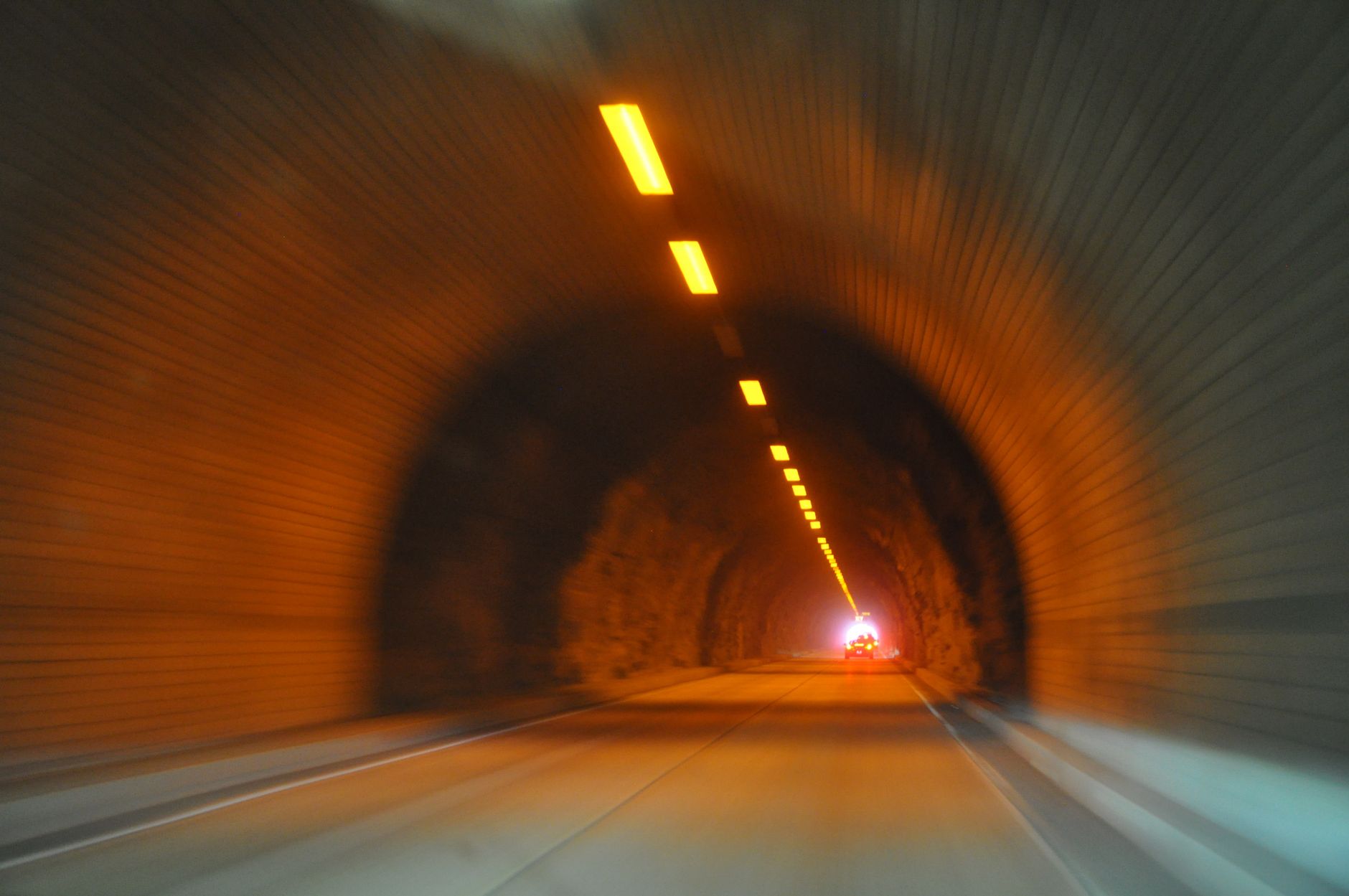
The Charger Bay
Reuben tells me at the depot charger at one in the morning, while both our cars drink and the meter on the wall counts what I owe. He is sixty-one, drives a blue hatchback with a rosary on the mirror, and in four years of sharing that charger he has never once told a story. That night he told one.
“If the pin ever lands on Delaney Road,” he said, “cancel it. Eat the rating. Don’t call the number. Don’t text back. Nothing.”
Delaney Road is a farm track with a guardrail on the canal side, two miles of nothing between the bypass and the first fenced fields. What’s there is the bones of a bus shelter: a concrete pad, one steel post, the bolt holes where the timetable used to hang. The buses stopped running out Delaney when the bypass opened. Nineteen seventy-seven. Before me, before Reuben.
He had it from his uncle. Thirty-one years on the meter — Checker, then County, then his own plate — and the uncle’s version came with clauses, the way real rules do. Only after the last numbered bus of the night. Never on a dry night. Take her once if you have to, and after that she won’t ask you again.
I asked him who “she” was. He rinsed his thermos cup, screwed it back on, and said that was the whole point of the rule. You don’t find out.
Ninety-Two
The airport queue in Garrow County takes ninety-two. Above it, you sit in the lot at Kessler Regional and the app feeds you fares in order. Below it, you drive the bars in town and argue about surge. I was at ninety-four and drifting, because December had been thin and I’d been declining the 3 a.m. casino runs on principle, the principle being that I like my windshield in one piece.
The first pin came on a Tuesday. 12:51 a.m., pickup at “Delaney Rd (Bus),” destination hidden until pickup. The app gives you fifteen seconds. I let them burn. It moved my number by less than a tenth of a point, and I lay awake doing the arithmetic anyway, the way you do at two in the morning.
Wednesday, 12:51, the pin again, with a rider note this time:
Off at 1. Please.
Thursday the note had grown up:
Getting home from shift. Please. Osmaby is far.
Osmaby is far. It’s the last of the mill towns out the old road, forty minutes at that hour, and now the destination field said Cartwell Road by name. The fare would come to forty-one dollars before tip. My number was 92.3 and the queue audits on Mondays.
There’s a version of me that takes the ride for the truth of it. I’m not that man. I took it because a tenth of a point is a tenth of a point, and because Reuben’s rule had reached me secondhand, from a man I never met, about a bus stop that died before I did. The app, meanwhile, was right there, every night, with a countdown. Whatever else you say about folklore, it doesn’t beep at you.
Friday, 12:51. I accepted.
Delaney Road
The pad sits back off the road where the headlights sweep it late. Drizzle had come in off the canal around midnight, fine enough to bead on the guardrail and do nothing about the dust on my hood. She stood at the post with her collar up.
Sixty, maybe older. A navy work smock with the stitching gone soft — GARROW WOOLENS, the mill in Osmaby, shut in eighty-two — and she got in the front seat, which riders don’t do. Riders get in back with their phones. She sat down front like it was a car she knew, and folded a newspaper into eighths on her lap, and smelled of steam and lanolin.
“Thank you for stopping,” she said. “Nobody keeps the old hours.”
The app put the destination at 46 Cartwell Road and the navigation said forty minutes, and for thirty-nine of them neither of us talked. Wipers on intermittent. Her hands quiet on the newspaper. Once, crossing the canal bridge, she tapped the seat twice with two fingers, light, the way you check that something is still under you.
Number 46 is a brick end-terrace with a low wall. The porch light came on while I was still turning in, which happens when somebody’s waiting up. She thanked me and got out, and the door shut with the small sound of a door that gets shut properly. The fare cleared at forty-one dollars and she tipped five, and the app filed her as a rider like any other rider, and if the app had been the whole world, that would have been the end of it.
On the front passenger seat lay a transfer. Paper. Orange, printed both sides, folded into quarters and creased sharp, the way you fold something you mean to keep in a pocket.
GARROW COUNTY TRANSIT — ROUTE 4 — NOT TRANSFERABLE AFTER 11 P.M.
Route 4 ran the south side of the county, the hospital and the estates. It never once went out Delaney. The county stopped issuing transfers in 1991, four years before I was born.
The Book
The Foundry Street diner opens at five, and the counter by the window belongs before six to men who drove cab in this county before the app was a rumor. Deke is the youngest of them at sixty-eight. I put the transfer on the counter and he stopped wiping mid-stroke and said a name, not mine, belonging to somebody dead.
Then he reached under the register and brought up the book.
A maroon ledger, cloth-bound, spine gone white at the folds, going back to 1979. Not a log — nobody ever made these men log anything. A book, kept because the men who kept it decided it should be. Page after page, ballpoint and pencil and, further in, gel pens and a strip of receipt paper taped flat. Entries in different hands for different companies. Checker. County. Garrow Cab. Precision. The app has no company in it, because the app has no name, just pins and a countdown.
They all say the same thing. The pad off Delaney. Twelve fifty-one. A woman in a woolens smock, front seat, Cartwell Road, porch light before the turn-in. The transfer after. The hands disagree about her age, her voice, whether the radio worked. About nothing else.
The first entry is dated November of 1979, initials R.D., Checker. It runs a paragraph, gives up on explaining, and lists rules instead:
Pin at the old 9 shelter, 12:51. Took her once. Woolens smock, front seat. Porch light before I turned in. Route 4 transfer after — the 4 never ran Delaney. Only after the last numbered bus. Never on a dry night. Take her once and she won’t ask you again. — R.D.
Here is the part I keep going back to. I had driven to that diner with a clause of my own. Somewhere on the canal road I had settled what the book would get from me, the one thing I’d add for whoever comes after: take her once, if you must, and after that she won’t ask again. It’s what I would have told any new driver who asked.
It was already there. Third line from the bottom. 1979, another man’s hand, before Reuben ever held a license.
I asked Deke who told R.D. He shrugged with his eyebrows, the way counter men answer what they’ve decided not to speculate on. A county driver, somebody thought. Or R.D. had it from a brother-in-law at the depot. Or he made it up — in which case he made up true things, which is worse.
Then Deke asked who told me. Reuben, I started, at the charger — and stopped, because I couldn’t get further back than that on anything I had actually heard. Had Reuben said take her once? His uncle? Or had I supplied it myself, alone, in the car, on the canal road, out of nowhere? The chain went back three links and dissolved, and every link in it would swear it held.
I wrote my entry anyway. Date, app, 12:51, Cartwell Road, Route 4. First name only. The book took it the way the counter takes a cup.
The Forum
Three weeks later a driver I’ve never met posted in the county forum: got a weird ping tonight, Delaney Rd (Bus)?? that stop isn’t real, destination hidden, anyone else? Two replies under it within the hour. One from a day driver, saying it’s a map layer, the vendor re-imported an old transit file, it happens, report it and move on. One from a woman with two hundred rides and no picture, who wrote only: cancel it.
I typed the rule out with my thumbs at four in the morning, in the airport lot, with the queue at two hundred cars and the meter running on nobody. Only after the last numbered bus. Never on a dry night. Take her once if you have to, and after that she won’t ask you again.
I posted it before I remembered where the last clause came from. Then I remembered, and it didn’t help, and I left it up anyway.
Nobody asked me where I’d heard it. That’s the thing about a rule that works — nobody ever asks. The transfer rides in my glovebox now, behind the manual. Route 4, not transferable after eleven. I didn’t write that rule either.
But I know it by heart.