The Second Fall
My mother came to us the week after Thanksgiving, her wrist still in the brace from the second fall. Early Alzheimer’s, the neurologist said, and said it again in the parking lot because I stood there waiting. I work nights in an ICU in Dayton. I know what decline looks like from the staffing side, which turned out to be a different thing from knowing it across my own kitchen table.
We gave her the room beside the kitchen, the one that had been an office, and Greg ran a grab bar into the bathroom wall of our split-level in Kettering before her boxes were unpacked. He is that kind of man. January went well, in whatever sense that word still carries. She lost nouns, blamed the pill organizer, dialed my father twice a week. He has been dead eleven years. She never asked where he was. She just called, and someone in the house hung the phone up gently and put the kettle back on for her.
The first week of February she started coming to breakfast with a report.
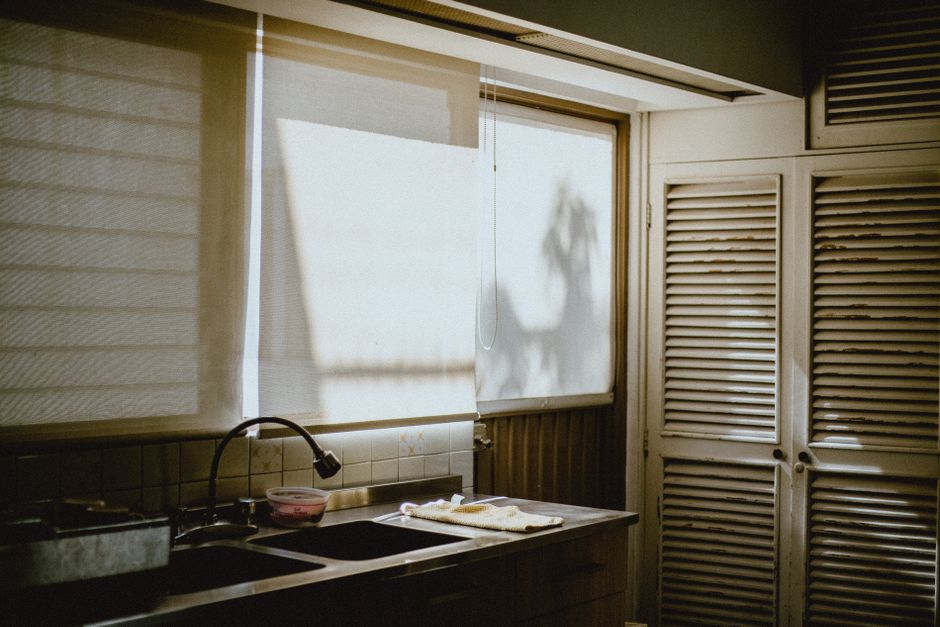
“There was a boy in the kitchen.”
“A boy,” I said, pouring her coffee.
“At the window first. Then at the sink.” She ate her toast in quarters, the way she had eaten toast since the Eisenhower administration. “He’s polite. He doesn’t say anything.”
The Hook and Eye
You screen for delirium first, because you want a cause with a cure in it. Urine clean. No fever, no pain, no new medication. Her clock test came back the same careful miss it had come back in December — hands drawn to ten past three, precise, wrong. Sundowning, the literature says, and hallucinations ride along sometimes. I read three papers at the nurses’ station on a slow stretch, the same papers I had skimmed a hundred times for other people’s mothers, and drove home relieved. Naming a thing has always steadied me.
Her nights organized themselves around four o’clock. Before anything was done about it, there was the knife: the good carving knife, wrapped in a dish towel under her pillow like a flute. She had meant to see him out with it, she said, and she was embarrassed to have been caught holding it, which tells you exactly how much of her was still home. The knife block moved to the basement. Then Greg fitted a hook and eye high on the kitchen doorframe, above where her hands travel when she isn’t attending to them. We told ourselves it wasn’t a lock. It was childproofing, turned upside down.
That was the second week of February. For a while the story went quiet, and I logged the quiet as a win.
The Dose
Quiet, not peace. Ruth stopped mentioning the boy around the same time she started sitting up in the hallway to watch the kitchen door, a blanket over her shoulders, always gone by the time I came down at six with my coat still on. A patient who will not sleep is a patient who will fall. Dr. Emerson started trazodone, fifty milligrams, and the hallway emptied. The reports stopped. I want to be honest about what that was, professionally: success. Chart it and go home.
The dose went to a hundred in April, with the doctor’s blessing, because the vigils had crept back. The night it went up, Ruth caught my sleeve at nine o’clock, on what should have been my one full night off that fortnight.
“Sit up with me tonight,” she said. “He comes later now. I want you to see him before those pills put me past seeing.”
I had worked three twelves. I shook the new dose into her palm, brought the water, turned off her lamp. She drank it watching me the whole time, the way you watch a train leave without you, and I told her the truth as I understood it, which was that she would sleep and feel better in the morning.
Rain came through after midnight. At ten to five Greg’s voice went up an octave and I took the stairs two at a time, the way you do when you have run to codes for a living and already know, from the landing, what that tone means in your own house. She was at the bottom of the porch steps, nightgown, one shoe, her hip turned under her. The kitchen window above her was dark. Out where the yard had gone soft, her slipper prints ran under that window and back. Twice.
The hip got pinned. Rehab went the way rehab goes at seventy-four when the mind is already leaving: a good week, a bad week, pneumonia in June, and then the phone call I have professionally made to other people’s daughters.
In the hospital she had two days of her old self. She held my hand with the IV taped across the back of it and said, “I wasn’t confused about the boy. I was confused about everything else.” Then she asked for her crossword glasses, and I brought them, and they sat on the tray table, untouched, until they no longer needed moving.
The Notebook
I cleared her room on a Saturday with the door open so I could hear the radio. Her crossword glasses were in the top drawer, folded shut around a spiral notebook, drugstore brand, the cover still stiff.
Feb 2 — 3:58. window.
Feb 9 — 3:59. window. 10 min.
Feb 19 — 4:02. sink.
Feb 27 — 4:04. sink.
Mar 9 — 4:06. sink. he looked cold.
Mar 26 — 4:09.
Apr 2 — 4:10. sink.
Apr 12 — 4:11. He was at the sink. I told him you were all asleep.
You will want to know what I checked, and the answer is everything a person in my line knows how to check. It was her hand, the one she still had, steady in the way of a woman who kept the books for a farm cooperative for thirty years. The first entry came four days before her first breakfast complaint — she had been watching in silence, logging, before she said one word aloud. The times walked later each week, a minute and a little more, regular as a schedule kept by something that can read a clock. The last entry was the night of the new dose. I did that arithmetic at her desk with the door open and the house making its ordinary sounds, and then I sat in her chair until the light moved off the wall.
Grief keeps banker’s hours. I can account for the waking, medically, four and five nights a week; there is a pathway for it through the same papers I used to read at the station.
Her notebook lives in the kitchen drawer now, under the takeout menus. In August I bought a spiral one, same brand, stiff cover, and put it next to hers, and I have written nothing in it. It sits there the way a smoke detector sits on a ceiling.
Last Tuesday I woke standing at the sink. A full glass was in my hand and the tap was dry. The window held the yard, and in it the reflection of a woman facing the glass, holding a glass. The stove clock said 4:07. My phone was charging upstairs.
I don’t remember the stairs.