The Kettle
The burn was on the inside of my left forearm when I got out of the shower, a neat oval the size of a thumbnail, already fixed into the yellow-brown a burn turns at day five. I chart bruises for a living. Peds ward, nights, eleven years of them; you learn to age a mark the way other people read a clock. Yellow takes a week to arrive. Mine was yellow at the edges, and my skin had been clear at the same shower stall twenty-four hours earlier.
People burn themselves and forget. That is the working theory you start with, the one that keeps you functional. Steam wand, autoclave, the edge of a warming blanket — nurses collect small wounds the way fishermen collect hooks. I dressed it and went to bed at four in the afternoon.
Three days later the kettle did it. I reached across the stove for the sugar bowl and the rim of the kettle laid itself along my arm, one clean line of pain, and when I got the arm under the cold tap and looked, the new burn sat inside the old oval like a proof mark. The skin around the fresh center had been healing for days.
The hiss brought Cal in from the hallway, drill in one hand. “Move the sugar bowl to the left of the stove,” he said, and kissed the top of my head, and went back to the wiring in a house the bank had emptied, a contractor had stripped, and we had bought at twenty-nine because it was that or rent forever.
I stood at the sink until the water stopped feeling like anything.
The Ledger
The cut on my right palm showed up on a Tuesday under the base of my thumb, a thin dark line, closed and three days old, stitched by nobody. Two days later I was steadying a pane of glass while Cal worked the glazing points free, and the pane slipped an inch and took my palm along its edge. One stroke. The fresh cut lay in the old one the way the burn had.
I photograph things. Eleven years of nights on a peds ward teaches you: if it isn’t charted, it didn’t happen. So when the third mark came — a bruise wrapped around my left wrist, five finger-shaped smudges in green and plum, four days old by color — I laid my wrist on the kitchen table beside a steel ruler and photographed it from directly above, the way we photograph injuries that will have to be explained to somebody later.
The mark aged. Its act didn’t come. Four days is a long time to hold your own wrist away from your body.
A mason jar took it in the end. Saturday, cellar steps, the preserves shelf Cal built that leaned a half degree out of true; the jar came off the shelf into my hand as I reached, and my hand closed on it and dropped through the gap in the railing to the floor, and the whole weight of me went after it for one locked second. When I hauled myself up by the good arm, my left wrist had four new fingermarks on it, fresh and purple, laid over the old ones like tracing paper.
Nobody had touched me. That was past argument now. The question had changed shape: not what was doing this, but how much lead time each one bought.
Cal’s knuckles were next. Green across both hands, a week old, while he slept with his fists curled the way he has slept since his mother told him some camp story about fists and blankets, a superstition from a lake I have never been to. I photographed his hands while he slept. I tell you that plainly because it is the thing the detectives fastened on later, the thing no story could carry well: a wife, alone at five in the morning with a camera, photographing her sleeping husband’s injuries with a ruler for scale.
He found the folder a month later. Fourteen photographs by then, dated and sorted, each mark paired with the accident that arrived to claim it, every accident later than its evidence by days. He sat at the kitchen table with the laptop open and said nothing for a while.
“Talk to me,” he said.
“You’ll think I’m sick.”
“I already think something.” He tapped the trackpad. “These go back to March. You’ve been building a file on us. What is it for?”
What could I say that was not a psych hold or a divorce filing? I told him about the kettle. He laughed, one syllable, nothing in it, and then he lifted his own hands and looked at the green on the knuckles, and stopped laughing.
His knuckles had a mark too, and neither of us had said so. The drill kicked against a wall stud that Friday and put his hand into it; he wore the bruise he had woken with, exact to the stud’s width.
Behind His Ear
The worst one I found on a night in late October. I came off shift and stood in the doorway of our bedroom with the hall light behind me, and on the back of my husband’s head, above the left ear, was dried blood matted into the hair. Under it, when I parted the hair with a wooden stir stick from the kitchen jar, a ridge of swelling the size and shape of an octagonal cap, dense, the skin over it gone the deep violet of day four.
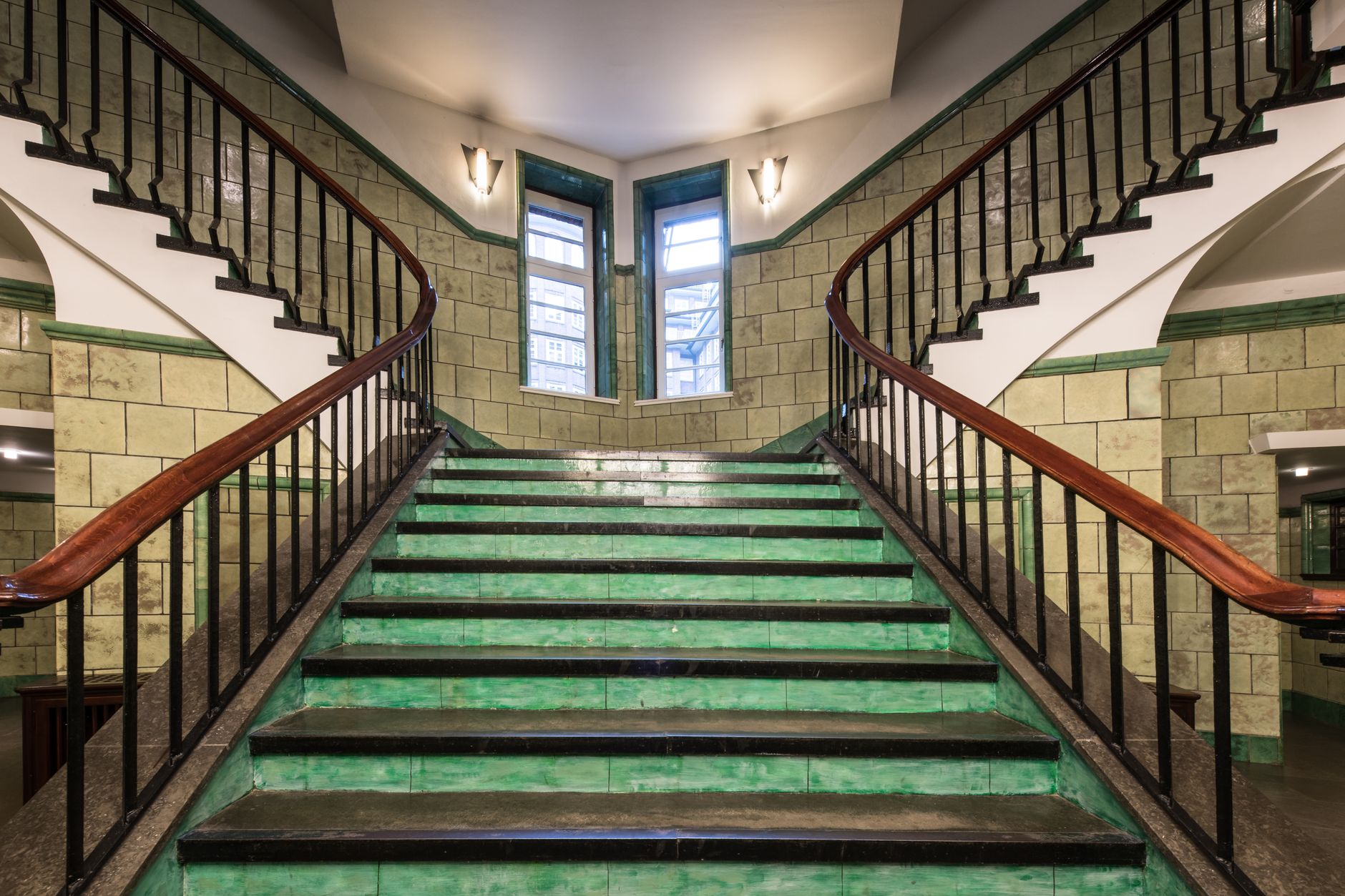
Our staircase has a newel post at the bottom. Oak, octagonal cap, stripped by the contractor, never refinished. I had walked past it two thousand times.
The intervals had been shortening. Twenty days between the first mark and its act. Eleven. Six. Four. This one was four days old by its colors — which meant the act was due.
I had one night.
I did everything right; I want that in the record. I carried the stepladder down to the cellar. I moved the book boxes out of the upstairs hall. I taped the loose stair runner flat. And on the third tread from the top, where the nosing had been broken for a year and had already cost him one bad stumble, I screwed down a strip of pine to cap the edge and make the step safe.
He woke at six and found blood on his pillowcase, a coin-sized pressed flower of it, and he stood in the kitchen doorway holding the pillowcase in both hands like a summons.
“Callie.” His voice was level. “There’s blood in my hair and it’s been there for days, and you knew. It’s in your folder. Isn’t it.”
I said yes.
“What does it say happens to me?”
“Nothing has to happen.” I had rehearsed it all night. “Stay on the ground floor today. One day. That’s all I’m asking.”
He looked at me, and behind his eyes the whole marriage rearranged itself — the folder, the camera, five in the morning, and now this: a wife who photographed injuries that did not exist yet and asked him not to climb stairs. He did the arithmetic any reasonable man would do, and the answer was a wife planning an alibi.
“You let me look at the back of my head,” he said, “or you call somebody, and either way I’m walking to that bathroom.”
He took the stairs fast, to have it done, or to be away from me — I have stopped choosing between those. At the top he half-turned to say something, and his heel came down on the third tread, on the strip of pine I had screwed down at two in the morning, on the half inch of proud edge my bit had driven a hair out of true.
His foot went out from under him.
The staircase in our house is steep, and the newel is at the bottom. I won’t write what it did. The paramedics took eleven minutes; I charted his breathing out loud to the dispatcher the way I had charted a thousand children’s, and it did not help. The mark met its act exactly, to the millimeter, after four days of waiting for him.
After
The folder held seventeen photographs by then, each dated before its injury. The detective went through it twice, slowly, with a face I know from parents’ rooms. Seventeen close-up photographs of a husband, timestamped, catalogued. He closed the laptop the way you close something you feel sorry for.
They ruled it accidental. The pine cap, the broken nosing under it, the stepladder already moved — a wife who did everything right. Nobody reads the folder the way it runs.
I still live here; the bank would take too great a loss and so would I. Every few mornings there is something new. A bruise on my shin, aged a week. A sore place along one finger, the shape of a hinge. I photograph each one beside the ruler, and I chart the intervals, and they keep shortening, and I no longer pad anything, move anything, or warn anybody.
The marks come first. I’m a nurse; I know what that makes me. I’m the only witness in the house.