Sublevel Two
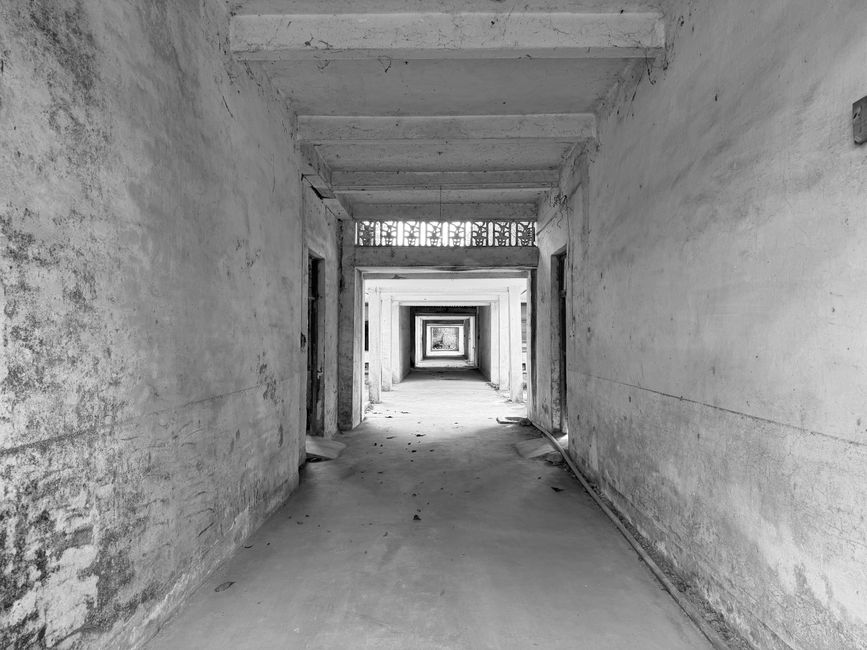
The annex sits two levels under the administration building, past a file room everyone pretends ends at the shelving. No windows. One clock, four minutes fast, that nobody has corrected in thirty years. For nine weeks I was the night keyer on the conversion project, alone down there from ten to six with a ledger open on a foam wedge to my left and the new county database glowing to my right.
The rule was simple. Where the two disagreed, the book won. The software called each disagreement a variance, printed a slip for it, and filed the slip in a green hanging folder under my counter. Two hundred and ten keyed variances was a full night. Two hundred and forty was flirting with the permanent position I had been promised might shake loose when the conversion finished Friday.
Russ worked days. Thirty-one years in the annex, and he moved like a man rationing himself for a longer errand. He showed me the wedges and the acid-free tabs, which drawers rolled and which you had to lift. My second night he stood behind me while I keyed a plat map correction and said, “You type what the book says. You don’t type what it means.”
I laughed. He waited until I had stopped, then went upstairs.
The Okada Variance
On the twenty-third night the ledger gave me marriage 88-402, Okada, Kenji to Okada, Mariko. The database had the wedding on June 3, 1978; the book said October 7, 1979. A transposed renewal, an old clerk’s paste-over, something from 1988 nobody had caught. I keyed the book’s date. The cascade column blinked and ran.
County records chain. A marriage carries its filing date, the date rides the paternity acknowledgment executed that same morning, the acknowledgment underwrites the birth certificate, the certificate feeds the school census. Move a wedding sixteen months and the acknowledgment lands fourteen months after the boy it belonged to, so the middle link re-dated itself, rescinded itself, and the chain ran green down my screen anyway. Green means revalidated. I closed the file and drove home at six.
Next night I pulled the Okada folder to square it away. Birth certificate, Okada, Daniel T., February 12, 1979 — father’s line blank, status VOID, cascading. School census, Grant Elementary, no match. Immunization, no match. I sat with that until the clock said 11:52, then drove to the address on the license.
Kenji Okada answered the door of a house with a sewing room where the county’s paper said a boy had slept for nine years. They were kind about it. One daughter, twenty-six, in Phoenix. Never a son. I asked to use their phone, called the annex, and listened to it ring on the empty counter downstairs.
What I couldn’t make fit, on the drive back, was the window of the grocery on Carroll Avenue. A Grant Elementary honor roll had hung there for years; I had read it while my coffee brewed often enough to know the third column, Okada, Daniel, between two boys I’d also never met. The window was washed now. Tape ghosts, four of them, where the corners had been. The clerk inside could not tell me what list I meant.
I tested it once, small, the way you check a wire before you grab the whole harness. Variance 77-119, a porch inspection on Sable Road: ledger failed 1981, database passed. I keyed failed and drove out at four in the morning. No porch. Sill plates, a chalk line, sawhorses, a front door opening onto a drop. The woman of the house stood in the doorway and asked if I was from the county about the rail order — her husband had meant to build the porch since before they bought the place, she said, from scratch, the way it had never been.
The Held Drawer
Thursday was Russ’s last day. The whole annex staff ended at the cutover, but his paperwork had cleared first, and he spent his final hour feeding the shredder one drawer at a time. At the counter he set down a brass key.
“Left drawer, under the wedges,” he said. “It’s yours now, except nothing in it is yours to key.”
The drawer held hanging folders going back to 1948, fat with slips nobody had keyed. A card was taped inside the lid:
Some of these books are wrong on purpose.
Key nothing you can’t stand behind.
— R.T., 1976
I read slips until my eyes swam. A 1953 stillbirth entered in the book as a live birth with a death date in 2036. A 1977 ward fire where the ledger’s count ran two higher than the state’s. A veteran whose enlistment date, corrected, would have voided his pension and the marriage that grew out of it. Decades of clerks writing mercies into the record and then declining, one by one, on purpose, to key them true.
I asked why they wrote them down at all.
“Because the book drafts it whether we write it or not,” Russ said. “The book’s a draft. Keying’s the publishing step. Somebody has to read the draft, or you don’t know what’s waiting in it.” He zipped his coat. “Friday at six the new system reconciles. It keys everything unkeyed — sweeps the drawer, every slip, all at once.” At the door he looked back at the counter where I had sat for nine weeks. “Your initials are on nine weeks of slips down there. That’s going to matter. You’ll see what for.”
My green folders were in my box. Daniel’s void rode a chain I had lit myself, and keyed things were settled — no sweep would undo them, his included. He was out, published, permanent, unless something put him back before six a.m. And at six a.m., thirty years of held mercies would publish too, all down the county at once.
So I stayed.
Back Pages
Volume 88 has blank pages at the back. Ledger stock takes fountain ink if you’re patient, and Russ’s pen was in the top drawer, third from the left, next to the blotter he was always drying.
I wrote an entry in the 1978 format. A certificate of paternity, filed December 1978, in anticipation of marriage 88-402, Okada, Kenji, acknowledging issue Okada, Daniel T., born February 12, 1979. The dates don’t line up the way county arithmetic wants. The book didn’t care. I filed the page as variance 11-610, initialed it, and keyed it, and the cascade ran green down my screen — birth certificate, census, immunization, Grant Elementary, honor roll, third column.
Then a column I had never triggered lit under the cascade, white on black: BALANCE.
Every entry spends. The book keeps two sides, entries against voids, and it fills the void side itself, searching for mass. It ran down the folder, past the Okadas, and stopped at the initials on the slip — mine, nine weeks of them. The line filled in from right to left, the way the old clerks wrote:
VOID — KESSLER, M. — ALL REFERENCES
My badge beeped twice and died in the reader. The cascade kept going. I let it finish.
Friday morning the permanent position posted. I read the listing from the lobby, on a screen that would not log me in, while a woman who had processed my timesheet for two months asked if I had an appointment. The payroll system had no temp named Kessler. The agency had no contract. Down in Sublevel Two the green folders hold nine weeks of slips initialed by nobody the county can produce — I have checked. Paper outlives the entry. That’s the one mercy in the whole arrangement, and I have made my peace with the rest.
The deadbolt on Sublevel Two is a lock, not a record, and the brass key still turns for me at night. Volume 88’s back pages take ink, one line at a time. Each line restores one small fact about a woman who used to work here — a hire date, an address, a spelling — and each line draws its balance from somewhere: a dog license in Sable Township, a boat registration, a wedding in the next county that quietly never was. I choose small ones. I read the drawer first, every night, the way Russ said, and I stand behind every line.
The honor roll went back up in the window on Carroll Avenue last Tuesday. Third column, where I remembered it. A boy I have never met has his name in ink again, and a book two floors under the administration building drafts me back, and I have stopped thinking of Friday as the end of anything. The book takes its time being true.