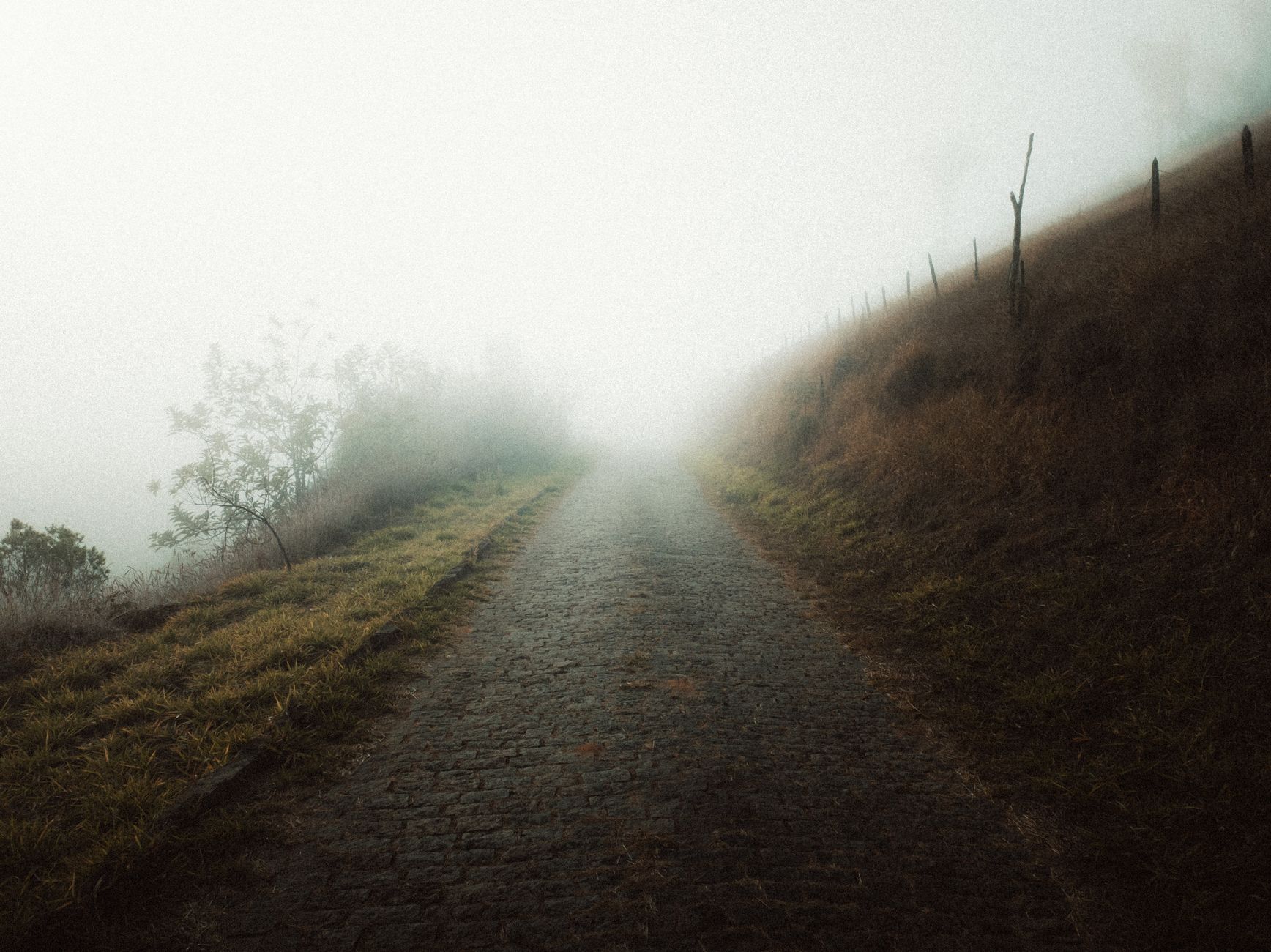
The Grip
He taught me the winter I was eight. We went down to the hazel belt below the barn and he cut the rod himself, off a stool he had cropped before, because a stick for asking should come from a tree that had already been asked. He trimmed it to my arm’s length, waxed the ends over the kitchen stove, and put it in my hands.
“Thumbs along the bark, not round it. Elbows in. You don’t grip a rod. You lend it a hand.”
Then the rule. He said it once and never said it again, and that was how you told his sayings from his laws.
Ask once. The ground answers once. Never ask twice.
I find things underground for a living now. Radar rigs towed behind 4x4s, marking pipes and ducts for contractors who would rather not dig blind. It’s the same trade, he said once, watching a survey van on the news. The instruments just got heavier.
He went in the ground on a Friday in November. On the Saturday I started on his effects, because there was a deadline in Manchester on the Thursday and grief keeps a diary whether you like it or not. On top of the dresser, under a calendar nine years expired, lay the rod, a spare, and a pair of white cotton gloves gone grey at the fingertips.
I thought of the eczema. He had worn gloves for everything, the last decade and a half. Even in July.
Barrow Rigg
Alan Hartley caught me at the churchyard gate.
“Borehole’s brackish since August,” he said. “Since the quarry started pumping. Driller wants to go deeper, but.” He looked at his boots. “Your granddad walked our top field in sixty-eight. You’ve the hands for it. He said so, more than once.”
I told him what I do, radar and maps. He kept looking at his boots. Monday morning, then, I said. One walk.
Frost stiff in the grass. The rod dipped at twenty yards, the way a fishing line informs you of current, and by forty it was dragging. I know what a pull is. A tow bar tells you when the rig hits clay. This took me by the wrists.
Where it dipped first was the old well-head, the stone cover Hartley still stacks his seed sacks on. Expected. Then it kept going.
The rod wanted the next field. I let it, because you do, and it walked me along the wall-gap, through the gate, elbows in, thumbs along the bark, like being led by a small determined dog on a lead of wood. Three fields. It stopped below Stang End, over ground that was nothing — rush and stones — and the pull came up my arms and set, like a rail on a winter morning.
Hartley had followed me over two walls. “That’s not where he said.”
“No,” I said. “It’s not.”
On the drive back my right palm ached at the base of the thumb, a seam of cold, as if I had carried the rod for days instead of forty minutes. Under the tap at home it would not warm. A line ran across the palm, damp, and the towel did not dry it.
The Well Book
The notebook was in the bureau, in with the deeds and the wool receipts. Wells, 1949–. A hard-backed ledger thing, farm by farm, one line each.
Stang End — 9 Jun 1952. Hard pull. 31 ft, sweet.
Barrow Rigg (top field) — 14 Mar 1968. Sweet at 22 ft.
High Garnthwaite — 30 Oct 1959. Slow. 44 ft.
Forty-one farms. Forty-one dates. Not one farm twice in sixty years of neighbours asking — droughts, quarries, new dairy units and all.
Our own entry was on the last used page.
Low Merrow — 11 Apr 1974.
Struck through twice, hard enough to score the paper. Under it, in a hand gone narrow:
Asked twice. Let it lie. Never a third.
My mother used to say the water at Low Merrow turned sweet in the spring of seventy-four. She meant it as a memory of her father’s good year.
I put my palm flat on the kitchen table to steady the ledger, and the table told me where the rising main runs. Under the yard, then under the garden, deeper, colder — a draught of a thing crossing my hand through an inch of oak. On the flags, both drains came up through my soles, and under them something older, going with the beck.
The first asking is a question. That is the whole trade: a rod on fresh ground asks, and the ground points, and you go home with wet boots and a farm owes you for a well. The second asking is not a question. On ground asked twice the water comes to meet you — up the rod, into whatever lends it a hand.
He wore gloves for everything, the last fifteen years.
The Gloves
Three neighbours at the gate by Tuesday, four by Friday, a man with a failing soakaway among them. Word had got about. I walked their fields, one asking each, first time on all of them, marked where the rod dipped, and drove back to Manchester on the Sunday with the deadline met by a day.
I have not taken the rod onto our own ground. It goes everywhere else with me — the back of the car, the shop, the walks — the way the gloves went everywhere with him. I wear them now too. Cotton, two pairs, one to wash. Not for eczema. A bare hand laid on a table, a wall, a animal’s back, answers things it was never asked.
At night I set my palm flat on the kitchen table, for practice, the way he must have done it: the rising main, the drains, the beck’s old course under the garden. The seam that crosses my palm crosses the house the other way, and each year the draught of it has come up through the oak a little nearer.
Nearer each year. That was the arithmetic the gloves were for.