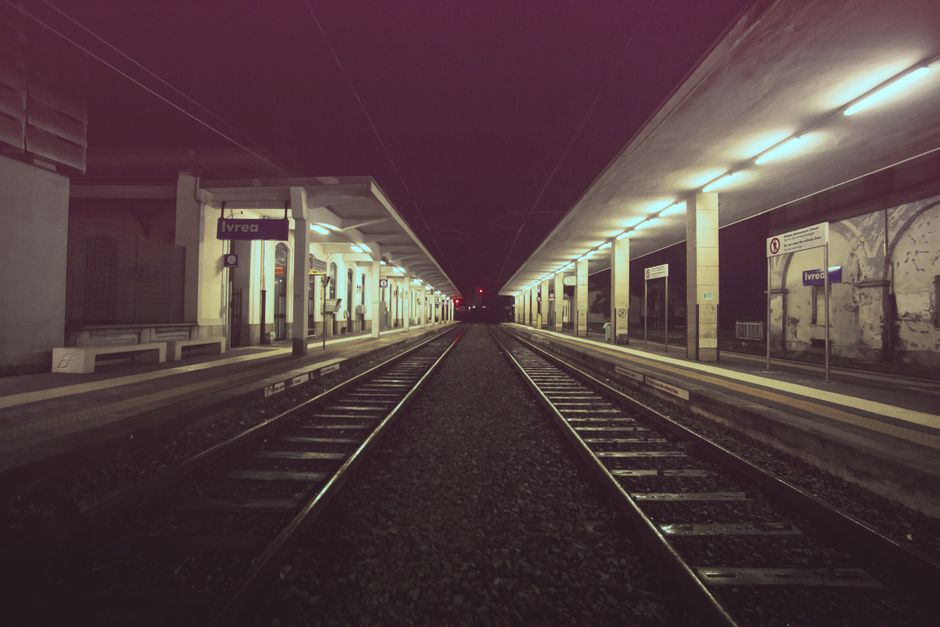
The 21:47
Mick rang in sick at ten past four, and by nine that night I was signing for the 21:47 down the Ashcombe branch — a two-carriage unit with a guard’s van bolted on the rear for a school run it stopped carrying years ago. Relief work suits me. Keep your head down, work the round the way the book says, be home for breakfast.
Nora turned six the next morning. I’d promised her pancakes before school, and the first bus out of Ashcombe left at 06:10, so the maths was simple: finish the round, sleep in the depot rest room, catch the bus, beat the batter.
Third stop out, Low Fen, an old man boarded the rear carriage. Coat too heavy for October. He didn’t tap his card at the reader; he held out a ticket instead, and not the paper the machines print now. Thick orange card, Edmondson stock, the kind the clerk’s rack kept before my time. Printed on it: HARROW HALT. Under that, a date. 14 NOV 1962.
I know the line’s history better than most men still working it. Harrow Halt went in the winter floods of ’62. Suspended, the notice said, and the word matters more than you’d think. Closed is withdrawn. Suspended is pending.
Bylaw 74(2): passenger presenting a ticket not valid on the service — offer an alternative, or confiscate against a report chit. I did what the book says. Wrote the chit, dropped the orange card into the leather pouch on my hip, handed him the carbon.
He read the carbon twice. “Mind how you carry that,” he said. “It’s mine, technically.”
“The chit’s your receipt. You can claim the ticket back.”
“Oh, I intend to.”
The Pouch
At Low Marsh I walked the carriages again. A dozen passengers is a busy night on that stretch; now there were more, and nobody had boarded past me. A woman in a headscarf held a wartime paper, soft as cloth, printed THRU TO HARROW HALT, CHILD ½. A man in a donkey jacket had a season ticket stiff with years of renewal dates. A boy of maybe nineteen clutched a travel warrant from the year they repainted the units. Different decades. Same destination.
The stretch between Low Marsh and Ashcombe is eleven minutes of flooded fields, and that night it ran long. The carriage clock lost whole minutes against my watch and then, as if embarrassed, gave them back all at once.
In the guard’s van, a working timetable page sits in a frame behind the door, dog-eared by forty years of thumbs. I’d read it a hundred times without reading it. Tonight the paragraph stood off the card:
HARROW HALT — service suspended 14 Nov 1962. Not withdrawn. Tickets sold to Harrow Halt remain valid and shall be conveyed to destination. Guards will ensure holders are set down.
The pouch at my hip had a weight to it that one cardboard ticket doesn’t have. I loosened the strap. Six cards. Then eight. I had confiscated one. The dates ran in sequence — 1962, 1968, 1974, 1989, 2003, 2011 — each a winter’s night apart, and the last card was printed with tonight’s date, the stock still pale where the ink hadn’t bitten.
I did then what a guard does to a dead ticket. I clipped the 1974 season through its face and dropped it back in the pouch, and when I walked forward through the carriages, the man in the donkey jacket was gone. Not moved to another seat. His newspaper lay folded on the bench, still holding the shape of the hands that had gripped it.
I stood a long moment with the clipper open in my fist.
A ticket is a promise the railway makes. Everyone on the payroll learns that in the first week and forgets it by the second. The clip doesn’t mark a ticket; it closes it. Clipped, the promise comes off the books — no destination owed, no setting down required. I had cancelled a man’s claim to arrive.
I went through the carriages giving back everything the pouch held that I could match to a face. The warrant. The child’s paper. The old man’s orange card I pressed into his hand myself, and closed his fingers over it, which is against every regulation I’ve ever loved.
“You counted every head tonight,” he said. “Walked the line twice an hour and logged the lot. Nobody’s worked the round like that since me.”
“You were a guard.”
“Until they suspended my station and put me off at Millbrook for waving fares through the flood winters. They never gave me my last month’s passes either.” He turned the orange card over in his palm. “Sixty-four years I’ve ridden out the claims, one ticket at a time. Tonight the books come right, and you’re the first man since me who’d have noticed.”
The brakes came on gentle, the way they do for a booked stop. There is no booked stop between Low Marsh and Ashcombe. The brakes don’t ask.
Harrow Halt
The lamps of Harrow Halt came up out of the flooded fields, and they were lit. Both platforms. The porter’s trolley stood under the awning with a lantern on it, and the lantern was burning.
The holders rose in the carriages, one bench at a time, and queued at the doors the way passengers do, patient, collars up, tickets in hand. I checked my own breast pocket before I understood why. Staff pass. ALL STATIONS, ASHCOMBE BRANCH. No expiry printed, because none was ever needed. All stations includes the suspended ones. Eleven years I’d carried a live claim on myself and called it a livelihood.
The train stopped. The doors hissed open onto a platform that isn’t on the public timetable, and the holders began to file out.
I took out my pass. I looked at it the way you look at a dog that’s never bitten anyone. Then I fed it into the clipper and squeezed until the little brass jaw bit clean through, and the punched chip dropped into the tray with everything else.
The old man paused at the door, cap settled, orange card held out flat like a boarding check. “You’re travelling without a valid ticket now, son,” he said, not unkindly. “Mind the bylaw. Millbrook’s staffed all night.”
The doors closed on the halt and the lamps went out one by one behind us, the way a station goes dark when the last customer’s gone.
The train ran two miles and stopped at Millbrook, which it does not do for anyone, and the door by my shoulder opened itself and would not shut until I had stepped down onto the platform.
Millbrook
The night porter was mopping around the ticket office. He didn’t ask. He took the ledger off its hook and laid it open, and I gave him my name and my staff number, and he wrote in a small careful hand:
Put off, Millbrook, 01:12. One guard, travelling without a valid ticket.
While the ink dried he thumbed backward through the pages, past years of nothing, to a brown entry near the front, and turned the book so I could read it. November 1962. The same words. Same hand.
“They made him sign for it too,” the porter said, and went back to his mop.
I signed beneath a dead man’s line. The inquiry later logged me as guard left service mid-round; they docked three days and declared my pass void, which spared me the paperwork of surrendering the two punched halves I keep in a drawer at home. The driver of the 21:47 was never identified, the roster showing Mick’s name and Mick at home in bed with a temperature, and no one asked twice, because no one ever asks the branch line anything.
Nora got her pancakes at ten past seven. I caught the 05:40 up, and if her father smelled of lamp oil and wet wool when he walked in, she was six, and pancakes came first.
I still work relief, when they’ll give me the shifts. I’m entitled to staff travel, but I’ve never used it since. I buy a paper ticket, full fare, every journey, and I clip it myself at the gate before the doors close — because a promise is a live thing however old it is, and I’d sooner be the one who keeps it than the one it’s kept for.