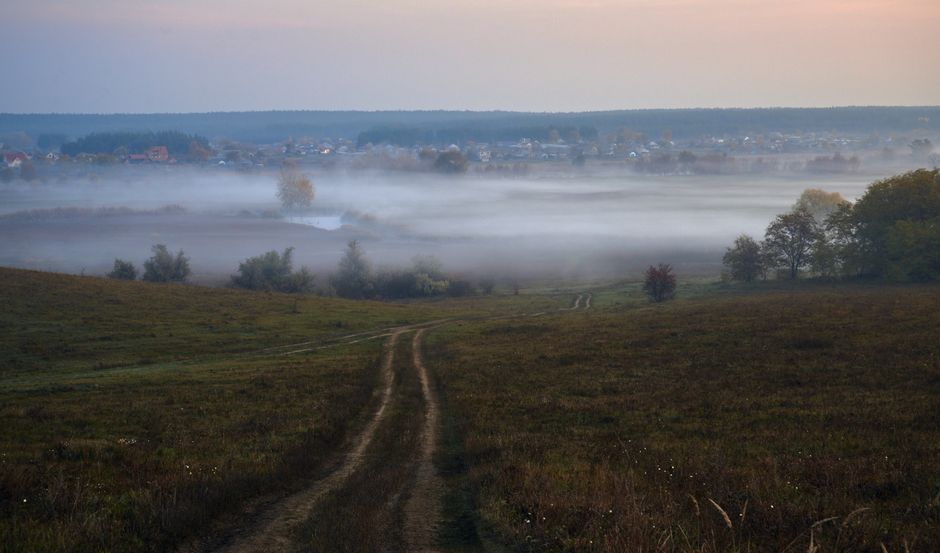
My mother died in March, and by June I was clearing her house for the sale. Forty-one years in that house. She’d worn the kitchen floor through to the joists in front of the sink and left every drawer labeled in pencil, everything shipshape except one thing: a brass lamp in the front window, plugged into a socket that had been wired, I think, just for it.
I knew what it was. Everyone in Fennick knows what a keeping lamp is. When the reservoir takes someone and doesn’t give the body back, the family doesn’t hold a funeral. You keep a lamp lit instead. My mother had kept hers going since August 1987, when my father’s boat came back up the ramp without him — bulb after bulb, two rewires, a small yellow square in the window of a house where nobody waited anymore.
I unplugged it on a Thursday. I had a list; that was on it. The same night, at four in the morning, somebody knocked on the door.
He stood on the step with his hair wet and lake weed on one sleeve, and he was thirty-four years old.
“Is Ruth up?” he said. “Sorry about the hour. I lost the boat.”
I was eleven when he drowned. I am fifty now. I stood in my dead mother’s cardigan looking at a man sixteen years younger than me, and he looked back the way you look at a stranger who has just opened the door at four in the morning — and then, for half a second, I watched him not know me.
“Dad,” I said.
“You’ve got her voice,” he said.
The Keeping Book
There is a ledger at the fire hall called the keeping book. It goes back to 1961.
When they flooded the valley in ’54 — Lower Bradden, forty-one farms, the chapel — the water took its first two men off the dam works that same autumn. Neither body surfaced. In June of ’61, one of them, Wendell Oakes, walked up the boat ramp at dawn asking whether the concrete had cured yet and where his boots had got to. His crew had scattered to other counties a decade before. Somebody at the fire hall started writing things down, and the book has been kept ever since, one line to a return.
Wendell Oakes, 22. Kept 7 yr. Returned 9 June 1961.
T. Aldergate, 19. Kept 4 yr. Returned 3 May 1979.
R. Yun, 50. Kept 41 yr. Returned 30 Oct 1995.
C. Aldergate, 12. Kept 9 yr. Returned 17 Aug 2011.
R. Yun is Mr. Yun, who farms the slope above the ramp. He went in in ’54, off his own land, and came back in ’95 to find his land at the bottom of the lake. He farms rented ground now, above the waterline, and he has not aged a day past fifty. None of them age. The kept come back still partly kept, still running on the basin’s clock, and the basin’s clock runs slow. Their hair doesn’t grow. Corrie Aldergate is still twelve.
The town will tell you the lamp is how the kept find their way home — a lit window for a kept man. My mother believed it. I’m a records clerk for the water district; I’ve spent thirty years believing the lake is a lake. Then my father knocked at four in the morning, five hours after I put her lamp out, and I stopped knowing what I believe. If the light ever called anybody, it waited thirty-nine years to do it. If putting it out is what sent him home — sent him back — then the timing was mine, and I can’t afford that.
Three Millimeters
Part of my round is the gauge house below the dam. Twice a month I read the staff gauge and log it, and in June, hunting precedent for the drawdown schedule, I took home the old ledgers going back to 1954.
The returns are in them. Not by name — the lake doesn’t keep names — but every line of the keeping book has a twin on the same night in my ledgers: a rise of three millimeters, no rain registered, easing back by morning. Something in the basin lifts. Sets a weight on the shore. Slides back down.
The intervals are shrinking. Seven years, four, forty-one, nine — there’s no pattern to how long it keeps anyone, but the gaps between returns have gone from decades to years, and the last two are eight months apart. Whatever sleeps under Bradden Water is waking more often. The district keeps a survey plate from 1979 rolled in a map tube; I put it on the light table one evening after everyone had gone. The deep basin reads as a shadow with edges to it. The shadow has a posture. It is curled the way a person curls around something small, both hands closed.
My father lived with me that summer because there was nowhere else to live. He didn’t sleep more than an hour a night — the kept don’t seem to need it — and I told him about Ruth on the second day, because he asked, and there was no kind way to load it. He asked me to say it again, slower. Then he asked to be shown the stone, and after that he spent his days at the cemetery with her.
He learned the world politely, the way you learn a country you’re only visiting. He liked that I had Mother’s laugh. He hated being asked what year he thought it was, because he could read the answer in my face before he finished guessing. In August he started walking down to the ramp after dark, and one night I drove down after him and found him standing in the water to his knees in his clothes.
“It kept me an afternoon,” he said. “That’s all it was to me. An afternoon, and she was gone.”
“Don’t,” I said, because I could see where he was going.
“Next time, it might be long enough that it doesn’t hurt anybody.” He was looking at the water, not at me. “I only have to skip it. That’s all I have to do — skip past the part where you’re older than me.”
He said it the way a man talks himself onto a ladder. That was the mercy of him. He had already decided, and being gentle with me was the last job he’d given himself.
The Same Storm
He waited for weather like the night he went in. It came through on the twenty-ninth — black off the forestry slope, the kind that stands the whitecaps up in lines. We carried the old twelve-footer down the ramp together. I held the bow while the lightning walked across the far shore and I counted the seconds under my breath, the way I had when I was eleven and he was teaching me how.
“You don’t have to,” I said, once, at the end.
“I know,” he said, and pushed off.
I stayed on the ramp until the boat was a dark chip and then nothing. Then I drove home and plugged the lamp back in.
That night the lake came up three millimeters with no rain, and the morning after, and the morning after that, it stayed. It is staying still. Six years on, I read the gauge before I read anything else, every working day, and it has never given those millimeters back — not through drought, not through the whole drawdown. Something under Bradden Water is holding my father the way the shadow on the survey plate holds what it holds, both hands closed, in no hurry at all, deciding where to set him down.
The house never sold. I keep the lamp lit, and I keep the keeping book now, one line to a return, and there have been two since him. The families come to the fire hall and ask me the question they all ask — whether it’s keeping the lamp lit that brings them home, or putting it out.
I tell them I don’t know. Then I tell them to leave it lit either way. They always do, and I have never once had to explain why.