The hire firm gave me the van until Monday, nine sharp, and the clearance company wanted four hundred to empty the bungalow and skip whatever wouldn’t sell. A tank of diesel and a weekend were cheaper. So I came down on the Friday night on my own, with flat-pack boxes, a torch, and the solicitor’s list.
Probate wanted three things: the building society book, the deeds, and the wedding ring. The ring had its own line in the will. To my daughter, my wedding ring; she knows where. Mum didn’t know where. Mum had last visited in 2019 and mostly remembered the wasps.
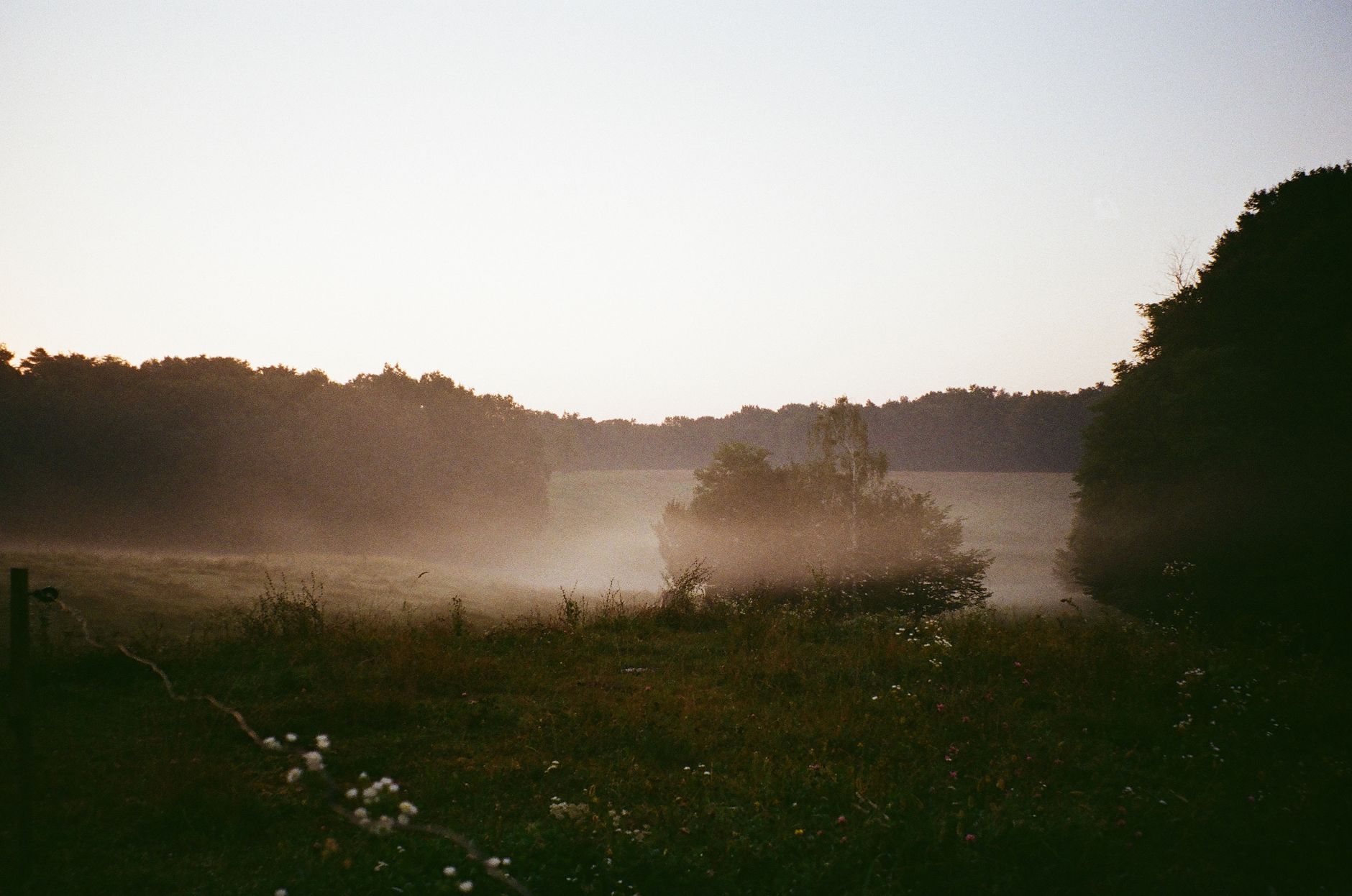
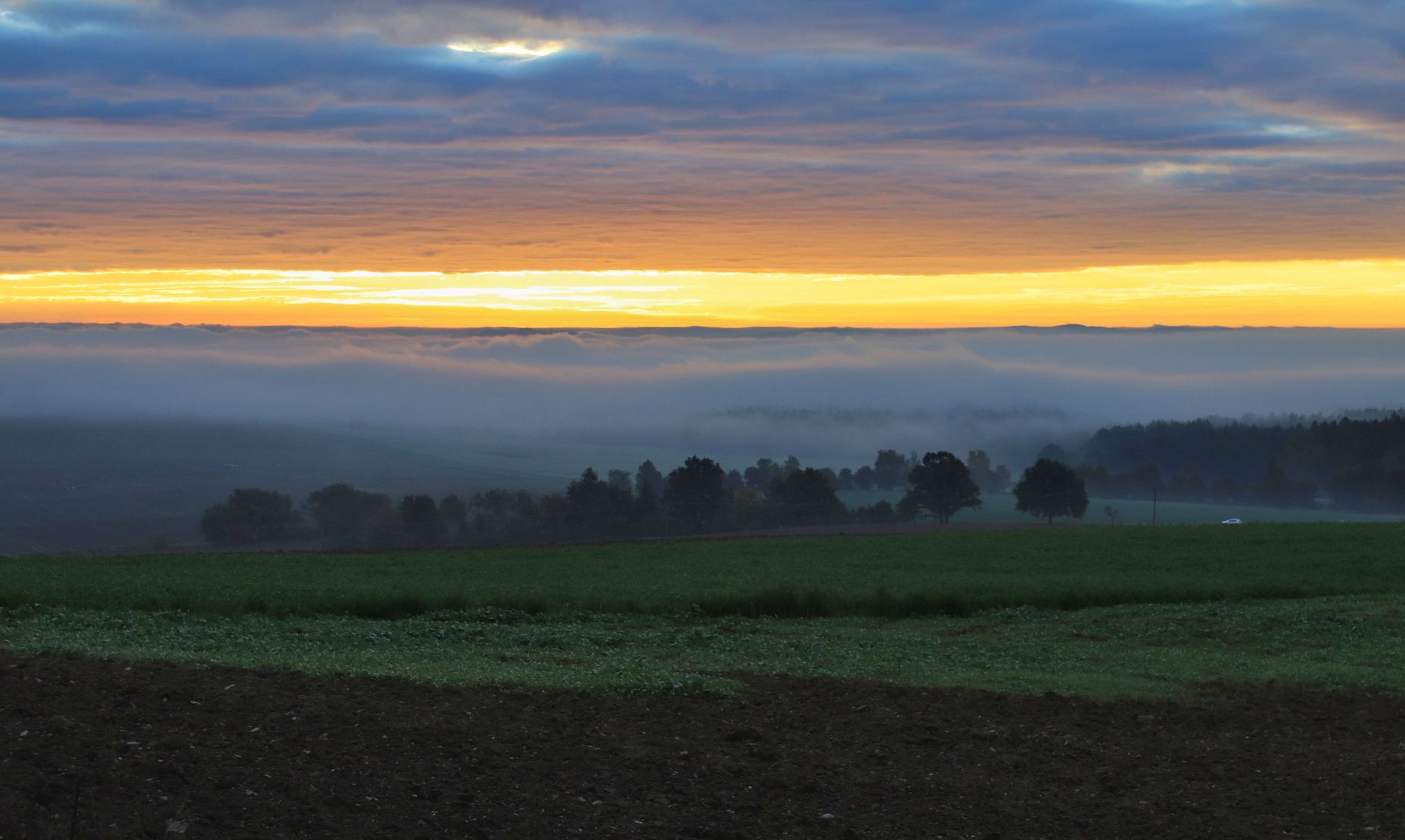
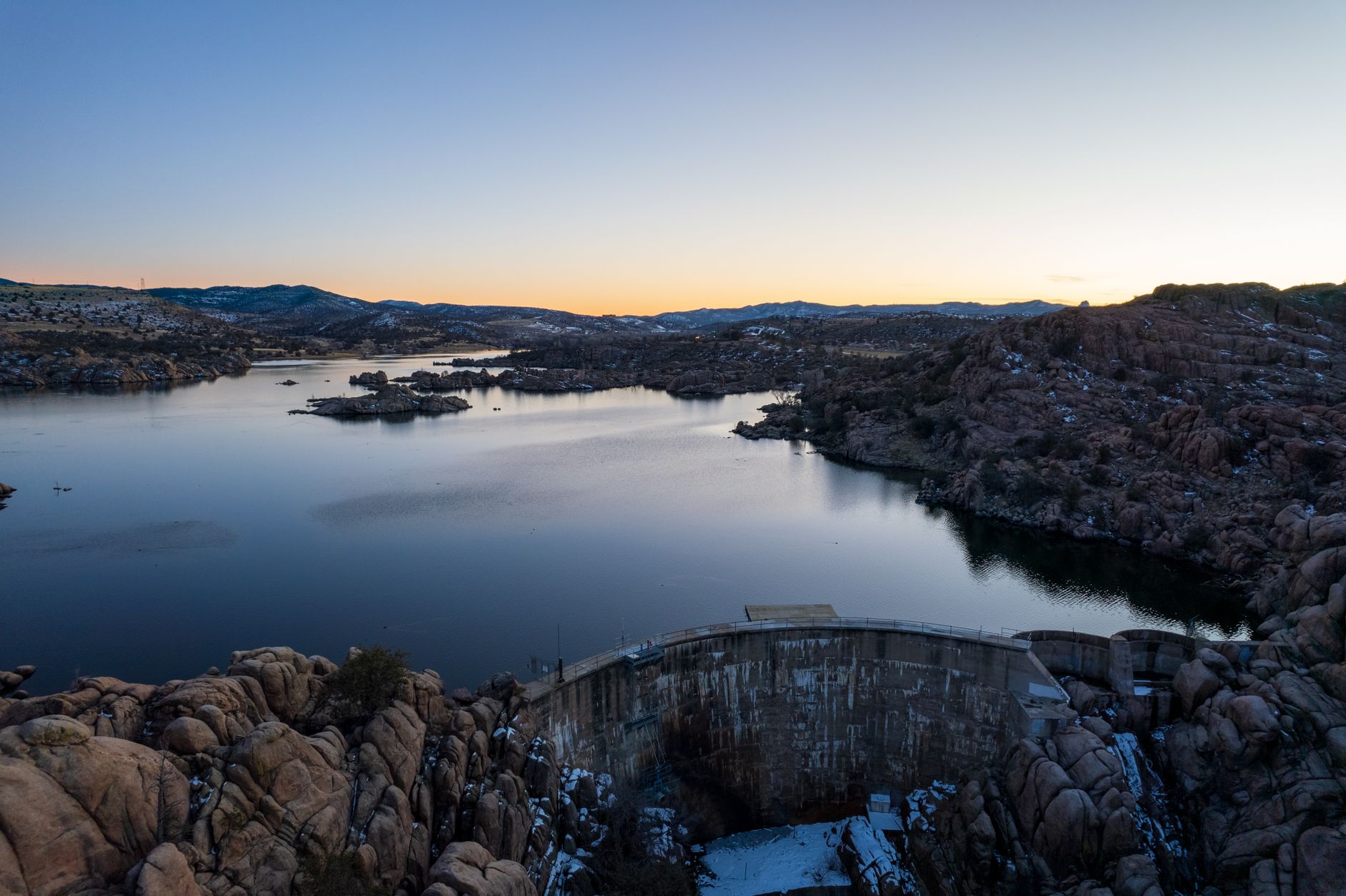
Gran’s bungalow sits where the town stops pretending to be countryside. Last house on the left, a horse paddock behind it, then the Forestry Commission pines, then the reservoir. The kitchen window frames the water like a picture nobody asked for, and every autumn you can watch the level fall a metre at a time while they run the valves. Below the garden runs the lane the water company uses to reach the dam foot. Nobody agrees what it’s called. There’s a post at the top of it where a sign must have been, once. I grew up on this street and couldn’t have told you what the sign said.
I made tea, cleared one cupboard to sleep in, and listed what I could by lamplight. Bird table. Stairlift. Gardening almanacs going back decades. I worked until the torch went flat.
The Bailiff’s Version
The gate was gone in the morning.
The field gate at the bottom of the garden, the one you leaned on to watch the planes. Not opened, not forced off its hinges. Gone, hinges and all, and the posts were smooth where the hinges had been — no holes, no raw wood, no paint shadow. Two posts, like a piece of furniture nobody ever assembled.
Scrap men, I decided. Scrap men are thorough.
Mr Petch from number four caught me staring at the gap. Eighty-one, waxed jacket on a warm morning, forty years walking that lane for the water board before his knees gave out. He asked if I was Joan’s granddaughter, and then he asked, the way you’d ask about a loose slate, whether I’d moved everything I meant to keep off the lane.
“What does the lane have to do with anything?”
“They opened the valves Thursday,” he said. “It’ll be a foot down by tonight. That’s when it takes.”
He told it plainly, like a man reciting tide times. The lane takes one thing a year, on the night the level first drops a foot. Ordinary things. A gate latch. A bell off a cow’s collar. A bench. Whatever stands on the boundary. You don’t report what it takes — report it, and it takes a second thing out of the paperwork, your word and your claim and the record your incident number points at, until you can’t prove the first thing existed either. And you don’t replace what went, not in the same season, because a replacement is a statement that it should never have gone at all.
“That’s one version,” I said. My mother’s version had no gate in it. Hers was about whistling: you don’t whistle on that lane after the level drops. She’d have had it off Gran, some other decade, some other telling.
“Your gran kept it fed,” Mr Petch said. “Forty years I walked that lane and never knew her to miss a year. She’d have left something on the stile by now. You want to think about that before dark.”
Fed. I thanked him for his time. I had boxes to flatten and a skip to book.
The Tin
The flour was at the back of the cupboard under the stairs, behind a half-bag of self-raising from a decade I couldn’t name. Inside the flour bag, a tobacco tin. Inside the tobacco tin, luggage tags.
Dozens of them. String and a golf pencil in the bottom. Each tag carried a year and a thing.
1979 — the brass bell
1986 — the rain gauge
1994 — the gate latch
1998 — the pear tree (took it anyroad)
2003 — the iron seat
2011 — the bird table
2019 — the water butt
The pencil had been over some of the words twice, pressed harder, the way you write when you’re arguing with yourself. The 1998 tag had a small x beside it, and the note in brackets. That tree hadn’t been Gran’s to give. Nobody left the pear tree anywhere. It went the same October the orchard sold, and Gran wrote it down like a receipt for something she’d been billed for by mistake.
Forty years of tags. Forty years of Gran “always losing her things,” which is what the family called it at every Christmas since I was tall enough to reach the good biscuits. The bird table went in 2011 and Uncle Robert built her a new one for her birthday and it was gone by the next autumn and everybody said, typical Joan, she’d leave her own head in a field.
Under the tags, wrapped in a J-cloth: the ring. Plain band, worn thin along one edge, sized for a hand smaller than mine. It had a tag of its own, string already threaded, and the tag was blank. No year. Ready.
I sat on the stairs with it while the light went out of the kitchen window and the valves under the pines kept up their hiss.
Read the tin all at once and it says one thing. Every tag is something ordinary. Every tag is something that stood on the boundary, or could be carried there. And the ring was the next one, chosen and set aside before the funeral, because Gran knew she was going and wouldn’t be here in October to pay.
She knows where. The will wasn’t talking to Mum at all.
The Stile
The number came off the wall that night. The porcelain 7 by the front door, and the two screws with it, and the holes the screws had lived in for fifty years. I woke to a doorbell that wouldn’t ring because there was no plate for the wire, and no wire, and no hole, and render as smooth as the day the house was pointed.
I didn’t phone it in. I want that on the record as a decision and not a failure of nerve: the van was parked on the lane, because the drive was stacked with flat-packs, and in the van, boxed for scanning at Mum’s, were five boxes of photographs. Sixty years of them. Gran’s whole life on paper, sitting on the boundary in the dark on the one night the boundary collects.
Moving the van was the sane part, and I moved it, up onto the verge where I could see it from the kitchen, and then I sat in it with my forehead on the wheel doing arithmetic I already knew the answer to. The ring was the only thing in that house Gran had chosen for this. Chosen years back, maybe, the way you choose what a standing debt is allowed to cost. It wasn’t on the probate list because it hadn’t been found. If it went on the stile, no inventory would ever show it existed; the will’s line would read as an old woman’s confusion, and Mum would sigh and let it go, because Mum forgets.
At dusk I threaded the blank tag through the band, wrote 2026 in Gran’s golf pencil, and set the ring on the top step of the stile where the lane runs under the hedge. Then I went in and boiled the kettle and didn’t watch, because standing at the window with my arms crossed felt like haggling.
The step was bare at seven. Bare, and swept, though there’d been no wind.
I wrote not found among the effects, signed the form, and drove the van back with the photographs untouched. The bungalow sold in the spring. The buyers are young; they ask me about the reservoir sometimes, politely, the way people ask a question they’ve decided in advance is charming.
At my cousin’s christening in July I told it — the gate, the tin, the valves — and it went down well, and halfway through I heard which version was coming out of my mouth. No tin. No ring. The whistling version, Mum’s version, the safe one where you keep yourself unlucky-proof with a rule about whistling. I couldn’t find the other version anywhere in my mouth. Not the words. Not the shape of it.
The gauge board by the dam reads a metre and dropping. There’s a spare tag in my coat pocket, string already on it, nothing written yet.