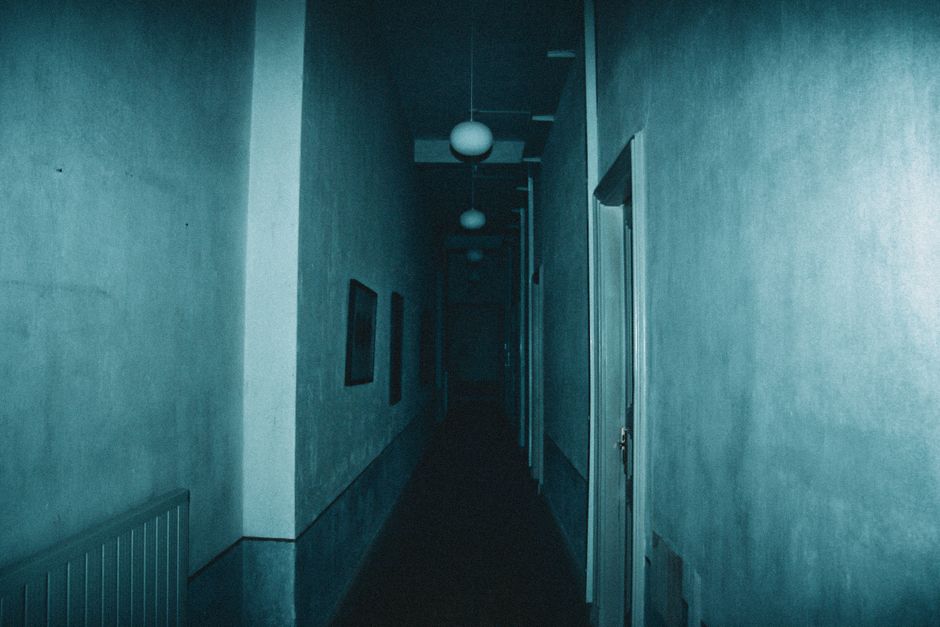
Two Hundred and Six
Two hundred and six is what the house measures, one full circuit in a blind woman’s steps: back room, front room, kitchen, back hall, home again. I walked it out for Mum the year her sight went, and she made me do it twice to be sure. She refused a cane indoors. It’s my house, she said. I’ll not be a guest in it. So she learned the walls with her hands, and she counted her steps in twos, under her breath, two soft beats at a time, the way other women hum.
Dad’s stroke came two winters after we buried her. It took his left side and most of his words, and it left the stubbornness. He came downstairs to sleep in the back room, where she had — the stairs were past him by then. Priya the physio gave us a belt to hold, a sheet of exercises, and a verdict for the record: a very teachable gait. Her word. Gait. Writing came back to him before speech did, so the practice notebook was his, one fair line a day.
Bridget came mornings, on the council’s money. Nights were mine. I’d moved home in March on unpaid leave; Manchester would hold my post until the ninth of May and not a day past it, and Dad turned eighty on the twenty-ninth of April. That was the arithmetic of my spring. Stairs by his birthday, tea carried in his own hand, train on the ninth, conscience clear.
So at ten, and again at two, I walked him the circuit with my hand on the belt and my mouth doing the count. In twos. It wasn’t a decision. Twos was simply the number this family counted in.
Third week in, I came down at three to the sound of him on the move and met him at the kitchen door. He’d done the whole circuit alone. Fluently.
It should have been a triumph. But the tread was wrong. All those weeks I had built his walk out of parts — heel, then toe, then weight — and here it came rolled through in one motion, light, even, a walk with nothing left to learn. At the threshold his heel set down twice. Twice. And his right hand wasn’t out for balance; it trailed the wallpaper, fingertips barely on it, the way you read a page.
The Amber Dots
After that he walked every night, and better each time. Priya chalked her lines on the front-room floor and could not account for the improvement; nights were outside her remit. I volunteered nothing. What was there to say — that my father had begun to walk like a woman?
Like Mum, though it cost me something to write that even now. The trailing hand ran at her height, not his. He is tall; to keep his fingers where the wall asked, he folded the wrist down and held that ache the whole length of the hall. In the back hall he stopped three strides short of the end and stood with a palm flat on the boarded-over scullery door — he screwed it shut the summer after the funeral, because it had never once latched — and he stood there as long as it used to take her to gather her breath at that same spot. Then back to bed, and no memory of standing in the cold.
And the sound. Almost no words left to him, but in the passage at night he made a sound in his throat, two soft beats, two soft beats, all the way down and all the way back.
I followed him once with the lights off, so as not to break whatever was carrying him, and my own fingertips caught something on the wallpaper. A raised dot. Then another. Amber, round, a cabinet-door bumper from the hardware shop. They run the whole circuit at a height that was never mine — hers. A dozen of them worn smooth as river stones by eight years of a blind woman’s fingers. In her sewing box afterward I found the old packet, empty, filed under the spare, still sealed in cellophane.
On the board over the scullery door sat one that was not worn. Bright. Its adhesive still tacky under my thumb. She had been dead two years, and the spare packet had never been opened.
A Fair Hand
The notebook was Priya’s idea. Since the stroke his hand in it came out fair and small:
22 March. Ten lengths with the belt. Tired.
4 April. 3:05. Circuit alone. 412. Did not mean to.
Four hundred and twelve. Two hundred and six there and two hundred and six back — and Dad’s legs are a foot longer than hers ever were; on his stride the circuit is half that. The count didn’t care. The count had been set to a woman five foot nothing, and the walk reset whoever performed it. I had never told him the number. At breakfast I laid my finger on the line and asked. He put his hand flat over the page and sat with it a long time, and then he wrote beneath, in the fair small hand: not me. The only words he ever set down about any of it.
Daylight said cured. Chalk lines at the day visit: even, symmetric, good push-off. Priya signed the discharge form with a flourish and told me to bottle whatever we were doing at night. On his eightieth he crossed the front room unaided, tea steady in his hand, no double-tap anywhere in him. His hands hung at his sides. He slept the whole night through and woke ten years younger. Whatever had borrowed him gave him back in better condition than it found him.
The Ninth
My ticket was for the ninth. For six nights after the party I slept the whole night through. I want that on the record.
On the seventh I woke standing. Back hall, cold through my soles, palm flat on the board over the scullery door, lips moving. Two soft beats. Two soft beats. My wrist ached between the bones — folded down, held down the whole length of the house at a height that was never mine. On the landing, my phone held the record of it: 3:11 to 3:17. Four hundred and twelve steps.
Dad slept through all of it. He sleeps beautifully now.
I stood at the door until my arm came down, and then I did what she taught me with everything in this house, which is to go on by touch. Along the wall at her height: the old dots, smooth as river stones. At the end of the run, the new one, still bright.
Beside it, a hand’s width higher, a second. Amber. Tacky under my thumb. At my height, where no hand in this family but mine reaches.
The train is on the ninth. Some mornings I come down and my feet are already turned toward the back hall before I’ve decided anything, and I stand at the kitchen door counting the tiles — two soft beats, two soft beats — holding the kettle in both hands until the count lets go of my mouth.