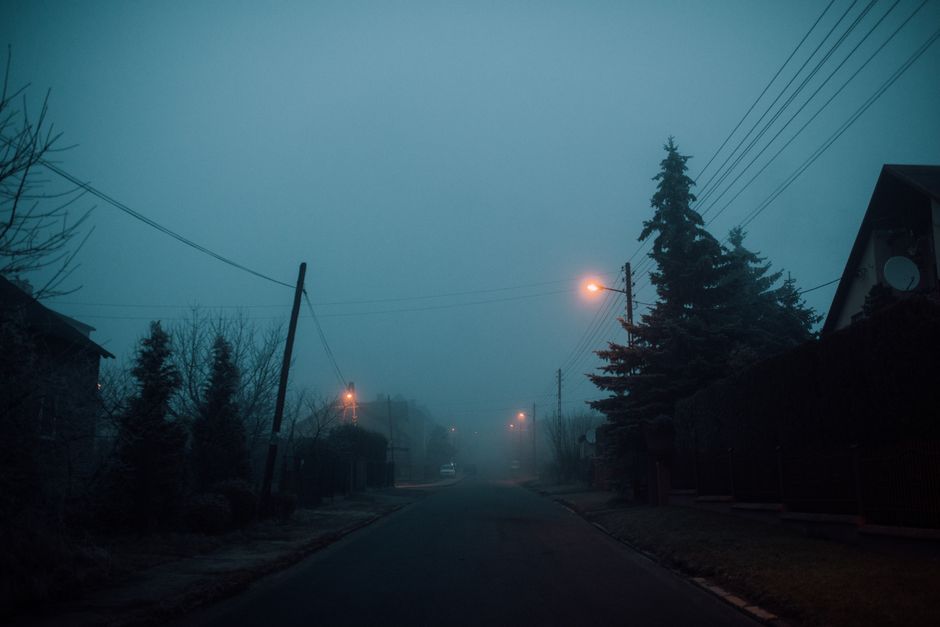
The Rule at Kanne
Every driver on the Kamosawa Line learns the rule before they learn the gradients. If the Kanne home signal shows red in falling snow, you stop, and you wait. You don’t radio control — the valley eats the transmission. You don’t accept the on-sight authority, whatever the current rulebook says. And you don’t get down on the ballast and walk the section, not in snow, not in daylight, not with a conductor holding your arm. You log the time. You wait. The signal releases you when it releases you.
No manual carries the rule. On a branch of twenty-seven kilometres you inherit things.
My last trip was the thirty-first of March, the 21:05 down from Torigoe Junction to Kamosawa, the final service before the buses take the valley. Sixty in April. Thirty-four years on the line, first as conductor, then in the right seat, and in all that time no delay was ever entered against my name. Drivers trade that the way other men trade golf scores. I wanted to bring the last train in on the posted minute and finish clean.
It was snowing when we left Torigoe. Dry March snow, fine as sifted flour, the kind the pass roads close for.
Sakaki, the conductor they had put on for the ceremony, called the halts. Fourteen of them. At the sixth the schoolchildren got on with their teacher, and after them the mayor in his good coat, and two women from the co-op with boxes of tea things for the terminus. A photographer from Tokyo stood at the back with a tripod he never opened. Sixty-one passengers. I counted them onto my train the way you do when it is the last time anything will be yours to count.
The Kanne home signal, at the ninth mile, showed red.
The Timetable Bent
Here is what the old men taught me, and what my father confirmed without ever explaining.
On the twelfth of February 1972, in a storm that took roofs off in three towns, the up last train was stopped at Kanne by the patrolwoman’s red lamp hung out from the box. Rockfall, she signalled. Beyond the tunnel mouth. Then she went out on foot to assess it, which was the job, and a second slide came off the slope, and what the recovery crews recovered fit in one canvas bag. Her lamp they found upright on the culvert parapet, still burning.
The train she stopped had sixty-two aboard.
The line reopened in four days. The Kanne signal, though — in falling snow, at that signal, trains got held. Ten minutes. Twenty. Then released, always, with the snow still coming down, no fault found, and no rock found either. The railway replaced the wiring, then the lamp, then in 1991 the whole box, remote-worked from Torigoe, door padlocked, and the holds kept coming. Central control can authorise a train past a failed signal at on-sight speed, crawling, horn at every metre. Twice in the nineties drivers took that authority in snow, and twice they stopped. A track worker in an orange anorak, they reported, standing in the four-foot at the tunnel mouth, waving a red hand lamp across the rails. Both drivers set back to the loop at Ide and waited out the night. The railway logged trespassers. There is no record that anyone went up the line to look for one.
So the timetable bent around the red instead. In the winter of 1983 my father sat at that signal four hours with a trainload behind him. His conductor walked to the box and back through the weather and lost three toes to the cold, and that spring the railway stopped running the last train past Kanne in the snow months. Then year-round. The evening connection became a railbus, then nothing. The hospital upvalley lost its training accreditation — you cannot keep young doctors where they cannot get out — the school consolidated down the line, and ridership did what ridership does. This spring they resurfaced the valley road and put buses on it, and the railway held a ceremony, and I got the last turn, because I had the most years and no delays.
That is the ledger nobody reads. In 1972 the red light at Kanne saved sixty-two people. Every year after, it cost the line a little more of the town it was holding safe.
The Box
Five minutes is the regulation wait. Then ten. The snow came straight down, the kind that means it. Sakaki had his phone out — no service, the valley — and said the word authority in a young voice, and I said no, and he looked at me the way you look at a man making a decision you will have to report.
The box stands two hundred metres back from the signal, beside the old crossing. Since 1991 it has been a shell, panes gone to putty, the hasp rusted to lace. I put my shoulder to the door and the hasp gave.
Inside, dry. Snow had come no further than the sill. The desk stood under the window with the filled lever holes behind it, and on the desk a train register, and across the register a pencil.
The book fell open where a spine learns to fall open.
12 Feb 1972, 21:10. Up last stopped, Kanne home. Protection placed, signal to danger. Rockfall beyond tunnel mouth. Going on foot to assess. — Sonobe, patrol
In a wire clip under the register’s front cover, the protection form. One page.
PROTECTION RECORD — KANNE HOME SIGNAL
Placed: 21:10, 12 Feb 1972 — Sonobe, line patrol
Reason: obstruction, rockfall, tunnel mouth
Relief: relief to walk the protected section on foot, confirm clear, and sign.
Relieved by: ___
The blank was blank. Fifty-four years of weather had yellowed every line on that page except the one that wanted a name.
My father’s conductor, the one who lost the toes, reached this desk in 1983 and read this form. He had sixty passengers at the signal behind him and a blizzard on a two-point-two-kilometre walk ahead of him, and to sign relieved without walking the section would have been a lie in a safety record. So he did neither, and they waited four hours, and the timetable bent a little more.
I had what nobody at that desk ever had. Behind me was the last train there would ever be. No service after mine to protect, no connection to miss, no superintendent counting my minutes. The card in my breast pocket said thirty-four clean years, and if an entry went against it now, it would be the last entry in the register of a closed railway.
“Watch the train,” I told Sakaki, and took the hand lamp off its hook, and went out into it.
The Walk
Two point two kilometres, tunnel and cutting. I walked the left-hand rail with the lamp and let the weather come at me level. The culvert beyond the mouth — the one that let go in ’72 — is poured concrete, chamfered, with a date cut into the top: 1973. Fifty-three winters have stood on that date. Above it the slope sits where a slope should sit. Snow on untouched ballast, going white where snow should go white. At the halfway point I put my palm on the rail out of old habit: cold past bearing, no train passed, no train coming, nothing.
I walked it out and I walked it back. My breath had frozen in my collar. That is the whole of it. The section was clear, and it had been clear since before I held a licence.
Back in the box I took up her pencil. I signed the form where a name had been waited for fifty-four years, and under her entry in the register I wrote the relief the old way, in the words they taught us in a classroom I never expected to use.
31 Mar 2026, 21:52. Protection at Kanne home relieved. Section walked on foot, full length, clear. All trains may proceed. — Mizoguchi, driver, last down train
When I looked up from the page, the signal was green.
I had shown no lamp, touched no frame. The green sat in the snowfall, steady. I stood at the window a while. Then I set the hand lamp in the frame anyway, lens out, the old courtesy for whoever needed to see it, and I think by then that was me.
Sakaki had the doors closed before I reached the cab. We took the tunnel at on-sight speed out of respect, twenty an hour, and the box went by on the left with its window lit green, and I gave it one note of the horn, which is not procedure, and nobody wrote me up.
Kamosawa, 21:58. Eighteen minutes down, the only ones of my career. The whole town stood on the platform, and the stationmaster rang the arrival bell through all eighteen of them.
They lifted the rails in June. The bus company took on two of us; the road holds the same valley, and I drive the 8:10 through it now. The railway was going to pulp the old registers, and when I asked, the archivist gave me the 1972 book, because nobody else wanted it.
Her entry is the last record that the line was ever protected by anyone.
Mine is the line underneath.