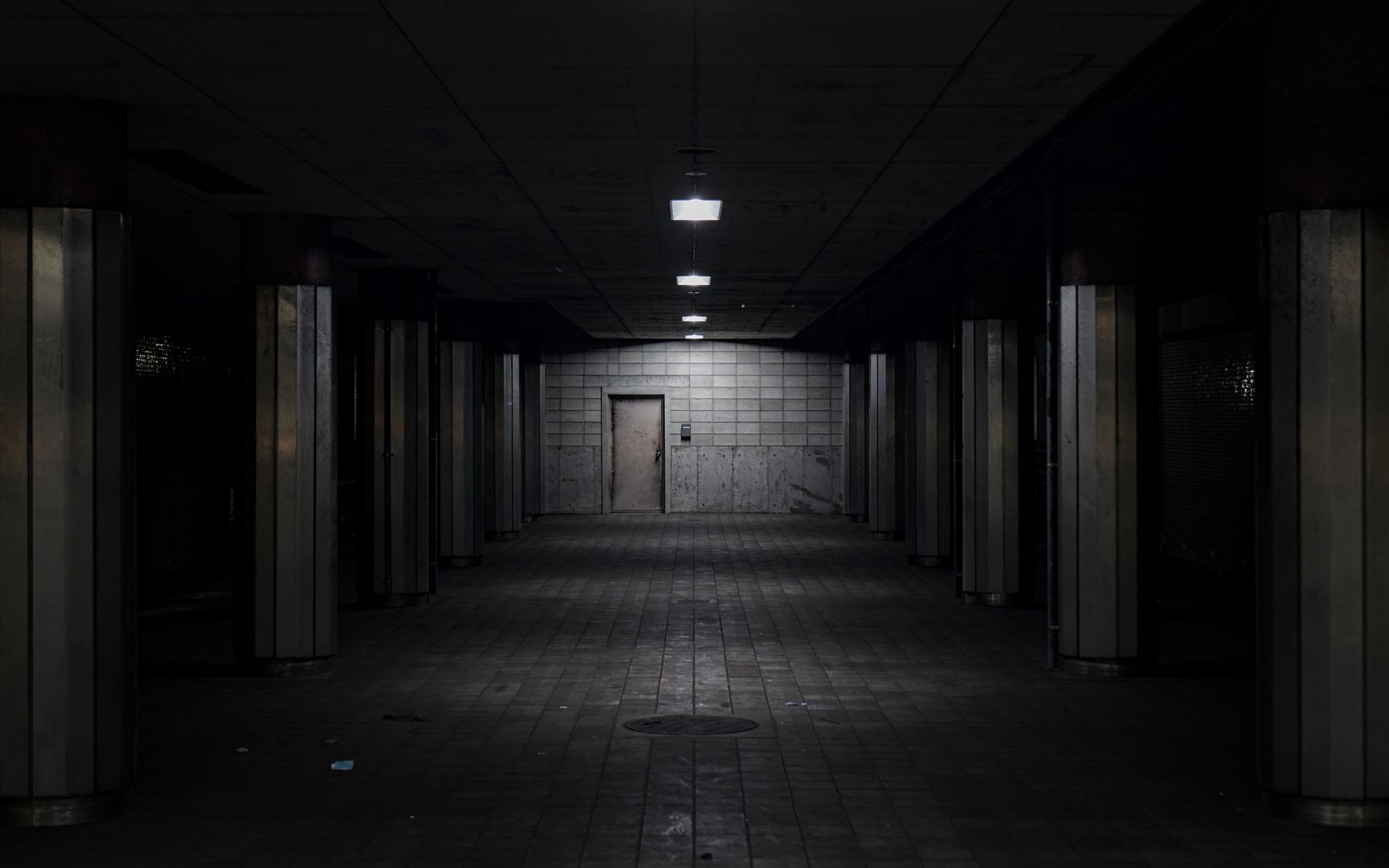
There were eleven gauges on the board at Hoxie Fork, and ten of them were mine to sign for. The eleventh, Gauge 7, sat at the end of the bottom row with black tape across its line on the schematic and the word INOP printed in some dead supervisor’s hand. Its penstock had been capped in ’87, seven years before I ever set foot in the station. The line it used to read was dry gravel now, grown over with alder.
My job was the night relief, ten to six. Every hour I walked the board with the logbook under my arm, wrote the levels, initialed the page, and at 03:00 I called the sawmill downstream and read them the flow. That was the whole of it. Warrick had days, and I had the vacancy to think about. He was retiring in November, and the day slot was mine if my logbook stayed clean.
My logbook was very clean.
The needle on Gauge 7 read 2.1.
A stuck needle reads one number forever. Gauge 7 read 2.1 on my first night, 2.1 on my second, and on the third night of September, when rain came down the Nettle valley in ropes, it read 4.6 before any of my ten live gauges had so much as trembled. I stood in front of it with the chalk still in my hand. By the time Gauge 1 caught up, an hour later, the two needles sat at the same height, and the difference between them was nothing at all.
Nobody trains you for a thing like that. The procedures cover instruments that work and instruments that are broken. Gauge 7 was neither. I wrote the hourly column as usual, left 7 blank the way you’re taught, and drove home at dawn with the wipers going and my hands perfectly steady on the wheel, which struck me at the time as a kind of insult.
Forty Minutes
I did not report it. I want that plain, because everything after follows from it.
Reporting meant a written anomaly, and a written anomaly meant the inspection team from the district, and the inspection team meant the station shut for however long they liked, with my relief contract finished the day they padlocked the door. I had eleven months toward the day slot. Warrick’s November was coming. So I watched instead, the way a person watches a door at the end of a hallway.
Through September the needle led the river. Not always by the same amount. Forty minutes in ordinary weather; two hours ahead when a front was still stacked behind the divide, invisible to me and to the barometer both. On the night of the 26th, Gauge 7 fell slack to 1.9 at half past one. The sky stayed shut and starless till morning, and at 09:40 the river dropped as if something upstream had reached down and pinched it. Nothing in the official record explained that. Nothing in my own head did either.
The logbook has a column for remarks. I began leaving the remark line empty and keeping Gauge 7’s number in the margin, small, in pencil, under the INOP. The pencil became ink, because that is how these things go. You would do the same.
02:00. Gates steady. G1 3.4. G7 4.9.
03:00. Mill advised 310 cfs. No surge reported.
04:00. G7 5.2. Spill gate 2 opened one foot, on my authority.
That last line is the part that matters. I opened the gate before the river asked me to. The mill had been logging our surges all season — every time I chased the live gauges, they got a wall of water at breakfast. That night they got none. The foreman’s voice came back over the radio and said, whatever you’re doing different, keep doing it, and I said I would, and my initials went under it.
The Shelf
In October I went at the archive. A steel shelf in the back room, logbooks back to 1951, kerosene and wet paper. I wanted one book: 1987, the year they capped the line.
I found the entry. Fourteenth of August, night shift. The last reading ever taken off Gauge 7 was a 2.1, initialled R.D., one clean column, and beneath it the words line dry — gauge to remain. I turned the page. The next night was R.D. again, all ten live gauges logged neat as church, and Gauge 7’s column empty. The next, and the next — seven years of empty columns marching across that shelf behind one plain number.
There was nothing in it. No story, no warning, no entry in a shaking hand. A man had written a number and gone home, and the number had waited seven years for me to walk in and read it. I sat on the fender of the kerosene stove with the book on my knees for a long while. Then I squared the shelf, put everything back in order, and walked out to the board, where Gauge 7 sat at 4.9, patient, forty minutes ahead of the rain.
November
Warrick retired on the eighth. The superintendent drove up from the district office with the paperwork in a cardboard folder and offered me days on the spot — the slot, the house by the yard, the school bus at 07:40 that my daughter could ride instead of hear about.
I asked who would take nights.
He had a list. Two names, young men, sharp, the type to read the manual front to back and then read the board the same way. The type that reports. I heard myself say I’d stay on through the winter, for continuity, and watched him write it down as a favor to the station. The folder went back in the car with the day slot still inside it.
That is the price. I want it said plainly, because no ledger anywhere will say it for me: I traded the bus at 07:40 for a number on a dead gauge, and I would make the trade again tonight.
The station runs better now than it ever has. The mill’s logs are clean. The district thinks Hoxie Fork finally got lucky in its relief operator. My daughter is taller than the counter by the door, and on the mornings she’s awake to see me come in, she asks what I do all night in a building by myself. I tell her the truth. I read the river, and I write it down, and every hour I initial the page.
Ten columns in ink. The eleventh is mine also, in the margin, under INOP. The needle knows the river forty minutes before the river gets here, and I have stopped asking which of them I work for.