The Low Road
The night round out of Elmshead pays two pounds an hour more than the days, and at twenty-two that was the whole of my career plan. Fourteen drops between ten and four, all of them down the low road to Backdale: one B-road, hedges higher than the mirrors, the kind of road you learn by its corners because the signs give up half a mile in. My insurance eats most of the difference. One written-off Fiesta on file, and the insurer had fitted a box to the van before I’d finished signing — forty per cent off the premium, so long as I drove like a man delivering eggs.
The licence I actually want costs two grand with the training. Class C. Articulated money, eventually. The night round’s premium was the only route to it that didn’t involve moving back in with my mother, so nights it was.
Three weeks in, on the way back from drop nine, the van stopped itself.
Event Fourteen
Not braked. Stopped. My foot went to the floor and the pedal did nothing at all — no pulse, no give — and then, somewhere below the hedge line at Swallowshaw, my foot mattered again. The engine hadn’t stalled. The wipers finished their stroke. In the headlights there was a gap in the hedge where a field track should have been, except there was no field track: two stumps of masonry lost in nettles, and that was the lot.
The van sat. Thirty seconds, maybe forty, engine idling, handbrake light glowing on the dash though I hadn’t set the handbrake. Then the light went out and the van rolled forward like a bus leaving a stand.
The app lets you annotate events. The annotation box isn’t built for the truth, so I typed fox and put the phone away.
HARSH BRAKING EVENT 14 — 02:17
Low Road, Swallowshaw
0.61 g · no obstacle recorded
It happened again the next night. And the next. Always the same gap, always between two and three, always on the way back up the valley. Dry nights, the pause ran thirty, forty seconds. In rain it stretched to a minute and a half. The Tuesday before midwinter it ran two minutes and nine seconds by the dash clock, wipers parked, headlights steady on the nettles, the alternator dipping once — a held breath — and nothing else. No shape. No light. Not even the fox I kept insisting it must be.
The box scored every one of them. By the end of January my driver score was the colour of the claims section’s drop-down menu, and the renewal quote came back with a surcharge. Thirty-eight a month. Risk tier three, reviewable after twelve months of clean driving.
Clean driving.
The One-Inch Sheet
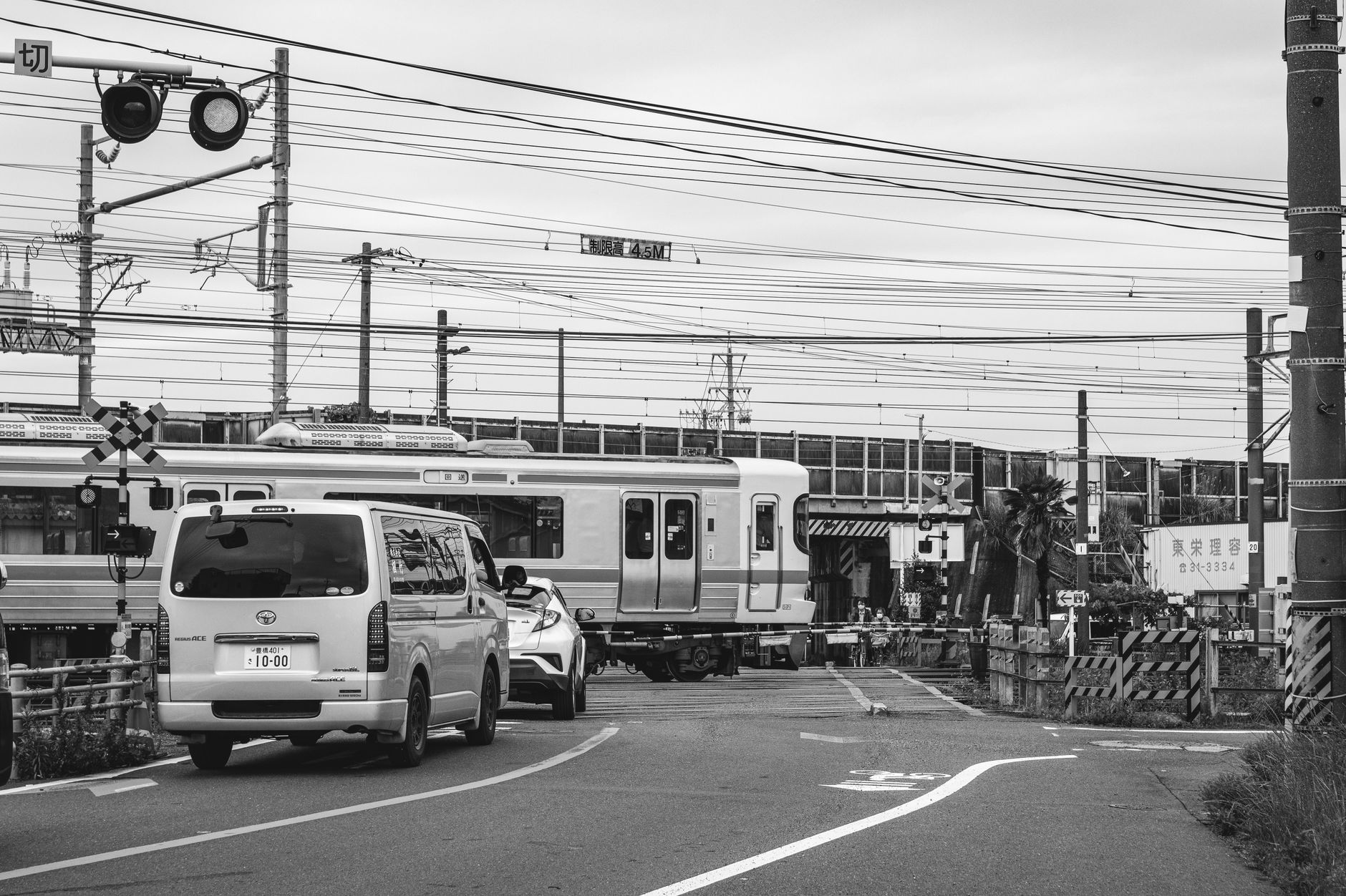
There’s a boot fair at Marsh Fold on the first Sunday of the month, and a bloke there sells maps out of a fruit box, fifty pence each. I bought the 1949 one-inch sheet for the district because my grandad’s people farmed at Backdale and I wanted the shape of the land they’d have known. The railway was on it, ruled dead straight across the sheet. The Backdale branch, closed before I was born, rails lifted in ’68. Where it met the low road at Swallowshaw, the map printed a pair of little gates and one word in the old copperplate: crossing.
The app has a map view. Every flagged event sits on it as a small red pin, and I had thirty-one pins by then, and they ran in a line. Hedge to hedge. Dead straight. I laid the phone on the one-inch sheet and the pins stood along the branch’s alignment like sleepers.
On my day off I walked the hedge line. A hundred yards either side of the gap, in the nettles: the two masonry stumps, a concrete post with a hook in it where a top gate would have hung, and the footings of something small — a hut, a cabin — under brambles behind the hedge. There’s a bungalow there now, seventies brickwork by the look of it, satellite dish, plastic windows, a rotary washing line. I didn’t knock.
I asked Dess at the depot, who is sixty-three and has driven every road in the district. “Branch shut before I ever sat in a cab,” he said. “Road’s quicker now.” That’s all there was. No crash, no story, no woman in white, nothing for the internet. The map said something used to cross there. The van agreed.
No Obstacle Recorded
Mags at the depot offered me the day rounds when my score went red. I did the maths on the back of a delivery manifest. Days: lose the shift premium, about two hundred a month. Keep the nights and pay the surcharge: thirty-eight. The bypass over the tops: fifty minutes a night, extra fuel, and the round stops fitting the hours. The cheap option was the one I’d already chosen — which was convenient, because I’d chosen it at the wheel weeks before I ever ran the numbers.
The craft took longer. Third gear, twenty-five, lifting off a hundred yards short so the deceleration never crosses the box’s threshold. Done right, the app logs a smooth stop, and smooth stops don’t count against you. The gap still gets its stop. The box just stops seeing it.
The tier doesn’t come back down. That’s in the small print; I read it on the night I paid the renewal, thirty-eight a month line-itemed in my budget between diesel and road tax, a toll for something no current record recognizes. The pauses ran their seasons — long in rain, longest before midwinter, brief and almost polite in June — and I passed my Class C in the October, a season later than planned, the surcharge having eaten the difference twice over by then.
My last night on the round, I lifted off early, brought the van down to nothing at the gap myself, and sat with the engine idling and the headlights on the nettles for two minutes and some seconds by the dash clock. Nothing came. Nothing was ever going to come in any way I could see or the box could measure, and I sat there anyway, because by then the stop was as much mine as anything’s.
I drive an eighteen-tonner now, trunk routes mostly, and the new box logs me like a librarian again. Clean scores, eleven months running. But some nights, on some strange B-road with high hedges, I catch myself lifting off early for a gap I have no reason to slow for, counting seconds with my foot off the pedal. The machine logs it as nothing.
No obstacle recorded. As far as it knows, it’s right.