Blog

  • Lost in the Fire

    Lost in the Fire

    The Box Marked K-9

    I learned the rule before I learned the phone system.

    First week at the Carrow County land registry, spring of 2016. Prue ran the counter, and she gave me the rule the way you hand over a key. If anyone asks for the 1887 cadastral volume, say lost in the fire. Those words, no others. No apology, no “probably,” no offer of the microfilm index. Then ask if there’s anything else.

    “The courthouse burned in 1887,” she said. “Half the records went with it. Everyone knows that.”

    What everyone knew turned out to be thinner than the story. The fire had taken the east wing and most of the probate shelves, and the last survey book before the burn had come through it — charred at the fore edge, water-stained down one side, a century of being the book nobody pulled. It lived in a gray archival box marked K-9, on the bottom shelf of the cage, behind the 1911 tax duplicates.

    I didn’t ask why. Counter job, first week. You learn the answers before you learn the reasons, or you don’t last.

    The grant came in April. State records modernization, eighteen months of funding, and the funding was my wage. The archive had to be certified — shelf by shelf, item by item, every pre-1900 entry verified against the current land index, discrepancies corrected or documented. The county clerk signed the memo, Prue signed the memo, and I started at shelf A with a scanner and a laptop.

    K-9 came up in the third week. I logged the box, lifted the lid, and there was the book the rule was about, sound enough for its age. The instructions were plain: every pre-1900 entry. The rule was for the counter, and I wasn’t at the counter. I was in the cage with a scanner.

    I photographed the first pages that afternoon and put the book back.

    Reconcile

    The land index is the index. Parcels in, parcels out, owners, liens, corners. A parcel that isn’t in the index doesn’t exist in any way a bank cares about — you can’t sell it, inherit it, or tax it. The 1887 book disagreed with the index in small, specific ways. Parcel 118, Beeler’s Addition: platted in the book, absent from the index. Parcel 121: the same. I worked down the column and the absent ones kept coming.

    The grant language covered this. Reconcile. I opened the correction screen, cited the book as source, scanned the page, and reinstated Parcel 118. The system took it without complaint. Two days later a title company in the city called, requesting a certified copy of record for Parcel 118, Beeler’s Addition. Sale pending.

    I held the phone against my shoulder and looked at the screen. The parcel was there. It hadn’t been. Nobody at the title company had gone looking for Beeler’s Addition on their own — a buyer’s agent had a signed contract on it.

    You can see how it went.

    Fourteen parcels in Beeler’s Addition were absent from the index. The grant deadline sat in my calendar like a landlord. I batch-verified on a Thursday, cited pages, entered all fourteen, and went home caught up for the first time since April.

    By Monday there was a surveyor’s letter about iron pins on Parcel 118, a lender’s package for Parcel 4, and a voicemail from a man in Phoenix who said his grandfather had never stopped talking about the family ground in Carrow County, and could I tell him whether any of it had ever been mapped.

    I took the letters to Prue.

    She read them twice. She asked how many entries I’d made, and when I said fourteen she sat down on the stool behind the cash drawer, the one nobody uses, and stayed there a while.

    “Finish the week at the counter,” she said. “I’m going home.”

    Grady’s Book

    Prue didn’t come back Wednesday, so I covered the counter and the cage both, and hunting for the microfilm index I found the ledger she’d never shown me. Gray cloth, unmarked. Inside: forty years of requests for the 1887 volume. A date, a name, an address, and under each one the same three words — first in a deputy’s hand, later in Prue’s — lost in the fire. Rows of them. Some years brought two requests; one year brought nine. The hand for the first three decades belonged to a deputy named E. Grady, retired 1998, dead before I was hired.

    On the inside back cover, in pencil, in Grady’s hand:

    We do not confirm the book. What is confirmed is kept.

    I did what a records clerk does. I checked. The insurance maps of 1892 and 1907, the 1908 re-survey, the assessment rolls back to 1888 — Beeler’s Addition appears in none of them. Not surveyed, not platted, not taxed, not once litigated. Fourteen parcels that existed in exactly one place on earth: a burned book in a gray box. Until April, when I entered them into the land index, the one system whose word counts.

    The sale on Parcel 118 closed on the ninth of June. Certified by me. The deed is good. The buyer put a for-sale sign at the county road before the end of the month, and I drove past it on my way to work, because it is the only road.

    I tried to unwind one entry, as a test. The correction module wants cause, attested before the recorder, with evidence attached. The only evidence that Parcel 121 is wrong is the book that says it’s right. To prove the book false I would have to enter more of the book into the record, sworn, and argue from it. Every road out of the correction runs through the cage.

    Parcel 12, Block 3

    The courthouse square is Block 3. Under the registry, the assessor’s office, the circuit clerk, and the flagpole with the 1918 plaque, there are two parcels: Block 3, Parcel 1, the county’s, and Block 3, Parcel 12, a strip along the north side that has been part of the county’s parcel by every document since 1888.

    By every document except one.

    Block 3, Parcel 12 was in my Thursday batch. Fourteen parcels, and I wasn’t going to leave one out with the deadline on Monday.

    The current owner of record is Asa Beeler, 1887. Status: active. No lien, no transfer, no probate. Tax status: current — paid through the end of the fiscal year, receipt number and all. I pulled the receipt. The payment came in by mail in June, a money order with nothing on the remitter line, and the treasurer’s office had banked it, because that is what the treasurer’s office does with money that arrives attached to a valid parcel number.

    There is a man in the city who owns a field that was ink in a burned book a month ago. There is a name from 1887 that owns the ground under this building, and the paper is good, and the taxes are paid, and nobody is coming. But the day the county wants to build, or borrow, or sell so much as the parking spaces, the title search will start and end in the land index I fed.

    Monday brought another request for the 1887 volume, from a genealogist in Tucson. Nice handwriting. I wrote lost in the fire on the slip, initialed it, and entered the line in Grady’s book, the first entry under Grady’s last.

    What is confirmed is kept. I stopped confirming. That is the whole of my part now — the counter, the cage, and a strip of ground on the north side of Block 3 that answers to a name nobody living answers to.

    The taxes on Parcel 12 come due again in June. The money order will arrive, or it won’t. Either way I’ll be at the counter, saying the words.
  • The Amber Light Over Annside Edge

    The Amber Light Over Annside Edge

    How Moira Tells It

    Moira has driven the Marsk district rounds for nineteen years, and she told me the story at the start of my second winter, on the grounds that I was now doing Tuesdays and Thursdays over the top and ought to know. It came to her from her brother-in-law, who hauled aggregates over Annside Edge for six years, and he had it from an older driver whose name changes every time Moira tells it.

    The shape of it stays the same.

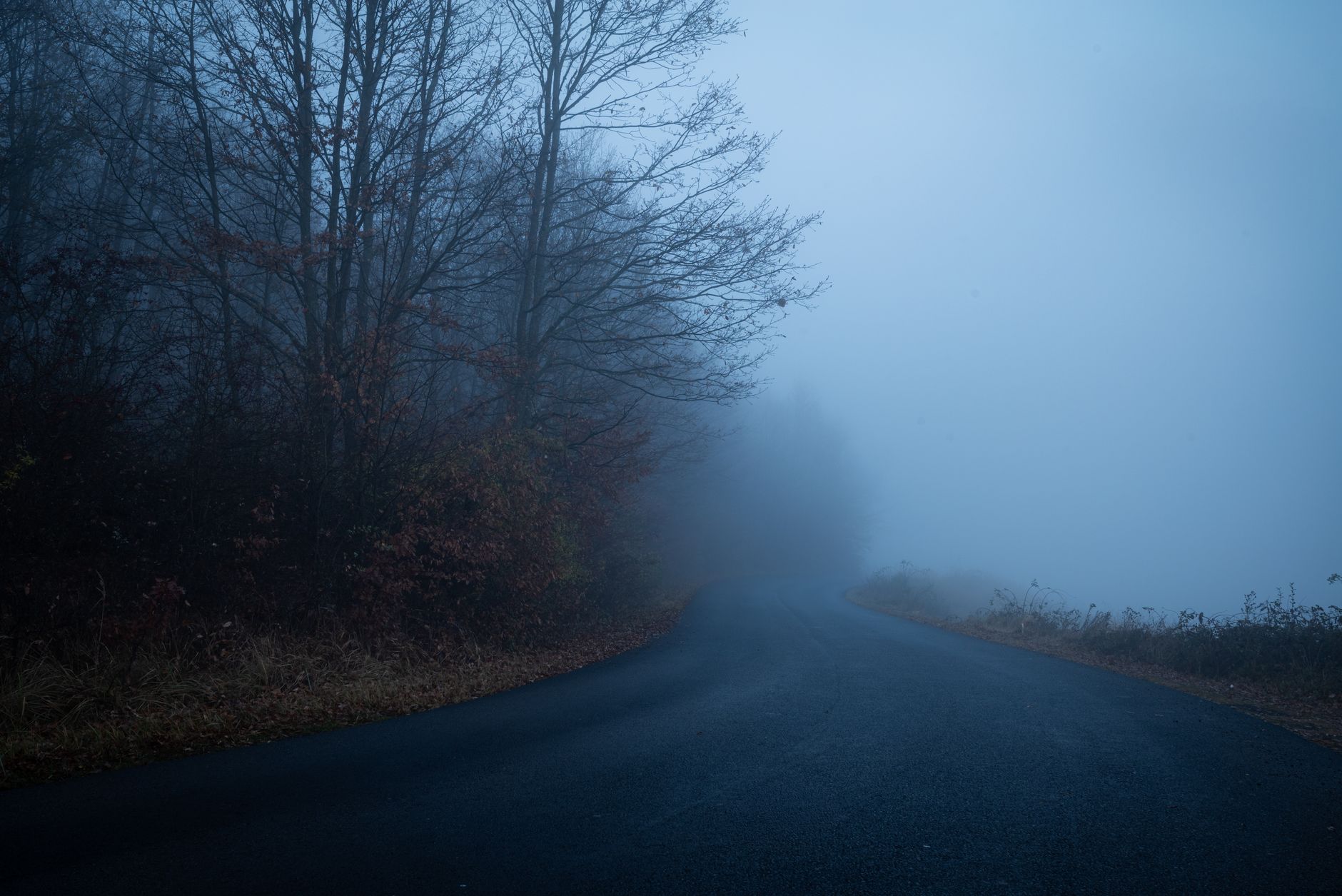
    First fog of October, any year, between half two and half four in the morning, on the stretch from the water board gate down to Marsk: a single amber beacon, the old rotating kind, running twenty miles an hour ahead of you. You fall in behind. You match it. You do not overtake, you do not flash your lights, and whatever happens you do not thank it — not out the window, not under your breath, not at the bottom when you’re through. It isn’t doing you a favour. It’s doing its job.

    Those it brings down arrive at Marsk with their paint unmarked. On that much, every version agrees. The rest they argue about. Moira says you must watch the light and never your speedometer. Her brother-in-law says a taxi man overtook it at the Elbow once and was found two fields off the road, standing upright in fog so thick the searchers walked past him twice. Somebody’s aunt says the driver is a woman. A man at the depot says there is no driver at all, only the light, and is told to shut up, because that isn’t the story.

    I filed it where I file most things Moira says. Fog, an old beacon on a highways truck, drivers pattern-matching their way home in the dark. I had Mr. Aldous and Mrs. Peake and the two bungalows at Pailings on my round, a fifteen-year-old hatch with a noisy heater, and one winter of getting over the top without an accident ahead of me. That was the whole of what I wanted.

    The Fourteenth of October

    The fog came down on the fourteenth, first of the autumn, while I was finishing the late round at Culerton. By the water board gate it stood over the hedges and I was down to second gear, windows cracked, listening for the gritter.

    The amber light was already there. A hundred yards ahead, no more. Turning slow.

    Twenty miles an hour. I know because I looked, and Moira’s rule about the speedometer turned out to be the one part of it I couldn’t keep.

    What it did, it did well. It slowed a full fifty yards before the frost hollow at the Pailings — the dip where field water crosses and the surface glazes in October — and took the Elbow wide, out past the marker stone, the line you’d take if you’d driven the road fifty years and knew where the camber lies. Once, on the straight above Marsk, it stopped altogether and held, and after a moment a ewe came off the bank through my headlights and trotted ahead of us both for a quarter mile, the way a thing is seen home.

    At the town boundary it was gone. No turn-off, no tail lights pulling away. The fog sat on the field above the allotments, the road ran empty and wet, and I was down.

    I’ve tried to describe the following week and mostly I don’t bother. Minded. That’s the nearest word. Something with a far longer attention span than mine had taken an interest in my axles and my stopping distance — briefly, in passing, the way a council takes an interest in a bridge.

    Six Days

    In the third week of November the fog came back and stayed. Not for the morning. Not for the afternoon.

    The county put the boards out on the Marsk road and local radio read the closure between the football and the overs.

    PASS CLOSED UNTIL FURTHER NOTICE — POOR VISIBILITY

    That was all it ever said. Below the Edge visibility was fine; you could stand at the top of Back Marsk and count Culerton’s streetlights with the barrier shut in front of you, and from the pub garden at Annside you could pick out stars. The fog sat on the pass itself, a mile and a half of it, gate to gate, like a held breath.

    I ran the rounds by the valley road instead. Three hours each way, down past Weirton and up the far side, and I told myself the schedule would hold.

    At four in the morning on the fifth day Mr. Aldous rang the bell at Pailings with the pain in his chest. I was there in nine minutes. The controller said fourteen for the ambulance and I said the pass was shut, and she said she knew, and neither of us said the other thing, which was that the helicopter sat weathered in at Culerton under the same fog that was holding the road.

    The ambulance came the valley road with everything on. Somewhere above Netherfield the bends took the siren off. He was conscious when they loaded him at Pailings and not by Culerton. Chest pain, eighty-one, November fog. The word the inquest used was delay, and the delay was the road’s, and the road’s was nobody’s.

    His son came down from Leeds and asked me, in the kitchen, why it had taken three hours to travel eleven miles. The pass was shut, I said. Poor visibility. He nodded and wrote to the county about signage, and I stood at his father’s sink and let the true half stand for the whole.

    The Fortnight After

    The fog lifted on the sixth evening, all at once, the way a hand opens. The county reopened the road at eight.

    At ten past four the next morning the hillside above the Elbow let go. A slab the size of a delivery van came down across both lanes, onto empty tarmac, in the dark, with the first bus not due until twenty past seven. The gang had a loader on it by nine and one lane open by noon.

    Moira took me to the local studies desk at Culerton library on her day off, and we went through the closures on the microfilm like two women doing a crossword. 1974: nine days of fog, then a fall at the Elbow the size of a wardrobe, a fortnight after. 1987: eleven days, a fall that took the wall and the marker stone with it. 2003: six days, then the rock on the front of the Marsk and District with a council man standing on it for scale. Every long closure, a fall after. Never once the other way round — no fall without the fog first, no car under a fall, no closure that ended without the hill paying out inside the fortnight.

    At the public meeting in the institute, the county engineer brought photographs of the scarp and a quote for mesh and bolts. Three hundred thousand, unfunded. Somebody asked about the fog and he said fog was fog, you couldn’t bolt weather. Then an old man at the back — aggregates, Moira whispered, the brother-in-law’s old ganger — stood up with his cap in both hands and said: “You’ll not fix that bank, and you’ll not move that road. It’s held as long as it can hold, every time, and it’ll hold again.” He said it the way you give a character reference. The money was deferred to the next budget round, which in Marsk means no.

    A week after the meeting, the new girl on the roster asked me about the amber light. She’d heard it at the depot, and was it true about the taxi man. I gave her the fog, the gate, the twenty miles an hour, the ewe. The shape of it. She wrote the rules on the back of her round sheet.

    Mr. Aldous never came into it. I registered that afterwards, the way you register you’ve driven past your own gate: the story had set him down somewhere behind me and carried on walking, and I let it, and I’d let it again. It’s a good story. It brings people over the top with their paint unmarked, and it wants to keep doing that, and it can only travel light.

  • The Fourth Stride

    The Fourth Stride

    Fourteen Nights

    The health visitor wanted fourteen settled nights in ink before she’d sign the sleep chart. Fourteen nights of June going down at seven and staying down, logged in the grid taped to the fridge door, and in October I could go back on nights.

    Twelve years of district rounds teach you a floor. You don’t put lights on over sleeping patients, so you learn every surface by pressure instead — which boards give, where a threshold lifts its lip, how far the medicine trolley runs before the laminate argues. Give me a strange hallway at three in the morning and I’ll tell you where my colleague is without opening my eyes. A house reports its people through your soles.

    June’s feed landed at three. I gave my own house the courtesy I gave my patients: no lights, bare feet, one hand on the rail, the soles doing the listening while the hands did the work.

    The landing in our semi is original pine, nailed down in 1936 and never lifted since. Third board and seventh take a body’s weight with a small dip, like a handshake from someone tired. I’d mapped them my first week, the way you map a ward.

    On the fourth night of the chart, June had finished and gone heavy against my shoulder, and I stood at the midpoint of the landing letting her settle. The dip arrived in the boards to my left. Third. Then seventh. A stride, walking the landing away from me toward the box room, longer than mine, lighter than Neil’s, and soundless in itself — not a footfall anywhere in it, only the floor receiving somebody and passing them along.

    The box room door doesn’t open. It hasn’t opened since we filled it with the travel cot and the boxes the cot came in.

    Settling, I filed it as, in the column I keep for things I’ve decided not to treat. Old semis tick all night; the estate agent said so with her hand flat on the newel post, steadying the house for what she was about to sell us.

    But settling doesn’t have cadence. And the third-and-seventh handshake, twice over, with a pause at the box room door where a person checks a sleeping child — settling doesn’t do that either.

    The Grid

    The chart on the fridge had a column for everything. Down, woke, feed, minutes, who went in. I filled it in at five each morning with the kettle going, and Neil’s rota ran along the top because his cover box changed with the week.

    He’s away two, three nights in seven — signaler, relieved wherever they’re short. On the away nights he writes the box’s initials in the corner, HL for Harwick Lever, FR for Frissing Road. On the home nights he writes nothing.

    Nine nights into the chart I was reaching for the milk and the grid did its second job, the one I hadn’t known it was keeping. I read down the margin where his initials sat, then went back through my head, night by night, and checked each one against the landing.

    Every crossing I could put a date to had come on a night he was home. Every away night — four of them by then — nothing. The house had run to three under my feet and I hadn’t marked it at the time, the way you don’t mark a correct pulse.

    Wed 14 Sept — down 19:05. Woke 23:50, self-settled. Feed 03:10, 15 min.

    No initials in the corner that day. That’s the whole of Wednesday in the official record. The unofficial record says the landing walked at 03:14, unhurried, while I stood with a sleeping baby doing arithmetic they don’t put on charts: two adults in the house, one stride too long to be either of them.

    I ran the test the ward way, one variable at a time. Neil had HL booked for the Friday; I asked him to swap it, said I wanted the weekend starting early, and he rang the change in without asking why. Friday night, June down at seven, feed at three, me at the midpoint of the landing with my weight still and my breath doing what it does.

    Third board. Seventh. The long line to the box room. The pause.

    He worked HL the following Tuesday, and I paced the same boards at the same hour with the same child, and the landing held nothing all night but the two of us. June was teething, which made it a long night and a clean one; I stood at three with my soles out like instruments, taking nothing.

    The house runs to four, or it runs to three, and the switch is whether everyone’s home.

    The Iron

    The rule held through September, and I stopped testing it and started, without deciding to, keeping it — a pencil column on the chart’s last page, small strokes, one per crossing. Not evidence. A census.

    Then on the first Sunday of October the house napped. Neil had come off a run of nights and went up after lunch, June went down at two, and I did the ironing, which is the one standing-still craft I have left. The iron makes its passes and your feet do nothing at all.

    The kitchen threshold lifted under me.

    I heard myself say oh — small, polite, the noise you make when a queue moves. Pressure came over the threshold with the same long stride, passed behind me at a pace and a half, and went out through the doorway toward the hall, and the dinner light was on the whole time, full afternoon, and there was nothing in it. There was never going to be anything in it. The stride doesn’t live in the light. It lives in the surface, the way a bruise lives in a bed.

    A district nurse knows what weight does. We log it, turn people by the clock, redistribute load so skin doesn’t fail. Standing at the ironing board with my heart going hard and nothing to see, I did the assessment I’d do on any load: consistent, tolerable, recurring, no escalation I could measure beyond its reach. It had never come downstairs before.

    Now it had.

    The landing carpet comes up in an hour with a kettle and a flat bar. Neil would stand in the doorway with his mug and want to know what I was after, and what I’d say — that the floor walks — would go into some file with my name on it, the postnatal file they’d open kindly and never quite close. The health visitor signed the chart off on the twelfth, fourteen clean nights in ink, and I nearly slid the pencil column across the table instead, just to see where it went.

    I didn’t. I’ve carried worse things between the official lines.

    Days

    The box offered Neil permanent days at the October review — more money, home every night — and we said yes the way you say yes to Mondays and mortgages. Neither of us said the other thing out loud, because there was nothing to say: from November, everyone under this roof, every night.

    First night of the new rota, June woke at three, and I did the landing dark and barefoot the way I’ve always done it. Halfway along, my weight went over to the wall side.

    I didn’t decide it. My feet have twelve years of standing aside for colleagues in doorways, and they did it on their own — gave the boards room, the way you’d make passage for the trolley, or for a sister with a tray.

    Two adults, one baby, and a stride with no name in it. The grid on the fridge is signed and finished. The pencil column isn’t, and from now on it grows nightly, one small stroke at a time, in a house that runs to four whenever you count by pressure.

    Nobody’s arithmetic but mine.

  • The Red Book

    The Red Book

    The Ninety Days

    My temp badge said REYES in block capitals, because temps come and go and the office got tired of making new ones. The permanent badges had your first name. I wanted one of those by Christmas, and I had ninety days to earn it.

    Hessler’s baked bread for forty-two stores out of a brick plant on the east side of Drayton, Ohio. Night bake, 11 to 7, deck ovens and a proof room that fogged your glasses the second you walked in. I stacked pans, swept flour, and learned the machines the way you learn anything at two in the morning — by being told once and not wanting to ask twice. Aldo ran the shift. Sixty-three, forearms like bridge cable, forty years in and the only man I ever saw take the stairs two at a time with a tray of proofed loaves.

    My mother needed two bottom molars pulled and replaced. The quote was three thousand four hundred dollars, and she kept the paper folded in her purse like a grocery list she couldn’t afford. The dental plan at Hessler’s started the month after conversion. Ninety days. I counted them on the punch card.

    The burn came on a Tuesday of my second week. I punched in at 10:53 and there it was on my right forearm, a bar the width of an oven rack, already blistered, already a day old by the look of it. I stood at the time clock with my sleeve rolled up. I didn’t own a curling iron. My radiator at home was cold to the touch all October.

    At 11:47 I reached past the third deck to slide a pan and my forearm touched the rack vent. Right on the bar. It didn’t even hurt. There was nothing left to hurt.

    Aldo saw the bandage at break and didn’t ask where I’d got it. He moved me to the pot sink for the rest of the week, which everyone agreed was a punishment, and said nothing else.

    The Red Book

    In week five the office gave me the red book. Every plant keeps an incident log; Hessler’s had kept the same bound one since 1971, and the insurer’s auditor wanted the year reconciled before he came out. Two columns, they told me. Just make the year balance.

    Each entry was one line, handwritten, going back four decades.

    4 MAR 74 — E. CAHILL, R. PINKY, BANDSAW. RECD 10:02. INCIDENT 10:09.

    19 JUN 96 — T. VOSS, L. INDEX, SLICER BLADE. RECD 22:31. INCIDENT 23:15.

    30 OCT 03 — R. PRUITT, L. THUMB, MIXER PADDLE. RECD 4 NOV. INCIDENT 4 DEC.

    I did what you’d do. I assumed clerical error, then I assumed a different clerical error, and then I laid a ruler under the gaps and stopped assuming. The worse the injury, the earlier it arrived. Cahill’s pinky took seven minutes to earn. Pruitt’s thumb was received a full month before the paddle took it. Nobody at the plant had ever been hurt without the book knowing first.

    My burn was in there. RECD 22:47. INCIDENT 23:40. Logged by the office before I’d punched in, in the office manager’s ordinary looping hand.

    And near the front, in fresh-looking ink that had actually been there for twenty-four years:

    22 AUG 89 — M. ALDO, BOTH LEGS, CRUSH. RECD 22 AUG. INCIDENT ——

    No date. Just the dash. Aldo walked past the office door as I read it, taking the stairs to the flour room two at a time.

    The book was honest. The world was late.

    I brought it to him at the 3 a.m. coffee, between the second proof and the first bake. He looked at his own line for a while.

    “Plant pays ahead,” he said. “Always has. Small stuff comes quick — a nick, a burn, you get it minutes before you do the thing that earns it. Big debts land early.” He tapped the dash. “The bigger the debt, the earlier it lands.”

    “Your legs landed twenty-four years ago.”

    “And here I am.” He turned his coffee a quarter turn on the table, the way he did when the loaves needed three more minutes. “You’re thinking the book’s wrong or I’m wrong. It’s neither. The book just runs ahead of us, that’s all. It’s the only thing in this building that’s never lied.”

    I asked him about the dash. When a line closes, he said, the incident date goes in, and the entry’s done, spent, over. His hadn’t closed. Two crushed legs, received August of 1989, unspent, walking around inside a pair of Red Wing boots and taking stairs two at a time.

    “Aren’t you afraid?” is what I should have asked. What I asked was whether he’d quit.

    “Twice.” He almost smiled. “Quitting doesn’t cancel the entry, Reyes. It just means it catches you somewhere with worse lighting.”

    That was the first time he called me anything but “the new one.”

    Three Days

    The cut came two weeks later, a clean slice across my left index, logged and received at 9:58 p.m. The box-cutter slipped at 10:51 while I was breaking down a flour pallet. An hour early. Growing.

    Aldo took me off the cutter the next night, and when I pointed out that the wound had already come and gone, he shrugged. “It doesn’t change the entry. Never has.” He said it like a man admitting a superstition. “But I’m not going to stand you at the thing your line is written on.”

    That was all the warning I got before my own big debt arrived.

    Tuesday, day eighty-seven. I punched in at 10:53 and my left hand wouldn’t close. The ring finger had a crease straight across the middle joint, a crush line, deep and old-looking, the nail black at the root. It would not straighten. In the book, in the office manager’s looping hand, the line was already dry:

    29 OCT 13 — REYES, L. RING FINGER, CRUSH. RECD 22:41. INCIDENT ——

    No date. Which meant, if the gaps meant anything, that somewhere ahead of me was an action that folded that finger like a hinge. A maiming-grade debt. Received three days before my probation ended, and the permanent post I’d been promised was the sheeter line.

    I did the math the way you do at 4 a.m. Quit. Fail the ninety days. Keep the finger away from every machine in Ohio.

    Aldo read it off my face before I said anything. “You can walk,” he agreed. “Plenty do. And then someday you’re closing a car door, or fixing a lawnmower, and you’ll think of me.” He rinsed his cup. “The entry doesn’t say where, kid. It never says where. It only says what.”

    I stayed. Not out of courage — three thousand four hundred dollars was sitting folded in my mother’s purse, and a debt with no date is a strange thing to run from. Friday night, my last shift as a temp, I ran the sheeter myself. Guard off for the cleaning pass is where that machine eats people, so I did it by the book, slow, both hands flat on the table where Aldo had put them thirty years ago for somebody else. The rollers turned. The dough went through.

    Nothing happened. At 7 a.m. I punched out, and the office stamped my card, and the auditor would later call ours the cleanest reconciled log he’d seen in thirty years of looking.

    The Footrest

    The molars got pulled in November. New ones in December, white and even, and my mother laughed into the mirror at the dental college with her hand over her mouth. I started the permanent badge in January. KAT, it said. My finger stayed crooked — the black nail grew out, but the joint set at an angle, twenty degrees, closed like a spent hinge.

    Her hips went in February. Not the same week as the teeth, nothing so neat — just age, and a fall on her back steps, and a wheelchair from the church thrift store that I picked up on a Saturday and had to fold to get through her front door.

    The footrest latch was stiff. Old chrome, somebody’s grandmother’s, the linkage gritty with household dust. I knelt in the doorway with the chair half-through and thumbed the release, and the footrest swung up and through the gap exactly where my braced hand was waiting for it.

    It took the ring finger along the crease. Same joint, same line — the doctor said so himself later, reading the old X-ray beside the new one, and then he asked me how I’d done it the first time, and I said at work, and he wrote that down.

    The red book closes a line when the incident date goes in. On Monday night I entered the date in my own hand — 15 FEB 14 — and sat looking at the first complete entry in that column for me. Spent. Over. Aldo brought his coffee and stood behind me a minute.

    “See? Paid in advance,” he said. “You never owe this place anything it hasn’t already given you.” He retired in the spring. His line still says 22 AUG 89. His legs still carry him up stairs two at a time, somewhere, and I don’t know what he’s walking around with inside him, waiting on its dash.

    The new kid started in September. REYES on his badge, no relation, and at 11:02 on his first Tuesday he cut his thumb on the pan rack — the book had logged it at 10:58. A four-minute debt. Nothing. I moved him to the pot sink for the night, and he thought it was a punishment, and I let him.

    It doesn’t change the entry. I do it anyway.

  • Never Leave a Thank-You

    Never Leave a Thank-You

    Lane Head

    My aunt’s will ran to eleven pages and left me a cottage at the end of Lane Head, where the hedged fields give up and Adderlow Wood takes over the job of boundary. The beck comes off the fell there and goes under the lane through a stone culvert, and the last gate on the left opens onto nothing but water and trees.

    I assess claims for an insurer in Leeds. Fourteen years of writing to strangers at the worst hours of their lives, and the training holds: you acknowledge everything. Every letter I sign carries some version of we remain grateful for your patience. I did not know, driving up in August with the probate folder on the passenger seat, that the habit was the one thing I should have left in the city.

    The cottage cleared fast, because it fought me at nothing. No mice in the pantry, though the house had stood empty since March. The chimney drew on the first match. The well water tasted sweet in late August — sweet enough that the surveyor wrote unusual beside it, then scored the word out. The beck came up in November — the agent’s photos showed it — to the lip of the garden wall, and turned back, though Lauries two fields down were sandbagging their door. A wasp queen started a nest in Lauries’ gutter and abandoned it at the boundary hedge, half-built, as if a line had been drawn.

    The estate agent called the place presented well and promised a spring sale.

    The Gate

    My aunt’s papers took longer. In a drawer under the linen she kept a school exercise book, forty years of entries in the same blunt hand.

    Left at the far end. Windfall apples. Twelve eggs. The good chair, mended.
    Left. A collar for the dog. Cut laurel.

    No thank-yous anywhere. No letters sent, none kept — just a bundle of stamped, addressed cards in the same drawer, never posted. On the last written page, underlined twice:

    We don’t thank. We leave.

    I put it down to her way of being particular. Old women keep their systems.

    Then, one evening in early September, I walked down Lane Head at dusk to find who maintained the culvert, and there was Alderslade’s boy at the lane’s end, setting a jar of honey on the flat top of a gatepost I had never marked. Not a gate into anywhere. A length of hedge grown across the lane’s end, kept at a height that stopped it being a hedge you’d look over, and set into it this gate — shut, hazel-hinged, older than the fencing wire in the fields. The boy didn’t touch it. He set the jar down, turned, and walked back past me with his eyes on the far hedge.

    By morning the jar was gone. The gate had not, as far as I could tell, been opened.

    I asked. That was my second error, though it cost nothing yet.

    Mrs. Prowse in the shop told me the beck rises every November to her cellar step and no further, and changed the subject to double glazing. Alderslade said his hives hadn’t swarmed since his grandfather’s time, and that Harlbeck spring honey keeps till Christmas, and looked at me the way you look at a visitor standing on the wrong side of a fence. Mr. Kiff, the land agent, was the only one who answered a question with a warning: his family’s enclosure of Harlbeck Green was 1809 and quiet, he said, and quiet it would stay; Lane Head was a lovely spot in spring, for sellers. And young Wren, who does hedges, admitted — because I caught him at it — that an envelope came through his own door every month with a tenner in it, for keeping the hedge across the lane end at the height it was. He didn’t know who left the envelope. He didn’t want to know. He had a van payment.

    Each of them knew. Each had a reason of their own, kept the way you keep a receipt.

    The Fourteenth of September

    On the fourteenth a man came to the gate at dusk, on the far side of the hedge, taking the jars in. Unhurried, sleeves rolled, an old man’s forearms. The training held. I spoke before I had decided to: that I was the niece, from Bess’s cottage, and thank you — the house had been looked after so well, all these years.

    He set the jar down inside the gate. He did not look at me again, and he did not close the gate behind him; he was on the far side of it, and then the far side of it held nobody. The beck ran quiet that night. I stood at the lane end longer than the errand explained.

    The mice came that week. Droppings in the pantry by Friday, first since March, the neighbour’s cat suddenly interested in our wall. Sunday the chimney backed into the room and I sat in smoke till midnight with the door open. Monday the wasp queen came back to Lauries’ gutter and built the nest out to the eaves, over the boundary hedge as though it were no boundary at all. Tuesday the well tasted of iron. I filled a glass, poured it on the border, filled another, drank it anyway.

    On the Wednesday the page was pinned to my door under a chip of slate. Torn from a school exercise book, ruled, in ink the brown of peat water.

    Received of the hearth at Lane Head, by the house at the far end, since the hearth was laid:
    the mice, the smoke, the sweetness, the swarm, the flood.
    Count: one thousand two hundred and fourteen.
    Thanked, 14 September. To be returned unnamed.

    I took it to Mrs. Prowse, who read it with her glasses on their chain, handed it back, and asked whether I’d be wanting anything from the bakehouse. Kiff offered, through the office, to fast-track the spring sale. Nobody said the page was strange. Nobody said the count was wrong.

    I paid the way city people pay. Notes in an envelope through the gate — gone by morning, but the page on my door read 1,214. A leg of lamb, my aunt’s good chair, carried down in the rain: they sat three days at the lane end and warped, and I brought them home ashamed, like refused flowers.

    One Thousand Two Hundred and Thirteen

    The storm on the ninth of October dropped a bough across the beck path, halfway to the stepping stones, green and hip-high and too heavy to want at any hour. I went out at first light because I could not sleep, and I cleared it, and stacked it, and told no one — there was nobody awake to tell. The path was dry by seven. A dog walker called hello.

    The page read 1,213.

    I did not test it twice that week. I did it the way you learn anything that matters: once more, small, in secret. Cut kindling at five in the dark, left on widow Hobday’s step, frost on my boots, no card. 1,212.

    The rule is my aunt’s book, read backwards. Money is refused because money names a price, and naming was the whole of the injury. The debt is owed in the coin the far end deals in: good done so it cannot be traced. One line per kindness that nobody can hand back to me. Four hundred years of it, against one hearth — and the hearth, whoever keeps it, owes.

    I rang the estate agent in November and took the cottage off the market. He was relieved. He said spring listings were crowded anyway, and I let him have that.

    Three winters on, the count stands at 1,140. The mice stay; they are part of the house now. The chimney smokes when the wind is north, and I drink the iron water, which the surveyor no longer calls unusual. Some mornings there is kindling on my step that I did not cut. Mrs. Prowse’s cellar step, I notice, stayed dry through the wettest November on the books. I add the kindling to the stack and I leave the observation where I found it.

    Twenty-four lines a winter, when I am diligent. I have the time. I was trained for exactly this work: to acknowledge everything — and now, to acknowledge nothing at all.

  • In Kind

    In Kind

    The Legacy Codes

    The council cut over to a new finance system on the first weekend of October, and my job for the whole of my probation was to kill the legacy codes. Every code still alive at cutover migrated. Nobody wanted a nine-year-old suspense account with their name on it, least of all me, so I worked the printouts top to bottom and would have finished in August if not for GL 7-110.

    GL 7-110. Rent — ceremony, in kind. Nil value, annual recurrence, last reviewed 1989.

    I asked about it at the desk. The girl who had the chair before me had asked too — Yvonne in revenues told me the story her first manager used to tell, which he had from the cashier before him, and by the time it reached me it had worn smooth as a coin. Rent on what, nobody said. Paid to whom, nobody knew. The rule was the only part that never changed: never query it, never write it off. It cleared itself. It had always cleared itself.

    Mr Hoyle had been chief cashier for thirty-one years. He retired in June, signed his leaving card across both pages, and taped a note under his drawer where he knew the next hand would find it. If 7-110 is ever queried — pay it, don’t explain it. The knives are in the drawer.

    Two kitchen knives, one sharp, one blunt, wrapped in a carrier bag from a newspaper that stopped printing in 2014.

    Arrears

    The external auditors were in through September, smoothing the accounts for committee. They flagged 7-110 on the Tuesday, and by the Friday the interim CFO had written it off — unrecoverable archaic liability, no counterparty, nothing at stake. I took a screenshot of the journal because I had liked Hoyle, and that was the whole of the protest.

    The first invoice came back with the September print run.

    FOR: mowing and removal, verge of the Market Hill, season 1998. £40. To be discharged by the servant of the borough.

    Plain paper, no letterhead. The print log showed a system job with no user attached, and the remittance line it named for itself was GL 7-110 — the account we had just deleted. After go-live I tried to raise a credit against it anyway. The new system refused me. You cannot settle a debt into an account that no longer exists.

    The second came two days later.

    FOR: lamp oil for the watch, winter of 1937.

    By the second week of October I had stopped telling myself it was a glitch, because glitches do not run backwards. 1998, then 1937, then a claim for the weighing of bread across the quarter days of 1861, then one for the keeping of the pound, due from a year the pound still stood on Corn Street. I went down to the strongroom and checked, because that much of my training stuck. Every service was real. The grass had been cut, the oil had been burned, the bread had been weighed. On each counterpart, in the town’s oldest hands, the same margin note. Quit by rent.

    The account had not gone away at all. It had come open, and it was collecting itself, and it was working from our end backwards.

    The last of them arrived the first week of October.

    FOR: ward and watch of the market night, from the Feast of St Michael 1542 to the same feast 1543. To be discharged by the servant now serving.

    The 1974 Book

    The strongroom holds the day books back to 1946. I went down on my lunch hour with a torch and stayed past it, and I found April 1974, the month they abolished the old borough and stood the new one up overnight.

    No payment that Michaelmas. Between October and February the same plain invoices had arrived, and someone had pasted them into the day book flat and even, like a man keeping evidence — the lamp oil, the weighing of bread, each dated further back than the last, ending at a claim from 1679 addressed to the servant now serving. The 1937 oil was there too, word for word, forty-eight years before its second arrival. Then, on 11 February, in a hand that steadied as it went:

    Paid in kind. — D. Ashworth, servant.

    The margins of the earlier books carried the rest, decade on decade of the same two-line entry. Two knives, one sharp, one blunt, delivered at the hall door, Michaelmas old style. The hall was the manor’s court hall once. The assembly hall was built around it in 1936, and the door is no figure of speech: a bricked arch in the passage behind the kitchen, a slot in the bottom stone the width of two fingers, and the slot is clean. No mortar in it. Five hundred years of rent have kept it that way.

    Paid by a servant of the borough. In person. In kind. Before the accounting date, which the old style still puts at the tenth of October.

    I sat in the cold and did the org chart in my head. The CFO is interim, in on a six-month contract. Finance is shared services now, staffed from across the county. Yvonne is seconded, the counter staff are agency, and the chain of servants has been thinned for years, for savings, until by the September of my probation it was exactly one probationer long.

    The Door

    I could have taken the invoices to committee, or to the paper, or to internal audit. I did those sums too — a probationer a year out of his course, telling members their ledger runs five hundred years deep. Probation ends in December. Some choices you get to make once.

    The petty cash receipt book goes back to 1994, and Hoyle’s hand is all through it, and on the Michaelmas page of every year the same line: two knives, in kind, per tradition. I signed mine under his on 9 October, took the bag from the drawer, and wrapped the knives fresh in this year’s Advertiser. The wrapping should be current. That is the kind of detail a legend keeps quiet about.

    The kitchen shuts at eight. I went down the passage after that, alone, under a strip light with a fault in it, and the arch is smaller than you would want a door to be. The paper went through, and then the knives, and the stone took them the way a letterbox takes mail.

    There was no sound of landing. There was no floor on the other side to land on.

    Year End

    In the morning every invoice had turned to a credit note, each stamped with the same four words in the description field — received in kind, account closed — down to the one from 1543. At one minute past midnight the new system closed its first period without a single exception report. The interim CFO presented the clean cutover to committee in November and left in December with it on his CV.

    I re-keyed 7-110 as a recurring in-kind payment, nil value, approver: me. Somebody has to be able to see the line, or nobody can pay it.

    The HR letter came in the second week of December. Probation confirmed, permanent establishment — the one permanent post the department now holds. Yvonne read it, looked at me for a long moment, and went back to her calls, and that is as close as anyone has come to saying it out loud.

    The temp who started in April got the drawer tour on her first morning, same as I did. I kept it short. Don’t query 7-110. If anyone asks, pay it, don’t explain it.

    I bought this year’s knives in the January sales. One sharp, one blunt, wrapped in the Advertiser, waiting in the bottom of the drawer for October. I have stopped thinking of them as stock.

  • Journey History

    Journey History

    The halt at Taverner Drove has a bus shelter, a timetable that still lists a service withdrawn in 2014, and a card reader bolted to a steel pole. That is the entire station. The pole is the booking office, the ticket machine, and the member of staff. You touch the orange square, it flashes green, and somewhere in the city an account ticks over.

    I took the card the week the counter in the city cut its opening hours to match my working day — which is to say, to hours I could never reach it. I do IT support at a further-education college. Ninety minutes each way, changing at Staithe Road. What I wanted was simple: to stop thinking about the journey. Auto top-up on Tuesdays, a receipt email I never opened, a smooth week with no queue, no cash, no decisions.

    For nine years it worked.

    Your Travel Year

    The statement arrived in November, while I stood on Staithe Road waiting for a failed unit to be dragged off the line. Forty minutes, nothing to read. So I read the email.

    Your travel year, the operator said. A PDF of my own life: four hundred-odd journeys, all mine, in order — until one that wasn’t.

    05:52 REAPHAM JCT touch in
    06:29 MEREGATE DOCK touch out

    Reapham Junction is on the Meregate branch, the far side of the city, a line I have never ridden. The card was in my pocket. It is always in my pocket; that is the arrangement. I checked the wallet twice, on the platform, the way a man checks for glasses he is wearing.

    The operator’s assistant — a chat window with a woman’s name and a photograph of a headset nobody owns — considered my case for eleven seconds.

    Our records show your card was read at Reapham Junction. Where a card is read, a journey is made.
    Is there anything else I can help you with today?

    The second line did most of the work. I gave the reply four stars and put my phone away.

    Till Paper

    The counter in the city had survived the cuts as one window in a corridor of shuttered ones. The clerk was past sixty, with a staple gun she used like punctuation. She could print a full journey history, she said, though the printer took its time. Did I want the year, or everything?

    Everything. The paper came off a roll, green and white, till paper. Four feet, then more.

    The stray taps were not strays. They were a commute. Every weekday of that year: 05:52 out of Reapham Junction, 06:29 into Meregate Dock, the far end of the goods loop where the wind-farm supply boats used to berth. Back at 17:03, home at 17:44. No Saturdays. No Sundays. Nothing at all for the first three weeks of August. And once a year, one Saturday in December — the fourth, usually — out at 09:14, back at 16:52.

    A working life. Somebody’s. Running inside my account like a second tenant in a flat you keep meaning to inspect.

    Here is the thing about capping: once my own week reaches the cap, every journey after it is free. The stranger had never cost me a penny. There was nothing to claim. The dispute form, when I found it, wanted me to attest that the journeys had not been made with my card. They had. That was the whole trouble. I could not honestly sign a form whose only function was to make him not exist, so I stopped filling it in. That was a decision, and it was mine, and I made it the way you decide not to wake a sleeper on a bus: quietly, for your own sake more than theirs.

    I showed the clerk one line and asked whether a reader could log a card that isn’t there.

    “Not the readers,” she said. “The readers just count.” She tore my history off at the perforation and squared the pages on the counter. “You get about a lot.”

    The Fourth Saturday

    In December I went. I told myself it was for the form: see the pole, close the case. Reapham Junction at half five in the morning is sodium light, a car park with one car, and the Meregate branch squealing in on points frozen wide open. A works bus dropped five men in hi-vis, and they tapped through ahead of me. At 05:49, a woman with a folded bike. At 05:52 the reader’s ring stayed dark. Nobody touched it.

    At six my phone buzzed with the weekly summary. Ten journeys this week. The history put them in order:

    05:52 REAPHAM JCT touch in
    05:58 REAPHAM JCT touch in

    Two touches, four minutes apart, one of them mine. I was the only person to touch that pole all morning.

    I have not been back. Not from fright — from the sense of having opened mail addressed to somebody else. The mornings at Reapham belong to whoever commutes in them, and my account, apparently, is big enough for the both of us. In IT we would call it an orphaned record and leave it in production, because touching it is how things break.

    Eight Weeks

    The counter closed in March. I had meant to ask her for one last full print — everything, floor to ceiling — and arrived at a shutter and a laminated sign that pointed me, by way of a QR code, to the app. The app keeps eight weeks of history. Older journeys scroll away a week at a time, down past the fold, into whatever the machine has instead of a bin.

    No one else was keeping the record. The operator was not. The stranger could not be.

    So on Sundays I copy the week into a hardback A5 book from the college shop, sixty pence, one line per journey that isn’t mine. It takes four minutes. There is nothing to learn from it and I have stopped pretending otherwise; the taps have no pattern I could act on even if I wanted one. But a record nobody keeps is not a record. It is weather.

    The rhythm has aged, these last two years. One spring the weekdays stopped for six weeks, then came back without the Friday. The returns crept earlier: 17:03, then 16:40, then 16:15. Last December, for the first time, no Saturday came. I read January’s Sundays twice.

    Nothing.

    I still touch the orange square on the steel pole at 06:12, and the light still goes green. Somewhere an account ticks over with my mornings in it, proof for nobody that somebody was somewhere. His, I copy out by hand. Somebody ought to know he was travelling.

    It might as well be me.

  • The Neater Hand

    The Neater Hand

    The Thirds

    I fold towels in thirds. My mother folded in thirds, hers before her, and in nineteen years of keeping a house on Dyer Street my hands have never done it another way. So when I came down on a Tuesday in November and found the bath towels folded in halves — edges matched, corners mitered, the stack squared off like a shop shelf — I stood at the linen closet holding them for a long time.

    The kettle was warm. My cup sat washed and upside down on the rack, and the last thing I could account for was filling the kettle at ten past nine, meaning to mark the Halloran dress while the tea drew. The clock over the stove said five to eleven. Forty minutes of a Tuesday, spent by somebody.

    I was forty-one and I put it down to tiredness. Tomas had been on doubles at the plant since the layoffs, Ada had started middle school across the river, and I did piecework for Fenwick’s Dry Cleaners out of the back room — hems, waists, the occasional dance dress. Tired explains a lot of a life. It does not explain mitered corners.

    Twelve Stitches to the Inch

    The Halloran dress had come to me in October. Bodice taken in two inches, sleeves reset, the hem rehung on its original horsehair braid, all of it due before Christmas. Three hundred and forty dollars, which was the deposit on the house on Carver Lane — real windows, no shared walls. I kept the dress on the form beside my machine and worked it in daylight while the house was empty, and I kept count of my days the way I keep count of a hem: with pins.

    In the third week of November the side seams were resewn. I unpicked two inches to be sure. Eighteen stitches to the inch, thread off my own spool, tension perfect, the seam pressed open under a cloth the way my grandmother did it and the way I never had the patience for. Twelve stitches to the inch is a good day for me. I sat on the floor of the sewing corner with the seam across my knee and counted twice.

    The gaps came oftener and stayed longer. An hour. An afternoon. I kept the times in a notebook in my coat pocket — 9:40, kettle on. 11:55, kettle warm — and the notebook made a dull arithmetic of it. Whoever used my hands was tidy. The towels in halves. The mending basket empty, the fridge relined, the stove hood degreased. Once I surfaced at the kitchen table to a half-carved roast and Ada eating, and Tomas saying, not looking up, “Your mother made a nice dinner.”

    And the calendar over the phone filled. That had always been mine — Tomas’s shifts, Ada’s skating, the dentist, Mass — in my handwriting, in the fat green pen I have refilled for years. The new entries were also my handwriting. Only neater. Loops closed, descenders even, dated weeks and then months ahead:

    Sat — Ada, rink, 9:00
    Dec 11 — Ada, play, 3rd row
    Jan 14 — teeth, both
    Mar 11 — Carver Lane, viewing

    My hand, and a future in it I hadn’t written.

    The Tape

    The camcorder lives on the shelf over the fridge, charged, because Tomas tapes Ada’s recitals. On the first Saturday of December I set it on the tripod in the kitchen corner and pressed record before I let myself sit down. If I lost the afternoon, the machine would keep it.

    I woke at dusk in the chair. Three hours and forty minutes of tape.

    The kitchen in gray light. Me at the machine, feeding the dress under the needle without stopping to repin — back straight, both feet flat, turning once to switch the kettle off at the boil, which I have never once done in my life. My face. My hands. My cardigan with the mend at the elbow. Ada crossed behind me with her skates over her shoulder and said something, and the figure laughed, and it was my laugh from years ago, before the layoffs, before Dyer Street. Halfway through, Tomas came home, stood in the doorway with his lunch pail, and looked the way you look at a thing you are fond of.

    I played it for him that night with the sound low.

    “How long,” I said.

    “Since October.” He watched the counter, not me. “She asked us not to tell you. She said it upsets your sewing.”

    “She.”

    “She keeps the calendar,” he said, as if that made it official. Then, quieter, and I could have gone my whole life without this one: “The house runs when you’re like that. Ada does her homework. Nobody argues about the truck payment.” He meant it kindly. He’d had two months to pick a better sentence, and that was the one he’d picked.

    October. Before the towels. They had known before I did.

    In the morning I drove Ada to the rink. She buckled her belt and studied me the way you study a visitor’s dog. “You’re back today,” she said, and then asked me to turn the radio up, and we didn’t manage another word the whole way.

    Nine Days

    That night I didn’t sleep. I lay in the dark and did the sums. Every gap had happened inside these walls — the towels, the dress, the tape, all of it within these plaster corners. So: the walls. At three in the morning, that is a thought with a floor under it. I dressed, took the truck keys off the nail, and left a note on the table: Gone to Dee’s. Don’t call.

    The county road took forty minutes. Dee put me on the daybed under the quilt with the dogs, and I fought until daylight because I wanted a witness awake when it took me. Then I slept.

    She was sitting cross-legged at the end of the bed with two cups when I opened my eyes, and the sun was on the west wall.

    “That’s the best week we’ve had in years,” she said. “You talked me down to four dollars on that blue coat. You iced the cake for the church supper. Up at six doing my hems and wouldn’t take a cent.”

    “What day is it.”

    “Wednesday, honey.” Nine days. A garage sale, a church supper, a blue coat — and everyone I had met inside them had liked me better than usual. Dee drove me home the same afternoon. It was never the house. I had known it before I finished the first cup at her table, because the body I have been living in had plainly enjoyed itself.

    The Halloran dress was gone off the form. On the fridge, under the rooster magnet, a card:

    Mrs. Doyle — the dress is perfect. Mom cried when she put it on. — K. Halloran

    The check was in the tin with the others. Ada’s play program hung taped beside the card, December 11th, stage crew, her name spelled out. Third row. Somebody in my coat had brought carnations.

    After they were asleep I stood at the calendar with my fat green pen and wrote in today’s square, small, under the skate rental: I am still here. Then I sat in the kitchen chair with my coat on and fought it, and lost, somewhere before the furnace came on.

    In the morning the page had been cut out. Cut, with my sewing shears, close against the rings, and the old page lay in the kindling box folded in halves. A fresh page was pinned in its place with the same dates, the same shifts, the same closed loops, the viewing at Carver Lane on the second Saturday of March. Today’s square had the skate rental. And one line more, in the neat hand, written with my own green pen:

    So am I.

  • The Company’s Opening

    The Company’s Opening

    Probation

    The county gives you ninety days to prove you can sit still. That’s most of the job, Walt told me on his last shift: sit still, answer the radio, and write everything down. He’d run the Garrow bridge for thirty-one years, and the county had hired me to replace him with, in his words, a pulse and a valid license.

    The bridge is a Strauss bascule, 1926, two lanes of county road that fold up over the river when a barge needs the channel. From the booth you can see the whole machine: the counterweights down in the pit, the trunnions, the leaves. You open on request, channel 16, and the procedure is fixed. Call the deck. Wait for all-clear. Insert your key, log the request number, run the sequence, watch the span rise and fall on the gauges, then confirm the seat. Fourteen minutes, done right. Everything goes into the tablet they issued me in March. Everything used to go into a paper log, and there’s still a drawer of the old books under the desk, but the county stopped paying for the paper.

    Walt’s handover was four hours. He showed me the grease points, the generator that kicks in when shore power drops, and then three things that aren’t in the manual.

    “First. Whatever opens this span, you log it. Barge, coast guard, training run, doesn’t matter. If it moved, it’s a passage.”

    “Second. Before you run a sequence, you call the deck and you wait for an answer. Not for quiet. For an answer.”

    “Third.” He looked at his watch then, the way people do when they’re deciding whether to say a thing. “The last opening of your shift, you do one for nothing. No barge, no request number. You write ‘maintenance.’ Old habit. Costs the county eleven minutes.”

    I wrote none of that down. I had forty hours of e-learning on lockout-tagout and a supervisor named Dell who had already flagged me once for a late entry, and probation is simple arithmetic: two flags and you’re back on the ferry crew. That was the whole of what I wanted. Ninety days, no flags, a chair that was mine.

    3:12

    Third week of nights, alone, the tablet chimed at 3:07 with a completed event I had not run.

    OPEN 03:12 — REQUEST NONE — OPERATOR NONE

    The span sat seated. Gauges flat. But the record showed a full sequence, fourteen minutes, leaves up and leaves down, closed out with no signature on it. A sensor fault, I decided. More to the point: an unexplained event in the log is a report, a report is a review, a review is a flag. I selected the entry and deleted it, the system asked me to confirm, I confirmed, and that was the last night the bridge closed all the way.

    Two inches. The leaves came down and stopped two inches short of seated, both sides, symmetric, and the seat pins wouldn’t engage. I ran it up and back twice. Same stop. And the alarms — this is the part I kept out of my report — were silent. Two inches off seat should throw a road-closed barrier. The barrier stayed up. Cars crossed all day over a span the system called open.

    That night it opened.

    At 3:12 exactly, on the cameras: the leaves rising smooth with the pump station dark, no power draw anywhere on the board, the road barrier lifting on its own to stop traffic that wasn’t there. Fourteen minutes. Then the leaves came down and stopped two inches short, the tablet chimed with a new event, OPERATOR NONE, and under the entry, a prompt.

    Confirm passage? Y/N

    I called Dell at seven and said the word “fault” nine times in one phone call. He sent a technician, who found nothing wrong with anything. Deliberate language, that — nothing wrong with anything: hydraulics, sensors, the barrier controller, all within spec. The technician left a sticker with a date on the console and drove off, and at 3:12 the bridge opened again, and the tablet asked again, and two facts settled in at the same speed.

    The span moves on interlocks. It cannot rise without a licensed acknowledgment somewhere in the chain — that’s not folklore, that’s the wiring. And Y was not a button for reporting a fault. Y was an operator taking responsibility for a passage. Whosever key sat in the slot at the moment of confirmation, the passage was theirs.

    I pressed N. I was on probation. The bridge stayed two inches open all night, humming under the traffic like a held breath.

    The Notebook

    Under the desk, with the dead paper logs, was a school notebook, hand-ruled columns, Walt’s block capitals. Not county property. His.

    1. IF IT MOVED, IT’S A PASSAGE. LOG IT. DOESN’T MATTER WHAT MOVED IT.
    2. CALL THE DECK. WAIT FOR AN ANSWER. NOT QUIET. AN ANSWER.
    3. LAST OPENING OF THE SHIFT IS THE COMPANY’S. NO BARGE. WRITE “MAINTENANCE.”
    4. NEVER PRESS N.

    The pages behind that were a ledger, years of entries in the hand-ruled columns. Most said MAINTENANCE, one a shift. A few said other things. Ack. passage, R. Okafor, 2/11. Ack. passage, D. Stiles, 9/3, plus two. Names with dates, going back through Walt’s capitals, and before that a different, older hand, and before that another, to 1958, where the book began — except the book wasn’t the beginning, because folded into the back cover was a photocopy of a casualty list.

    March 1927. Night repair, decking crew of six, river high. The tow Annaster sounded for the channel at 2:40 and the keeper, whose name the list spells out in full, raised the span on the tow’s acknowledgment. The deck crew’s foreman answered on a bad line. The keeper logged a clear channel. Five men went in at the raised leaf; the river took them at the channel marker; the sixth held a stanchion until a barge deckhand pulled him over.

    The rules in Walt’s notebook have dates next to them. All four, April 1927.

    The Company’s Opening

    I stopped sleeping days. At 3:12 the bridge rose with the board dead and the booth lit and the tablet asking its one question, and every night I pressed N, and every day the gap measured the same, two inches, a thing the county’s technician could stand under and find nothing wrong with.

    Understand the shape of what I’d done. On my ninth night I deleted a passage from the record. The bridge had logged it, which meant something had passed. Something the span was owed an acknowledgment for, and I had made the acknowledgment impossible, and a span that cannot balance a passage does not seat. It rises. It waits. It asks.

    A bridge is a ledger with a road on it. Openings and closings, both sides. Walt hadn’t pressed N for thirty-one years. He’d pressed Y and written the passage into his own book with a name from the list attached, one debt at a time, five names, decades of maintenance entries. The county thought he was eccentric. The county paid him for eleven minutes a night.

    On the fifth night of my N streak I took out the notebook and read the last page, which I had skipped. Handover, it said at the top. Walt R. to successor. Under it, a short column: 3 unack., carrying. Three passages not yet cleared, held open on his shift to the end. His last day, he had done the company’s opening at 6:52 and written beside it, carried forward.

    At 3:12 the bridge rose. I put my key in the slot.

    OPEN 03:12 — REQUEST NONE — OPERATOR H. MARRIN
    PASSAGE ACK. — G. WEBSTER, DECK CREW, 3/1927

    I wrote it in the paper log too, the old book, by hand, the way the columns were ruled for: time, span, passage, name. Then the cursor blinking on the tablet’s Y, and I pressed it. The leaves came down. All the way. The seat pins went in with a sound like a safe closing, and every alarm I had stopped registering came back at once — road barrier, seat circuit, all green, all nominal.

    The bridge has run clean since. Barges call, I call the deck, I wait for an answer.

    And at the end of every shift, in the booth, alone, I do one opening for nothing. Eleven minutes, county time. In the notebook, under Walt’s column, there is a new one now, mine, and under his carried forward it reads 3 unack., received — R. Okafor, D. Stiles, and one Walt never wrote a name for, dated his last September, which I mean to clear before I hand this chair to whoever comes after me with a pulse and a valid license.

    Probation ended Thursday. Dell signed my sheet with no flags. He says I’m a natural.

  • Forty-One Point Two

    Forty-One Point Two

    The Six O’Clock Figure

    The scheme posted the pond level in our shop window. Mr Rennie took Cairnwater shares for the back paddocks, and by long agreement the office phoned the figure through at six, and Dave wrote it on the card in white pencil, and that was most of the news in Bellhaven, along with the works doppler and whether the shuttle was running.

    I was seventeen and driving the van for the summer. Feed, drench, dog biscuits, the odd gate part, out onto Harker Flats before the heat came up. If I did the flats run clean till February — no wrong drops, no credit arguments — Mr Rennie had said I could have it on my own licence.

    The rule came with the run. Dave gave it to me the first morning, along with the keys.

    “Card goes up at six. Water’s a different matter.” He tapped the glass. “If you’re out on the flats and the water’s over the third stump — the grey ones below the old ferry — and the card still says yesterday’s figure, you don’t stand there sorting out which of them’s wrong. You get up the levee. Take whoever’s with you.”

    I asked who’d proved it. Everybody, he said, in the way everybody proves a rule: somebody’s uncle. His uncle Bob had been gauge man out there thirty years, up till ’94, and Bob’s version had the incident in it. February of ’78. Gauge man down with his back, the office running the book figure for a week, and the flush came down through the fog with nobody at the intake to sound the siren — the siren worked off the gate telemetry, and the telemetry worked off what the book said the pond was holding. It took the second cut where it lay, and a quad bike, and forty of Aldous Martyn’s ewes off the point. The file at the county, Dave said, called it gauge within tolerance.

    Friend-of-a-friend shape, sure. But it came with a place and a time and a thing to do, which is more than most warnings get.

    The Stump Line

    January was dry. The pond should have been walking down the card a finger at a time, and the card said it was: 43.0, 42.6, 42.1, days in order like fence posts.

    The water said otherwise. The stump line runs out from the gate at Corcoran’s — six grey posts, ferry moorings from before the dam, marching across the shallows — and by the third week of January the second stump was wearing water at the knee. The card said 42.1. Forty-two-one puts the water at the first stump’s ankle.

    I started keeping the run book differently. Stump column, card column. Then the numbers ran out of stumps and I added the fence wires.

    End of January the third stump went under on a morning the card said 41.8. I stopped the van in the gravel and counted to a hundred, waiting for the arithmetic to fix itself. Fog on the water. The far stopbank gone grey. The pond standing higher than any number in that window had ever put it.

    The New Gauge

    I did what you do. Phoned the office, then drove out.

    Mr Hart at the counter was decent about it. He had me write my figures down and laid the stilling-well tape alongside, a long waxed strip with the pen trace walking it like a seam. The tape agreed with the card to the decimal. Forty-one-eight. I asked whether the well could be reading wrong — silted, maybe, sitting in its own calm pocket away from the pond. He said the well was the instrument, and the instrument was what they had.

    Two weeks later two scheme men spent a day at the reservoir with a spray rig and a grinder. They didn’t go near the well. They painted the staff gauge — the timber one standing in the shallows by the tower — fresh white figures, every mark a foot lower than the mark under it had been, and there was a notice in our window when I got back.

    NOTICE TO SHAREHOLDERS — CAIRNWATER GAUGE DATUM.
    Investigation has established that the reservoir staff gauge was mis-set at installation. A corrected datum applies from 1 February. Historic readings have been adjusted on file. Current storage is within normal range.

    The stumps came out the same week. A heifer had broken a leg between them, went the word at the works, and the digger pulled all six mooring posts and stacked them by Corcoran’s gate for burning. A century of ferry posts. The true gauge, Bob would have called it, waiting on a match.

    I sent my run book to the county — photocopied the stump column myself, both pages. The reply came to the shop, marked for my attention.

    Thank you for your observations of 30 January. Non-instrumental observations cannot be entered against scheme records. The corrected gauge datum is authoritative.

    The book came back with a paperclip through the pages.

    That was a Thursday. On the Friday I went out early with a tin of white paint and did a quiet thing: marked two of the fence wires on the flats run, the ones that go under first. Second wire under, drive for the levee, spend nothing on the card. The rule hadn’t died. It had moved house.

    Second Cut

    The flush is a calendar item, second week of February, drawdown for the contractors. The card that week read 41.2 — pond at half, room to move, nothing for anyone below the dam to lose sleep over.

    Ten past six I was on the flats with the windows down, fog sitting lowest, coldest air running into the van to keep me honest. Col Houghton’s camp sat by the race: tent, trailer, dog on a chain, fencing gear strung along the posts for the new line. I was dropping his drench at the gate.

    Water over the second wire. Both sides of the crown of the road, no wind on it, and it came up the gravel with that flat sound water makes when it isn’t in a hurry.

    I looked at nothing else. Levee road, foot down, horn held the length of Corcoran’s frontage, and I stopped in Col’s camp with the headlights through the fog. He came out swearing at the hour until he stopped mid-word. The dog was already at the end of its chain, pointed at the race. The race ran bank-full and climbing — and the race is where the flush arrives when the pond is being dropped faster than the book knows. His trailer was axle-deep before we got it shifted, and then we stood on the levee together and the flats filled like a bath. Quiet as anything. Second cut and all.

    No siren. The siren would have come off the intake telemetry, and the telemetry said 41.2.

    Col’s claim went in and came back settled under adverse weather, which is the drawer they file things in when the instrument can’t be wrong. The scheme’s incident sheet recorded a release within design parameters and put the ponding below down to blocked drains. Design parameters. The pond had stood two feet over the old numbers, and the old numbers were gone — paint over the cuts, stumps out at Corcoran’s gate, my stump column reclassified as weather in a teenager’s exercise book.

    Mr Rennie gave me the flats run early that fortnight, on my own licence. I’ve had it since. The card still goes up in the window at six; one morning this month 41.2 went up and stayed a week, and I read the wires instead, both runs, every day.

    A boy from the coast started Saturdays, stacking shelves. He asked about the stump line — you can still make out six holes in the turf at Corcoran’s when the growth is short, and that is the whole of the ferry now. I gave him the rule the way it came to me, with the wires in it.

    He wrote it on the card. In white pencil, under the figure.