Blog

  • The Sudmoor Link

    The Sudmoor Link

    The Second Roundabout

    The bridge works went up in the third week I was there: grey hoarding, a temp traffic light on legs, and a closure notice laminated at both ends of Marchford bridge. NIGHT CLOSURES, 22:00–05:00, SIX WEEKS. DIVERSION SIGNED.

    Brian read the notice over my shoulder at afternoon shift change and took me for a coffee I didn’t want.

    “You’ll be on nights when they start,” he said. “So you get the talk now, instead of after.”

    The talk was this. The amber signs — the diamonds on the yellow ground — you follow them as far as the second roundabout, the one with the garden centre. Then you leave them. Your own way, whatever it costs you in minutes.

    “Past the garden centre they keep going,” he said. “Up past the gate at Sudmoor, arrows pointing over the moor. You do not go up there.”

    “Why? What’s up there?”

    “The Link.” He said it the way you give a road its local name, no ceremony. “Nineteen hundred metres of road the county’s got on its books and nobody’s ever built. There’s a gate, there’s a footpath, there’s four hundred metres of old sub-base that runs out into a field of barley. And there’s a making-up order from 1976 with a seal on it. The street went on the List before the scheme died at inquiry, and it comes off the List with an order nobody’s been paid to make since Heath was in office. So far as the county’s concerned, that’s a highway. Seven point three metres wide. Street-lit.”

    He’d had it from the old lad with the pallet round before him, who’d had it from a county man over a fence in about 1988. That’s how the talk goes. Nobody who gives you the talk is the person it happened to.

    “Rule three,” Brian said. “If you’re ever on it — and you won’t be — you keep rolling. You do not stop. You do not get out. Not for a puncture, not for a lamb, not for a man waving you down. Traffic keeps the road. Anything else is a person stood on a scarp in the dark, and then you’re not traffic.”

    Twenty-Two to Five

    First night of the closures I did as I was told. My own way from the second roundabout: ring road, the levels, the back of the retail park. Forty-one minutes extra. My last drop cleared at 06:04, four minutes past the cut-off, and the agency’s transport manager got the automated email about it before I’d parked the van.

    One more, lads. Third one ends the placement. The depot group chat, no question mark.

    The night after, the motorway shut two junctions up — a jackknifed artic, they said — and the whole town tried to use my own way at once. I sat in a queue of strangers’ brake lights on the ring road and watched the amber signs continue past the garden centre, on up past the gate, over the moor.

    Six minutes. Brian had said six minutes, estate to Ashgate roundabout, and by any road with tarmac on it the same run is nineteen.

    The queue moved a van-length. The clock said 02:51, the last drop was unmade, and I turned up the Link.

    The Sudmoor Link

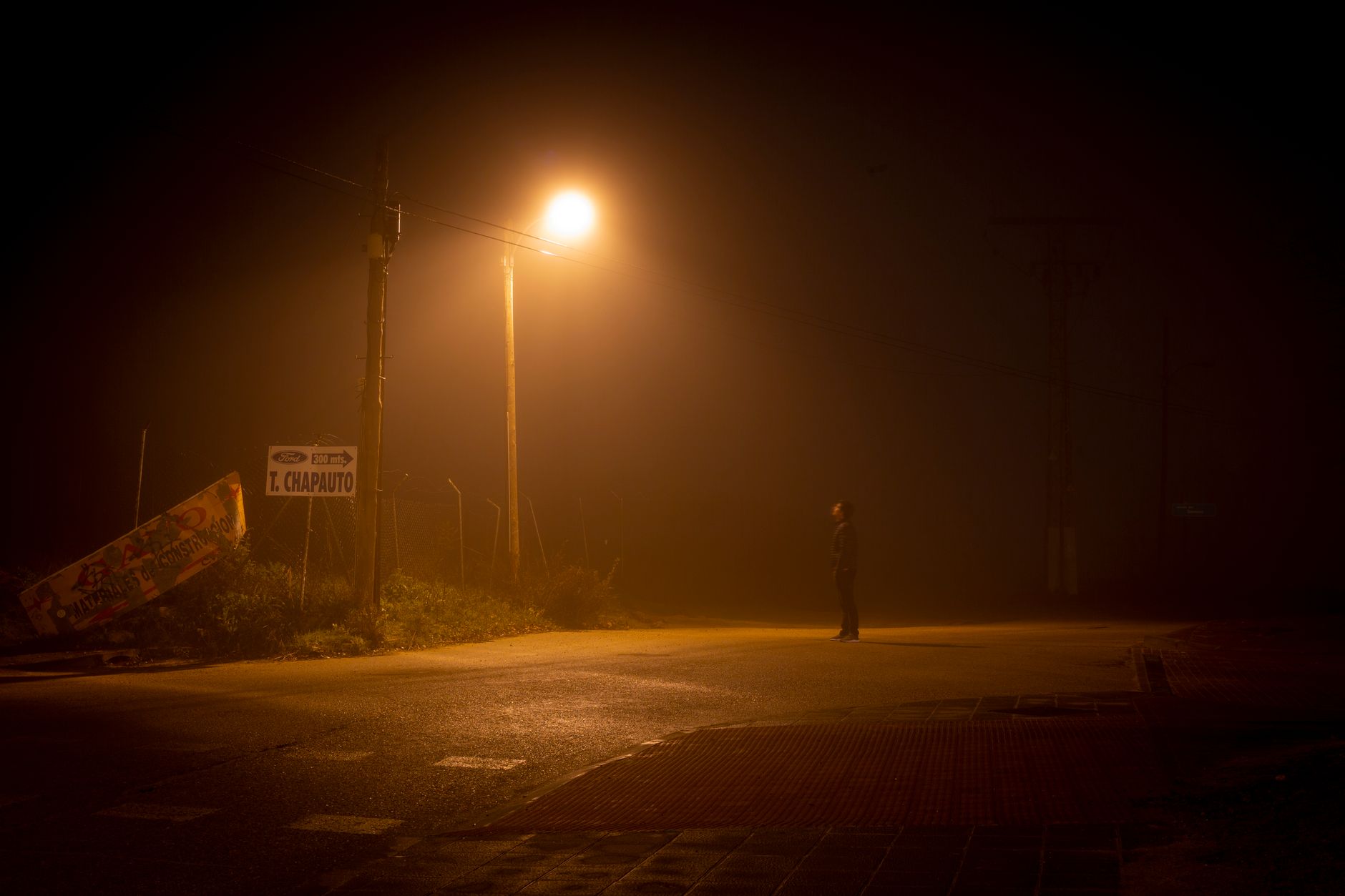
    The gate was open. I want that written plainly: the gate at the foot of the scarp, padlocked every time I’d ever passed it on the bridleway, stood chained back on its post, and a fresh amber diamond above it pointed the way a diversion arrow points.

    The sub-base lasted the four hundred metres it lasts on foot. Then the signs kept coming and the road kept being there.

    It drove like new asphalt, and that is not a figure of speech. No camber wrong, no pothole, the wheel singing the way it sings on a dressed surface three weeks after the plant has been through. It had rained since ten o’clock and every road in the county wore a sheet of standing water. The Link was dry. Bone dry, swept, two polished grooves running up the nearside lane like the wear you get off a bus route.

    Cat’s-eyes, spaced the way the manual spaces them. Lamps at the proper interval, every one dark, each with a small steel plate at eye height: SUDMOOR LINK 41. SUDMOOR LINK 42. A hedge on my side, cut square, and past it the gorse ran down the scarp into nothing — no lights, no farm, the town fallen away behind — and the road went on being a road, white edge lines and all, wherever the record said it was one.

    The radio, empty all week after midnight, found the county’s own traffic channel and read the closure order on a loop, in the soft voice they put on recorded lines:

    Marchford bridge, night works, closed twenty-two hundred to oh-five hundred. Local diversion in operation via the B-road and the Sudmoor Link.

    A sign went by on my left, facing the other way, for traffic coming up the Link as I was: ROAD CLOSED AHEAD. There was no junction. There was nowhere it could have come from.

    At the white stake marked PP3 there was a van.

    County highways. The orange livery gone chalky, the beacon dome crazed and dead on the roof. Moss to the sills and up over the scuttle, the windscreen opaque green, the asset number on the door still reading — and the service sticker in the corner of the glass was this spring’s. Inspected. Due again in March.

    I did not stop. The van was doing what the county’s books said it did, which was stand at passing place 3 in service, and I was doing what the order said I did, which was proceed.

    Six minutes, estate to Ashgate roundabout, and the amber signs folded me down onto real tarmac with the rain waiting on it as if I’d been let out of a building.

    Average Journey Time

    The run cleared at 05:36. The telematics uploaded itself at the gate, the way it does, and by afternoon the transport manager had sent the depot a message with a thumbs-up in it: good find, that Link’s six minutes off the estate leg.

    A fortnight later the routing app started offering it. Between ten at night and five in the morning, the Link comes up on every run to the Ashgate side. Fastest route. Average journey time six minutes, based on recent drives. My drive. I’m the recent drives.

    The agency lads go up it now. One of them complained at shift change about a parked van he’d had to swerve round, up by the third passing place, and was told to log it as a highway obstruction. He logged it. The app still routes him up there.

    I’ve been up it four times since. You take the six minutes off your own risk or you don’t, but you know the rule before you choose, because I’m the one who gives the talk now.

    And once — the fourth time, a Tuesday, 02:14 on the clock — there was a vehicle ahead of me on the Link, holding the lane at thirty. Orange livery, chalky in my headlights. It signalled left at the white stake, PP3, and eased in to let me pass, the way you do for faster traffic on a single-lane section. Going by, I had the cab dark under the moss on the glass and the current sticker in the corner.

    It pulled out behind me. In the mirror it stayed with me, patient, at the lawful following distance, all the way to the roundabout — and the roundabout was rain and brake lights and a Tesco lorry, and behind me the Link was a gate and a footpath and a field of barley.

    I keep rolling. That’s the whole of the talk. There’s a new lad starting Monday on nights, the bridge works have six weeks to run, and I’ve already asked him for a coffee he won’t want.
  • Always Has

    Always Has

    The Question at 2:14

    Ness runs the bakery under our flat. Her father ran it before her, and the flat came with it — you climb nine stairs off the back of the shop floor and you’re home, flour on every cuff, the smell of scorched sugar in the curtains no matter how often they’re washed. Her alarm goes at 4:20. The morning dough has to be out of the retarder and shaped by five, and if she’s woken at two and doesn’t get back down into sleep, the whole day comes apart in her hands: weights miscounted, orders doubled, once a full tray of buns left to prove until they collapsed into grey slabs.

    The talking started the winter her father died. Not conversation. One question.

    Is the prover off?

    At first I answered out loud. Wrong move. Half-waking her at two was as bad as waking her at four — worse, actually, because she’d surface just enough to panic about the morning and then lie there grinding herself down toward the alarm. So on the third or fourth night I did it in writing. There’s a whiteboard on the fridge, the kind with a pen on a string, left over from her father’s ordering system. I wrote:

    Prover’s off. Timer’s set. Go back to sleep.

    She stopped mid-syllable. Ten seconds, maybe less. Silence until the alarm.

    That became the arrangement. I work late shifts at the hospital pharmacy — home by twelve-forty, awake till two — so the night end of it fell to me anyway. Most nights between one and three the question would come, some nights twice, some nights with variations: Did the order go in? Is the back door locked? I’d pad down and answer on the board, and inside a quarter-minute she’d settle. In the mornings she’d erase it, write BREAD, MILK, and never ask what else had been there. She has slept better this year than in any year I can remember. She told her sister so on the phone. I heard her say it.

    My Own Handwriting

    In March I came down at 2:40 and she was already asking. The answer was on the board.

    Prover’s off. Timer’s set. Go back to sleep.

    The handwriting was mine. The loop on the f in off, the way I break the k in back — mine. And I hadn’t written it. I’d been asleep on the sofa; the pen was capped and hanging on the wrong side of the board, the side she uses for shopping. She asked twice more while I stood there. Then I wrote my answer under it, the same nine words, and hers — its — stopped mid-syllable as always.

    The next morning I compared the two lines. Letter for letter. The spacing before Timer’s matched, down to the apostrophe overlapping the s. Pharmacists check. It isn’t a choice; it’s how the hands are trained. You count twice, you read the label twice, and if two counts disagree you don’t shrug and pick one — you start again. So I started again. I photographed the board before touching it and kept the pictures in an album on my phone called PROVER.

    It happened once more in April. Twice in May. Each time the answer was there before I’d have written it, in my hand, correct, and the interval widened. In April it beat me by four minutes. By the end of May, forty. In June I came home at twelve-forty with the shop shuttered and dark below me, and the answer to a question she wouldn’t ask for another hour and a half was already on the board, as if somebody sensible had written it at a sensible time and gone to bed.

    One night that week the board read:

    Rye’s in. He checked twice.

    At 2:14 she asked whether the rye order had gone in. She had never asked that before. The answer was two hours old.

    The Night I Didn’t Answer

    I tried stopping. Once. A Tuesday in July, the way you stop taking a tablet to see whether it was doing anything.

    By 1:50 she had asked the question nine times. By 2:30 her voice had worn down to the vowels alone. At 3:15 she was sitting up in bed, asleep, asking it into the dark with both hands curled in the duvet, and I stood in the kitchen with the pen in my fist and understood the shape of what I’d built. Whatever answers her — me, or the me that isn’t me — she needs the answer. The kindness isn’t a habit I can put down. I wrote. She lay down. The alarm went at 4:20 and she got up and made sixty loaves.

    She knows none of this. I’ve tried telling it in pieces — the album, the intervals — and she listens, frowns at my phone, and says she doesn’t dream at all, hasn’t since her father died. The flat has never been colder than it should be. Nothing has moved that shouldn’t have. The dogs on the street take no interest in our door. Whatever shares this kitchen keeps bakery hours, answers in my handwriting, and has never once been wrong.

    The Question I Never Wrote

    Then, at the start of October, the board asked a question. My handwriting. Six in the morning, light coming up grey over the yard, pen capped on its string:

    Does he still take the late shift for me?

    Ness came down at 6:10 with her hair tied back for the ovens. She read the board on her way to the kettle, the way you read anything on a fridge. She lifted the pen off the string and wrote beneath it, in the round, even hand she does the invoices in:

    Always has. Tell him.

    Then she made coffee and went down to start the shop.

    I erased both lines that evening. By ten the question was back, word for word, and upstairs she was asking it aloud — asleep, a new question in the rotation — until I copied her answer onto the board in my own hand. Two answers again. Stacked.

    I don’t erase it anymore. The board stays up with the week’s exchanges on it — hers, mine, whatever the third one is — and the flat runs on it the way the shop runs on the prover timer, loaves coming out at six whether anybody watches or not. I answer when it’s mine to answer. And on the mornings when a question about me appears in writing I didn’t put there, I stand back and let her answer it, because she’s better at that part than I am, and because somebody in this kitchen apparently needs to hear it.

    Last week I bought a bigger board.

  • The Undercount

    The Undercount

    The Book Number

    The warehouse was called Halvard Cold Storage, and the job was mine through a temp agency that spelled my name wrong on the badge. Night inventory. Six to six. The freezers ran at minus ten, and the handheld scanners died in there inside of a shift, so we counted on paper — clipboard, pencil, and a technique for turning pages with your teeth that Dot Voss taught me on my first Wednesday.

    Dot had run the count for thirty-one years. She was retiring at the end of October, and I wanted her to tell the plant manager, Rendell, that I was the one to take over days. There was a day-supervisor position open. Days meant warmth, a chair, and forty-one cents more an hour.

    Her rule came with the clipboard.

    Freezer count runs one short. It has always run one short. You write what the manifest says. 4,200 goes in the book, 4,200 goes on the sheet. The sheet goes in the tray outside Rendell’s door. You do not write what you counted.

    I asked what happened to the missing pallet. She took the pencil out of my hand, wrote 4,200 on the line, and initialed it.

    “Nothing is missing,” she said. “That’s the whole point of the book.”

    For six weeks I wrote the book number. Slot 6-14 never held a pallet — the floor there stayed clean, no scrape marks, no frost shadow where a pallet’s feet would stand — and I wrote 4,200 like a churchgoer.

    Then corporate scheduled the annual audit for the first week of November, and Rendell called me into the office with the space heater and said the day job was between me and a kid from the dock who’d already been written up twice. “What I need,” he said, “is somebody who finds things. Anybody can keep things the same.”

    So the night before the audit, I counted aisle six three times.

    4,199.

    I stood at 6-14 with the clipboard under my coat and thought about Dot’s pencil, and then I wrote, in a print nobody could mistake for hers: 4,199. One pallet short, slot 6-14. Recounted x3.

    I walked out at dawn feeling clean.

    Slot 6-14

    Rendell loved it. He photocopied my sheet and faxed it to the regional office before I clocked out, and I got the nod in the hallway, the one that means the job is yours if nothing falls on you first.

    That night the manifest said 4,200 and the freezer held 4,200.

    I found it at 6-14. A pallet, forty inches by forty-eight, shrink-wrapped so tight the plastic squeaked when the freezer fans cycled. No label. No lot code. The wrap was frosted over except where something under it held a shape that came to about my height, and I did not cut it, because a man on probation for honesty has a limit. I pressed a scanner to it anyway. The scanner was dead like always, but the screen lit for half a second: PALLETIZED GOODS — INVENTORY 0.

    Manny drove forklift on nights. Friday he wasn’t there, and Saturday the schedule board had a gap where his shifts used to be. His locker still smelled of his cologne, the cedar one, and I stood in front of it long enough for the smell to stop making sense.

    I asked Rendell about him. Rendell looked at me with the pleasant blankness of a man being asked about a stranger.

    “Manny,” I said. “Forklift. Taught me the turning trick on ramp three.”

    “We’ve never carried a Manny on nights.” He said it kindly. He opened the scheduling binder to show me, and the nights went back to January with no Manny anywhere in them.

    The only other person on earth who had ever said the name Manny to me was Manny.

    The Recount

    Here is what I told myself, in the break room, over vending-machine coffee, at four in the morning: the count is a machine. Honest input, honest output. I’d written a lie for six weeks — one number, but a lie — and the ledger had charged Manny for it. If the truth got written hard enough, loud enough, the machine would have to break instead of a person.

    Regional flew an auditor out. A woman named Coyne, gray coat, conference-room voice. She wanted the freezer aisle by aisle, counted herself, and I walked her through and did not write anything all night, because the book number had my handwriting on it now, mine alone.

    She reached aisle six. I could have handed her the sheet already filled in. I stood by the door and let her count.

    She wrote 4,199. She initialed it. She went to the office to call in her numbers.

    Rendell came out of that office twenty minutes later looking for the sign-in sheet for a guest, and there was no guest, and there never had been. He had a confirmation email from regional on his screen, dated that morning, and the body of it was blank white, and the sender field was blank. He asked me if I’d seen a woman in a gray coat come in.

    A rental car with airport plates sat in our lot for eleven days. Then it was gone.

    At 6-14 there were two pallets.

    Two Short

    Dot’s last shift was the final Friday in October. She cleaned out her locker — a plate, a magnet, thirty-one years of nothing else — and I walked her to her car in the cold and asked her, in a voice that had stopped sounding like mine, what was at 6-14.

    She put her gloves on one finger at a time.

    “The count was short before they poured the slab,” she said. “The building went up around a number. You write the book number so the number stays asleep at the edge of the sheet, where it’s always been. You write what you counted” — she took the clipboard out of my hands and held it the way you hold a cat that’s about to bolt — “and the building makes it true. It makes up the pallet out of whatever’s nearest the size of it. Then it squares the paper by taking the entry off somebody.”

    “Entry.”

    “People are entries. Payroll, schedule, a name in a binder. You’ve seen what’s left when the entry’s gone.”

    “Then I’ll fix it. I’ll write 4,201. I’ll over—”

    “You’ll write the book.” She gave the clipboard back. “It was one short in 1987, too. You know how I know that? Because in 1987, a man wrote what he counted.”

    I got the day job. Rendell shook my hand in the hallway and said I’d earned it with honesty, of all things, and I smiled with my teeth while two pallets sat at 6-14 behind four hundred tons of frozen chicken.

    They gave me a kid out of the temp pool for nights. I taught him the clipboard, the pencil, turning pages with his teeth. I taught him the rule and dressed it up as a rounding convention, a legacy quirk, and he wrote the book number every night for three weeks, and I almost stopped noticing the taste of my own mouth.

    Last night my phone went off at 4 a.m. A text from the kid.

    hey weird one. count came up two short tonight, not one. slot 6-14’s got a third one and there’s no room for it. what do i write

    I sat up with the phone in my hand for a long time. Then I typed: the book number. And under it, before I could stop my thumbs: and don’t stand next to it.

    This morning at my desk, in the warm, I started a list. Everyone I can still name. My brother picked up on the second ring. My mother asked why I was calling so early, and I said no reason, and asked her to say my name back to me.

    She said it.

    I wrote it down.

  • The Standing Swath

    The Standing Swath

    The funeral casseroles were still in the refrigerator when the Realtor called with a number. I told her I’d sign. Forty-one years old, a toolbox in Columbus, a lease I could break, and a farm I’d been leaving in increments since I was seventeen — the number she said was the kind that ends the leaving.

    There was one condition, and it wasn’t hers. It was the farm’s.

    The rule outlived everyone who could explain it: the last windrow, the pass nearest the ditch, stays standing. Never cut, never grazed, never touched. My grandfather ran his discbine around it like the line was painted. My father did it my whole childhood, and after him my grandmother hired the Kucharsky boys, and later their boys, and every one of them mowed up to the windrow and turned. Nobody asked. You don’t ask, on ground like that. You mow around.

    I asked, once, thirteen years old, hanging off the fender. My grandmother looked at the standing beans longer than she looked at me. “That’s the neighbor’s,” she said, and that was the whole religion of it.

    Nine Acres

    The water authority’s surveyor was a flat, reasonable man named Pete, who walked the whole perimeter in a day and called me that evening, unhappy. The deed said a hundred ninety-three acres. His instruments said a hundred eighty-four.

    “Deeds drift,” I said. “Rods and chains, the old ones.”

    “Not nine acres of drift.” He sent me to the county seat with a case number and a face that said he’d seen the file already and didn’t want to be the one to open it.

    The plat books live in a basement room that smells like iron and paper. 1998, the year the farm passed to my grandmother: a shaded band along the ditch, nine acres, reserved. 1955: a narrower band, four. 1907, in a clerk’s copperplate: three acres along the ditch, for the neighbor’s use. Not to be plowed. Each band drawn over where the last one had been, each one fatter, like a river shown in flood years.

    The recorder’s clerk — young, kind, bored — turned the pages back to 1907 and then forward again, checking she’d read it right. “It’s not an easement,” she said. “It’s not anything. There’s no grantee. You can’t reserve land to ‘the neighbor.’”

    “What do I do to clear it?”

    She looked at the shaded band a long time. “Honestly? Nothing in this book tells me it’s yours to clear.”

    The Discbine

    Closing was set for the twenty-sixth. I had until then to deliver a farm that was what the deed said it was.

    I don’t spook. I wrench for a living; machines fail where they’re weakest, and the weakest point tells you the failure — that’s the whole trade. So Thursday night I put the discbine on the tractor and drove the north field by headlights to mow the windrow myself and be done with the argument.

    The tractor ran beautiful to the line. At the line it quit. Not stumble — quit, like a key shut off, and the lights went with it, and the dark out there by the ditch was the kind that comes up off water. I walked home in it and came back at dawn with a socket set.

    Six spark plugs, all fouled. Not gas-fouled, not oil. Pond water — ditch water, you can smell the difference, duckweed and iron — sitting in the cylinders of a tractor that hadn’t been within sixty feet of the ditch.

    Renewed, 1907. Three acres.
    Renewed, 1955. Four acres.
    Renewed, 1998. Nine acres.
    Paid in kind: no calf lost, no dry well, no hail, ditches ran in the drought.

    That’s my grandmother’s hand, in the front of the ledger she kept feed purchases in. Page after page of groceries and vet bills, and this, in the middle, in ink older than me. The next line under 1998 is blank. Ruled, and waiting.

    I tried twice more. That’s the arithmetic of me: twice.

    Saturday I lit the yard brush pile right against the windrow, dry cedar and a can of diesel, flames I could feel on my face. I went inside for water and came back out in under four minutes and the pile was cold. Not burnt down — cold, unlit, the diesel still shining on it.

    Sunday the field answered. The beans within one mower-width of the windrow stood wilted, gray, terminal, a strip of dead crop exactly where I’d have started my next pass. Not sprayed, not frosted. Withdrawn. That night there were bootprints on my grandmother’s porch, dried ditch mud, toes pointed at the door, coming from a direction nobody walks in from. And the grain bin was down — not much, forty pounds of shelled corn, the sweep auger cold, the bin door latched from the outside.

    I called Eldon Rupp, who farmed the quarter-section east of ours for fifty years. He’s ninety-one and answers his own phone.

    “You’re selling,” he said. Not a question.

    “To the reservoir people, yeah.”

    Silence long enough that I checked the call was still alive.

    “Your grandmother renewed in ’98, day after the funeral,” he said. “Same as her mother-in-law in ’55. I drove her to the seat myself. She come out of that office gray, and she says to me, ‘Well. That’s the north field spoken for, mostly.’” A breath. “You can not renew. Nobody’ll make you. But land like that don’t go to strangers with a checkbook, boy. It goes to whoever’ll keep the terms.”

    “The terms of what?”

    “The neighbor keeps the ditches running and the hail off and the calves alive,” he said, “and the family keeps the last cut standing, and the reservation —” he used the plat-book word like he’d been waiting sixty years to — “the reservation is the back payment. It’s honest, whatever else it is.”

    “What happens if I don’t renew and sell anyway?”

    “Ask your surveyor what he measured.” He hung up. He’s ninety-one; he doesn’t waste.

    The Twenty-Sixth

    I sat up that night with the ledger and the survey and the plat copies fanned out on my grandmother’s kitchen table, and I did what I do with a failed machine: I stopped arguing with the parts and read the pattern.

    Three, four, nine. It doesn’t double clean. It grows by what the ground can bear, and the growing is the only sentence the neighbor writes, and it had been writing it since before the copperplate clerk. The blank ruled line under 1998 wasn’t a threat. It was a price tag. Sixteen, seventeen acres. A third of the north field, standing uncut forever.

    The authority would take the farm at a hundred eighty-four and dock the price, or take it whole and inherit a reservation with no grantee on it, and I knew — the way you know a hairline crack is going to go, know it in your hands — which reading of that plat was the true one. Land like that don’t go to strangers. It goes to whoever’ll keep the terms.

    The Realtor called at nine on the twenty-sixth, cheerful, ready to fund.

    I told her I wasn’t selling.

    I drove to the seat that morning and wrote, under my grandmother’s hand, in mine, awkward and legal as a fist: Renewed, 2019. The clerk read it upside down and didn’t stamp it, didn’t charge me, slid the page back like it was warm.

    The strip took what it took by the first hard frost. Sixteen acres and change, drawn by nobody, recorded nowhere, every fence post along the new line leaning just slightly back from the beans. I measure it every October now, with a tape, alone, and it has never once cheated me.

    Ditch runs high all year. No hail since. The Kucharsky boy who cuts my hay now doesn’t ask about the windrow.

    Nobody asks. On ground like that, you mow around.

  • One Part Short

    One Part Short

    Every temp agency in Ludwell County carries the same story, and no two tellers agree on where they heard it first. My cousin’s roommate had it from a girl she temped with at the courthouse. The version that reached me was short. Work the annex, keep your mouth shut about anything that isn’t on your list, and if you slip, don’t act surprised at what turns up at your door.

    The annex sits behind the courthouse: deeds, vital records, hunting licenses, one yellow-brick shoebox with a flat roof and a flagpole nobody raises. The girl in the story lasted three weeks. She keeps a stapler at home that the county has no record of buying. No hinge pin in it. It still staples. She keeps it in a drawer with the batteries and the birthday candles, which tells you something about what she thinks it is.

    I took the job anyway. Six weeks of fiscal-year-close inventory, fourteen dollars an hour through Staffing Solutions, and one sentence from the placement counselor: temps who close clean get converted. My lease and I both wanted converting.

    Mrs. Ostrander had run Room 5 since before the typewriters went out. First morning, she set the printout in front of me, squared it against the desk edge, and gave me the rule flat, no story attached, the way you tell somebody not to top off a tank indoors.

    Anything on this list you can’t find, you strike the line. Your hand, pencil, one clean line through it. Don’t initial the strike. Don’t write found or missing. And whatever you do, don’t stand anywhere inside this building saying you remember something that isn’t on my list.

    I laughed. She waited until I stopped.

    Counter Two

    The letter tray went on my ninth day. Two-tier steel, sat on Counter Two where the outgoing requests collected. I set certified-copy forms in it at 9:40 in the morning; at 2:00 the counter was bare, wiped down, not even a ring in the dust where its feet had stood. The 4:00 printout ran four lines short of the morning’s, and the tray’s line was gone with the rest. Not one soul at those counters looked around for where their forms went. A man folded his request in quarters and carried it home in his coat.

    I struck it. Pencil, one line, no initials. Mrs. Ostrander watched me do it and went back to her stamps.

    The spare pad for the date stamp went the next week. Then the third chair, the one with the wobble that everyone supposedly kicked to the same corner. Then the fountain on the landing — midweek, no plumbers called, a patch of unworn linoleum at the stair turn that I could see and the deputy recorder could not, and I stopped pointing at things not long after that.

    Nothing ever appeared. That’s the part the story never gets across. Nothing moved, nothing knocked, nothing arrived to replace what went. The annex just got simpler, one ordinary thing at a time, and simpler was somehow worse.

    Thursday of my fifth week I called my cousin and got the roommate on the line. The stapler is real. County property stamp on the base, hinge pin gone, staple track still true. Her words, and I’ve kept them:

    I said it at the annex, to the girl covering my lunch. “They used to staple everything in duplicate here.” Just that. That night it was on my kitchen table.

    I asked how the pin goes missing off a stapler that never leaves a kitchen. The pause on the line lasted long enough for me to regret the question.

    “That’s the other half,” she said. “It comes to you one part short. Everybody at Staffing Solutions knows that half. Ask them where the part goes.”

    Nobody at Staffing Solutions knew. The counselor smiled with her whole face and moved on to my conversion paperwork.

    The Pale Rectangle

    Room 5’s wall calendar hung by the door: the county’s sesquicentennial calendar, printed for 1998, never replaced, because the next one isn’t due until the bicentennial in 2048. Every January Mrs. Ostrander wrote the new year under the printed one in red ink. Duty initials filled the grids — four clerks’ worth of winters, a couple of hands I recognized from deed books older than me.

    The last Monday of March I came in and the wall was bare. Pale rectangle, a shade and a half lighter than the paint around it, four screw holes I could count and nobody else could see. My morning printout carried a line for the wall calendar. My afternoon printout did not. The deputies walked past that wall all day, past a rectangle of ghost paint, and if you’d asked them, that wall had always been bare, and they’d have wondered what was wrong with you for asking.

    I struck the line. My hand. No initials. Then I sat with my pencil and said nothing, for three days, while the annex closed itself down around me in tidy subtractions and I initialed page after page of balanced nothing.

    Thursday we ran the final reconciliation. The sheets matched by 6:40. I was tired the way the last week of a contract makes you tired, all the way through, and I stood in the door of Room 5 with my coat on, looking at that pale rectangle, and I said it. “There was a calendar on that wall.”

    Mrs. Ostrander’s stamp stopped mid-press. She didn’t turn around.

    “Parking lot,” she said. “You say it in the parking lot.”

    I had said it in Room 5.

    It was leaning against my apartment door when I got home, upright, like something delivered and signed for. The 1998 calendar, red year-inks and all, and December cut out of it — one clean cut at the spiral binding, no ragged edge, nothing for a thumb to catch on. Eleven months and the title page. February’s grid was full of duty initials, and one square in the second week held initials I didn’t learn from any deed book.

    My mother’s. Her slant, her loop on the second letter.

    She temped at that annex the winter of 1998 and never told me, and she took the whole of it with her when she died, and now I know exactly one square of it: February, second week, her initials in a duty grid. Whatever she initialed in December — her last month, the month the temp contracts ran out — the county keeps.

    What I Keep

    The inventory closed clean. Every line struck or found, the sheets balanced to the penny. The conversion post went out of existence in the same budget meeting that voted to digitize the deed room, so my reward was a reference letter and a firm handshake.

    I keep the calendar on the kitchen wall. November turns over and there is nothing behind it but the courthouse picture printed inside the front cover, and every year I stand there a minute too long, checking a printout in my head for a line that isn’t there.

    Mrs. Ostrander retired in May. On my last day she said my mother struck fourteen lines that winter without one word spoken in the building, and that I had her hand for the pencil. Then she gave me the rule again, both halves, and made me say them back.

    The agency still has the annex story. I do my part for it now, each season, the way it was handed to me: a friend of a friend, a building where things go missing on the list and off it, a rule with two halves. Last winter a girl at Staffing Solutions told it to me with the roommate already gone from it — a girl she went to school with, a stapler, one part short. She asked me whether I knew where the parts go.

    I said the county keeps them. She wrote that down.

  • Gradient Allowance

    Gradient Allowance

    The Tender

    The tender document ran to sixty-one pages, and the clause that decided everything sat on page nine: ninety-five percent of visits inside their agreed thirty-minute window, measured quarterly, no exceptions for weather or roadworks or the fact that the roads in question cross four miles of reclaimed marsh. I had been rota coordinator at Mareham & District Home Care for two years by then, promoted off a care round of my own because I was the only one of us who could make the council’s rostering software do what the brochure said. You feed it the visits, the dependencies, the drive times off the mapping layer, and it draws a week that looks like a heartbeat on a monitor.

    Haverton Level is the tide-bank drove that links Mareham to the seaward villages — Oxholme, Salhoop, Duncote Ferry, Wrackle Staithe. Dead straight, dead flat, drainage ditches either side deep enough to take a tractor without a splash reaching the road. The mapping layer priced the crossing at twenty-two minutes at care-visit speeds, the same twenty-two either way. On the paper rotas I’d inherited from the last scheduler, and shoved unread into the cupboard under the kettle, every seaward round carried fifteen minutes of blue fountain pen in the margin. Paper people padded everything. That was the whole reason the sector was buying software, so I stripped it — forty-one visits folded back into the same contracted hours, symmetric travel times both ways — and our bid came in eleven percent under the incumbent. In April we won.

    In May the missed windows started.

    Two Cars, One Quarter Hour

    The software flags what it calls exceptions: red for late, amber for early, grouped by carer and day. I ran the report every Monday, and by the third Monday the Mondays were all telling the same story. The misses sat on the legs that finished at the carer’s own front door. Rima’s six-forty medication round at Oxholme: fine going out, red coming back. Colin’s Tuesday double-up in Duncote Ferry: textbook on the way over, twelve minutes gone on the way to his flat by the staithe. End-of-shift drift, I called it. People hurry to work and dawdle home. I wrote it up in a supervision note, worded kindly, and Rima cried in the office kitchen, and I stopped writing things down and started checking instead.

    The software keeps GPS pings at ten-second intervals for exactly this argument.

    The Friday of the June review gave me a quarter hour with two cars on the Drove at once. Rima driving landward, home to Mareham, her round done. Colin driving seaward, home to Wrackle Staithe, his round done. Same road, opposite directions, 19:10 to 19:40. Her outbound crossing that afternoon had taken the mapped twenty-two minutes. So had his. Her trace home showed thirty-six. His showed thirty-five.

    Same twenty-two-minute road. In the same half hour, in both directions, the journey home was the long one.

    I checked the grade first, because you would. The Level has no grade — the highest thing between the ditches is the crown of the road, and the surveyors who drained it in the 1840s would have shot a marble from one end to the other. Wind: a still June evening, and both cars had it anyway, whichever way it blew. Traffic: there were two cars, and they were the two cars. I laid the traces side by side on the second monitor and hunted the gaps. No stops. No stretch below care-visit speed. The pings simply arrive later in one direction than the same pings did going the other way, and both traces are right, and they cannot both be right, and the software files the difference as unattributed variance, which is the machine’s way of putting its coat on and leaving.

    The Lever-Arch Files

    I tried the obvious fix before I believed any of it: fifteen minutes of named contingency on all homeward legs, labelled traffic. The council’s contract monitor queried it inside a fortnight. The drove has no recorded congestion, she wrote, in the tone they teach them. So I pulled the contingency back out and clawed the difference off the outbound legs instead, spreading the visits a shade tighter to protect the window percentages.

    The next fortnight the misses turned up on the outbound legs. Four carers. Both directions. No pattern the software could name, and I had stopped calling it drift.

    That was the week I finally opened the cupboard under the kettle. Forty years of lever-arch files, E. Tansley in gold on the spines, every seaward round Mrs Tansley had ever built, and in the margin of every single one, blue fountain pen, the same line:

    add 15 home

    Her predecessor’s hand, further in, older, browner:

    add 20 in winter

    And in the back of the oldest file, a shorthand I couldn’t fully read, 1970s at least, same instruction wearing different clothes:

    add the quarter, home

    Nobody, in forty years of margins, had written why.

    Mrs Tansley is eighty-four and lives in sheltered housing by the church, eleven minutes’ walk from the office, and I went that evening because some things you do face to face. She had the diary out of the cupboard before I finished the sentence, which told me something in itself. I asked her why fifteen. She looked at me the way you’d look at someone asking why you salt the water.

    “Because you need it, on the way back.”

    I asked what takes the time, out there. She thought about it properly, which I’ll say for her.

    “Nothing takes the time. It’s just longer, coming home. It always has been. You don’t book tight over the Level, love. Nobody ever has.”

    Gradient Allowance

    You cannot put any of that in a tender response. There is no box on the contract monitor’s form for the road home is fourteen minutes longer for everyone who drives it, whichever way home is, and if there were, the form would come back flagged. What the form has is an engineering vocabulary, and what the fen hasn’t got is a gradient, so I gave it one. Fifteen minutes per homeward crossing, printed in the rota as a standing charge: gradient allowance, Haverton Level crossing.

    No auditor has queried it. Auditors don’t drive the Drove. The carers looked at the printed rotas, looked at their own wrists, and said nothing, because the number matched something they’d already stopped mentioning to each other. The window percentages settled in September and the tender survived its first quarterly review.

    Rima handed in her notice in July, in the worst fortnight, when the misses were on both legs and I still had nothing to tell her except that the software was under review. She blamed the software. I signed her reference and let the blame sit, because the truth wasn’t fileable and she needed the job more than the truth.

    I completed on the cottage at Salhoop in October. The seaward side is the side you can afford on a coordinator’s wage, and the road runs both ways the same for everyone, which is to say it doesn’t, and my own rota line now carries ten homeward crossings a week, each one charged fifteen minutes of gradient that isn’t there. The new hire started this month. I printed her first week’s rounds and wrote the line in the margin where Mrs Tansley used to write it, and she copied it into her notebook without asking, the way I photocopied it without reading, back when the pen was blue and the rounds were mine.

  • Coal Weather

    Coal Weather

    Two cast-iron fire grates, ground floor and nursery. Decorative only.

    I initialled the line. Eleven years fitting boilers does that to you; you initial pages the way other people breathe. The cottage was two up, two down, at the end of Ninehouse Row in Clinkburn, a pit village whose pit had closed before I was born. The rent was two-thirds of anywhere else on the row. The agent said the landlady “likes a family in it.”

    Ellen loved the place before she got up the stairs. Rosa was three weeks old. We needed the money for other things.

    I replaced the boiler myself that first week — the old combi was condemned, heat exchanger furred like a kettle. New condensing unit, stat set to eighteen. The house sat at twenty-three. I did the sums on the back of a gas bill, standing in a loft with a hundred millimetres of rockwool and a draught you could relight a match in. The sums didn’t work. I decided I’d measured the loft wrong. Money was for nappies.

    The Drawer

    Through December the house got warmer as the nights got colder. Rosa’s room held twenty-four with the radiator valved right off. I checked it twice.

    Then the small things started. Newspaper stuffed into the trickle vents, dry and yellow, folded to fit exactly. A flannel rolled along the nursery threshold. Our bedroom door, which swelled and stuck all autumn, ran smooth as a cabinet door overnight. And the carbon monoxide alarms — my own kit, one per landing, batteries ten weeks old — both dead on a Sunday morning, batteries out, laid in the kitchen drawer in a row like cutlery.

    Ellen hadn’t touched them. She cried when I asked, and it wasn’t the crying of somebody caught.

    I fitted fresh batteries. A week later the alarms were back in the drawer, leads coiled and tucked under, and the drawer closed.

    A thermostat doesn’t shear. That’s what I told myself at the end of December, standing in the hall looking at ours — set to thirty-two, dial snapped clean off the stem and gone. Appliances fail. Stats stick. But a dial comes off by hand or not at all, and I was a gas engineer with a newborn and no money, so I made the trade you make: I stopped saying things out loud, and I put my flue gas analyser on the air instead. Zero carbon monoxide. My combustion, my flue, all of it clean. The warmth was costing us nothing I could meter.

    I know now what I couldn’t afford to know then. It wasn’t my fire.

    The Mittens

    January brought the row its first real cold in years, and the house turned hot. Not boiler-hot. Hearth-hot, if that means anything to you: a dry pressing heat that came up through the floorboards and out of the chimney breast, as if the brick itself were blushing.

    Ivy across the row is eighty-four and born in the end house. I asked her why the rent was low. She looked at me the way you look at a man before handing him something heavy.

    “That was Agnes Telford’s house. Her babby died in the January of forty-seven. Snow to the windowsill, coal on the ration, and their flue smoking back into the room for a week. Four months old.” She pulled her cardigan closed. “Agnes never moved. Kept a fire in every grate till the day she died, summer included. Folk here don’t say her name in winter.”

    The blanket chest sat under the nursery window. We kept muslins in it. Under the muslins I found the mittens.

    Wool, cream, hand-knitted, dozens of pairs. The dates on the cuffs ran from 1947 to 1989, one pair a year, and the sizes never climbed — they turned over. Newborn. Three months. Six. Nine. Newborn again. Forty-two first winters, knitted in order, like the same year being wound back and knitted through. The last pair, 1989, was three-month size.

    Rosa was four months old that week. They fitted her to the centimetre.

    That morning there was ash in the nursery grate. Fine, grey, cold on top and warm underneath when I pushed it with one finger. Nothing had moved in the coal bunker except its lid, which stood slid back. I swept the ash out, screwed a sheet of ply over the grate, and on my next day off I fitted a galvanised cap on the chimney stack, off a ladder, in the wind. Professional job. I even said it out loud, to the room, like a fool laying down the law: “No fires now.”

    The house thanked me by finding another one.

    The Oven

    February brought the storm they’d named on the telly, minus eleven, and the district came apart the way districts do. Frozen condensates, burst tails, no-heat calls stacked ten deep. I’m on the emergency rota. That is the whole of my defence.

    I was two nights out. Ellen told me to go twice, which meant she meant it. Rosa had started sleeping through. The house was warm as toast, Ellen said. Warm as toast.

    I finished early the second night and came up the row at four in the morning with fish and chips cooling on the passenger seat. The front door was hot to the palm. Inside, the air was thirty-some degrees and soft, like a laundrette. Every vent in the place was stuffed — newspaper, flannels, a rolled muslin wedged in the airbrick by the yard door. The window latches were all down. Both carbon monoxide alarms were in the kitchen drawer again, batteries out, laid like cutlery.

    The oven door stood open. Flame tall and quiet, burning orange at the crown of every ring, and a gas man reads orange the way a sailor reads a sky.

    Ellen on the bed. Rosa in the cot. The eiderdown from the blanket chest lay over the cot, tucked to the chin, and on Rosa’s hands, dry and warm, the mittens from 1989.

    I did the things my hands know. Windows, door, 999, air. The paramedics worked on Ellen under the yard light with the snow coming down through their torches. She died on the Thursday, in Durham, without coming back to us. Rosa came out soaked and furious and alive, and in the hospital notes somebody wrote well perfused, which is the word for warm right through, and no one there could tell me why that word took my knees out. Or why the cot and not the bed. The oven, when they tested it, was sound. Clean combustion, door or no door. The house was the problem, they said — sealed like that, in this weather — and who seals a house in a storm? My trade had words for all of it. None of the words were hers.

    Coal Weather

    The housing association offered us a flat. Electric, new-build, forty minutes west. I went to see it with Rosa in the sling and stood in its warm little kitchen, and I did what I’d stopped doing in December: I let myself finish the sum. Whatever kept Agnes’s house hot wasn’t metered and wasn’t mine, and I could not prove it would stay behind.

    So I gave it a fire. That’s the honest engineering word for what I did. Gas capped at the meter by my own hand, my card in the book. Coal ordered — you can still get it, if you ask round. The living-room grate opened up, flue swept, draw sweet as a struck match. Vents left clear. Alarms back on duty, batteries in.

    Nothing else happened, all that February. No stuffed vents. No drawer. The heat stayed where I put it, twenty and falling after eleven, and the alarm on the landing ran four months on the same battery.

    I bank the fire at eleven each night and lay it fresh when I come in. That isn’t sentiment; it’s maintenance. She never wanted my boiler. She wanted a hearth stood over, and while the hearth is lit she has nothing to fetch. The improvisation was the thing that killed. The care itself never touched anybody.

    Rosa is three now. She calls the front room the warm room, and of a morning she puts her hands down to the fender rail, where two small mittens I have never bought sit drying, warm as new bread, whatever the weather.

  • The Keeping Hand

    The Keeping Hand

    The Walk

    I learned the Bracken walk backward before I learned it forward. That is how the trade goes: you stand at the jack with the new strand paying out over your open hands, and you walk away from it, and the building is a quarter mile of cold brick ahead of you, one lamp every fifty yards, no end to it that you can see from the head. Two men carrying coils have to plan their passing in advance. There is no room in a ropewalk for anything sudden.

    The hemp came up through the tops, and you read it with your palms. A dry catch, a wet catch, a strand that wanted to jump its lay — your hands knew a stride before your eyes did, and you corrected without breaking step, because breaking step behind the jack was the one thing Fenn would sack you for on the spot. Old man Fenn, the master. Seventy-one that year, built like his own crank handle, and he ran the crank house with one rule nobody else was permitted to touch.

    Friday’s last rope went onto the reel one hand short. An order for twelve fathoms took eleven fathoms and a hand’s breadth, and the breadth stayed at the crank. He initialed each shortfall in a little black book hanging on a nail by the crank house door — 11 fm less a hand, E.F. — then he stood with his palm flat on the stopped crank, eyes shut, a full minute, before he would let anyone speak to him. Paying the keeping, the tar-shed men called it, and they kept their voices down around the words. I filed the whole business under an old man’s cramp that had picked up a liturgy on the way, and thought no more about it, because the dockyard order came in that same week and there was a deal of work and no time for the past.

    The dockyard bought from Bracken for one reason, and it stood in the header of every invoice I carried across the yard to the office: No Bracken rope has parted under load since 1901. Seventy-six years, and never once. You will not find a cleverer advertisement than that in the whole north of England, nor a stranger one, but I was nineteen, and it looked like plain good craft to me.

    One Hand Short

    The winter order was big enough for a second man kept on permanent — stamp, number, pension book. I wanted it with my whole spine.

    Fenn let me wind the Friday reel myself. The first time, I ran the length out true to its order, twelve fathoms, and two of his fingers closed on my wrist and stopped the crank dead.

    “Not the last hand’s breadth,” he said. “That one’s spoken for.”

    I asked him who had booked it. He looked at my hands for a long moment, at the new calluses and the burns off the tar shed, and something behind his face did arithmetic that had nothing to do with fathoms.

    “Whoever’s holding the crank,” he said, “when it comes due.”

    The tar-shed men found work at the far end of the building. They were good at that, that winter.

    The first tug came in October, loading the carrier’s wagon. The crane hook went into a coil of three-inch and took up the slack, and a breath before the rope came taut the load arrived in my palm — the honest weight of that coil coming onto its own line, run up my arm out of nowhere, gone again when the rope took it. I stood rubbing my hand down my coat and told myself the thing the tar-shed men would have told me: rope holds the memory of the hands that made it. Fibers. Everybody knows.

    The Tugs

    Then they came at night.

    A long steady mooring pull, once, that woke me at four with my arm out from under the blanket, holding nothing against nothing. A small patient wear, patient as weather, that I assigned to somebody’s clothesline because there was nothing else in the order book small enough. In November, a sawing shudder that ran from dusk to full dark — someone somewhere cutting a length of Bracken, and my palm carried every stroke of the knife as if the palm were the rope.

    I did the arithmetic in the break, over tea, privately, the way you do. Every rope gone out of the walk since Fenn stopped my wrist was reporting to me. Not the old ones from his years.

    Mine.

    Fenn went thinner through the autumn. By Advent he stood his Friday minute with both hands on the crank, and the minute ran long, and twice I went and took his shoulder, and he came off it the way you come off a wall you had been holding up.

    December the ninth was a Friday, last rope of the dockyard order at full twist, the whole walk humming with the tension like a struck string you cannot hear, only carry in your teeth. Fenn went to steady the crank and sat down instead, back against the crank house wall, and slid a little further down it, and the crank began to give.

    A rope at full twist with no hand on it runs its own stroke out, and it runs it crooked. Dougie the crank boy stood with his hands over his mouth. I took the crank, and ran the stroke out to its stop, one hand short, and the twist came up through my wrist, and up, and did not stop at my shoulder.

    It settled. That is the only word for it. The way a coil comes down onto your shoulder and is shouldered.

    The doctor wrote Fenn’s heart on the certificate, and there was nothing in it to argue with. Seventy-one, December, a cold crank house. The tar-shed men stood the walk’s silence that afternoon, all of them, the full quarter mile of it, and then went back to the tar, because the carrier came Monday.

    Full Measure

    The book still hung on its nail. I took it down the way you take down a dead man’s coat.

    Page after page. 9 fm less a hand, E.F. Under his, for the years before, his father’s initials, and under those another man’s, back and back, the paper browning, the shortfall never. And fixed to the inside of the cover, in a copperplate gone brown:

    A rope made to its full measure keeps itself, and takes its keeper where it first comes taut. Wind short, and the master holds the difference. The keeping is paid out one hand at a time, and cannot be set down but by a full rope.

    I got out the invoices then and read the header again with the book open beside it. No Bracken rope has parted under load since 1901. Not because of the fiber. Not because of the water or the tar or the lay. Because every rope off that walk for seventy-six years has been short by one hand’s breadth, and the difference has been held — the whole accumulated weight of it — in however many palms, one at a time, down the years. In Fenn’s, until December the ninth at full twist. In mine since, arriving one tug at a time, a century’s worth still in the post.

    There was a way down out of it, and the book was plain about that too. Wind one rope to its full measure — put the last hand’s breadth on, break the short winding once — and the keeping goes into the rope instead of the man. Then the rope goes out on the carrier’s wagon, and takes its keeper where it first comes taut. A rigger’s wrist at the dockyard, someday, at some ordinary strain. A stranger who never heard of Bracken, and never would.

    I’ll be honest. I counted coils over it. Three days I left the order book open at a twelve-fathom line for a barge owner of no importance in the world, with a pen beside it, and on the third day Micky started.

    Sixteen. New hands. Walking his first furlong backward with his palms open, jaw set, and the tugs found him inside a month — his hand stopped on a coil one Tuesday for no reason his face could name. So when he wound his first Friday reel out true, I put two fingers on his wrist, the way two fingers had come down on mine, and stopped him one hand short, and heard myself say the hand’s breadth was spoken for.

    He didn’t ask twice. Nobody ever does.

    The dockyard confirmed the permanent line in January. Stamp and number, like I wanted; the pension book sits where I can see it from the crank house. On Fridays now I stand the minute myself, palm flat on the stopped crank, eyes open — Fenn shut his; I have decided I won’t — while the week’s new ropes come home one hand at a time, and the old weight settles deeper toward the bone of my hand.

    In February I went out to my sister’s, two days, past York. The palm carried the mooring pull the whole way there and back, and I came home a day early, and that is all I have to say about leaving.

    No Bracken rope has parted under load. Mind the stamp, if you buy one, and mind the man who stops your reel with two fingers. Somebody holds the difference.

  • Answer First

    Answer First

    The Rules According to Danny

    Danny Hodge mows the verges for the council, and he mows them the way he did when we were fourteen, which is to say at walking speed, one hand on the bars, the other holding a phone he isn’t reading. I found him on Padley Drove on the Thursday, folded out of his cab onto the tailgate, eating a pork pie in the shade with both doors open and the radio going.

    I was in town four days, by plan. Clear my mother’s house, sign whatever the agent put in front of me, hand over the keys Monday morning, drive back down the A1 before the traffic. Four days is generous. That was the plan.

    Danny asked after her, and I told him, and he nodded at the pie for a while. Then he asked whether I still went out the Drove at dusk, and when I said there was no reason to, he looked pleased, the way a man does when he’s got something saved up.

    “You want to try the pipe,” he said. “Kids still do it. Not our kids, but they do it.”

    The pipe is the culvert that takes Paddy Drain under the Drove, a brick throat about chest height, barred at both ends with galvanised grates gone the colour of bark. The rule as Danny gave it, word for word, because he gave it word for word:

    Knock three times on the grate and ask it one how-many question. Any how-many you like. You get one in your life, so don’t waste it. Never ask it when. And mind — it answers quick.

    “Quick.”

    “Ahead of you.” He folded the pie paper into a square and pocketed it. “That’s the bit nobody believes till they’ve stood on it. My cousin asked it how many fish in the old flooded pit and got his knocks back before he’d finished the sentence. He swears that. Swears it at parties.”

    A friend of a friend, with the cousin promoted to first person whenever Danny’s had a drink. The usual shape of these. I said something polite about echo, and Danny said yeah, sure, echo, and tipped the last of his flask into the cup, and neither of us pressed it, because Thursday had four more rooms of my mother’s things in it and the light was going.

    Twenty-Nine Seconds

    I went down the Drove at dusk on the Friday, with the phone.

    Not to prove anything to Danny. The house had reached the stage where every flat surface was a decision, and the decisions had started answering back, and I wanted twenty minutes of fen air in which nothing needed sorting. The recorder was for the sorting. If I came back with a file of taps and rooks, that was a story for the drive home, and I had two nights of them to fill.

    The Drove runs dead straight for a mile between two wheat fields that used to be five jobs, and the pipe sits at the low end, where the drain runs slow, the hedges quit, and the sky starts. I stood on the grate. Rooks going over. The water doing what fen water does, which is nothing, loudly.

    I hadn’t decided the question. That’s the truth of it — I was still choosing between something safe and stupid, how many bricks in the arch, how many rooks in that lot going over, when the knocks came.

    Three. From inside. Wood on brick, unhurried, the spacing of someone knocking on a door who expects it opened.

    My hand wasn’t on the grate. My hand was in my coat pocket, around the phone. I hadn’t knocked, and I hadn’t asked, and the three knocks sat in the evening as though they’d been waiting for me to catch up. Then, into the gap they’d left — because the alternative was standing on a farm lane saying nothing for the rest of my life — I asked my question out loud: how many more nights would I sleep in my mother’s house?

    The pipe gave nothing else. I stood there past the point of dignity and walked the mile back with the light failing behind me.

    In the kitchen, over the last of a tin of soup, I played the file. The knocks are at eleven seconds. My question is at forty. Between them you can hear a rook, and the drain, and me shifting my weight on the grate — twenty-nine seconds of ordinary fen, all of it after the answer and before the ask. I turned the volume up until the knocks filled the room, and there was no knuckle in them, no tick of the grate settling. Wood. On brick. From inside.

    Three Nights

    Monday’s handover didn’t happen. The agent’s buyer had a surveyor who could come Tuesday afternoon, and Tuesday the surveyor wanted the loft hatch seen to, and there is one man in Wickmere who does loft hatches and he fishes, so Wednesday. I slept in my mother’s back bedroom on the Monday, and again on the Tuesday, and packed the last boxes on the Wednesday morning with the count sitting in my chest where I’d put it away.

    Two nights by the plan. Three by the pipe.

    Say it straight: I’d have found a third night regardless. Nobody clears a mother’s house in the time they set aside; there is always an envelope that needs the afternoon. I know every way to make that not mean anything. But the file on my phone has the answer arriving before the ask, and I was the one who chose to stand on that grate, and on Wednesday the third night was spent and gone.

    I gave the agent the keys at ten on the Thursday morning. The A1 south was clear.

    Nineteen Sixty-Two

    Danny rang me on the Friday, while I was still unloading boxes into a flat that already had too much in it. His sister had told him I’d been down the Drove. Word gets around a town that size the way water gets around a fen — no hurry, everywhere eventually.

    I told him about the recording. I played him the twenty-nine seconds down the phone, knocks first, question after, and he went quiet in the way of a man checking something against something.

    Then he said, “You got three.”

    “How do you know that?”

    “Because of my gran.” A lorry went past his end. “Her story. She told it every Christmas once the port was out. Nineteen sixty-two, she’d be eighteen, walking the Drove home from her aunt’s at dusk, and the pipe knocked three times with nobody on the lane either side of her. Clear as a knuckle on a front door, she said. Three of them, then nothing. She ran the rest of the way home and made her father walk the lane with a torch, and there was nothing to find. That telling is half of why the kids still bother with the pipe. Nobody ever put those knocks with a question, because there wasn’t one.”

    In my mother’s retelling, the gran story was a girl on a lane and a sound with no source. Nobody ever put it with mine.

    Danny’s telling it around the town now with the recorder in it — that’s his right, it’s half his legend — and the kids’ version by Bonfire Night will have the knocks a full minute early and a surveyor who never existed. The rule as it travels goes: the answers are already out before you ask, so asking is only catching up, and never ask when, because when is the one thing that pipe keeps in no order at all. I helped that last line along myself. It fits the facts as I have them.

    What isn’t in the telling, and won’t be: the knocks my question got were heard in full by an eighteen-year-old girl on her way home from her aunt’s, sixty-four years before I stood on that grate with my mouth still shut. She is thirty years gone. It can’t be checked, and I won’t try, because checking is what the pipe does to you — you go down with one question and come back with the answer in your chest, counting.

    Boxes, on the drive down. Three wouldn’t sit flat in the boot, and I stopped twice on the hard shoulder to do them again.

  • Number Fourteen, Millrace Row

    Number Fourteen, Millrace Row

    Ten, Twelve, Sixteen

    In March 2011 I was one of nine temporaries taken on to walk the borough’s streets and reconcile them against the address register before the census delivery rounds were planned. The work paid by the street, not by the hour. A street left open on the residual sheet earned you nothing and cost you your Friday.

    Millrace Row was thirty-one doors of two-storey brick along the old mill leat, and the register ran it clean from 2 to 32 until you stood in front of it. On the ground, between 12 and 16, stood a house.

    Number 14. Slate roof, repointed lintels, a step swept that same morning. A brass 14 on the door, polished along the top edge where a thumb would catch it.

    The register had no 14. The numbering jumped 12 to 16 with the small tick you put against a demolition gap. There was no demolition. There was a window box with this year’s geraniums in it.

    I coded it as a sub-division of 12 — the training allowed that; odd splits happen on old rows — and moved on, because I had three streets left and the light was going. That was my reason. Everyone who comes to this story has one.

    The Fold in the Folio

    The code bounced. A sub-division needs a parent rating assessment, and number 12 had none to give: its banding schedule described a single dwelling, no annexe, and the parcel card drawer told me why. The cards ran 12, 16, and between them nothing — not a gap where a card had been taken, but a place where a card had never sat, because the tab guides had been printed without it.

    The valuation map lived in the basement of the listed building on Wood Street, in a bound folio the size of a paving slab. The surveyor’s name inside the cover was E. Garlick, 1988, traced from the 1974 survey, and the fold came across with the tracing. The row was drawn at 1:500 across two facing pages, and the fold fell exactly where number 14 stood. Ink cannot survive the binding. The parcel boundary went in at one edge and came out at the other, and the house between belonged to neither page.

    Garlick had retired that Friday. He still came in to hand his pass over, and I asked him what you do with a parcel that lives in the fold.

    “You leave it in the fold.” He was not unkind about it. “That folio is the base for forty-one banding appeals in that street. Open number 14 and every one of them re-opens with it — refunds, re-hearings, the lot. It has sat in the fold since 1974 and cost nobody a penny there.” He looked at my temporary badge while he said it, and then at the queue behind me.

    A Ring of Letters

    I could have left the address unmatched and taken the hit to my count. I started telephoning instead, which was the point where I stopped being paid to care and simply cared.

    Each office omitted the house in the idiom of its own register, and in each one somebody had a reason nothing like Garlick’s.

    The delivery office had the row on a walked route, planned door to door. A point added mid-route meant re-walking and re-costing the whole round, and the officer who owned the walk was two years from a pension that her current overtime shape paid for. “That address has never been served,” she said, “so it generates no volume, so it has never been in the plan. Give me an aggrieved resident and I’ll open a case.” Nobody was aggrieved. That was the shape of it. The house asked nothing of anyone.

    Water billed the row by meter. Number 14’s supply ran through the allotment standpipe account two hundred yards upstream, had done since the account was opened, and untangling it meant repricing forty years of charges against a recovery budget the billing clerk was judged on every quarter. He told me the pipe was “probably communal originally”, in the voice of a man deciding that it always had been.

    Electoral services held one annotation against the row in their street index:

    derelict — no electors, verified 2006

    The initials were the electoral officer’s own, and her quarterly target was closing streets off the unresolved list. She had verified it from a bus.

    None of this was conspiracy. I sat in four waiting rooms that week and conspiracy would have been easier to report. Nobody had agreed anything with anybody. Each office held the cheapest true statement available to it — not ours; another office’s — and the statements pointed at each other in a closed ring that touched every counter in the borough and was anchored to nothing.

    The ring had a paper trail, and it is the part I still have. Local taxation keeps a determinations file: disclaimers, in effect — letters in which one office records, for the file, that a property is another office’s to assess. Number 14’s section held five letters. The council disclaimed to the water board in 1994, the water board to the valuation office in 1997, valuation to the delivery office in 2001, the delivery office to electoral services in 2003, and electoral services back to the council in 2006.

    The property described above is not rateable in this authority’s area, its assessment having been previously determined elsewhere.

    Every letter cited a predecessor. Not one of the cited letters existed. I checked — I had become the kind of person who checks. The oldest document in the section was the 1994 disclaimer, whose operative words were “as previously determined”, and the determination it named was held by no file in the borough. The first letter’s signature line had been ruled through, with the note copy to originator. No originator was named. No office held an original.

    I photocopied the run of them on the public machine, twenty pence. The counter clerk logged my twenty pence and asked nothing. She had her reasons too. Her queue was out the door.

    No Household

    On the Thursday they held the residuals meeting. Sixteen unmatched addresses in the borough, and mine was the only one with a building standing on it that no register anywhere would hold.

    The team leader had a residuals target of her own, and the coding manual offered a class that would close my street clean: non-residential structure — no household. A shed could wear it. A substation. She asked me whether the building was lived in.

    There was the swept step. There was the thumb-polished brass. There were the geraniums.

    “No household recorded,” I said, which was true, and which was also the whole ring of it wearing my voice.

    She keyed it. My street closed. My contract was extended on the Monday, and my reference says accuracy: high, and both of those were bought with one sentence that any of four offices could have spoken at any point in thirty-seven years, and had not, because each of them had a pension, a quarter, a queue, a Friday of their own.

    I walked home along the leat that evening. The step at number 14 had been swept again. The photocopies are in the pocket of a coat I no longer wear to work, and no office in this borough holds the letter those five letters all point at, and somewhere between 12 and 16 there is a house that every institution in this town can prove, on paper, to be somebody else’s.