The Question at 2:14
Ness runs the bakery under our flat. Her father ran it before her, and the flat came with it — you climb nine stairs off the back of the shop floor and you’re home, flour on every cuff, the smell of scorched sugar in the curtains no matter how often they’re washed. Her alarm goes at 4:20. The morning dough has to be out of the retarder and shaped by five, and if she’s woken at two and doesn’t get back down into sleep, the whole day comes apart in her hands: weights miscounted, orders doubled, once a full tray of buns left to prove until they collapsed into grey slabs.
The talking started the winter her father died. Not conversation. One question.
Is the prover off?
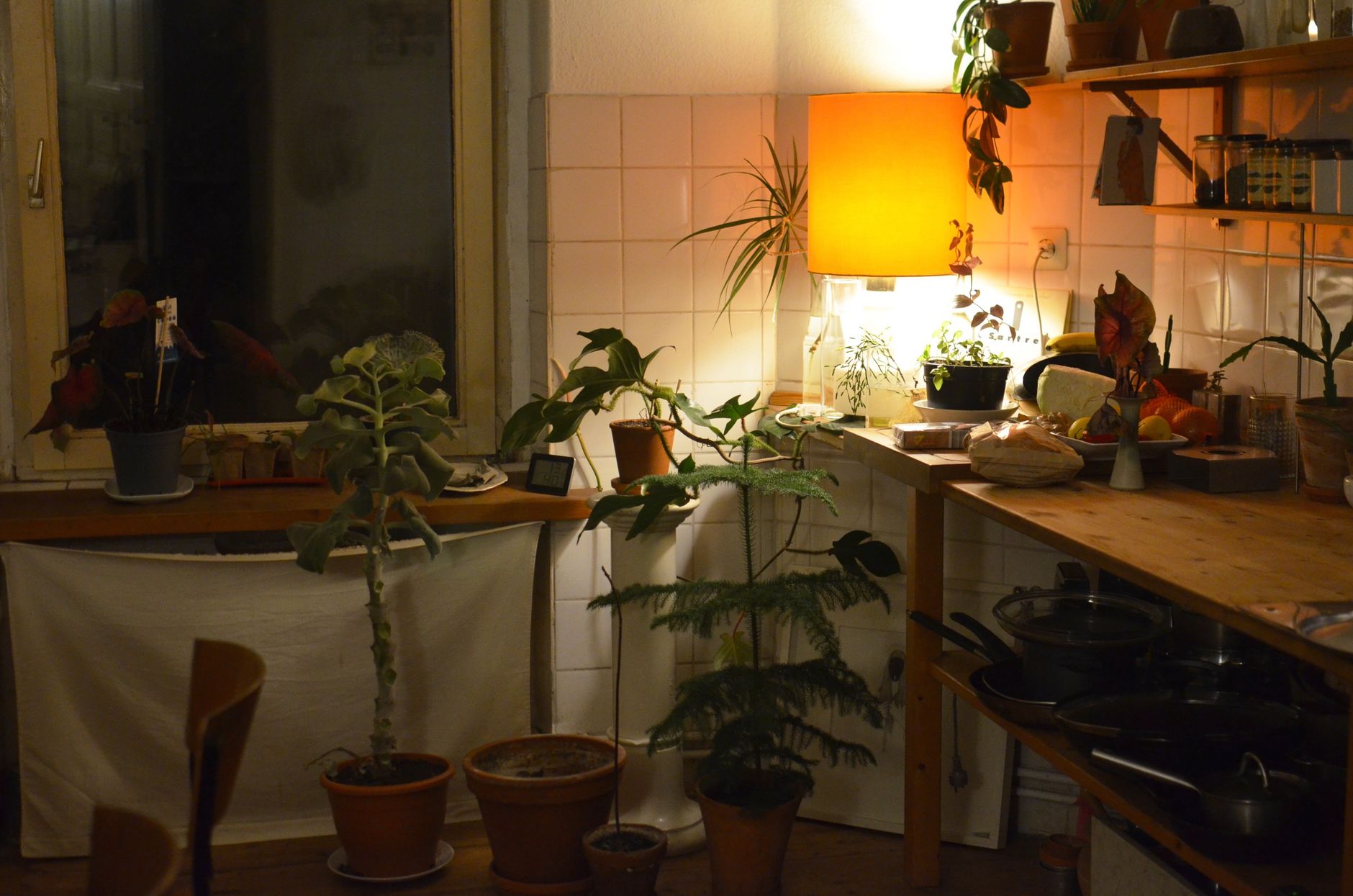
At first I answered out loud. Wrong move. Half-waking her at two was as bad as waking her at four — worse, actually, because she’d surface just enough to panic about the morning and then lie there grinding herself down toward the alarm. So on the third or fourth night I did it in writing. There’s a whiteboard on the fridge, the kind with a pen on a string, left over from her father’s ordering system. I wrote:
Prover’s off. Timer’s set. Go back to sleep.
She stopped mid-syllable. Ten seconds, maybe less. Silence until the alarm.
That became the arrangement. I work late shifts at the hospital pharmacy — home by twelve-forty, awake till two — so the night end of it fell to me anyway. Most nights between one and three the question would come, some nights twice, some nights with variations: Did the order go in? Is the back door locked? I’d pad down and answer on the board, and inside a quarter-minute she’d settle. In the mornings she’d erase it, write BREAD, MILK, and never ask what else had been there. She has slept better this year than in any year I can remember. She told her sister so on the phone. I heard her say it.
My Own Handwriting
In March I came down at 2:40 and she was already asking. The answer was on the board.
Prover’s off. Timer’s set. Go back to sleep.
The handwriting was mine. The loop on the f in off, the way I break the k in back — mine. And I hadn’t written it. I’d been asleep on the sofa; the pen was capped and hanging on the wrong side of the board, the side she uses for shopping. She asked twice more while I stood there. Then I wrote my answer under it, the same nine words, and hers — its — stopped mid-syllable as always.
The next morning I compared the two lines. Letter for letter. The spacing before Timer’s matched, down to the apostrophe overlapping the s. Pharmacists check. It isn’t a choice; it’s how the hands are trained. You count twice, you read the label twice, and if two counts disagree you don’t shrug and pick one — you start again. So I started again. I photographed the board before touching it and kept the pictures in an album on my phone called PROVER.
It happened once more in April. Twice in May. Each time the answer was there before I’d have written it, in my hand, correct, and the interval widened. In April it beat me by four minutes. By the end of May, forty. In June I came home at twelve-forty with the shop shuttered and dark below me, and the answer to a question she wouldn’t ask for another hour and a half was already on the board, as if somebody sensible had written it at a sensible time and gone to bed.
One night that week the board read:
Rye’s in. He checked twice.
At 2:14 she asked whether the rye order had gone in. She had never asked that before. The answer was two hours old.
The Night I Didn’t Answer
I tried stopping. Once. A Tuesday in July, the way you stop taking a tablet to see whether it was doing anything.
By 1:50 she had asked the question nine times. By 2:30 her voice had worn down to the vowels alone. At 3:15 she was sitting up in bed, asleep, asking it into the dark with both hands curled in the duvet, and I stood in the kitchen with the pen in my fist and understood the shape of what I’d built. Whatever answers her — me, or the me that isn’t me — she needs the answer. The kindness isn’t a habit I can put down. I wrote. She lay down. The alarm went at 4:20 and she got up and made sixty loaves.
She knows none of this. I’ve tried telling it in pieces — the album, the intervals — and she listens, frowns at my phone, and says she doesn’t dream at all, hasn’t since her father died. The flat has never been colder than it should be. Nothing has moved that shouldn’t have. The dogs on the street take no interest in our door. Whatever shares this kitchen keeps bakery hours, answers in my handwriting, and has never once been wrong.
The Question I Never Wrote
Then, at the start of October, the board asked a question. My handwriting. Six in the morning, light coming up grey over the yard, pen capped on its string:
Does he still take the late shift for me?
Ness came down at 6:10 with her hair tied back for the ovens. She read the board on her way to the kettle, the way you read anything on a fridge. She lifted the pen off the string and wrote beneath it, in the round, even hand she does the invoices in:
Always has. Tell him.
Then she made coffee and went down to start the shop.
I erased both lines that evening. By ten the question was back, word for word, and upstairs she was asking it aloud — asleep, a new question in the rotation — until I copied her answer onto the board in my own hand. Two answers again. Stacked.
I don’t erase it anymore. The board stays up with the week’s exchanges on it — hers, mine, whatever the third one is — and the flat runs on it the way the shop runs on the prover timer, loaves coming out at six whether anybody watches or not. I answer when it’s mine to answer. And on the mornings when a question about me appears in writing I didn’t put there, I stand back and let her answer it, because she’s better at that part than I am, and because somebody in this kitchen apparently needs to hear it.
Last week I bought a bigger board.