The Handover
I came for the double rate. Nights over the Ashcross tops paid twice what days did, because nobody wanted them, and I wanted my overdraft gone by spring. So on the first of December I took the rota off Ken Brassey, collected the drugs box, the fetotomy wires and the on-call phone, and sat through twenty minutes of instruction that was all cow and none of it road.
At the door he handed me an index card. Block capitals, the way you’d write feeding instructions for a kennel hand.
If the tops go, stay in the car. Engine off, hands in. The road will move you.
Never get out on the closed road.
And don’t leave anything on the tarmac you’d miss.
I asked what happened if I missed a call. He looked at me the way owners do when you’ve asked the wrong question about a dying dog, and went home to Darrow.
The Punchbowl
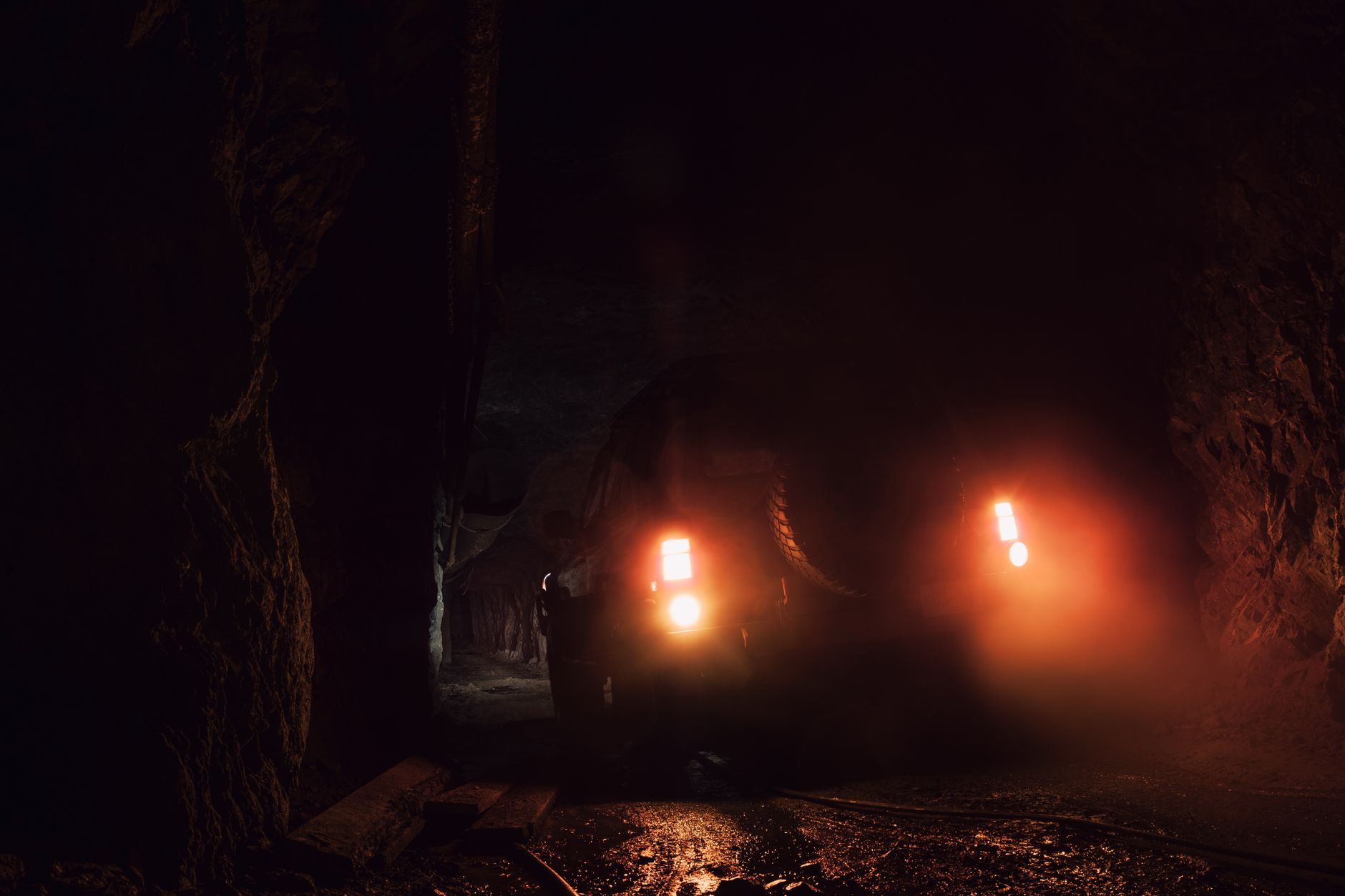
First snow on the ninth. I was coming back over the tops from a difficult foaling when a milk tanker jack-knifed at the Punchbowl and the road died in both directions. Forty of us, engines off, wipers on intermittent, snow closing over the lamps like water over a dropped coin.
My engine started itself.
Dashboard lit, fan stirring heat off a heater I hadn’t switched on. The handbrake let go at its own pawl. In the mirror the car behind rolled its lights, then my bumper kissed the car ahead — a touch you’d have called gentle from a boy pushing a bench — and the whole lit snake began to crawl.
The glass whited out in a hundred yards. I rode at walking pace in my own lane, engine ticking over a throttle I wasn’t touching. My hand went to the door handle. In the Transit alongside, a man I’d never seen caught my eye, shook his head once, and set his hands back on the wheel like a driving examiner.
The only sound, all the way over, was coupling knock — metal finding metal ahead of me, then behind, patient as loadstones. Then the glass cleared, the snow fell away, and we rolled toward Ashcross in open order, engines cutting out one by one as the coal-yard gates came up. Nobody hooted. Nobody stopped.
The dashcam kept eleven minutes of blowing snow and my own exhaust. The GPS track on my phone drew the car four miles east in a line as straight as a ruled pen. I sat in a layby until my hands agreed to be hands, then took the next call.
The Set-Down Gates
The pub at Ashcross keeps a photograph over the fire, brown as tea. A string of coal waggons in snow, horses belly-deep, men leaning on the shafts with poles. The frame carries a brass plate.
THE WAY WENT THROUGH. JANUARY 1881. Fourteen waggons over the tops; the horses died at the second milestone and were cut from the traces; the waggons arrived. Darrow did not freeze.
The landlord topped my glass without being asked. The road runs on the old waggonway, he said, and the waggonway was laid on one instruction: the coal goes through. The tarmac is the newest thing on it by two hundred years. Then he asked what I did with a dead ewe on the crown of the road at closing time, and I said I’d move it, and he said, aye, so would the road.
I took it for a way of saying the plows were good up there.
Strangers’ Paint
By January I’d stopped checking the forecast. The tops could close behind me and it didn’t matter; the column would come, couple me in, and set me down the far side with the engine warm and the call sheet on time. The practice’s winter figures were the best in the county, and old clients began asking for me by name, which nobody says to a locum.
The crossings changed as the winter deepened. They came earlier, engines turning over while the snow was still deciding. They coupled tighter; my bumper wore three colours of strangers’ paint that polished out in rings, and one morning a Mondeo’s tow-eye cover sat where mine had been. They ran longer. Eleven minutes in December, nineteen in January, half an hour by February, cart pace the whole way.
Once, high on the quarry bend, I came up level with the front of a crossing going the other way, and my lights caught it working. A drift the height of the wall went over the wall. A gatepost came off the crown of the road and lay down in the field like a thing tidied away. Nothing broken, nothing hurried. I drove home with the radio off — and didn’t take the long way round the next night, which is the choice I’d answer for, if anyone ever asked what the choice was.
Hesyett
February hard freeze, and a calver at High Hesyett, the last farm before the drop. Snow banked the gateway to both sides, so I left the Yaris half on the tarmac — the way you do — and walked up the track with the kit.
The calf lay wrong. I went in to the shoulder to turn it, inside a warm animal that wanted to live, which is the best hour of this job and I won’t pretend otherwise. By the time the cow stood and the calf was at the teat, the tops had closed.
The gateway was empty.
Ewan, the farmer’s boy, nineteen, went out without his coat. The column sets down at the gates, he said, and the fell track cuts the quarry bend by a mile. He took his pickup up the track with me standing in the bed, and we came out above the road with the crossing strung below us, nose to tail down the pass, crawling. My silver Yaris was third from the front.
Ewan jumped down onto the tarmac and raised his arms to it, the way you’d flag a tractor.
I want to tell it quick. It was slow. The column came on at cart pace; it did not steer and it did not slow, and at the front of it, where the snow went over the wall, he was moved. Not struck — moved, the way the drift had been moved, the way the gatepost had been moved. Aside, off the crown, over the kerbless edge, out of the running lane, which is everything the road does to whatever stands on it at closing time. The bank below the quarry hinge is thirty feet of frozen scree.
Forty people watched through windscreens, belted in, hands where they’d been told to keep them. My Yaris rolled by, third from the front, with my kit in the boot, and set down at the gates on time.
We roped down to him. Cervical, from the angle. It was two hours before anything with a siren could come up the closed tops, and he died on the calving-pen straw, his mother holding his head the way you’d hold a tup at clipping.
The Finding
The inquest sat at Darrow in April. I gave my account. My account did not go in.
Death by misadventure, contributed to by a vehicle unknown. No matching paint transfer; no damage consistent with any speed. The forty witnesses concur that no vehicle passed them.
Which is true. No vehicle passed them.
The practice offered me the permanent nights and I took them. The overdraft cleared by June, and the road has never once kept me waiting. When the new assistant came for her handover, I copied Ken’s card out twice, once for her visor and once for mine, with a line added that nobody had given me.
The road keeps waggons, not people. Inside a car you are cargo. Cargo rides. On foot on the road at closing time you are obstruction, and obstruction is moved.
Some nights, waiting at the gates with the engine off, I read it by the yard light.