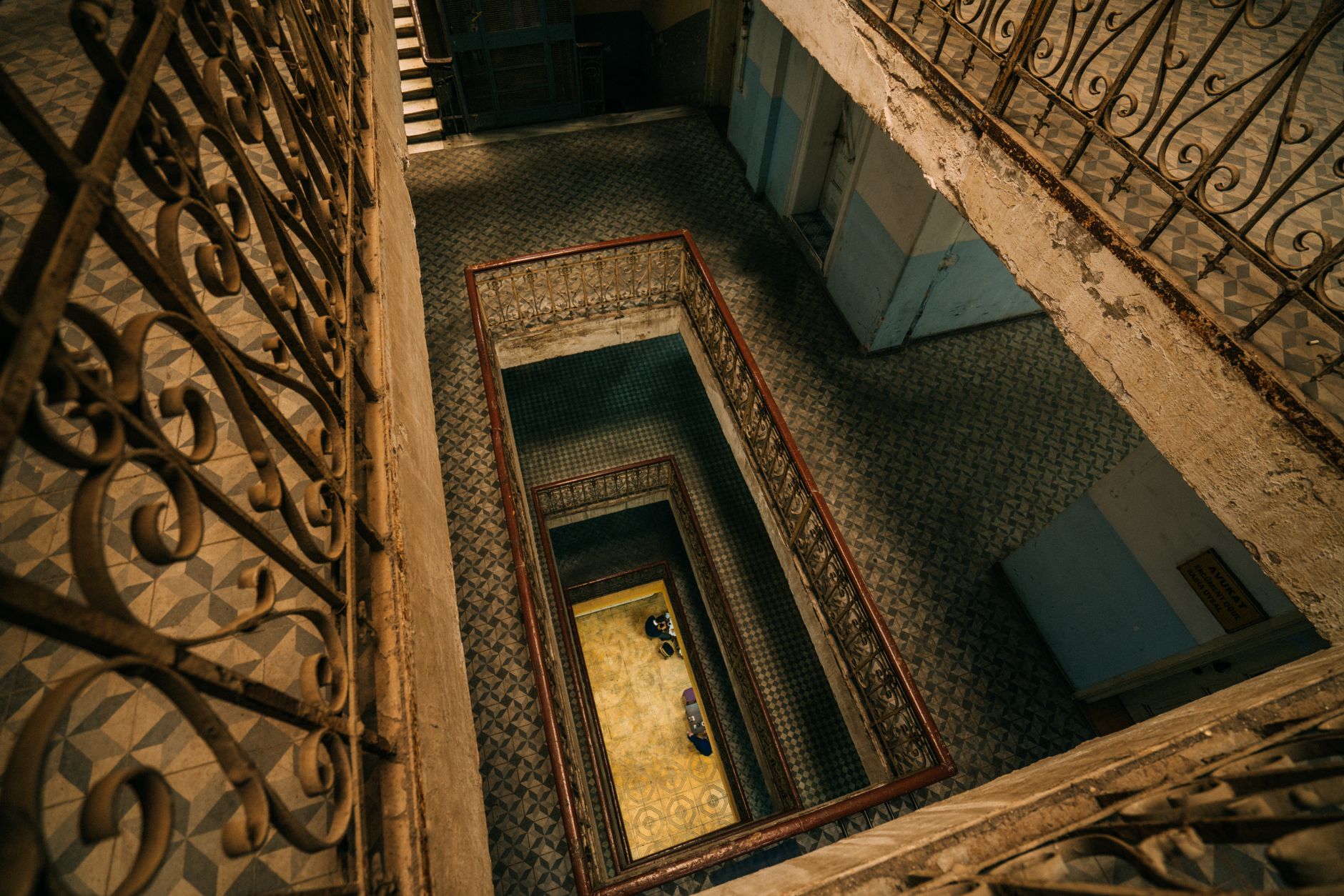
The Marble
Peter and I had our quarrel on the afternoon of the funeral, in the kitchen, with the casseroles still sweating on the counter. It was about the house, which is to say it was about everything since 1998. He wanted it kept. I told him what the last four years of it had cost, and that I lived in Halifax and he lived in Toronto and neither of us was our sister, who was dead. He set his plate down and left before the pies were cut.
“Walk it with me before you drive,” I said at the door, and he laughed, not unkindly, which was worse.
I stood at the sink with my hands in the cooling water and watched a marble cross the floor. It had been under the dresser since I was nine. My father’s — shooter-sized, grey glass with a twist of white in it. It came out slow, rolling on its own weight, and stopped against the toe of my boot. I toed it back under. By the time the dish towel was hung it was at my boot again.
The floor was level. I’m telling you the floor was level.
In our family you did not let a quarrel see the dark. Before sundown the two of you walked it off: front door to back door and return, shoulder against shoulder, no talking, steps set to the boards. Gran called it squaring up. No sun sets on a list. I had taken it for a saying. Peter took it for quaintness, and quaint things embarrassed him. He had a six o’clock flight. The sun went down on us at 5:41, unwalked, and the house took the weight.
I had until the first of December to have her empty, surveyed and listed.
Nine Days
Third morning, the pantry door needed a hip where it had always swung on two fingers. Fifth, the dog drank at one rim of his bowl because the water had gone to live at the other. Sixth, I called the surveyor, because a woman who sells houses knows what a leaning floor does to an offer. His laser said one point two degrees, west, and a laser does not tell stories. He blamed the sills. Sills do not carry a whole house to one side, but he wrote what he wrote, and took his money, and the marble kept its post at my boot.
The funeral video came back from the cameraman that evening. Every Vyre in the pews leans left. Not slumped — canted, all of us off the upright by the same degree, shoulders down on the same side, my aunt at the organ, the cousins, the baby.
June is Peter’s girl, seven months old. Her mother sent a clip that night: the crib, and the baby rolled to the left wall of it like a cup set down on a boat’s table, and a hand pressing her back to the middle, and the baby rolling again. Patient. Absolute.
Peter video-called on the eighth day, about the lawyers. He listed. Shoulder down on the left, propped in his doorframe, and when he turned for a file he walked into the frame of it — thump — and swore at his own house. His physio finds nothing. There is nothing to find. Someone at his office has shimmed his chair, he says, and he thinks that is funny.
At night my bed climbed. That is the word. I woke at three with both ankles working, holding me the way you hold a tray level on a moving deck, and the room would be still, plumb, every object in its place, and my body the only thing in it leaning.
The Hollows
A house tells its secrets to the woman with the packing tape. Washing the pantry doorframe, one stroke of the rag and the paint came away in two hollows — shoulder height, one on each side of the casing, worn in like saddle leather. Two hollows. Set the width of two people apart.
On the shelf behind the pickle crock: a spirit level, brass-bound, its bubble pinned to dead centre by a beech wedge driven under the glass. All my life I was told it was my grandfather’s joke. Grandfather did not joke. A tool that cannot report the truth is not a joke; it is a held line.
The log lives in the dresser drawer, under the marble’s dust. A shipwright’s notebook, hand-sewn. Abram Vye built her in 1887 for two sons who could not share a hammer, and he logged her like a hull.
Walked, the brothers, 41 times. She stands. — 1891
Walked, Silas and the boy, all through the lockout winter. She stands. — 1923
Walked, Dad and me, twice, the day of Mum. She stands. — 2019
The last line is my father’s hand.
Not forgiveness, then. Ballast. A quarrel has weight; tell yourself it hasn’t, but a house that has carried one every night for a hundred and thirty years knows what it weighs. The walk was built for two shoulders because the weight is meant to be split — carried out the front door and the back, half each, set down matched. Forty-one walks in 1891. We stood at zero, nine sunsets down, and the newest thing in her register was rolling to the wall of a crib.
The Walk
I called him on the ninth evening. I told him about June, and the pew video, and his chair. I heard the chair creak as he sat up straight to deny it, and the denial came out tilted. He could not come. He had a pitch on Thursday. June’s mother had rules about weekends. And under all of it, plain, the thing he had carried onto every flight since he was nineteen: he would not stand in that kitchen and be handled by a house.
“Sell it, then,” he said. “That’s all it is to you.”
The sun stood on the sill. And I did the arithmetic a house like that teaches you: the next increment had somewhere to land, and the lightest name in her register was seven months old.
I walked it at 5:38, barefoot, the way it is done. Front door to back. My shoulder into the hollow on the left of the casing — his hollow; the paint is worn to the wood there, and it fits a shoulder that is not mine.
Halfway down the kitchen the floor came level under my feet, like a hull taking its trim. No motion. The room swung — dresser, windows, both doors, one slow swing, the way a moored boat turns when the tide goes — and set, and was still.
Then the weight. All of it. Nine sunsets and the house’s own lean and whatever a quarrel weighs after twenty-six years came down into my spine between the shoulders, one payment, unsplit. My right knee buckled. My hip took the wall. I stood in the back doorway breathing like a woman carrying a wardrobe upstairs.
I finished the walk. You finish the walk.
The marble stayed under the dresser all night. June’s mother texted at six in the morning: she’s sleeping flat, what did you do. Peter’s back let go on its own by the weekend; he credits a new chair. The surveyor re-shot the floors for nothing — one point one, within tolerance, and falling. By possession day the laser said plumb, the wedge was out of the level, and the level agreed with the laser.
I sold her level. That was the point, and I do not regret it.
I list. Two degrees, the physiotherapist says, left, postural, unexplained, and she gives me the little grey exercises. My shoes are built up four millimetres on the left. In Halifax the sidewalks are honest and I tilt along them into the wind off the harbour, and old men steady me with a hand on my arm as they pass, and I let them.
The log came with me. The last line in it is mine:
Walked alone, October. She stands.
June quarrels now — she is two, and she quarrels with the radio. When she is old enough to quarrel with us, I will teach her the walk the way it was given: two shoulders, no talking, before dark. What I will not teach her is that it can be done otherwise. A house proved that it can. I keep the proof where I keep the log.