Academy Street
My grandmother kept one rule for the house on Academy Street, and she stated it at dinner the way you state a thing that has to outlive you: never tighten the third step. I was nineteen. I filed it with the other coal-town superstitions — coins above doors, no whistling past the breaker — and for twenty years it cost me nothing, because the step was already loose, and loose things ask nothing of you.
She died at ninety-four, downstairs, in the good armchair. Left me the house: a half-double with good bones, a slate roof good for another decade, and a mortgage-shaped absence where the other family used to be. My husband Marcus walked the rooms counting outlets and called it a project. My stepson Ben, twelve years old, took the back bedroom under the stairwell, because it was the quietest room in the house.
Quiet mattered to Ben. He was the kind of kid who surfaced from a dead sleep when the refrigerator changed pitch.
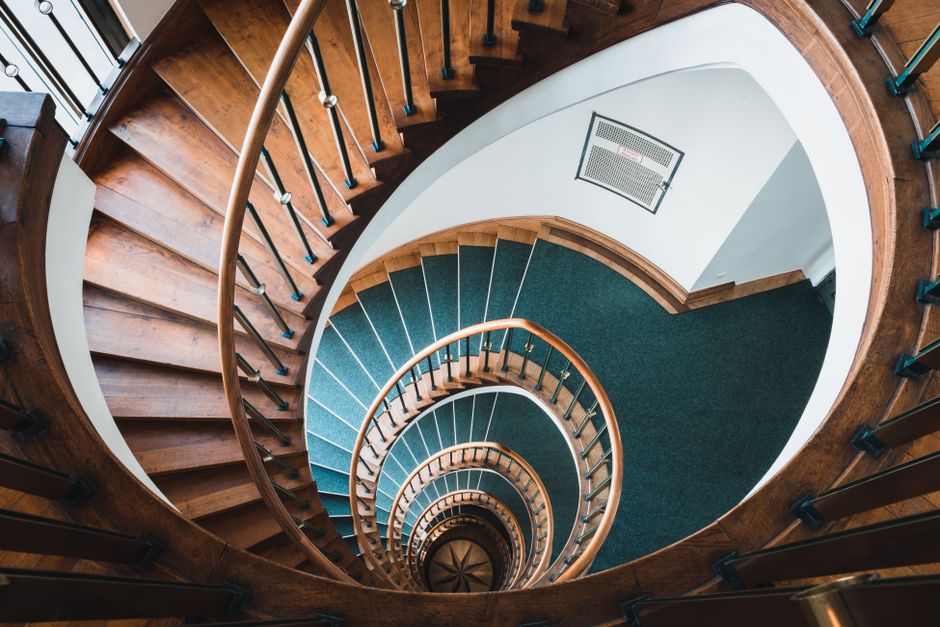
I do fall-prevention for a living. Home health, all over the county — I teach old men to stop storing rifles and rocking chairs in the same dark corner, and I write remove trip hazard more often than I sign my own name. So understand how that staircase read to me. Twelve pine treads under seventy years of paint, and the third one rocking a quarter inch underfoot with a sound like a knuckle.
I fixed it in September. Unscrewed, cleaned, glued, blocked, shimmed flush. Silent. While the tools were out I did the banister too, and Marcus did the hinges, the weather-stripping, the smart lock. By the first week of October nothing in that house moved unless we moved it.
The re-inspection was set for the last week of November. Pass it, release the refinance, keep the house. That was the whole plan, and I want it on the record that it was a good plan, the kind they give you a certificate for.
The Quiet
Old houses talk at night. Academy Street always had — I grew up in what is now Ben’s room, and the house kept a whole vocabulary: the radiator’s cough, the wind finding the same loose board by the pantry at one in the morning, the stairs doing their arithmetic whenever anyone came up late. Three nights after the glue cured, the house stopped talking. All of it, at once. No settling. No ticking of the roof cooling off. Nothing.
Ben said the silence was better. Ben said a lot of things that October, because the clicking had started, and he didn’t want it examined.
It came through the wall first, faint as a fingernail on a wine glass. One click. A pause. Another. The rhythm of a slow walk. His hip — and hips are not allowed noises, not in children; I’m the one in this family who knows which sounds growing joints are permitted, and I chart kids for a living. The doctor’s office said growing pains, said hypermobility, said come back in six weeks. I charted us instead, on a legal pad at the kitchen table, because the pattern was asking for a chart.
Marcus’s jaw went next, clicking at meals, then catching mid-sentence. Then my right knee, on the stairs — on the third step, the silent one, and somehow that was the detail I couldn’t put down. The house had gone quiet and we were getting loud. By November the clicks ran all night, all three of us, in order of distance from the stairwell: Ben first through the wall, Marcus across the hall, me at the far end. The pauses between clicks were shortening. The sounds were climbing — Ben’s hip to his low back, Marcus’s jaw to his neck, my knee up to my sacrum.
Then Ben woke on a Wednesday with his hip caught mid-turn, locked half over, and stood at an angle at breakfast like a fence post taking wind.
I quit charting.
Waxed Paper
I went down at three in the morning, put my palm on the third tread, and pressed. The step gave nothing back. No rock. No sound. A dead tooth. Her rule came up whole, in her dinner voice, and I got the pry bar.
The tread lifted. Underneath, laid into the cavity like something stored rather than something structural: packets. Waxed paper, tied with twine, dated in pencil. Shims — cut pine wedges, dozens of them, decades of them, each packet a different generation of trim. Oct 1961. Mar 1968. Jan 1978, the winter her porch got enclosed. Sep 1999, the month the windows were replaced. The last packet was newer and not in her hand: Feb 2016. The month we bolted the stair-lift to the stringer so she could get up to bed. Six rails of steel, silent as a bank vault, and her hip fused inside eight months. We told ourselves it was the fall.
There was no fall. I was her caregiver of record. I signed for her file at the agency and sat in the parking lot and laid her sixty years of joints beside sixty years of permits. 1978, frozen shoulder. 1999, trigger thumb. 2016, adhesive capsulitis of the hip — a hip that set, in her doctor’s phrasing, like concrete. Whenever the house got tightened, she paid in a joint. Whatever lives in the give of an old house, she had been holding the gate for fifty years, one loose wedge at a time.
The oldest packet carried a note, and the pencil had gone brown.
3rd — leave her loose.
Better the step than us.
— A., Oct 1961
Third Tread
The inspection was eleven days out. I want that noted too. Eleven days, a refinance riding on it, and I sat on the stairs at four in the morning doing the math she must have done a hundred times: what a quarter inch of give buys, and who pays when the wood can’t.
I re-cut the wedge with her block plane. Took the tread up, pulled every shim I’d glued, set the new wedge loose enough to speak, and screwed the board down soft. Then I stood on it barefoot, my full weight, and the step creaked — long, low, unhurried, a word being tried after years out of use. I stood there a long time. The house answered down its whole length: the pantry board, the radiator, the roof. A conversation catching up.
That night the house talked till morning. All three of us slept.
The clicking stopped over the following weeks, the way a weather front moves off — Marcus’s jaw first, then my knee, then Ben’s hip. What had already routed into Ben stayed. There’s a hitch in his gait now, one knock on the wrong side of his stride. Two pediatricians and an orthopedist have found nothing to explain it. It knocks when the stair creaks. Anyone, day or night — one creak, one knock, in time, a call being answered.
The inspector came the Tuesday after Thanksgiving. He rocked the third tread with his boot, wrote character wear, serviceable, and passed us. I signed.
In March I found Ben in the garage with his coat still on, at the workbench, cutting shims from a length of pine — next year’s set, wrapped and dated in pencil, stacked the way hers had been stacked. He said he didn’t remember being shown. His hip knocked once when the back door settled.
We keep one thing broken in this house.