Blog

  • Cancel Before the Terminus

    Cancel Before the Terminus

    The 21:47

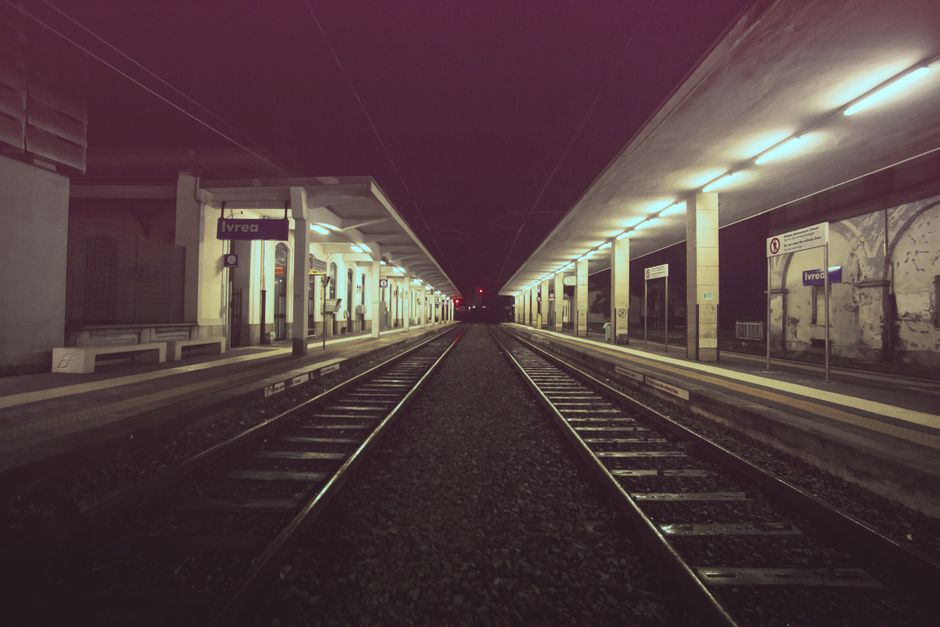
    Mick rang in sick at ten past four, and by nine that night I was signing for the 21:47 down the Ashcombe branch — a two-carriage unit with a guard’s van bolted on the rear for a school run it stopped carrying years ago. Relief work suits me. Keep your head down, work the round the way the book says, be home for breakfast.

    Nora turned six the next morning. I’d promised her pancakes before school, and the first bus out of Ashcombe left at 06:10, so the maths was simple: finish the round, sleep in the depot rest room, catch the bus, beat the batter.

    Third stop out, Low Fen, an old man boarded the rear carriage. Coat too heavy for October. He didn’t tap his card at the reader; he held out a ticket instead, and not the paper the machines print now. Thick orange card, Edmondson stock, the kind the clerk’s rack kept before my time. Printed on it: HARROW HALT. Under that, a date. 14 NOV 1962.

    I know the line’s history better than most men still working it. Harrow Halt went in the winter floods of ’62. Suspended, the notice said, and the word matters more than you’d think. Closed is withdrawn. Suspended is pending.

    Bylaw 74(2): passenger presenting a ticket not valid on the service — offer an alternative, or confiscate against a report chit. I did what the book says. Wrote the chit, dropped the orange card into the leather pouch on my hip, handed him the carbon.

    He read the carbon twice. “Mind how you carry that,” he said. “It’s mine, technically.”

    “The chit’s your receipt. You can claim the ticket back.”

    “Oh, I intend to.”

    The Pouch

    At Low Marsh I walked the carriages again. A dozen passengers is a busy night on that stretch; now there were more, and nobody had boarded past me. A woman in a headscarf held a wartime paper, soft as cloth, printed THRU TO HARROW HALT, CHILD ½. A man in a donkey jacket had a season ticket stiff with years of renewal dates. A boy of maybe nineteen clutched a travel warrant from the year they repainted the units. Different decades. Same destination.

    The stretch between Low Marsh and Ashcombe is eleven minutes of flooded fields, and that night it ran long. The carriage clock lost whole minutes against my watch and then, as if embarrassed, gave them back all at once.

    In the guard’s van, a working timetable page sits in a frame behind the door, dog-eared by forty years of thumbs. I’d read it a hundred times without reading it. Tonight the paragraph stood off the card:

    HARROW HALT — service suspended 14 Nov 1962. Not withdrawn. Tickets sold to Harrow Halt remain valid and shall be conveyed to destination. Guards will ensure holders are set down.

    The pouch at my hip had a weight to it that one cardboard ticket doesn’t have. I loosened the strap. Six cards. Then eight. I had confiscated one. The dates ran in sequence — 1962, 1968, 1974, 1989, 2003, 2011 — each a winter’s night apart, and the last card was printed with tonight’s date, the stock still pale where the ink hadn’t bitten.

    I did then what a guard does to a dead ticket. I clipped the 1974 season through its face and dropped it back in the pouch, and when I walked forward through the carriages, the man in the donkey jacket was gone. Not moved to another seat. His newspaper lay folded on the bench, still holding the shape of the hands that had gripped it.

    I stood a long moment with the clipper open in my fist.

    A ticket is a promise the railway makes. Everyone on the payroll learns that in the first week and forgets it by the second. The clip doesn’t mark a ticket; it closes it. Clipped, the promise comes off the books — no destination owed, no setting down required. I had cancelled a man’s claim to arrive.

    I went through the carriages giving back everything the pouch held that I could match to a face. The warrant. The child’s paper. The old man’s orange card I pressed into his hand myself, and closed his fingers over it, which is against every regulation I’ve ever loved.

    “You counted every head tonight,” he said. “Walked the line twice an hour and logged the lot. Nobody’s worked the round like that since me.”

    “You were a guard.”

    “Until they suspended my station and put me off at Millbrook for waving fares through the flood winters. They never gave me my last month’s passes either.” He turned the orange card over in his palm. “Sixty-four years I’ve ridden out the claims, one ticket at a time. Tonight the books come right, and you’re the first man since me who’d have noticed.”

    The brakes came on gentle, the way they do for a booked stop. There is no booked stop between Low Marsh and Ashcombe. The brakes don’t ask.

    Harrow Halt

    The lamps of Harrow Halt came up out of the flooded fields, and they were lit. Both platforms. The porter’s trolley stood under the awning with a lantern on it, and the lantern was burning.

    The holders rose in the carriages, one bench at a time, and queued at the doors the way passengers do, patient, collars up, tickets in hand. I checked my own breast pocket before I understood why. Staff pass. ALL STATIONS, ASHCOMBE BRANCH. No expiry printed, because none was ever needed. All stations includes the suspended ones. Eleven years I’d carried a live claim on myself and called it a livelihood.

    The train stopped. The doors hissed open onto a platform that isn’t on the public timetable, and the holders began to file out.

    I took out my pass. I looked at it the way you look at a dog that’s never bitten anyone. Then I fed it into the clipper and squeezed until the little brass jaw bit clean through, and the punched chip dropped into the tray with everything else.

    The old man paused at the door, cap settled, orange card held out flat like a boarding check. “You’re travelling without a valid ticket now, son,” he said, not unkindly. “Mind the bylaw. Millbrook’s staffed all night.”

    The doors closed on the halt and the lamps went out one by one behind us, the way a station goes dark when the last customer’s gone.

    The train ran two miles and stopped at Millbrook, which it does not do for anyone, and the door by my shoulder opened itself and would not shut until I had stepped down onto the platform.

    Millbrook

    The night porter was mopping around the ticket office. He didn’t ask. He took the ledger off its hook and laid it open, and I gave him my name and my staff number, and he wrote in a small careful hand:

    Put off, Millbrook, 01:12. One guard, travelling without a valid ticket.

    While the ink dried he thumbed backward through the pages, past years of nothing, to a brown entry near the front, and turned the book so I could read it. November 1962. The same words. Same hand.

    “They made him sign for it too,” the porter said, and went back to his mop.

    I signed beneath a dead man’s line. The inquiry later logged me as guard left service mid-round; they docked three days and declared my pass void, which spared me the paperwork of surrendering the two punched halves I keep in a drawer at home. The driver of the 21:47 was never identified, the roster showing Mick’s name and Mick at home in bed with a temperature, and no one asked twice, because no one ever asks the branch line anything.

    Nora got her pancakes at ten past seven. I caught the 05:40 up, and if her father smelled of lamp oil and wet wool when he walked in, she was six, and pancakes came first.

    I still work relief, when they’ll give me the shifts. I’m entitled to staff travel, but I’ve never used it since. I buy a paper ticket, full fare, every journey, and I clip it myself at the gate before the doors close — because a promise is a live thing however old it is, and I’d sooner be the one who keeps it than the one it’s kept for.
  • The Third Share

    The Third Share

    The Water Charge

    The water charge came folded inside the rent statement, the way it always did, and the arithmetic was wrong by a third.

    Flat 4C, Barrow House, above a laundrette that had closed in ’99 and never been let again. Two of us. Me and Col. I picked orders nights at the distribution park off the ring road — conditioner, squash, birthday candles, forty thousand units a shift going beep under a scanner — and because my hand was the steady one, the paperwork was mine. Six years of quarterly charges, paid on time, in my writing.

    That March the slip read occupants of record: 3.

    I rang them from the phone box by the chip shop. Eighteen minutes on hold, a woman called Pauline, my details taken twice, and her promise that the amendment would process at quarter’s end with the credit to follow. Two hundred and six pounds across the year. That was the boiler serviced twice over. That was Col’s chest seen to before winter instead of after.

    The June statement arrived. Occupants of record: 3. Amendment requested, it said in smaller print. Pending.

    July brought a parking permit for a car we didn’t own, made out to M. Vale, 4C Barrow House. I sent it back registered. August brought the health centre’s repeat slip for Vale, M. — coal tar bath additive, two hundred millilitres, monthly — and this time I walked it round to the housing office in person and asked for a copy of our original occupancy declaration, the one from when we moved in, the one I had signed.

    They photocopied it while I waited, and I stood at their counter and read my own handwriting three times.

    Two names I knew. The third was Vale, M., entered in the same loop and slope as the rest, same pen pressure, the same way I cross my sevens. Col swore over my shoulder that we had never put anyone else on that form. He doesn’t lie to me well. His ears go red.

    “Two hundred quid,” he said. “Doll. Let it lie. Pay the share.”

    But the pipes had started, and that decided it more than the money did. Quarter to five in the morning, home through the dark from a shift, standing at the sink with my shoes still on, and the draw of water overhead — our overhead, top floor, nothing above us but the tank and the roof — a long steady run, the cylinder cupboard breathing warmth into the hall on a night the heating had been off since April.

    Somebody was having a bath in a flat with two people in it.

    The Walk-Through

    The association sent a man called Aldous in September, young, polite, a clipboard held low like a hymn book. I showed him the statements, the returned permit, the slip from the health centre. He nodded along and wrote nothing down, and then he asked would I mind if he walked through, just to complete the picture.

    He went room to room at a stroll, tipping his head at things. The window seat in the front room, where the sun kept the cushions warm. The chair we had never bought, parked by the south window with its arms worn pale — Col’s mother’s leftover, we had told ourselves, though Col’s mother died in Wigan and owned a rocking chair, and this was not a rocking chair. Aldous stood beside it a long moment. Whatever he was completing, it completed.

    I read his note upside down while he stamped my copy of the inspection slip.

    4C inspected 14 Sept. Sitting tenant plus two, consistent with roll. South-facing chair in regular use, curtain track recently oiled, bathroom steam damage consistent with three adults over time. Tenant cooperative re: meter.

    “Sitting tenant plus two,” I said. “Which two?”

    He looked at the chair first. Then at me, kindly, the way you look at someone who has wandered into the wrong waiting room, and made a small mark against something on his sheet, and let himself out.

    Col stopped sitting in the front room after that. We ate in the kitchen with the door shut and the radio on, and when I say we didn’t discuss it, I mean we discussed the radio. In October I filed for a tribunal. My writing on every form, my name at the head of the appeal, and Col went quiet in a way I took for worry and was, I think now, something further off — the look of a man reading the map of a river he is already in.

    The Bundle

    The hearing was in January, a warm room in the civic annexe with a water cooler nobody used. The association sent a solicitor with a wheeled suitcase of files. Me in my coat.

    She unfolded the bundle along the table: occupancy declarations for 4C, 1989 to the present. Fourteen years, four tenancies before ours, and every one disputed the count. Every tenant going back — a bus driver, two students, a family called Okonkwo, a Mr. Prior who lasted nine years — had rung about the charge, or written, or stood at that counter, exactly as I had.

    And every declaration, all fourteen years of them, was signed in my hand.

    Same loop. Same slope. My sevens. Ink fading blue to violet on entries older than my time in this country, and there at the foot of each page, patient and small: my writing, as though I had always been the one who did the paperwork for this flat, whoever lived in it, whatever decade the paper believed.

    The committee retired for eleven minutes. The chair had a cold and apologised for it twice. The ruling came by post the following week, one page in a franked envelope — no stamp, I remember fixing on that, because a person had to have fed that page into the franking machine that morning, for me.

    The record of occupancy, being consistent across fourteen years of signed declarations and inspection notes, stands. The appellants are entered as supplementary occupants of 4C.

    Supplementary. I sat with the word at the kitchen table while the radio played to the closed door.

    Number 4C

    The council merged its systems that spring — housing onto benefits, benefits onto the water billing, all of it onto one screen in an office somewhere with the blinds down. A man on the helpline told me this with pride. What the merge did, in the end, was choose. Where the records disagreed, it kept the older line, and the older line was the roll: one tenant of record at 4C, M. Vale, plus two supplementary.

    Our post thinned in April and stopped in May. Not just bills — the takeaway menus, the community centre raffle, everything. Col’s repeat slip for his inhaler came back from the chemist marked no such patient on our list. The bathroom leak we had reported in February was cancelled twice, and the stain in the corner spread from the width of a saucer to the width of a dinner plate, because the corner it spread through was on no plan the workmen carried, and water is patient with what paperwork forgets.

    Then the possession letter came through our letterbox addressed to nobody we knew, and on the date it named, a family arrived.

    Three of them. A woman, a man, a boy who counted the doorframes under his breath as he passed them. They moved through the flat the way you move through a place that has been measured on you — the woman hung her coat where the chair’s shadow falls, the boy took the back room, ours, the bed already gone from it by whatever goes in advance of such families — and they never once looked at us, not out of rudeness. The way you don’t look at the previous people in a photograph. Not your business.

    We keep to the kitchen. The pipes are ours to listen to. Somewhere under the floor, at quarter to five, the tank refills what we take, and nobody bills us for it, and that is not the comfort you would expect, being beneath the notice of the charge.

    In October the new water charge slid through the letterbox, and I stood behind the woman while she read it at the sink. Occupants of record: 5. She was on the phone by nine — Pauline, or whoever holds that phone now, taking her details twice.

    Col says we should be quieter at night. I have started keeping the old papers under the lino where they will stay dry: every declaration since 1989, my hand at the foot of all of them. The next blank form the association sends up will get the same treatment, because a form is a hungry thing, and I have always, always been the one in this house who signs.

  • Lighting Nine

    Lighting Nine

    Both Accounted

    Col went up the basket and I stayed on the ground. Twenty years, and it never changed. He worked the lantern; I footed the rig, chocked the wheels, walked the cone pattern out and back. Between us we kept four hundred columns alight from dusk to dawn, every street the borough would own up to.

    The check came at ten past ten, first round of the night. County control on the radio: Nine, confirm both accounted. Col answered. Senior man answers. He’d been answering since 1971 — four years before I ever set foot in the yard — first with old Mick Fenn, then with me, and I never once wanted it otherwise. You learn where you stand. You stand there.

    That winter the yard went out to tender. The borough wanted shot of its lighting the way it wanted shot of everything, and the talk in the hut was that the contractor would keep routes and shed men. In January I’d passed my platform medical on the quiet — my own idea, up at the Buxton clinic on annual leave — so that when the lists were drawn, Lighting Nine would show two certified hands. One unit, two certs. Harder to halve. I meant to tell Col when it was done.

    His granddaughter came on a Tuesday in February, six weeks early. Derby. The word came up to the yard at half nine, while he was still signing out the rig. Twenty-six years without a shift off, and he’d have run the round first and driven over after. I took his keys off him at the tailboard and sent him up to that ward smelling of sodium and wet wool.

    Control don’t care for stand-downs. A one-man Nine is a form with no second line, and forms with no second line come back with queries. So at ten past ten I keyed the handset and answered the check myself, for the first time in my life.

    Nine. Both accounted.

    It went out calm as that. A kindness, sized to fit a radio.

    The Flood of ’89

    The solo round ran smooth. Too smooth, I thought at the time — every depot gate open before I reached it, every fault exactly where the card in the column door said it would be, the whole borough laid out like a room already walked through. Once, at the subway columns on Croft Lane, my own handset clicked and a voice said receiving half a beat behind mine. Duplex bleed, I told myself. The county sets did that near the mast.

    We ran it lopsided through February while the baby fought — Col on the hospital runs, me taking the odd round single-handed. Eleven, all told. Each night, the check, and my answer, and that half-beat click.

    When we were back two-handed, the overlap started. Both reaching for the card in the column door at once. Both saying receiving. Both stepping left at the tailboard. He laughed it off — getting old together, he said, like married folk. I laughed too. It was that or stop the truck.

    The first thing to go was the flood of ’89. The Saturday after we were properly paired again, I rang him to settle something — whether the water had come as far as the tax office or stopped at the arches. We’d gone out in a punt borrowed off the rowing club, live cables down everywhere, lanterns floating past us in the road like dropped coins. I could remember the punt existed. He could remember the rowing club. Past that, neither of us could get. The water, the cables, the lanterns lifting past the shop fronts: gone, like a page read so many times the print has lifted off it.

    Tuesday night, footed at the foot of Slack Lane, it all played back. Whole. The river smell filling the cab, Col’s arm round a column to keep his feet, me laughing till I couldn’t foot straight. Every bit of it, running between log-on and log-off like it was kept somewhere lit.

    I said, “Remember the flood.”

    He said, “Aye.” Quiet. He was holding the same reel of it I was.

    Neither of us said the obvious thing, which is that we’d each rung the other on Saturday and found nothing.

    The Christening

    His daughter was christened at St Aidan’s in ’77, my first winter on the yard, and I stood godfather. There’s a photograph of it on Col’s mantelpiece: me holding her, twenty-six and terrified, his mother-in-law’s hat on the chair beside me like a second guest. The fact of standing godfather I still had. The day itself — the font, the do at the Railway, the speech I made — had gone wherever the flood went.

    I tested it, and I’ll put the test plain. At home, of an evening, off the clock: photograph only. On shift, footed at Barker Gate where the granddaughter night had started: the whole do played out, warm and complete, down to the hymn his mother-in-law demanded twice.

    Whatever the sign covered, it kept. And it was widening what it covered. The darts final — team name Nine, trophy still on his shelf — went in by March. Our one holiday together, Blackpool in ’92: gone from both of us by April. Our wives could still talk Blackpool across a tea table. We’d nod along like men hearing about a place we’d once driven past. Each man’s own past stayed put — my father’s funeral, my honeymoon, my twenty-year war with the council tax, all still mine, right where I’d left them. Only the shared went. The friendship was being paid into the unit, and the unit paid it back out an hour at a time, on the clock.

    Col went into control about it before I did, and a clerk read him off the log:

    Lighting Nine. Two-handed, continuous. 1971 to date.

    His name and mine on every line, including the eleven February nights only one of us had walked. Both accounted, in my voice-print, eleven times over.

    Split the Sign

    I went in myself in April and asked for the sign to be split. Nine-A, Nine-B. Two single men, two clean lines.

    The controller was decent about it. He said a split retires the unit — that’s the arithmetic. The sign, the rounds book, the log, the whole continuity: retired means retired, and everything the unit holds goes with it. “You’d be two separate men,” he said, “with nothing between you but what you can remember.” He looked at me while I counted what that came to.

    I withdrew the request at that desk. I want that plain. No second attempt, no appeal. Twenty years is not a thing you sign away to save the parts of it you can hold in a house.

    The contractor took the routes in May. They kept Nine. Col’s hip went the same month — the platform medical pulled him off the baskets, and he retired on the decent terms they were giving the old men to clear the books. They offered me a supervisor’s post. Days. A badge, a van, an office with a kettle in it. Everything I’d been angling for since January, handed over at exactly the wrong price.

    I told them I was a night man. They wrote it down as a preference.

    I run the Nine round now with a lad from the agency, twenty-two, up the basket because my cert says I like the ground. Between ten past ten and half six, the whole twenty years plays whenever I want it. The flood. The christening, hymn and all. Col’s face the night his granddaughter came. I can stand in it up to my neck, on the clock.

    Off it, we ring at Christmas. Four minutes, this year. Two men listening for a shift to start that neither of us is on.

    The check still comes at ten past ten. I answer for both of us.

    By the sign’s books, it’s true.

  • Conveyance Loss

    Conveyance Loss

    The Wasteway

    The district hired me at the end of March and put me on nights, because nobody else wanted them. Forty-one miles of main canal, ninety-some of lateral, and a book of instructions with a cloth binding that you signed out like a sidearm.

    Most of the book was arithmetic. Gates by clock, weirs by staff gauge, every acre-foot owed a name and a number. Page one carried a paragraph that matched nothing else in it — typeset square, pasted in crooked, the way a correction gets made to something older:

    At the opening of the season the first water shall be passed to the flat by the north wasteway and delivered to no farm. Duration: four hours. This to remain in force year to year.

    No reason given. No signature. Under it, in pencil, pressed hard enough to emboss the next three pages: same as before.

    Merle held the riding boss job and forty-one seasons under it. I asked him at Check 9 what the paragraph was for, and he greased the lift gate through my whole question.

    “For what it’s for,” he said. “You open W-4 at the head of the season. The flat gets four hours. Then you go to work.”

    “That’s ninety acre-feet of non-recoverable. The state audits us in June.”

    “Then write it down,” Merle said.

    The new manager came out from the city in April with the audit behind him like weather. He walked the accounts for two days and found the flat on the third — ninety acre-feet, every spring since before his father, poured onto alkali that grew pickleweed and a man’s resignation. He called it a leak we had been politely calling a custom. By Friday there was a printed rotation card on his desk with my name at the top: first water down the West Lateral to the Coe place, W-4 locked out of service.

    I told him the book said otherwise. He tapped the card with one finger.

    “That book is older than the dam,” he said. “So is the pickleweed.”

    On the first of May I opened the headgate and sent the first water to the Coes. It ran clean, it went where I told it, and I stood on the bank while the ditch filled and believed the business was finished.

    Return Flow

    Trouble hides in arithmetic, if it is smart, because that is the last place a watermaster looks with his gut.

    The Coes took their nine hours. Tailwater came back down the drainage the way it does, a brown thread you could step across. At two in the morning the return gauge at D-6 read forty second-feet. I had delivered thirty-one. I put my lamp on the water and it ran bank-full, dead straight, out of a system where every gate I knew of was down.

    Return cannot beat delivery. That is not mysticism; it is a fraction. Water leaves a field thinner than it arrives.

    At four the gauge read fifty. The water had gone the way rivers go in November — my hand ached in it to the wrist — and gray silt hung and turned in it, like smoke in a room somebody had just breathed out. I checked the gates twice and drove the laterals once with the lamp out the window. Nothing running. Nothing open. I wrote the numbers in the log, went home, and did not sleep particularly well.

    By the third night the drains ran full from dusk to sunup and balanced at nine in the morning as though nothing had happened. The trash screens at the culverts clogged with a fine gray sludge that smelled of flooded cellars. The manager was delighted. Free water, in a drought year, in a district under audit — he had me recapture the return at the spill basin and put it back in the canal. Procedure. His procedure, printed on a card, signed at the bottom.

    So that is what I did. Every night the drains brought back more than the books said existed, and every night I lifted it over into the canal and delivered it to the rotations, and my log closed to the acre-foot and looked like the best log in the valley.

    I was holding the first of the water back from where it goes, and making it come collect. I know that now. At the time I had a card with my name on it.

    The Ledgers

    The office kept the bound books in a cabinet nobody locked. I went in on a Sunday with the manager’s blessing — he wanted the flat’s history for the audit — and read season openings back to 1908.

    Apr. 9, 1908. First water to the lake. It knows the way. 4 hrs. — J. Coe

    Then year on year, hand after hand, the same line. Four hours. W-4. The flat.

    Apr. 12, 1928. First water to flat, 4 hrs. — R.E.V.
    Apr. 10, 1935. First water to flat, 4 hrs. — A.M.

    1943 broke the line.

    Apr. 9, 1943. Delivered first water to West Lateral per Manager’s order. — H. Olsen

    Olsen’s hand never appears again in that book. In April of 1944 the entry comes in someone else’s:

    Apr. 7, 1944. First water to flat, 8 hrs. Make it eight.

    Eight, every year after, in every hand, to the end of the book. No order attached. No comment. Just eight.

    I took it to Merle, there being nobody older. He was mending screen at his shop and read the pages upside down from across the bench, which is how I learned he already knew them.

    The reservoir company built the dam in 1906, private money, first filling in the spring of 1907. It went out on the fourth of May. The water took the lower ranches and eleven buildings, and the number of people was never agreed on, because the company went into the receiver’s hands before anyone finished counting. The district bought the works cheap in 1908 with one condition nobody wrote down. The old channel to the lakebed still ran under the district’s right-of-way — under the county road, under L-9, under the flat itself — and the first water of every season walked it. To the lakebed. To what had been carried there.

    “It goes where it went,” Merle said. “Once a year, the first of it. You can give it at the gate, or it takes it at the low ground. It don’t take paper.”

    “The book says four hours.”

    “It’s been eight since the war.” He went back to his screen. “Give it eight. And when it’s walking, don’t stand over the hollow ground.”

    Eight Hours

    On the eleventh night the return came up L-9. Lateral 9 has no grade — it was cut dead level for a subdivision that never got built, and water does not climb. It stood full to the banks at midnight, in the moon, going nowhere. By morning it had found the one low thing on its own level, which was the Coes’ tailwater pond.

    The pond sat full and still, silt settled in rings, and the three ewes that bedded on the bank were gone. Drag paths led up through the pickleweed. Not down the grade — up, toward the flat, the way nothing drains.

    The Coes said rustlers. The manager said beaver, and had the culverts trapped, and the traps stayed empty. I stood at the pond edge with the arithmetic finished in my head and my mouth shut. That was a choice. I made it for a card with my name on it.

    At dusk I unlocked W-4.

    Eight hours on the clock. I opened the wasteway to the head of it and sat on the concrete with the log book across my knees, writing the old line in my own hand: First water to flat, 8 hrs.

    You could hear it before anything of it showed. Under the road, under the bank, under my boots on the concrete — a river, big and quiet, walking the buried channel out beneath the alkali. The wasteway itself ran loud and small. Under it ran something the size of the canal, with no surface at all. It walked all night. I kept off the hollow ground until the east went gray.

    By morning a tongue of dark wet reached half a mile across the flat, pointed at the old lakebed. The drains were empty. My log was short a hundred and eighty acre-feet.

    The audit flagged it in June. The state man was reasonable, in the way of state men, and went looking for precedent — and turned up the same line item in every annual report the district had ever filed. Seasonal conveyance loss, non-recoverable. 1908 on. The board nodded it through without a discussion I ever heard about, and the 1978 rotation card came back from the printer with W-4 on it. April 1. Restricted. Eight hours.

    The ewes never turned up. The Coes sold out in the fall, the manager went back to the city, and I got kept on, which is the whole of what I got.

    Twelve seasons later I had Merle’s job, and a kid at the counter signing out the cloth-bound book, working page one over with his thumb.

    “Why eight hours?” he said. “It prints four. Then somebody penciled eight.”

    Same as before, under the printed line, in a hand he did not know was mine.

    “First water goes to the flat,” I told him. “Count it as lost.“

  • The Top Line

    The Top Line

    I had been typing forty-six into the county attendance return every Thursday for six years before I found out who the other twenty-two were.

    My job at St. Cuthbert’s was the office. Three mornings, dinner money, the photocopier, and whatever Mrs. Farrow pushed across the desk with a Post-it on it. You know where you are with a dinner money tin. In January the governors decided on a display for the school’s hundred and fiftieth, and the sorting of the old records came across the desk with a Post-it on it, and that is how I ended up kneeling in the cupboard under the stage with the light off, because the switch for that cupboard is in the corridor, outside, and has been since 1971.

    The cupboard held thirty folding chairs, a maypole, boxes of hymn books, and four tea chests of records. Log books back to 1869. Admission registers. And the attendance registers, one book per class per year, cloth-bound, tied through the spine with pink string gone the colour of weak tea.

    I read the log books first, because log books are gossip.

    20 January 1919 — Several families removing to Leeds, the dress works having failed. Attendance 4.
    17 February 1919 — School closed for want of scholars.
    3 March 1919 — Reopened. Present 46.

    The Cupboard Under the Stage

    I took the oldest register to my desk to flatten it under the guillotine weights. It was the infants’ book from that winter, and it began with twenty-two names in iron-gall ink, each followed by a neat column of pencil marks.

    Not fading marks. Bright ones.

    The date ruled across the top of the column was the Monday just gone. I sat with it a while. Then I checked the book against the wall calendar, against the dinner numbers, against my own diary, because there is a version of you that will try anything before it will read what is in front of it. The marks went on. Morning and afternoon, twenty-two children, every schoolday the school had been open since the week the dress works failed, each mark laid down in a small copperplate hand that kept its loops tight and its descenders clear of the line below.

    I carried it to Mrs. Farrow. She was mid-phone-call about the compost delivery and she took the book the way you take something hot, still listening to the compost man, and when she put the receiver down she did not say anything for long enough that I offered that a governor’s child had perhaps been in the records, playing.

    “Mrs. Prior usually does it,” she said. “The marking.”

    Miss E. Prior taught infants at St. Cuthbert’s from 1911 until her death, in post, in 1954. Her name is on the honour board by the door.

    Mrs. Farrow locked the book in the office safe, and I thought that was the end of it, the way you think a thing is ended because a cupboard has been shut on it. The next Thursday the county return wanted its number and the register count gave it to me as it always had, forty-six, and I typed it as I always had, and my hands knew the number before I did.

    There is a note typed on a card, dated 1979, in the front of the current log book. It has been shown to me now. It was shown to Mrs. Farrow in 2003, and to the head before her, and it reads:

    Leave the top line. Mark around it. The roll is the roll.

    The Roll Is the Roll

    The county letter came in March, on the cream paper they save for bad news. Sustainability review. Small schools, falling rolls, three villages in the dale and a federation proposal on the table that would share one head between Harrop and Marsdale and, within five years, share one school too. The roll would decide it. Roll of forty-six, stable, viable. Roll of twenty-four, and the projection sheet they enclosed did not need its third column.

    The reviewer came in April. Mr. Aldous, from County Hall, with a lanyard and a canvas bag. Mrs. Farrow had been called that morning to the federation meeting in Marsdale — of course she had — and left me to hand him what he needed, which was the premises, the current registers, and documentary reconciliation of the roll.

    He counted the current book twice.

    “Twenty-four on the page,” he said. “Forty-six on the return.”

    The key to the safe was on my own ring. He was a pleasant man, patient with old buildings, and the safe was four steps behind my chair, and inside it a book whose top line would have closed the whole question in one look, and after that the school, and after the school the last thing the village had left with a light on in it. I have gone over it since. There was a moment, and it had a weight, and I set the log books on the table in front of him instead.

    A century of them. Every week of every term since 1919, Present 46, entered and initialled, in Miss Prior’s hand and then four other hands and then Mrs. Farrow’s and then — I saw it properly for the first time that afternoon, though I had filed the books myself — mine, every Thursday, six years of mine.

    “The registers are fragile,” I said. “They’re sealed for the display. The return is the return, Mr. Aldous. It’s sworn weekly, and it’s been sworn for a hundred years, and there are the signatures.”

    He ran his finger down the flat line of forty-sixes and said he had never seen stability like it, and that the village was lucky, and that luck like that should be protected, and he wrote viable on his form.

    Seven Letters

    The published admission number is eight. It has been eight as long as anyone can say, and the number exists because the total must not exceed forty-six, and the total must not exceed forty-six because twenty-two of the places are taken. Fifteen families applied for September.

    I typed the letters for the governing body in the last week of March, as I do. Seven refusals. The criteria are the criteria: looked-after children, siblings, practice of faith, then distance measured from the lychgate. We rent at Weirstead End, a mile and nine hundred yards out past the last of the streetlights, and we are not churchgoers, and Nath is our first. Ninth on the list. The letter to our own house went out with the other six, in the same envelope style, over my own governor-clerk signature.

    I must advise you that, having applied the published oversubscription criteria, the governing body was unable to offer a place for admission in September 2019. Your right of appeal is set out overleaf.

    We did not appeal. Appeals panels uphold the number. The number is the number because the roll is the roll.

    In June the display went up in the hall under glass, and the 1919 page lay open where the whole village could read it. I watched the parents at the open day. The older ones stopped at the top line, at names like Postlethwaite and Aldersley and Wren — nine of the twenty-two surnames are on this term’s dinner list — and they looked, and moved on, and said nothing to me and nothing to each other, the way you say nothing about a thing you have known since before you knew you knew it.

    The review outcome came in July. Viable. Stable roll, distinctive character, no federation required. There is to be no bus for Marsdale.

    There is a bus for us. It turns at the end of the lane at ten past eight with its escort and its belts, forty minutes down the dale and forty back.

    On the first morning of September I walked Nath up and waited with him while the other six climbed on. He found a seat and put his bag on his knees the way I’d shown him. He waved until the bend took the hedge, and then the bus was gone.

    I opened the school at twenty to nine. Miss Prior’s marks were down already, both columns, twenty-two present, the pencil so new it shone. I fetched the current register and ruled the week and marked the living children around the top line, dinner numbers set against names, and did the sum the way I have done it every Thursday for six years and will do it every Thursday after.

    Forty-six. Never once been late, that class. Not one of them, not any day the school has been open.

  • Eleven Stops

    Eleven Stops

    My job is noticing what’s out of tolerance. Frozen mackerel comes down the line at the plant and I check the eyes for cloud, the skin for scale loss, the core temperature against the tag. Nobody thanks you for catching it. You catch it early or you explain it later.

    That is the only claim I can make about why it was me who saw.

    I ride the 23:47 out of Kanaya, the last train on the Hoshikawa Line. Two cars, one driver, and past Hobara — second stop — nobody but me. Eleven stations down the valley to Tsukumo on the coast, and I get off at the tenth, Akagane, at 23:41. Six minutes short of the end of the line. I have done this for four years, five nights a week. My father did thirty years on the same line as a conductor and died two weeks after his retirement party. In April I transfer to days. Until then the plan was to keep my head down and touch nothing.

    On the third of February I came up the stairs at Akagane and the vending machine was gone.

    Not broken. Not boarded over. Gone. The alcove held bare tile, no bolt holes, no pale rectangle where the sun had missed for fifteen years, and the young attendant at the window told me the station had never had a machine — that I must be thinking of Mizukubo. He said it kindly. He was new that autumn.

    In my coat pocket was the coffee can I had bought from it the night before. Cold, sealed, the label faded the way labels fade under fluorescent light. I set it on the shelf at home, next to my father’s pass. The old magnetic kind, renewed every six months for thirty years, the last one the company ever stamped. Eleven stations printed down its face.

    Ten Stops

    The bench at Oborodai went in the second week. Then the lights over the far platform at Mizukubo, leaving the whole platform in the dark like a length of track nobody had a use for. On the twenty-first, the train did not slow for Komezawa at all. The announcement gave the next stop as Mizukubo in the same woman’s voice, and the map decal by the door had been redone — Hobara and Mizukubo set shoulder to shoulder, the blue line shortened and centered, the way a hem is taken in by a good tailor.

    A woman I had watched get off at Komezawa for four years got off at Mizukubo instead and complained to the driver about the walk, about her knees, about how it had been years of this now. The driver nodded along. He had known her for years. He had always known her.

    The timetable in my coat still printed eleven stops.

    I want to give this in order, because this was the stretch where I stopped trusting myself, and the order is all I have.

    I did a test. I told nobody, photocopied nothing, and left my pocket timetable on the seat when I got off at Akagane — slid it under the window strap where lost things wait. In the morning the rack at Kanaya held ten stops, glossy, uncreased, the same paper weight it had always had. That evening my timetable was gone from the seat and from the shelf at Tsukumo, and the copy folded in my coat, which had ridden down the valley with me through every stop, still said eleven.

    Whatever the last man carries through the ride, keeps.

    I did not decide that sentence. It arrived on its own, standing on the platform at 23:41 with the sea wind coming up the stairs, and after it arrived I slept badly for a week.

    The Booth at Tsukumo

    There is a collector at Tsukumo named Okabe. White cap, receipt spike, a kettle. He rode with my father longer than he has ridden with anyone, and when I started getting off at the terminus instead of Akagane — riding the last six minutes, taking the 5:12 back down — he poured tea without being asked and let me sit with it going cold.

    On the fourth or fifth visit he told me. Nineteen seventy-four, the line had twenty-seven stations, and he was the only man riding past the mill. He counted what vanished, back then, on the back of a ledger. Twenty-seven became twenty-two. Twenty-two became what it became.

    “The line shortens behind the last man,” he said. “It isn’t malice. It’s arithmetic. A stretch nobody rides the length of, awake, carrying the count, stops being a line. It becomes a scar. And then the scar heals over.”

    I asked about the boy. A judo student, high school age, who rides to Tsukumo some nights with his bag under his feet and his head on the glass. He rides the full length.

    “He sleeps,” Okabe said. “And he carries nothing that remembers. The card in his wallet says whatever it’s told.” He tapped his ledger. “Paper and habit. That’s the whole thread. Your father understood that better than anyone I stamped for.”

    I said my father never told me any of this.

    “He was going to. April.” Okabe looked at the kettle. “You know how that ended.”

    On the first of March the company posted a notice at every station on the line. I copied it into my notebook at Akagane, then took the original down and folded it into my coat, because by then I understood what my coat was for.

    Notice of Service Rationalization. Effective March 31, the 23:47 departure from Kanaya (last train) will be discontinued in its entirety. Patrons are directed to the coastal bus, departing Kanaya at 23:10. The Company thanks its riders for many years of patronage.
    — Hoshikawa Line Operations

    The same week, framed on the booth wall, Okabe’s own letter: retirement, March 31. The company was thorough about paperwork, even ours.

    A man at the plant had been offering me a ride for a year. He drives in from the coast, leaves at eleven, and I had been telling him April, April, out of politeness. It would have been easy. Nobody would have blamed me, and nobody would have known to, because when the thread goes all at once, every town along the line becomes a place that was always only reachable by car, mourned by nobody because knowable by nobody. My mother’s grave is four stops past where anyone will remember a station stood.

    The subtraction did not slow down for sentiment. Shiraiwa went on the twenty-fourth, and Akagane became the eighth of nine, and the map decal was centered again, generous with its spacing.

    March 31

    I rode the full length that night, past my own stop, with the pass and the notice and the cold coffee can in my coat. I stayed awake the way I stay awake on the line at the plant: by checking.

    Okabe was waiting at the booth with the cap on the peg. He did not ask me anything. He took the key off its hook, put it in my hand, and closed my fingers around it with both of his, the way you’d hand over something hot.

    “He never asked me to stay either,” was all he said.

    In the morning the timetable at Kanaya listed the 23:47 as it always had. The company site showed no notice. The rack copies were glossy and uncreased, and only the paper folded in my drawer remembers that March 31 was ever going to happen. The line holds at nine. My father’s pass holds at eleven, because I never leave the thread now, and the thread runs through the booth.

    The judo boy got off last night, held out his ticket, and slept the whole way with his head on the glass. I stamped it and gave it back, and after he walked off into the dark past the depot I did what Okabe used to do with me.

    I counted his stops. Nine. He is young, and he rides like a boy who has never once wondered why the decal is centered so generously.

    There is time.

  • The Kitchen at Four

    The Kitchen at Four

    The Second Fall

    My mother came to us the week after Thanksgiving, her wrist still in the brace from the second fall. Early Alzheimer’s, the neurologist said, and said it again in the parking lot because I stood there waiting. I work nights in an ICU in Dayton. I know what decline looks like from the staffing side, which turned out to be a different thing from knowing it across my own kitchen table.

    We gave her the room beside the kitchen, the one that had been an office, and Greg ran a grab bar into the bathroom wall of our split-level in Kettering before her boxes were unpacked. He is that kind of man. January went well, in whatever sense that word still carries. She lost nouns, blamed the pill organizer, dialed my father twice a week. He has been dead eleven years. She never asked where he was. She just called, and someone in the house hung the phone up gently and put the kettle back on for her.

    The first week of February she started coming to breakfast with a report.

    “There was a boy in the kitchen.”

    “A boy,” I said, pouring her coffee.

    “At the window first. Then at the sink.” She ate her toast in quarters, the way she had eaten toast since the Eisenhower administration. “He’s polite. He doesn’t say anything.”

    The Hook and Eye

    You screen for delirium first, because you want a cause with a cure in it. Urine clean. No fever, no pain, no new medication. Her clock test came back the same careful miss it had come back in December — hands drawn to ten past three, precise, wrong. Sundowning, the literature says, and hallucinations ride along sometimes. I read three papers at the nurses’ station on a slow stretch, the same papers I had skimmed a hundred times for other people’s mothers, and drove home relieved. Naming a thing has always steadied me.

    Her nights organized themselves around four o’clock. Before anything was done about it, there was the knife: the good carving knife, wrapped in a dish towel under her pillow like a flute. She had meant to see him out with it, she said, and she was embarrassed to have been caught holding it, which tells you exactly how much of her was still home. The knife block moved to the basement. Then Greg fitted a hook and eye high on the kitchen doorframe, above where her hands travel when she isn’t attending to them. We told ourselves it wasn’t a lock. It was childproofing, turned upside down.

    That was the second week of February. For a while the story went quiet, and I logged the quiet as a win.

    The Dose

    Quiet, not peace. Ruth stopped mentioning the boy around the same time she started sitting up in the hallway to watch the kitchen door, a blanket over her shoulders, always gone by the time I came down at six with my coat still on. A patient who will not sleep is a patient who will fall. Dr. Emerson started trazodone, fifty milligrams, and the hallway emptied. The reports stopped. I want to be honest about what that was, professionally: success. Chart it and go home.

    The dose went to a hundred in April, with the doctor’s blessing, because the vigils had crept back. The night it went up, Ruth caught my sleeve at nine o’clock, on what should have been my one full night off that fortnight.

    “Sit up with me tonight,” she said. “He comes later now. I want you to see him before those pills put me past seeing.”

    I had worked three twelves. I shook the new dose into her palm, brought the water, turned off her lamp. She drank it watching me the whole time, the way you watch a train leave without you, and I told her the truth as I understood it, which was that she would sleep and feel better in the morning.

    Rain came through after midnight. At ten to five Greg’s voice went up an octave and I took the stairs two at a time, the way you do when you have run to codes for a living and already know, from the landing, what that tone means in your own house. She was at the bottom of the porch steps, nightgown, one shoe, her hip turned under her. The kitchen window above her was dark. Out where the yard had gone soft, her slipper prints ran under that window and back. Twice.

    The hip got pinned. Rehab went the way rehab goes at seventy-four when the mind is already leaving: a good week, a bad week, pneumonia in June, and then the phone call I have professionally made to other people’s daughters.

    In the hospital she had two days of her old self. She held my hand with the IV taped across the back of it and said, “I wasn’t confused about the boy. I was confused about everything else.” Then she asked for her crossword glasses, and I brought them, and they sat on the tray table, untouched, until they no longer needed moving.

    The Notebook

    I cleared her room on a Saturday with the door open so I could hear the radio. Her crossword glasses were in the top drawer, folded shut around a spiral notebook, drugstore brand, the cover still stiff.

    Feb 2 — 3:58. window.
    Feb 9 — 3:59. window. 10 min.
    Feb 19 — 4:02. sink.
    Feb 27 — 4:04. sink.
    Mar 9 — 4:06. sink. he looked cold.
    Mar 26 — 4:09.
    Apr 2 — 4:10. sink.
    Apr 12 — 4:11. He was at the sink. I told him you were all asleep.

    You will want to know what I checked, and the answer is everything a person in my line knows how to check. It was her hand, the one she still had, steady in the way of a woman who kept the books for a farm cooperative for thirty years. The first entry came four days before her first breakfast complaint — she had been watching in silence, logging, before she said one word aloud. The times walked later each week, a minute and a little more, regular as a schedule kept by something that can read a clock. The last entry was the night of the new dose. I did that arithmetic at her desk with the door open and the house making its ordinary sounds, and then I sat in her chair until the light moved off the wall.


    Grief keeps banker’s hours. I can account for the waking, medically, four and five nights a week; there is a pathway for it through the same papers I used to read at the station.

    Her notebook lives in the kitchen drawer now, under the takeout menus. In August I bought a spiral one, same brand, stiff cover, and put it next to hers, and I have written nothing in it. It sits there the way a smoke detector sits on a ceiling.

    Last Tuesday I woke standing at the sink. A full glass was in my hand and the tap was dry. The window held the yard, and in it the reflection of a woman facing the glass, holding a glass. The stove clock said 4:07. My phone was charging upstairs.

    I don’t remember the stairs.

  • Blanket Stitch

    Blanket Stitch

    Carhill Workwear made coveralls for men who worked around things that could kill them — smelters, acid plants, the rail grinder out of Sudbury. Flame-resistant cloth, reflective tape, triple-stitched knees. There’s a joke in there somewhere. Thirty-one years on nights, and I never found it.

    I was the mechanic. When a lockstitch seized or a binder started eating tape, it came to my bench, and most nights it went back before break. The company kept me because one mechanic on nights cost less than three on days, and I stayed because three more years put me at full pension. The knee was the arithmetic nobody else had. Two decades of concrete floors had taken the meniscus in my right joint down to lace, and in September there would be a functional re-test — climb the ladder to the cutting loft twice, unassisted, no pause at the top. I practiced at home with a chair beside me. Then I stopped needing the chair, and told myself people heal.

    Down the middle of packing ran a steel clothes rail. Any garment you tore in the course of a shift, you hung it there with a tag, and by morning it came back whole — new cloth where the old cloth was, no charge, no ticket. Some auditor had written it off as shrinkage, reversed, back in the nineties, and after that nobody asked. You don’t ask about a thing that saves you a reprimand.

    Off the packing floor there’s a door of frosted glass with a painted number nobody can read anymore. The repair room. The last seamstress Carhill actually paid left in 1986, and the mending didn’t stop with her. The old men called her Mrs. Oland, or called her nothing and touched the door frame going past. The rule on nights was older than me: torn things go on the rail. Torn things come back.

    Four Four Seven One

    The review changed the arithmetic. Vantis Industrial had bought Carhill without once visiting it, and in June of ’09 they sent a man named Kessler to decide which of their five plants would still exist in spring. He wanted the floor clean, the mezzanine cleared, and the repair room — non-production square footage, in his words — stripped out before his second visit.

    Stripping it fell to me, the machines in there being mine, or having been. A treadle machine under a dust cover. Drawers of horn buttons sorted by size. A thread cabinet with a wooden handle, stocked in colours the order system discontinued before I was hired.

    The book sat on the shelf under the window. Cloth over board, cracked spine, and I know a production log when I’m holding one.

    3312 — coverall — knee worn through. Taken in, patched. Keep.
    3314 — vest — tape lifting at hem. Re-issued.
    3318 — 4471 — R. knee, worn through. Taken in. Keep.

    Four four seven one. My clock number, inherited off my father, who got me on in ’78. Dated the previous Thursday.

    I sat on the stool in that little room for a long time. Then I rolled up my right trouser leg.

    The knee had ached since March, a hinge-grind I’d learned to walk around, and on Thursday I’d taken my twenty minutes in the break room after the two o’clock push, coat over my face, feet up. Standard. When I woke the joint was quiet. Not numbed — quiet, the way the floor goes quiet when a press cycle finishes. Along the inside of it, under the skin, ran a ridge: fine, pale, closing in short even loops, knotted off at each end. Every hem Carhill ever put out carries that stitch. The book calls it blanket stitch, and you can look up for yourself what a blanket stitch is for. It’s for edges that want to come apart.

    I stood on the bench. Then on the table. Then — because once you start you may as well know — I climbed the steel shelf by the window, two rungs of it, no hands, no pause at the top.

    A wise man would have taken that book straight to the plant manager. What I did was put it back on the shelf, walk out to the floor, and start watching the men.

    Vantis

    Aldous Rees had been too wide for aisle four since I’d known him — a loader’s shoulders, arms carried out from his sides like a bag too full. In July he came back from two weeks off standing differently. Closer to himself. Arms hanging straight. He said his wife’s garden was the reason, and we all agreed that must be it. Emile Deguchi’s bad shoulder quit clicking. Marta Okonkwo, who could out-run the bundle lift and did, started finishing her counts exactly on standard — not a bundle over — and got commended for it twice.

    And nobody got hurt. That was the line Kessler’s spreadsheets were going to love. No lost-time claim in eleven years, no first aid in six, in a trade that eats hands. Every man on nights knew to the dollar why, and none of us said it, and every morning the rail came back with its loops pulled even.

    She can’t leave a torn thing alone. That’s all it is. Whatever she is — if she is anything, if she was ever Mrs. Oland — she sees us the way I see a seized machine: something wearing out ahead of schedule that she can put right. There’s no bill. There was never a bill. That’s the part nobody outside that shift understood about why we let it go on.

    The scale is what’s wrong. Not her. You cannot mend a man the way you mend a coat, but nothing in that room has ever learned the difference, and a thing kept in repair gets brought to the pattern eventually. Taken in, the wide ones. Let out, the fast ones.

    Kessler’s second visit was the last week of August. My re-test was the Friday before it. He’d read the numbers, obviously, because he asked about them in the packing aisle, the plant manager sweating through his collar — how does a floor of two hundred people run a decade without a lost-time claim. With the review packet came a form for the senior man on nights: an attestation that the injury statistics are true and complete. They were true. They were complete. Every injury we’d ever suffered, somebody had woken from a nap with closed, and nothing torn had gone on the books.

    The plant manager wanted the room gutted regardless, so the stripping came to me a second time, and the book went into my crate with the bobbins and the horn buttons. I had until end of shift to decide what I was. A book like that in front of a man like Kessler means doctors, claims re-opened, lawyers finding out my knee was laced shut by something with no licence and no name. It means spring, and no Carhill, in a town that is mostly Carhill.

    I put the book back on its shelf, cloth side up, and hung my coat on the rail on my way out. On Monday the review board in Toronto kept us open on the strength of the safest record in the group. The plant manager shook my hand and said the repair room would stay as a heritage feature.

    My knee is thirty years old and perfect. I signed the attestation. I would sign it again.

    Kept

    I retired in the spring, pension full, the re-test passed without a pause at the top. From the loft you can see the whole cutting floor, and the rail.

    They threw me a party. Emile, Marta, the young ones I never properly learned. Aldous died in ’14, and I stood at the graveside with the rest of the old night crew, eleven of us in our good coats — and if you’d photographed us from behind, you could not have said whose shoulders were whose. None of us are hurt. That’s rather the point. Not one of us is hurt.

    At home my garden coat hangs on a peg by the door. There’s no Carhill to take it to anymore, not for me; the night shift still runs, they kept it on. Every so often I find a seam in that coat renewed, loops pulled even, thread in a colour I don’t stock. My wife died in ’19. I live alone, and I keep meaning to give her cardigan away, the grey one with the split cuff, and last month I came down at three in the morning with my hands aching and found I had closed that cuff in the kitchen light — short even loops, knotted off at each end, and as far as I could tell, no thread at all.

    I am, as far as I can tell, the best-kept thing in the house.

  • Stroke Four Hundred Thirteen

    Stroke Four Hundred Thirteen

    The Count

    The surgeon gave me a number and I have kept it like a job. Four hundred and twelve strokes, pontoon to intake tower and back, counted in my head, breath every third to the left because the right side still won’t rotate. Twelve weeks of this, no sprinting, no exceptions. The cuff came off the bone in March, and the physio was blunt about it: you taught shoulders their trade for forty years, now teach this one manners. Counting is how you teach a shoulder manners.

    I coached at Nether Weir baths until they closed the place. Splits, turns, stroke rates, the mile in eighty-two; numbers went into me and never came back out, so when the protocol said count everything, I told Dr. Achebe that counting was the one habit I had failed to quit. She laughed and told me to keep it up. Week twelve is the whole crossing without a pause, and after that I’m meant to stop counting altogether. We’ll see.

    Varlow Reservoir holds a mile of brown water above the town, behind a wall whose foundation stone nobody can read from the shore. Underneath it sits Low Varlow, drowned in 1936; in dry Augusts the garden walls come up like teeth. The town keeps rules about the water. You don’t swim alone, you don’t swim after the siren, and whatever you’re planning, you don’t promise it out loud while you’re in there. I coached too long to be a superstitious woman. At six in the morning the water is ten degrees, silt-brown, honest, and it needs no help being a fact. I swim a sleeveless suit, arms bare for the feel of it. Habit of a coach.

    My husband paddles alongside on Sundays. Weekdays I sign the watching book at the pump house, and the keeper, Dyson, looks at the flag and tells me the wind.

    Four Hundred Thirteen

    Week nine, the count came out wrong.

    Four hundred thirteen. I stood in the shallows with one hand on the pontoon ladder, algae slick under my palm, and ran the lap back through my head stroke by stroke. Four hundred twelve. It has been 412 since June. The course does not move. The watch said 413, and I am sixty-one, and my mother counted wrong in her last years, so I put it down to blood and hardware and drove home to toast.

    Thursday, 413 again, and this time I caught it in the act.

    Late in the lap, past the tower, my left arm made a pull I had not asked for. Full catch. Elbow high, hand pressing through to the hip, the whole phrase of it, better than anything my repair can manage — and the water inside that pull was warm. Not sun-warm at the surface; warm all the way through, and thick, like the shallow end of a lido in August, water that gives too easily and holds nothing back. My arm came out cold and the count closed at four hundred thirteen and I hung on the ladder breathing like a woman twice my age.

    I mapped the place on the Friday swim and crossed it twice, wide and slow. Ten degrees, all the way down. A coach knows about warm lenses, weed beds, springs. Varlow keeps none of them.

    On Saturday the extra stroke came at four hundred. Sunday, three ninety-nine. Tuesday, three ninety-six, arriving while I rolled to breathe, turning my head a finger wider than I do.

    That was the rule, and it took me a stupid number of days to read it. One stroke, once a lap, warm water through my left arm, one stroke earlier each morning. Marching to the front. I did the arithmetic on the pontoon in the dark and it didn’t matter what number came out. It was coming for the front.

    I broke every habit I had instead of thinking about that. Breath to the right, which the shoulder hates. A wide line past the boat buoys. A dead float at the tower, thirty seconds, letting the chop nudge me round like furniture. The stroke came anyway. Three forty. Three twenty-nine. Patient as a queue.

    The Keeper’s Book

    Dyson has kept the pump house for thirty-one years. On the Tuesday I signed the watching book and asked him, the way you’d ask about weather, whether anyone had ever come to grief on the course. He went up the ladder without a word, took down the old incident book, bound in green cloth, and laid it open on the counter with one finger flat on the page.

    14 SEPT 1979, 06:41. Sponsor swim, pool fund. S. WHITLOCK, 19, of Lowgate Road. Entered at pontoon, single cap, no wetsuit. Wind light, water 13°. Recovered 30 m short of the intake tower. Not resuscitated. Her coach counted the crossing aloud from the tower steps — 412 by his count — and finished the last four strokes into the air after she went down. Witnessed by the recovery crew. Entries below in the hand of P.C. Ashe.

    “The count finished up in the air,” Dyson said. “Forty-five years. It’s the water that’s owed.”

    I have spent my working life making bodies finish things, and I will tell you what forty years of it teaches you. You cannot finish a stroke for somebody. You can only give them water to finish it in. A borrowed rhythm rides at the back because every stroke I claim is mine, and the lap can never end on hers while I keep taking mine.

    I told Dyson I would swim on Sunday at six. He looked at the page a while, and then he went out and put the recovery boat’s lights on.

    The Last Lap

    We didn’t discuss it. He held station off the tower with the engine off, and I stood on the pontoon edge with my feet in the cold, and I began the way you begin any lap you mean to give away.

    Four hundred twelve, I said aloud, and pulled, and gave the stroke to her.

    Four hundred eleven. The water took it. Ten degrees, ordinary, mine except that I handed it over — and the giving is a skill like any other; you have to mean it on the catch, not at the finish. Three ninety. Three sixty. The warm stripe came up the course to meet me, one stroke wide, then two, then five, arriving earlier because I was paying the lap out from both ends like rope.

    Somewhere inside three hundred the chop laid me over and I breathed late and got a mouth of reservoir, and my body — the old body, the coached body — did what it has done ten thousand times: steadied the pull, finished the stroke, kept the count. Mine kept trying to help. That was the worst of it, telling sixty-one years of technique to stand down stroke by stroke, unlearning the whole job on a mile of brown water. Warm closed over my hands. Then my wrists. Then deeper.

    The last four strokes, the ones her coach threw into the air in 1979, pulled warm all the way to the hip.

    The last stroke was not mine.

    I came up at the ladder. My hand found the rail without being told. Dyson’s face in the boat lights had the look men wear at funerals, and I said, swimming’s off till Christmas, and he wrote something in the book that isn’t any of the columns.

    One Short

    Three weeks later I was back. The crossing now takes four hundred eleven strokes. Not 410, not 412; eleven, as if the water had done a sum. When I reach the tower and forty years of habit reach for one more pull, the left arm declines. No pain in it. A refusal, quiet, from the inside, the way a hand closes over your wrist and the hand is also yours. The January scan came back clean. Dr. Achebe says rotator cuffs don’t count.

    On still mornings a stripe of warm water crosses the course by the tower, one stroke wide. Dyson logs the temperature daily, and the log holds at ten degrees. I swim through the stripe, and I keep my count, and I don’t count it.

  • The Outgoing Tray

    The Outgoing Tray

    The Loaner Stamp

    The annex stopped taking applications the last Friday of May. After that, the county said, the records would live in a computer, and the basement behind the courthouse would go back to being a basement. Mrs. Otero stayed on for close-out, days. Nights were mine.

    My job was the ledger. Every certificate the office issues needs an application to answer — a certified copy needs a requester, an acceptance needs a declaration, a renewal needs its owner. At six each morning I matched the outgoing tray against the incoming requests and initialed the line where they met. Two years of temp contracts had taught me the whole of my profession: flags are remembered, clean pages are not. Mrs. Otero had my name in for the permanent post at the main hall. Day shift. Pension. A person can want a clean page the way other people want a raise.

    Our date stamp went out for repair the first week, and the loaner the state office sent ran fast. That was my explanation, and I gave it to myself at two in the morning, holding a certified deed copy stamped with tomorrow’s date.

    Tomorrow’s mail brought the application it answered.

    Balanced is balanced. I initialed the line. The next night the tray held two certificates dated for Saturday, then four dated for Tuesday, then a passport renewal dated for a week Friday would never reach on its own. The applications kept coming in after, always matching, always late. The county was being answered before it asked. Mrs. Otero blamed the vendor; the vendor replaced a fuse. I stopped blaming machines the night the tray taught me the first rule of close-out.

    The Dog License

    A dog license renewal, dated nine days out. The number sat wrong in my chest all shift, and near dawn I did the thing you’re not supposed to do: the certificate went into my bag instead of the tray.

    At six the tray held it again — same paper, same ink, same date — with a second sheet beneath it:

    DUPLICATE ISSUED IN LIEU OF UNRETURNED ORIGINAL.

    Nothing in a records office is issued in lieu of anything. Every sheet answers an application. The duplicate answered nothing; it just was. I took the original home a second time, and by morning there were three, and the ledger line carried initials in my own hand with the tails wrong, the way your signature comes back off a fax. I stopped withholding after that. The office issues what it issues. Withholding is not one of the things a person can do.

    The Flood Book

    The dead ledgers lived in the far room, floor to ceiling, county property since 1908. I went in for the close-out bindings and stayed three hours.

    In June of 1974 the office ran ahead of the river. Marriage bans for the fourteenth, issued and dated the fifth. A deed transfer for a house that would be standing in water by the tenth. Eleven death certificates — issued, certified, dated the sixth and seventh of June — for eleven people who were alive, and dry, and asking no one for anything. The rain came on the ninth. The river took eleven.

    The voided entries in that year’s book all carry one notation, the same clerk’s hand, over and over:

    Void — applicant deceased prior to filing.

    A wedding license, voided. A land claim, voided. A business registration, voided, the owner’s name struck in the margin by a flood he filed too late to survive into. Whatever the office has answered keeps its answer, unless the applicant dies before filing. That is the whole of the second rule. There is no third.

    Every night after that, I went through the far-ahead dates hunting death certificates. There were none. Marriages, deeds, a gun transfer, the dog. The county wasn’t being answered for a flood. It was being answered for an ordinary June.

    The Fourteenth

    The acceptance was in the tray on a Thursday, nine days ahead, printed on the heavy stock the office reserves for families.

    DECLARATION OF MARRIAGE — RECEIVED AND ACCEPTED.
    VAIL, LENA C. — DARNELL, ROYCE T.
    CEREMONY: JUNE 14, 10:00 A.M., MAIN HALL, WINDOW 2.

    Lena had left Royce twice. The second time lasted eleven days, and then he was in her kitchen explaining, in his patient way, that her paycheck went into the joint account because joint meant trust. In March she told me it was done — she’d rather be alone forever than agree with him one more time. In April she went quiet about it. May she spent not saying his name.

    The paper said she marries him on the fourteenth at ten.

    I called her that night. I told myself that knowing would set her against it, the way finding it had set me against the whole tray. She asked to see it. I said I’m there till six, the window’s open till then.

    She came at ten to six, still in her salon clothes, and stood on the public side while I turned the tray around. She read it twice. Her thumb moved along her own name the way it moves over a price she can’t afford.

    “June fourteenth,” she said. “His mother’s knee surgery is in June. He’d love that.” Then, quieter: “I’ve gone back and forth for two months. If it’s already filed, then it’s decided somewhere, isn’t it? You’d know. This is what you do.”

    I told her paper doesn’t decide anything, paper records. She asked me then — the way you ask a doctor to just say it — whether I had ever seen one of these come back unmatched. I am a lot of things at two dollars over minimum wage, but at six in the morning I am not a liar.

    She asked to file it early. Right then, at my window, so she wouldn’t have to keep deciding on the drive over. There is no procedure for filing against a certificate that has already answered you, but the ledger takes what the tray gives it, so I ruled the line, and she signed above her printed name, and I stamped it. The stamp was the loaner. The loaner was still running fast. Nobody had come to swap it back.

    The wedding was on the fourteenth, at ten. The county book remembers it on the thirteenth. The clerk of record is me. Nobody has asked about the date, and if anyone ever does, we’ll say loaner stamp, and they’ll write it off the way this county writes off everything that happens below the courthouse.

    Mrs. Otero’s recommendation went up with the close-out papers. Cleanest reconciliation in the annex’s history. One flag — the dog license, resolved — and my initials on every line but the ones I didn’t write. I have the permanent post now. Days, main hall, my own stamp. It runs true. I check it every morning, first thing, before the window opens.

    The applications keep coming, asking politely for what has already been answered, and I rule the lines and initial them. Balanced is balanced. It always was. I just used to think the balance was ours to keep.