Category: Mysteries

  • Item Thirty-Four

    Item Thirty-Four

    The Check-In Inventory

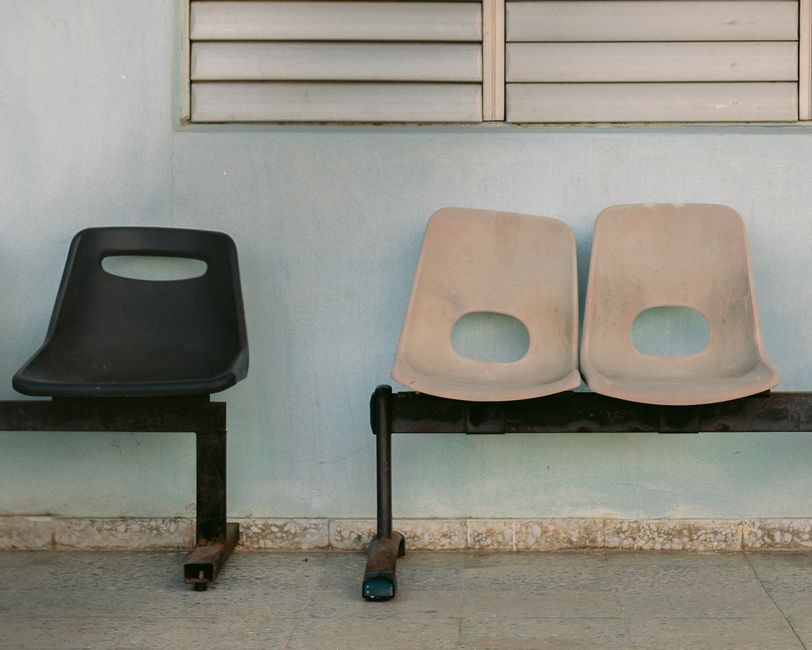
    The flat came furnished because the purchase on our own place was dragging and the vendor wanted proof of a short-term tenant, not comfort: a gas hob with one dead ring, a wardrobe that smelled of the previous tenant’s ironing, a pine table with four chairs arranged around it in a way that suggested nobody had ever eaten there.

    Item 34 on the inventory read:

    1. Dining table, pine, and chairs (4) — good general condition.

    The clerk ticked it twice, once on her copy and once on ours, and I countersigned at the kitchen counter while Jon held the door for the movers. I do this for a living — third-party motor claims, eleven years, the reconciliation of what people swear happened against what the documents agree to say — so I read every line before signing. Four chairs. £950 deposit, protected with the scheme, refundable in full if we handed the flat back as found.

    We needed every pound of it. Completion was set for March and the removals firm wanted cash on the day.

    Nine months of ordinary tenancy. Jon worked nights at the depot and slept till noon; I left for the office at seven and filed other people’s disputes. We ate at the pine table maybe four times. In February I opened the scheme’s check-out pack and started the photographic evidence they ask for, room by room, the way I’d advise a policyholder to do it. Kitchen last. Table, hob, window, floor. Four chairs at the table.

    Jon took the wide shot on his phone, because his camera was better than mine.

    The photograph had five chairs in it.

    Four of Five

    He swore the phone hadn’t stitched anything. I made him take twelve more, from the hall doorway, from the window, one from directly above with me standing on the table like a lunatic. Twelve photographs, five chairs, the fifth pulled up close to the table on the north side with its back to the window, as though someone had got up from it mid-meal.

    We didn’t own a fifth chair. That’s the sentence I kept arriving at, and it’s still the true one.

    The rational explanations came easily, the way they do at the start. The agency would sort it. I emailed the check-in inventory through and asked them to confirm item 34 as a clerical baseline. Their PDF came back the next morning.

    1. Dining table, pine, and chairs (5) — good general condition.

    I fetched our countersigned copy from the warranty tin. Ours said four. Same clerk, same tick marks, same date, my signature on both versions of the page. I photographed the photocopy at my desk and sent it, and the office manager rang me back within the hour, apologetic, and said their system held only one version — the five — and had I perhaps printed mine from a draft? I work with drafts for a living. I know what a draft looks like.

    The viewing sheet came next, because Jon dug out his emails to check we hadn’t imagined the flat smaller than it was. 12 June, furnished viewing, the agent’s tick-list: table & 4 chairs. Four, in his inbox, in writing, from the agent herself. And beneath it, in the notes field she had filled at 14:10 that afternoon, parking for 1, chairs x5 confirmed with landlord.

    Every document we pulled agreed with every other document, except the ones that agreed with us, and each new document weighed a little more than the last.

    Item 34

    Here is where I made it worse, and I want to be exact about the mechanics, because the mechanism is all I ever had.

    The scheme’s adjudication runs on evidence, so I gave them evidence. I re-photographed the kitchen with the date stamp on. I submitted Jon’s June email, our countersigned inventory, a signed statement from the mover who had carried the furniture in on a two-wheel trolley and remembered the count, because four chairs is an awkward load and five is worse. The adjudicator acknowledged receipt in nine working days.

    Her bundle came back with the agency’s inventory, the landlord’s original purchase invoice from 2011 — dining set, table + 6 chairs — and the check-out photographs her own inspector had taken at the flat on 26 February. In those, five chairs stood around the table. The fifth had a scorch on the seat, a cigarette burn or a pan scald, and the adjudicator proposed a deduction of £140 for the damage: itemised, referenced, photographed at three exposures.

    I went home and stood in my kitchen. Four chairs. I counted them the way you count your own fingers, not trusting the arithmetic and trusting nothing else either. Jon came in at noon from nights, looked at the table, and asked why I’d arranged them all bunched to one side when the fifth was getting repaired.

    No chair had gone anywhere for repair. But he could no longer picture the room with four in it, and that was the part no form captured — that the paperwork was patient, and consistent, and mine was one signature against a system that never contradicts itself twice.

    Check-Out

    We signed. Completion was the following Tuesday and the deposit release held the removals to it, and £950 minus £140 still covered the men and the van. The adjudicator closed the file with the fifth chair photographed, itemised and paid for, and the inspector’s report listed it in situ, seat damage consistent with contact heat, and I initialled every page in blue biro because my hand still knew how to do that while the rest of me stood somewhere else.

    The flat went back with five chairs in it. On the last morning I wiped all five down for the handover, and I could not have said which four of them I had wiped the year before, or on which day the fifth had become one I wiped.

    Jon remembers five now, and he remembers the scorch. He remembers knocking the chair against the radiator the winter we ran the heater in the kitchen, and he can describe the mark — an oval, brown at the rim — well enough that I’ve stopped correcting him in front of people. His version has a history in it. Mine has a photocopy.

    It’s in the warranty tin at the new house: our countersigned copy, item 34 in my own ink, dining table, pine, and chairs (4). No office will take it now. The scheme’s file is closed, the agency’s system holds the five, and the one document that agrees with me exists in a single copy I have decided not to lose.
  • Passengers Not Carried

    Passengers Not Carried

    The Working Timetable

    In the summer of 1996 I was nineteen, and the Ashcombe & District Railway Society let me keep the summer log. That meant sitting on the bench at Thurse Halt with a thermos and a clipboard, writing down everything that moved. The branch carried three trains a day in each direction, a parcels working on Wednesdays, and a future the county council had put out to consultation in a document with a grey cover. Logging it was like fishing in a bucket. I did it anyway. The society’s bulletin ran a column called Branch Line Notes, my grandfather had kept that column for thirty years, and a boy home from his first year at university will inherit almost anything rather than invent an ambition of his own.

    The halt had one platform, a wooden shelter, a clock that had stopped at ten past four, and a staff of one. Mr Pardoe sold tickets through the hatch, swept the leaves, and submitted the numbers. The public timetable promised a last arrival of 22:05, and the county had decided in print that even that was too much service for eleven hundred people.

    Then a member who worked in Ashcombe control photocopied a page of the working timetable — the staff one, the real one — and the column for Thurse Halt read:

    1Z99 — Thurse Halt, arrive 00:13.
    Set down only. Origin: not shown.
    Not available for public travel.

    Set Down Only

    A Z-headcode means a special. Specials came to our branch about twice a decade, and a set-down-only call at thirteen minutes past midnight, under a lamp column that had been out of order since February, was not rare. It was impossible. On the third Friday of June I stayed to find out which.

    It came at 00:13 exactly. Two Mark One coaches in the blue-and-grey livery the region had withdrawn ten years earlier, windows lit, brake blocks smelling hot the way they do, every detail of it ordinary except that it existed. Eleven passengers stepped down. A woman with a bicycle. Two men who might have been brothers. They went up the lane toward the village the way people leave a station they have left a thousand times, not furtive, not curious about the boy on the bench, and the sound of the train faded off toward the terminus and the floodlight there.

    Nobody boarded. The machine on the platform had no button for a 00:13.

    I wrote down the headcode, the stock, the time, the eleven. Then I went home the long way, down the lane rather than the road. At half past seven the next morning Mrs Voss had sold out of small loaves and both brands of rolling tobacco. I can name most of the smokers in Thurse. None of them had been on that platform.

    Everyone’s Reason

    I put the photocopy on the hatch shelf. Pardoe read it with the kettle already on.

    “Misprint,” he said, and poured for two.

    His quarterly returns went to the county on the last Friday of the month. The branch had survived that spring’s review by a margin of forty-one passengers, and I never learned whether the forty-one included my eleven, because I never asked a straight question in that office again. His hatch, his pension, and the only quick road to the hospital in Ashcombe all sat on the same side of that arithmetic. That was his reason.

    Mrs Voss had raised three children on morning trade in a village where the morning trade was two pensioners and a spaniel. Hers needed no explaining.

    Alan Withers ran the 07:20 minibus under a county contract that existed because the railway’s evening service left the village stranded — 22:05, and nothing after. A midnight arrival printed in the public timetable would strand nobody, and a village that is never stranded does not need a minibus. Withers had never seen the train. He defended the last-service arithmetic at every parish meeting like a man defending his own roof, which is what it was.

    That October the bulletin printed my log under Branch Line Notes: headcode, stock, time, eleven passengers set down. Six weeks later a letter came from the regional records office — I still have it — stating that no such working had been scheduled over the Ashcombe–Thurse branch in the period stated. The next issue carried a note from a retired Ashcombe signalman explaining that 1Z99 was the headcode boys invented for trains they half-saw, and that the column’s new keeper had inherited his grandfather’s habit of dressing up a quiet summer. The editor’s line ran:

    The society regrets the error.

    I was nineteen and I let it stand. That is a reason too. It took me twenty years to call it one.

    The Ledger

    Pardoe retired in the spring of 1998. On his last Friday he called me into the office, took the kettle off, and gave me a bound book in leather the colour of strong tea. Irregular occurrences, said the label, in the lettering of a railway twenty years dead.

    20 Mar 1953. 0013 arr. Set down, 11 pass. No stock working found. — T.H.
    4 Nov 1971. 0013 arr. Set down, 11 pass. Query to control, no reply. — R.P.

    The entries ran in pencil and ink, in hands I knew and hands I didn’t, from a March evening in 1953 to the previous Tuesday. Eleven passengers, set down, every time. The halt got its electric light in 1961, so T.H. logged his eleven by oil lamp, and thought it worth writing down, and thought it worth writing down quietly, because he is in there again in 1954, and 1957, and he never once copied the entry into a return that left the office.

    I keep the society’s records these days; I have kept them since the old chairman died. Each January the parish clerk sends me the county form to check before it goes in — cream paper, one column headed Passengers carried. The number I write in that column comes out of the ledger. The branch clears the review threshold by forty-one, or thereabouts. There is a minibus at 07:20. There is a shop that still opens at seven, and a lamp column at the halt that the county mended in February 1997 for reasons no one recorded.

    The train still calls. I have never written that sentence in the bulletin, and I never will.

    Pardoe’s kettle went to his daughter in Exeter. The ledger lives in the strongbox with the society’s plate camera, and once a year I take it out, sharpen a pencil, and add the year’s arrivals in my own hand — which is what everyone did, all the way back to a March evening in 1953, for reasons that were never once the same.

  • Except Sunday

    Except Sunday

    Reel 41-C

    Every copy the Harwick Ledger ever printed lives on film on the third floor of the public library, and for two dollars ninety an hour I minded it. Saturdays were mine: the request counter, the film log, the long cabinet that locked at 4:30 because the room closed at 4:45 and my bus left at 5:04. Reels went out by slip only. You printed your name and the month you wanted, I threaded the carriage, and whatever the paper had been the day it was printed was what came up on the screen. The rules aren’t decoration in that room. They are the job.

    Mr. Averill came the third Saturday of June, every June, at opening. Tall man, canvas coat in any weather, a request slip he carried folded from home. Ledger, June 1954, reel 41-C. He signed the log in a careful Palmer hand, took the seat by the window, and read one month of a dead newspaper for most of a morning. Before he started he dropped a quarter in the coin box. In two summers he never took a print.

    “You pay for what you read,” he said, the one time I asked. That was the whole explanation.

    I was behind him with a reshelving cart when it happened. His screen held the front page, gray and grainy, the flag across the top — the Ledger eagle, the price, all of it — and under the flag the dateline: Sunday, June 20, 1954.

    The Ledger ran mornings, every day except Sunday, from 1898 until the paper died in 1962. Every masthead in the cabinet says so: EVERY MORNING EXCEPT SUNDAY. Whatever that page was, it wasn’t supposed to exist. I stood there long enough that he turned around, and I said something about the date being wrong, and he looked at me the way an old man looks at a young one he has decided to be honest with.

    “It’s right,” he said. “June 20th was a Sunday.”

    Twenty-Six

    A misdate, I decided. Printers drop a plate and run Wednesday’s folio on Thursday; there’s a paper in the cabinet from ’57 like that, and the reference desk keeps the story of it. I let it go, the way you let things go that are none of your shift.

    In July I pulled 41-C myself on a dead afternoon, no slip, the cabinet open for reshelving. I ran the whole month slow and counted.

    Twenty-six editions. June of 1954 had twenty-six publishing days and the reel held twenty-six front pages, Tuesday the first through Wednesday the thirtieth, Sundays skipped, lawful as a calendar. I threaded it twice more. Twenty-six.

    The next June, third Saturday, Averill’s slip in the log, I counted from the desk where I could see his screen.

    Twenty-seven.

    You can’t test a thing like that by staring at it, so I tested it the way the room had taught me. I asked him for the society page, and at his shoulder I watched him find the announcement he came for — AVERILL–HALVORSEN, June 19, St. Luke’s — and the weather box in the corner of the front page calling for fair and warm, squalls toward evening. He had never asked me to print it. That morning I offered, and fed the quarter myself, my treat.

    The printer hummed, turned, and delivered page one: Saturday’s paper. The lawful one. We ran it twice more and got Saturday every time.

    “Never comes out,” Averill said. “Still costs the quarter.”

    His story, told once, without drama: he married Ruth Halvorsen on Saturday, June 19, 1954, at St. Luke’s, the third Saturday of the month. The announcement ran the next morning. In the Sunday paper. The one with no press run, no compositors called in on penalty rate, no edition in any archive but this building’s, on this reel, for whoever signs.

    Ruth kept the clipping in a scrapbook. Ruth died in 1980, the scrapbook went missing in the move to the apartment, and in June of ’81 he asked the county historical society for a copy and was kindly told the paper never ran Sundays. He told them he had had the clipping in his own kitchen for twenty-six years. They were gentle with him, the way people are gentle about a man’s dead wife, and somebody at the society said: try the library. Third floor.

    He never found the scrapbook. He found the reel.

    He turned the log back for me, June by June. ELSIE MARCHETTI, 1973 through 1980, the same week, one request a year. A man named Pruett before her. “She came for the boat races,” Averill said. “Her husband rowed. The finishing order’s on the sports page, every year, right where you’d look. It isn’t the whole paper you get. It’s your page.”

    The Collation Sheet

    The accession file lives in the basement, a folder per cabinet, invoices and receipts from 1971, when a Dayton outfit filmed the county’s newspapers for the state. The collation sheet for reel 41-C is typed on onionskin and stamped, and under June 1954 it reads: TWENTY-SEVEN (27) EDITIONS, COMPLETE.

    The state library keeps the duplicate. I emailed in August, posing a school question, and the archivist who answered had checked twice before replying: their June 1954 reel holds twenty-six editions, and their collation sheet — same company, same year, same stamp — says twenty-six. She sent a photocopy. Two sheets, disagreeing by one edition, with no procedure on earth for reconciling them.

    The vertical file holds one more vote. A thirty-two-page pamphlet, The Compositors of the Ledger 1898–1962, printed for the union local’s anniversary. Sunday work was penalty rate in every contract from 1901 on. Times invoked, sixty-one years: none. Not one Sunday edition set, paid, printed, or delivered. It is all in an appendix.

    And Monday’s paper, June 21, on the reel between the wedding and everything after: SQUALL FLATTENS TENTS AT RIVER FESTIVAL. Two sprained wrists, a swamped punt, a photo of men wading for deck chairs. The Sunday’s weather box had called it, squalls toward evening, out of a press run the union says never happened.

    I told nobody. The reference desk would have had me count frames with witnesses, and the count would have come out lawful, because alone, off-week, unsigned, it always does. The rules decide what the film holds. My job was the rules.

    The Back of the Log

    The third Saturday of June, 2004, no canvas coat at opening, none by ten, none all day. The February before, the Courier had carried him — six paragraphs, a daughter in Columbus. Where else would I have read it.

    Staff don’t need slips. I signed one anyway, my name under his last line, because a badge decides nothing in that room and a signature does. I threaded 41-C and ran June.

    Twenty-seven editions.

    I read the Sunday through, once, front to back. Ads for Howland’s and the Bijou, the church page, the comics, a photo spread of the river festival crowd in their shirt sleeves before the sky went. The announcement where it has always been, on the page Averill paid a quarter a year to sit with:

    AVERILL—HALVORSEN. June 19, at St. Luke’s Church, Miss Ruth Halvorsen, daughter of Mr. and Mrs. Carl Halvorsen, Bay Street, to Mr. Rudolph Averill Jr. The Rev. T. Brandt officiating.

    The printer would have given me Saturday. I took a pen.

    The back pages of the film log were blank once — are blank no longer. Under the last tab, in hands I half know from the front of the book, one line for each June: a finishing order for the eights, in pencil, Mrs. Marchetti’s round cursive; AVERILL–HALVORSEN in Palmer script, 1981 through 2003, so steady it’s dull; then nothing. I added my line under his, twenty-two words, and put the reel away and locked the cabinet at 4:30, because the room closes at 4:45 and the bus leaves at 5:04.

    The state library’s sheet says twenty-six. Ours says twenty-seven. Every third Saturday of June, between nine and 4:45, so does the film.

  • The Retention Pond

    The Retention Pond

    The Heron Beat

    The evening round takes me past the pond at half past five, after the tunnel doors are dropped and before the stove wants feeding. Mum’s bench sits on the south bank, garden green, one slat gone at the back where the willow dropped a limb in her last winter. Behind the hedge the new estate stands in its rows where the barley used to be, and the dog walkers come down the shared path in twos, earphones in, calling nothing back to anything.

    The heron lifted off as I came through the gate.

    I stood there while its reflection stood. Two beats — lift, beat, beat — and then the wings came up off the water and followed where the bird had already gone. Sun strike, I told myself. Water does things at that angle in October. I finished the round, fed the stove, and thought no more about it, or hardly any more, which is how these things get a footing.

    Nine Seconds

    Three weeks later I filmed it. The same bird, or its cousin, up from the shallows with that unhurried jackknifed look they have, and the phone held level on the gate rail for exactly as long as it took. Nineteen seconds of clip. I scrubbed it back with my thumb on the kitchen table while the tea went cold beside me. The bird quits the frame at second four.

    The wings stay on the water until second thirteen.

    I sent the clip to my brother. Dean came over on the Sunday with his wellingtons and his opinion, and we stood on the bank while a pigeon crossed and crossed again, and each time the water held the flight a while after the sky had let it go. He watched it four times. Trick of the light, he said, and then the rain arrived — except no rain was falling. A clear four o’clock sky, the surface flat as a laid table, and stipple rings blooming across it in slow ranks from the north-east, a shower that had passed over the estate an hour before, written out on the water an hour late. Every ring arriving. Dean watched the rain that wasn’t falling come down, and put his hand on the gate rail as if the gate might need holding.

    “Drain it,” he said. “Get it emptied, get it dug. It’s a puddle, Nell.”

    It’s two hundred years of puddle. Spring-fed, clay-bottomed, the whole top field drains into it, and every dry July since Dad died I have stood a bowser beside it and pumped the tunnels through by hand, because the pond has never held enough water for what the smallholding now is. The grant letter had been on the fridge since June.

    Conditions of award WRE/26/114. Works must commence on or before 28 February and reach completion by 31 March. Enlargement and relining of the existing water body to be carried out per the approved specification. Matched funding lapses on expiry of the completion date.

    Drain it, dig it, line it, double it. Twelve thousand pounds of other people’s money so my tunnels drink on their own and the bowser rusts in the yard. That was the plan. The plan required the pond empty, and the pond had begun keeping things.

    Half a Pond

    Rowleigh’s man came on the fourth of November to shoot the levels, and he wanted the water down two feet to see the shelf. I ran the pump overnight. By morning the pond stood half its March self, mud shelving grey out of the margin, the gauge post bare to its second ring.

    The reflection did not drop an inch.

    It lay across the water that was left, the reed tops standing in their old positions on a surface that wasn’t there any more, the willow’s crown doubled in full above a waterline the tape said had gone. I have the photograph. The pump man has not answered my texts since, though his invoice arrived promptly enough. I let the pond refill over nine days and the image never blinked, never doubled, never tore — it simply waited under the incoming water like a plate under a tap.

    Green Gate, Red Gate

    Mum’s albums were still out on the dresser from clearing her room, and I went through them that week with a magnifying card from the seed drawer. There is a photograph from Easter 1979. Dad in his church coat by the field gate, which she painted red that spring — I have her diary entry ordering the tin. In the photograph the gate is red, and in the pond behind him, the gate is white. The old white, from before.

    A Christmas-morning photo from 1985: snow on the gatepost, snow on Dad’s cap, and green banks in the water. An August-bank-holiday snap from 1993 with the whole family squinting on the bench, and the pond behind us showing the bench empty for a two-second exposure, though we were on it. Small mistakes, if that is what they were. The pond has been running behind all my life and my parents’ life, by a beat or a second, and nobody stood still long enough at that angle in October to catch it holding on.

    Now the interval is doubling. I measured it against fixed events, because a thing you can measure is a thing you can face. The night the estate’s streetlights first came on, the water showed them dark for eleven minutes and then lit them. When the ash came down in the January gale, the pond carried the standing tree for a fortnight after the stump was cleared. A beat in October. Nine seconds in November. Eleven minutes by the new year, and every week the lag folded in on itself and doubled, the water falling further behind the world at a rate that no longer asked my permission.

    I tried breaking it. Ran the bowser pump out on the float and churned the whole pond to chop for an afternoon, white water, no surface to speak of. When the rings settled out at dusk the wings were still hanging there, mid-lift, holding their line under the disturbance like a page under a shaken sheet. The image does not live on the water. The water lives around it.

    The Fourteenth of January

    The digger was booked for the eighth. On the seventh I phoned Rowleigh’s, cancelled, and paid the call-off from the seed money, because the letter on the fridge left no room for a half-dug pond and I already knew — had known since the pump man’s gauge post — that emptying it was not a cure for anything. It was a burglary. Dean took the news the way he takes weather, and asked twice about his field drains, which the match funding was to have paid for. I said he could have the bowser.

    So that is the price, and I pay it in instalments. Every July I stand the tank in the yard and haul water like it’s 1979. The tunnels are watered by hand through the dry weeks, and the grant is dead, and twelve thousand pounds of other people’s money went back into the pot for some other holding with an honest pond. The pond runs eleven minutes behind the world, and then a day, and then a week, and I keep the arithmetic in the front of the herd book. Twenty-six weeks and two days, as of yesterday, fixed against the night the ash fell.

    The water is not falling behind. It is keeping. It kept the gate white and the bench empty and the ash standing, and at the rate it doubles, on the evening of the fourteenth of January it will reach back as far as the twelfth of May.

    The twelfth of May was a Tuesday. She was nine days from the end, and she sat on the bench at half past eight with her tea going cold the way tea does, and watched the estate lights come on, and the water that evening held every light in the sky the instant it appeared. I have swapped my market-stall day. I have repainted the bench the same green, and left the back slat off, exactly as it was. The kettle will go on at ten past eight.

    I’ll sit on the grass. The seat I’m leaving free.

  • The Finishing Snip

    The Finishing Snip

    The Blue Book

    Donna trained me out of a ring binder she called the Blue Book. Fourteen steps to a gent’s cut, printed and laminated, tea-ringed at step nine. The last page never changed.

    1. Final check, front and back.
    2. Comb out. Gown off. Show the back in the hand mirror.

    I was four months into my probation year at Headlines, the salon between the card shop and the phone repair place on the Keldmouth parade. Donna owned the shop and all three chairs. Ash did the colours and had been there eleven years. My January review would come down to numbers. Six regulars. I needed twenty.

    The first time was a Wednesday. Mrs. Kirk, set and trim, £12.50. I brushed her neck, unbuckled the gown, held up the hand mirror the way the Blue Book says.

    She stood. My hand clicked the scissors once behind her collar.

    Blades vertical, a thumb of air under the steel. Nothing between them. I hadn’t decided to do it; my thumb moved on its own, the blades rang, and Mrs. Kirk paid at the till saying the back felt lovely and light. It did. I hadn’t cut anything.

    The Mirror Wall

    Stand by the till and the mirror wall shows all three chairs. The next morning I bagged hair with my back to it for an hour, then gave up and watched.

    Ash’s client stood. Click. Donna’s client stood. Click. Same place every time — shoulder height, the nape line, once — same beat, as if the client rising were a cue both hands had agreed on years ago. Ash is left-handed and it mirrors mine exactly. The clients never turn round. Nobody’s hair is touched.

    I asked Ash between customers what the last snip was for. She looked at her own hand.

    “What snip?”

    She did it twice more before lunch. When I asked Donna, she said habit, love, and gave me the broom, and did it herself at four o’clock to a man from the bowling club.

    The Blue Book ends at the comb-out. The training DVD ends at the comb-out — I know, because I took it home and ran the final chapter frame by frame on my laptop, and the demonstrator packs his kit, says good luck out there, and the screen cuts to black with the scissors still in his hand.

    In October there was a Federation training day at a hotel in Leeds. Forty chairs in a ballroom, demonstrators with thirty years in, models with clean hair. By the second demonstration I wasn’t watching the scissor work. I was waiting for clients to stand. A model stood. Click. Another stood. Click. Senior, senior, senior, three counties of them, all the same closing beat, and at my table of juniors nobody’s hands moved at all except to take notes. A girl from Pontefract asked her trainer, a big man with forearms like a stevedore’s, what the final snip was for. He opened both hands, palms up.

    “What final snip?”

    He did it when the next model stood. At the break we compared notebooks, half the juniors in the building, and we’d all written down the same thing: the move had started somewhere around our six hundredth cut. Nobody had been taught it. Nobody could remember the first time their own hand did it. Mine, by my day book, was cut 593 — a Tuesday, a skin fade on a scaffolder who tipped in coins.

    Skipping It

    In February I skipped it. Twenty cuts over three days, deliberate, thumb still.

    Nothing happened. No one turned round, no one complained, the till took the same money. But by mid-afternoon my thumb kept hunting for the ring it hadn’t rung, opening and closing on nothing while I booked people in, and the base of it ached by home time, the deep ache you get after a full book of Christmas Eves. That night I sliced bread at home, and at the end of the loaf my hand clicked the knife through the last centimetre of air. I stood in my kitchen holding a breadknife and thinking about Mrs. Kirk’s collar.

    Donna’s wrists went that spring, the way wrists go in this trade, a knot under the skin no physio could talk down. She sold the lease to Ash in April. On her last day she cut a full book of her old regulars, every one of them standing up to a click, and then she cried in the back room over a card we’d all signed, and went.

    Hunter’s, 1971

    The reference library keeps a trade shelf: union journals from the fifties, a 1958 handbook of ladies’ hairdressing with half its spine gone. The handbook runs a gent’s taper in eleven steps. No snip. Nothing in the journals either, and I went through them a Friday at a time, because by then I wanted one page, one sentence, one person in this trade writing down what our hands were doing.

    What I found was a booklet. Keldmouth & District Hairdressers’ Association, Fifty Years, 1971. Photographs of shop fronts. On page eleven, Hunter’s of Church Street — long since a lettings office — a man in a white coat with a half-risen client whose gown is already off. His arm is behind the client’s collar. The blades are vertical. You can’t hear a click in a photograph. You can see the wrist.

    Mr. Hunter sees a customer out, 1962.

    A stranger would look at that picture and see a man waving a customer to the door. I sat with it under the desk lamp for a long time. Headlines has been going since 1981. Donna trained in 1974. The Blue Book is on its fourteenth edition and it still ends at the comb-out.

    Donna Comes Back

    She came in the first week of May for a trim. I gowned her up and cut her hair in the chair she’d owned for twenty-six years, and when she stood, my hand clicked behind her collar and she didn’t react, because why would she.

    Then I asked her to show me her old finish. The whole of it. Comb-out, gown, mirror.

    She stood, took my scissors, and went through it: the comb, the buckle, the mirror held up the way the Blue Book says. Her hand came to the nape line and stopped. It hung there a second, fingers open, and came down empty. She tried again. Empty again.

    “You finished them off,” she said, giving me back the scissors. “That’s all I remember, love. You finished them off and they went out pleased.”

    Priya started in September. Sixteen, quick with a clipper, rude about the card shop, frightened of the till. On a Saturday in her ninth week a woman stood up from her chair and Priya’s hand rose and clicked once on air behind the woman’s collar, and Priya was already looking at the till, and the woman was already hunting her coat, and neither of them knew anything had happened at all.

    I swept around my own chair. My hand had answered before I’d decided to — one click, a thumb of air under the steel, over a stranger’s collar, mine while the work lasts.

  • The Eleven Minutes

    The Eleven Minutes

    The radar came free with the policy. Anchor Mutual called it a wellness bundle: a white disc the size of a coaster, meant to sit on the bedside shelf and watch the bed all night with radio waves. No strap, no camera, nothing to wear. Keep your sleep score above eighty for six months and they take fourteen pounds a month off the premium.

    We needed the fourteen pounds. Dana’s hours at the trust had been cut to three shifts a week that spring, and my contract at the pathology lab ran out in October. The terrace we rented on Petre Street ate most of what was left. Fourteen pounds is close to a weekly shop if you’re careful, and Dana is careful.

    The disc went on her side, on the little shelf above the radiator. It tracked the bed in two zones, hers and mine, and every morning it emailed a score. Dana treated the score like a mark out of a hundred. She stopped drinking coffee after six. She bought a heavier duvet. By the third week she was hitting eighty-six, eighty-eight, and the emails glowed green, and we let ourselves plan a weekend away with money we hadn’t saved yet.

    3:12 to 3:23

    In April I lay awake one night with heartburn, sitting up against the headboard while Dana slept. I checked the phone at ten past three and put it face-down because the light was harsh. Dana hadn’t moved. She sleeps like a dropped stone, always has.

    The morning email put a small amber flag in her bar chart.

    Out of bed: 03:12 – 03:23 (11 min)
    Night wakings can affect your recovery score.

    I showed her. She frowned at it the way you frown at a receipt that has charged you twice, shook her head, and went to work. I decided the radar had simply lost her. It measures the rise of a chest; that is all it measures. If she’d rolled to the far edge of the mattress she’d drop out of its beam for a while, and the software would call that out of bed. A dumb instrument that doesn’t know what it’s looking at. I work with dumb instruments. You write it in the log and move on.

    The Export

    The same flag came the next night. And the next.

    Same minute. Not roughly — exactly 03:12, give or take the seconds the disc takes to update, and out again at 03:23. On nights we went up at eleven. On the night after her late shift, when we went to bed at nearly two. The start never drifted and the length never changed: eleven minutes, eleven and a half if the update lagged.

    So I did what I do at work. I exported the raw data.

    2019-04-11 03:12:06 zone_b presence 1
    2019-04-11 03:23:47 zone_b presence 0
    2019-04-12 03:12:04 zone_b presence 1
    2019-04-12 03:23:41 zone_b presence 0

    Forty-one nights, forty-one pairs of lines. I sorted, I pivoted, I built a chart with the gaps in it. The pattern ran back to the first night after calibration, a full week before the heartburn. Whatever the radar was counting, it had been counting it from the beginning, patient as a meter.

    I didn’t say anything yet. I’m the sort of person who checks a figure three times before showing anyone the figure.

    Her Empty Side

    At the end of April, Dana’s sister had her baby, down in Rotherham, and Dana went for a long weekend to help out. Friday to Sunday. I had Bramble, our old lurcher, and a quiet house.

    On Monday I pulled the export. My zone read as it always did, asleep and turning. Her zone: presence from 03:12 to 03:23, all three nights, with the covers smooth and her fifty miles south and me asleep one zone over.

    That Tuesday I slept in the spare room with the door shut. Wednesday’s export was the same.

    I sat at the kitchen table with the laptop and Bramble’s chin on my knee, and it was plain I had moved past the part where a wrong reading explains anything. One reading is noise. Ninety-odd aligned readings in a room with nobody in it are a record of something, and the only question left was what the record was of. That question has an instrument too.

    The Camera in the Drawer

    Bramble has a little camera we point at his bed when we’re both out, the kind that streams to a phone. It was in the sideboard drawer. While Dana was still away I carried it upstairs, set it on the chest of drawers facing the bed, and stood a while with my thumb on the pairing button.

    I didn’t press it. Years ago we agreed we don’t watch each other, even as a joke, so I carried it back down and waited for her to come home.

    When I showed her the spreadsheet she was quiet long enough for the radiator to tick. Then she said the practical thing, because she is the practical one.

    “If it shows an empty bed, we learn the radar’s wrong, and we never trust a score again, and there goes the discount. If it shows something in that bed—” She stopped there. She looked at the doorway, at the stairs. “We still have to sleep up there. And I still need the six months. They don’t restart the clock for something you can’t explain on a form.”

    Six weeks left. Her shifts weren’t going to grow back in six weeks either.

    “The camera stays off,” I said. And it did.


    The discount came through in June, no medical, a letter with a green header. Fourteen pounds a month, backdated to the spring. We took the weekend away after all, a rented caravan near Bridlington, and Dana’s score held at eighty-eight without her lifting a finger, because the disc was still on the shelf above the radiator, still counting, eleven minutes a night.

    I kept the spreadsheet. It’s on the laptop still, in the folder with the appliance manuals. I’ve added nothing to it, and I’ve closed it more times than I’ve opened it. The data doesn’t change. Data never does; that’s the comfort of it and the whole problem.

    Most nights now I sleep through. But I wake sometimes in the small hours, before I know what woke me, and the phone says 3:09, or 3:10, and once 3:11. Never past 3:12. I put it face-down, close my eyes, and keep them closed until it’s over.

  • The Smaller Record

    The Smaller Record

    They held the count in the sports hall of the leisure centre, on trestle tables set up over the badminton court lines. Chlorine and floor wax. A tea urn in the corner the caretakers were not supposed to let us use, and did.

    I was one of six verification assistants. Temporary, Christmas cover, ten pounds an hour, and a possibility: the elections office would fill a permanent post in January, and the interview would be short for whoever they already trusted. My contract ended on the twentieth. I had a room I liked and no reason to stay in it without the job.

    The boxes came in from the polling stations just before one, grey plastic crates, each box taped with a numbered seal. The drill was to read the seal number aloud, match it against the returning officer’s log, snap it in front of the counters, tip the papers out, count. That night we counted only the number of papers — the ballots stayed face down until morning — but the number had to be exact, because it was written beside a number in the presiding officer’s book, and the two numbers were meant to be one truth held by two hands.

    4,411

    Nether Harnshaw’s box reached my table at ten to two. Church hall, small district, one presiding officer, one clerk. I read the seal, logged it, broke it, counted.

    Four thousand four hundred and eleven.

    The book said 4,408.

    The presiding officer’s book is ruled with a running total, initialled at every hour. Mrs. Firth — retired schoolmistress, twenty-two years a presiding officer — had a page of neat figures in a single hand from opening to close, and the last figure said she had issued four thousand four hundred and eight papers. I counted again. Shanice at the next table counted for me, both of us with palms flat, sliding papers in fifties the way we’d been shown. 4,411. A third count with the duty supervisor standing over us. 4,411.

    Three papers more than anyone could have been given.

    I fetched the marked register for the district, the copy of the roll the clerk ticks when you’re handed your paper. The ticks came to 4,411. On the last page, three of them stood in a bluer black than the clerk’s pen. The register agreed with the box. The book refused to agree with either.

    Rowntree, the returning officer’s assistant, took me to the side office and did arithmetic that had nothing to do with papers. The seat had been won by 214 votes. An inquiry into the district could void its count; a voided count invites a petition; a petition means a re-run in February for four and a half thousand electors, at a cost that gets read aloud at a scrutiny committee. “Three can’t turn two hundred and fourteen,” he said. “We correct the book.”

    The procedure allows it. The verification statement carries a clerical-error line, the smaller record is amended in ink and initialled, the statement is filed, the count stands. The smaller record — that was his word for it. Not the mistaken one. The smaller.

    Mrs. Firth, telephoned at two in the morning, would not countersign. A page of figures in one hand across fourteen hours, and an amendment that made them a clerical error. She asked for the inquiry, hers to ask for and theirs to refuse, and they refused it as not in the public interest. Her refusal was minuted. The correction went ahead without her. Her letter of resignation from the register of presiding officers arrived in January, the same week as mine confirming the permanent post.

    Three Doors

    Where register ticks cannot be tied to the book, the office writes to electors. It is routine, a template, and because my signature was going on the statement, Rowntree handed me the three addresses to chase in person. “Be quick,” he said. “Don’t speculate.”

    The first was a maisonette over a chip shop. The woman read the letter twice, said, “I work nights, you want my husband,” and the husband, when I rang, said she’d been in Manchester since November. Both of them had ticks.

    The second answered by email, two lines:

    I was there at seven, before the ice on the carpark. Check whatever you like.

    There was nothing to check that could see a person. The station had no camera. The book had her hour, her minute, a tick, and no paper to answer for.

    The third was Mr. Kellett of Aire Street, eighty-one. He kept a diary and let me read the twelfth of December in pencil: V, 8.40. He’d gone in after the bakers opened, he said, and remembered the clerk, a young lad, and Mrs. Firth, who had taught him decimals forty years before either of us was born. Why, he asked, couldn’t we simply count them again? I said we had, three times; the papers weren’t in question; the question was where the papers had come from. He thought about it for longer than the question deserved.

    “Then one of your papers belongs to nobody,” he said.

    That sentence is in no file. I wrote the statement that afternoon, chose the number with all the witnesses on it, and initialled the margin of a book its own author had sworn was right.

    Close of Poll

    Two years on I ran the desk at Nether Harnshaw myself, the May locals. Presiding officer, church hall, one clerk, a page of figures in one hand from open to close.

    At half past ten the book said 3,106 and the box held 3,108.

    My clerk offered to count again. I told her there was no need. She’d find out how little need there is, in a year or two, when the arithmetic is hers.

    You rule a line through the smaller figure and write the witnessed one above it, then initial the margin. That is the whole mechanism. A stroke of ink deciding which of two signed facts is allowed to have happened. I had drafted the form myself, the clerical-error line, the margin, the precedent sitting quietly in the drawer behind whoever opens the next box at ten to two in the morning.

    I initialled it. Two papers that had been given to nobody became correctly issued, lawfully marked, counted all along, because my pen said so in the only place it matters. Mrs. Firth’s figures were still right somewhere, in a drawer in a house in Nether Harnshaw, believed by no one holding a file.

    It balances in the end, whatever the end is. The end is wherever the pen stops.

  • Working as Designed

    Working as Designed

    Two Houses

    My father worked the Alderford branch for thirty-one years, secondman first, then guard, and when he died the drivers went on stopping the 23:12 at Lund Halt for a week out of pure habit, opening the doors onto a platform with nobody on it. Nobody counted a courtesy back then. Now everything is counted.

    In March the operator took out the request lamps and gave us HailStop. You tap the train you want, you stand at your halt, and a green flag comes up on the driver’s console. For an unmanned station it works. Efficient — that was the area manager’s word at the chapel-hall meeting, used twice, the second time with his coat already on.

    The first thing the app did at Stanner Bridge was call in the last train.

    Four requests, every night, for a halt with two houses and a footpath. The Ellerys at Bridge End are in bed by nine. The other house has stood empty since the floods. I raised a fault ticket in April and the ticket came back in June.

    Working as designed.

    Rob Naden drives the last train, Tuesdays to Fridays. He logged the no-shows the way you’d log weather: four a night at first, then eleven a night by midsummer, requests spread across Lund and Netherby and the halt at Cold Wrenham that serves a churchyard. The train stops regardless. Protocol. Console shows a flag, you stop, you open the doors, you close them, you go on.

    The Tuesday Man

    In July a man came to the booking window on my morning shift, holding his mother’s phone out flat in both hands, the way you’d carry something with a spill in it.

    “She’s been dead eight months,” he said. “Your app says she’s due to travel tomorrow. Ten fourteen.”

    I looked it up, because that part is easy, that part is only a screen. M. Errington. Annual season, Stanner Bridge to Cold Wrenham, standing request, Tuesdays. The debit renews itself out of an account the family never closed. Tuesday was her hospital day — dialysis at the district general, two stops down the valley, four years running — and the app had kept the shape of her week. One seat. One journey. Held.

    “Delete her,” he said.

    I told him about the freeze. Every profile on the branch is locked while the count runs; the transport authority audits us in September, verified journeys, average weekday, the lot. He said thank you, which was worse than shouting, and went home past the platform without once looking at it.

    The Retained List

    The authority calls me a data custodian now. It means two hours of console access on a Friday, on top of the flowers and the torch and the timetable frame.

    The console has a list called retained profiles. Two hundred and eighty-six names, every one flagged the same.

    DECEASED — RETAINED. DO NOT PURGE.

    The flags went on before I started. Some of it is laziness, direct debits nobody cancelled, phones living in drawers. Some of it isn’t. There is a column for retention reason, and in that column sits a spreadsheet decision dated two winters back, when the branch last came up for review: below three hundred verified journeys per weekday, the evening service goes to tender as bus replacement. The valley has been losing people faster than it loses trains. The arithmetic came up short, so somebody made it long.

    I took it to Devlin, the area manager, in the car park at Alderford, because the car park is where he talks. He didn’t deny any of it. He watched the turbine on the ridge the whole time and said that if the list went, the 23:12 went with it, and asked whether I remembered what the Sunday bus had done to Netherby. Mrs Pardoe missed her own daughter’s wedding. The bus doesn’t run Sundays.

    He never told me to do anything. That’s the part I keep going back to. There was no instruction anywhere in it.

    One Under

    I purged one, on a Friday, as a test of my own conscience. K. Ashworth of Lund, died before my time, no family left in the valley that I know of. Four clicks. The console asked me twice whether I was sure, which it doesn’t do for anything else.

    The projection refreshed itself before the kettle had boiled. Two hundred and ninety-nine. One under, and beside the evening service a marker in the amber they save for flood warnings.

    I put Ashworth back.

    The Tuesday man came again in September, after the count closed. He’d found the direct debit at last, he said. He’d stood over the bin with it. Then he asked me one question, and it wasn’t about money.

    “Does it stop for her?”

    “It stops,” I said. “Ten fourteen, every Tuesday. She never misses it.”

    He bought a platform ticket — a pound, they still do them — and stood at Stanner Bridge through the 10:14 with his collar up, and watched the doors open and close on the empty halt.

    My father is on the list. Flagged driver-request, ceremonial, dated three days after his funeral, which is how I learned that the depot had entered that week of courtesy into the system and left it there. The app gave the habit a number. The number counts.

    I signed the return on the last Friday of the audit. Verified passenger journeys, average weekday: three hundred. I used the good pen from the drawer my father kept for occasions the railway considered formal. Under three hundred journeys there is my handwriting, and I can put faces to fourteen of them.

    Tonight the feed shows four requests for Stanner Bridge and one for Lund. I go out with the torch for the 23:12, because that is the host’s job when the console flies a green flag. The doors open. The load cells under the floor of car B add one between the two houses and my halt, and take one away again at Alderford, where the car park holds a single car.

    Mine.

    I give the platform announcement to nobody, the whole script, and the train pulls away up the valley, and somewhere ahead of it, counted and no longer named, somebody goes home.

  • The Handover Log

    The Handover Log

    The Notebook

    Takeda showed me the log on my second night. It was a school notebook, the cheap kind with a red cover, and it lived on a shelf above the hand-sorting bench where the machine could not reach it.

    “Anything the machine spits out, you write here,” he said. “Address, size, time. Then it goes in the tray.”

    I asked him what happened if I forgot one.

    He was fitting a new liner into the bin at his knee and he did not look up. “Don’t forget one.”

    The Kamishiro sorting centre ran two shifts. Days did the volume and nights did the rest — the parcels wrapped in twine, the letters with the address written down the side instead of across, anything too thick or too soft for the OCR machine to read. The machine could do nine thousand an hour. It could not do a padded envelope with a hand-drawn map on the front, and there were always four or five of those, and they went to the bench, and the bench was mine from ten at night until the first train at 5:12.

    For three weeks it was the easiest money I had ever made.

    The Envelope

    It came through on a Thursday. Brown, unpadded, a little larger than B5, addressed in blue ballpoint to 3-14-2 Nishimachi. Nothing unusual about it except that I was seventeen hours into a day that had started with a seminar, and my hand was already on the tray when I realised I had not written it down.

    The notebook was two steps away.

    I put the envelope in the tray anyway.

    That is the whole of it. That is the entire thing I did wrong, and I want to be clear that I did not think about it afterward, not once, not until the following Tuesday when Takeda came in early and stood at the bench with the log open and asked me what 3-14-2 was.

    “Nishimachi,” I said. “Last week sometime.”

    “There’s no 3-14-2.”

    3-14-2 Nishimachi

    The municipal notice had been taped inside the door of the break room for eleven days. None of us read the things.

    Notice of house-lot renumbering — Nishimachi 3-chome. Lot 14 shall be designated 13-B. Lots 15 through 18 shall each be reduced by one. Effective from the 12th. This correction addresses a long-standing clerical error in the register.

    Takeda read it with me twice. Then he went back out to the floor and finished the shift, and at 5:12 he walked to the station with me instead of taking his bicycle, and on the platform he told me about a house in Sakuradai that had gone the same way in 2005.

    “The log isn’t a record,” he said. “I thought it was, for about a year.”

    I did not understand him and said so.

    “The post office decides where people live. Not officially. Officially the city does, the city keeps the register, and the register is correct because the register is the register.” The train was two minutes out. “But the city updates from the delivery data. And the delivery data comes from what we write. There’s no other list. Whatever’s in that notebook is what exists.“

    “That’s not how anything works.”

    “No,” he agreed. “It isn’t.”

    One In, One Out

    I went home and slept badly and came back at ten and wrote the entry in.

    3-14-2 Nishimachi — brown envelope, non-standard, 23:40.

    I dated it eleven days back, which was a falsification of a company document, and I remember weighing that against the alternative for about as long as it takes to uncap a pen.

    The correction notice went up on Thursday. Nishimachi 3-chome renumbered again, 13-B restored to 14, the four houses above it moved back, clerical error, apologies for the inconvenience.

    And 3-14-5, which had been there the whole time, which had been there in 2005 and in 1998 and on the pre-war fire insurance map framed in the city office lobby, was not on the new notice at all.

    I checked the delivery walk sheets for the past month. Nothing for 3-14-5. Nothing the month before that either. I went out there on the Saturday and stood in front of a two-storey house with a blue tile roof and a citrus tree in a pot by the step, and the plate by the gate said 3-14-4, and the next plate down the street said 3-14-6, and between them was a house with no number and a woman hanging washing on the second-floor balcony who looked at me until I left.

    Takeda was not surprised. He asked me how many entries I had written that night and I told him one.

    “One in, one out,” he said. “It’s been that way since I started. I used to think if you wrote more, you’d get more, but it doesn’t take more. It takes what it takes.”

    So there is a number. Kamishiro has a number of addresses and it has had that number since before either of us was born, and the notebook on the shelf above the hand-sorting bench is where the number gets spent.


    I am still on nights. Takeda left in the spring — he had a child coming and days pay less but you see them — and now it is me who trains the new ones, and I show them the notebook and I tell them to write down everything the machine spits out.

    None of them ask what happens if they forget one. They are nineteen and tired and the money is easy.

    I write every item. All of them, every night, even the ones I am fairly sure are a prank or a mis-drop, because the alternative is to decide, and I have decided once already and a woman on the second floor of a house with no number knows my face.

    What I have never worked out is who spent the number before there was a sorting centre. Kamishiro has been here four hundred years. The machine was installed in 1994.

  • Verified Event

    Verified Event

    A Dollar Forty

    The clips ran eleven seconds and paid a dollar forty.

    Base was thirteen an hour, a night differential on top of that, and a bounty for every event QA let stand. It came to something livable if you kept your hands moving. Suite 200 sat above a dental lab in an office park off Route 4: two monitors per desk, a headset nobody used, and a quota board on the wall that refreshed every twenty minutes with our tag counts in pale green. Rowan held the top line all summer. Mine lived at the bottom, in the gray, next to the two guys who were gone by August.

    The handbook carried one sentence that mattered, under Guidance for Ambiguous Footage:

    When in doubt, tag. An untagged incident costs more than a corrected one.

    Vantage Safety Analytics bought camera hours from depots and crossdocks and cold-storage rooms, cut them into eleven-second windows, blurred the faces, and fed the windows down to us in the dark. We tagged near misses, contacts, PPE gaps. PPE paid nothing. Near misses paid everything else.

    Rowan trained me for two nights and handed me the whole craft inside an hour. “Don’t watch the man. Watch the rear wheel.” Wheel over the yellow tape: clean miss, easy tag. Wheel short of the tape — “then watch the tape,” she said, “tape wears, tape gets repainted wrong, there’s always one frame you can argue.” She could pull a near miss out of an empty aisle if the condensation was right. Fog on a lens is a person you haven’t met yet.

    I had a reason to be quick. Two hundred eleven dollars left on the Corolla’s title loan, ninety days of probation before the insurance kicked in, and a quota floor that October moved from ninety tags a shift to a hundred and forty because the client wanted more positives for a retrain. Nobody called it pressure. It was on the board in pale green, which is the same thing minus the word.

    In November, Site 41 came into my queue.

    The Man in the Green Jacket

    I knew the floor before I knew the man. Patched yellow pillar at Bay 3. The ramp that ate a caster off my jack when I was nineteen. I’d picked at that depot for two years before the office job, long enough to know the camera over Bay 6 sits crooked and the paint on its walkway line died before I left.

    Then the jacket. Green, quilted, sleeves cut short at the forearms, and under it a walk I could have named blind: a hip that never straightened, hands that moved double speed to pay for it. Dez. He taught me the pallet jack my first week, back when I dropped more loads than I moved, and he took my Saturday once when my sister had her appendix out, and he never mentioned it again, which is its own kind of memory.

    He worked the way the best pickers work, which is to say he lived inside the margin the tape measured. Close to the loads. Quick through the swings. On camera, profitable. His clips had density — real forks, real clears, an arguable frame every eleven seconds — and the floor got fond of him the way you get fond of a slot machine. Green jacket’s buying my groceries this week went around more than once. Best-paying man in the queue. He never knew.

    Every tag fed the model, the model scored associates, and the scores crossed lines with soft names like coaching and review. That was the far end of the pipe. Nobody at the bench thought about the far end; I had a loan and a quota floor, so I tagged his swings the way Rowan taught me, fourteen of them across the fall. The frames were there. You could argue every one, which is another way of saying I chose to.

    In January the bench grew a new tab, Outcomes, and under it, in the client’s own cheerful voice:

    1,214 verified interventions this quarter. Every label protects an associate. Great work, Night Team!

    Searchable by site. Site 41, Mansfield. December: intervention confirmed. Risk mitigation method, separation.

    Separation. A word built for its softness.

    One last clip of his came through the archive before the retrain closed. Bay 6, the hook by the charger where the green jacket lived between shifts. Empty hook. Eleven seconds of nobody.

    Fourteen of the swings in that score were mine. The rest belonged to the floor, and the floor hit its bonus, and the bonus cleared.

    Site 200, Bay 3

    Spring, and they mounted cameras over our own aisles. Parity, the memo said — the model should learn office logistics too — and the queue began mixing Site 200 windows in with the depots. Rowan called it a trust exercise. The bounty held.

    Wednesday, 02:17. A hooded figure at the printer bank steps backward off the walkway line while a pallet jack of paper reams swings wide. Heel over the tape. Wheel not. One arguable frame, the kind Rowan built a career on.

    I knew the hoodie. I knew the second it happened, because I had been in it — Sid from facilities came through too fast with the reams and apologized after, and I told him it was nothing, and for both of us it was nothing.

    The tag box waited. Mark it, and somewhere a number with my name on it took one step toward a line I had helped paint across another man. Leave it, and QA might catch the miss, because they only ever checked the misses — that was the floor’s whole religion, when in doubt, tag, the handbook’s one commandment.

    I marked no event.

    The Corolla has been mine outright since March. Probation closed in green, the insurance kicked in, and my accuracy score came back inside the week.

    Marisol started in April, week one, window seat, second monitor still in plastic. Somewhere in her second hour she tilted her screen toward me. “It’s close. Wheel’s at the tape but not — do I tag it?”

    Rowan’s rule came out of my mouth in my own voice. “Tag it. They only ever check the misses.”

    She tagged it. The next refresh took her numbers in, pale green, a dollar forty, and somewhere down the queue it cleared while she was still smiling at it.