Category: Mysteries

  • The Two-Forty-Seven Bell

    The Two-Forty-Seven Bell

    The Handover Book

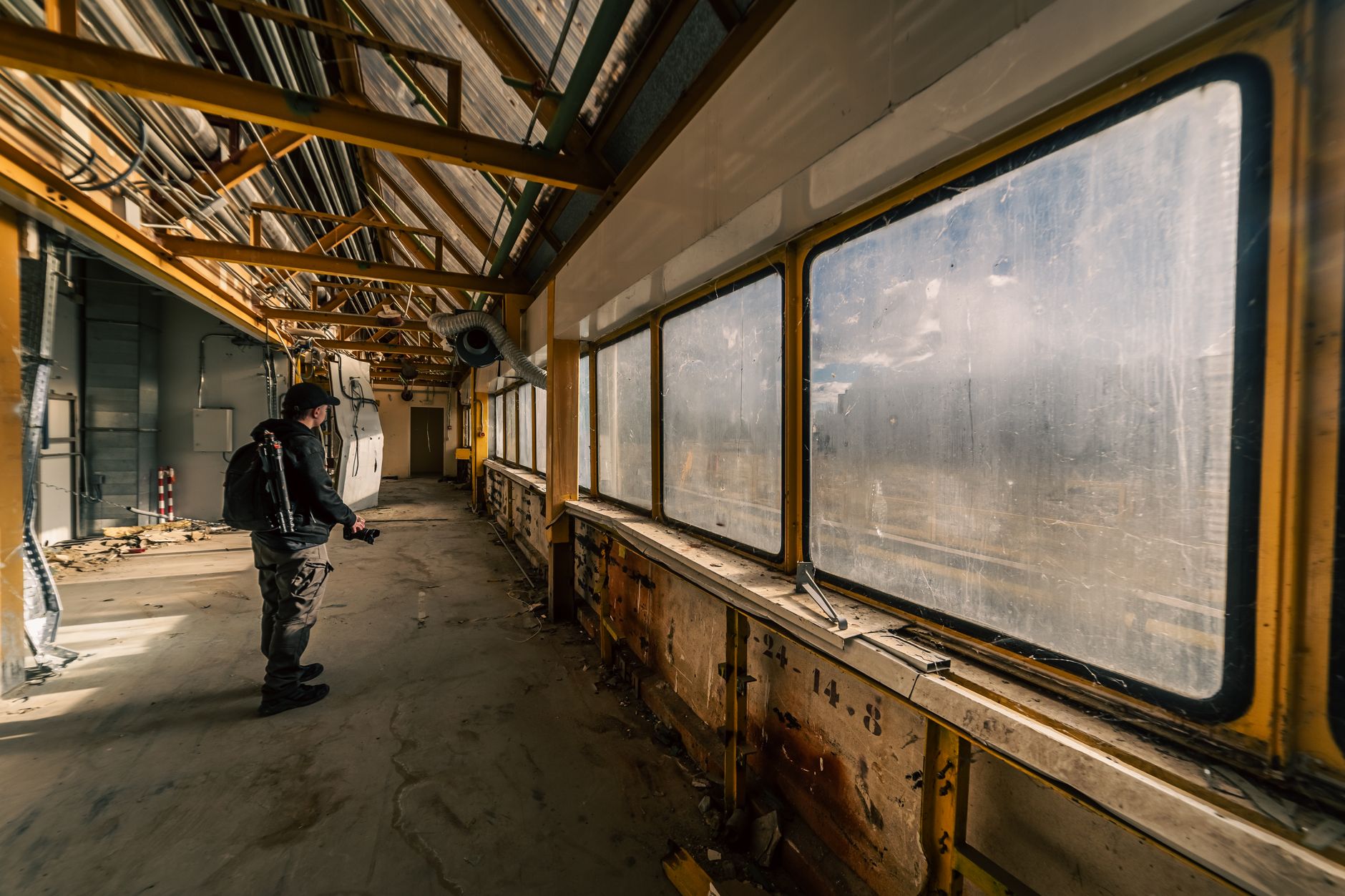
    The branch line to Nanspeth runs single track down the Bere valley, eleven miles of it, and of its six crossings Hollowmere is the only one that still keeps a man. The hut stands below the road on the seaward side: two rooms, a stove, a lever frame of four, and the roof comes with the wage. Four weeks on, two off, a relief for the fortnight. I was the relief. Twenty-six, two years of barrier duty, one assessment between me and a signal box of my own.

    Dennis Tresidder handed over on a Wednesday in March. Sixty-one, forty years on crossings, glad of his leave. We walked the road together, checked the lamps and the boom hinges, wound the clock in the frame, and then he did for me what every keeper does for a relief and pointed at the shelf.

    “Read the book before you sign it. Not just this year’s.”

    The handover books go back to 1957. Cloth bindings, the same four columns down all the decades: bells answered, barriers down, road held, weather. Reading sixty years of it is like listening to one man think. On my third night I found the entry that every keeper makes and none of them explains.

    1. Bell, two. Box confirms NIL. Barriers down 3 min. NIL TRAIN.

    Dennis’s hand, small and square. Below it, 2009, the same words to the letter in an older hand. 1993. 1981. 1968. I worked backwards through the volumes with my thumb holding the place. The entry sits in the same position on every page, like a printed thing. 2:47.

    Dennis was boxing up his kitchen when I asked him. He didn’t stop wrapping the plates.

    “Bell rings at 2:47,” he said. “You ring the box, Tregarrek will tell you nothing’s on the section. You drop the barriers, give it three minutes, raise them, put it in the book. That’s the whole of the job.”

    “It’s the approach code?”

    “It’s the bell.” He closed the case. “It’s gone in every night since before Combellack, and no keeper here has come to harm over it. Don’t be the first to leave it out.”

    Two Rings

    Evenings I studied for the assessment at the hut table, Rule Book open beside the stove. That’s where the second thing was waiting.

    The current book is plain about a kept crossing: train approaching is signalled three rings, and has been since the codes were revised in 1968. Two rings meant the same thing once, on the old companies’ cards, and the revision withdrew it — the appendix lists it among the dead signals, a line struck through the meaning. The card in my hut is older than the stove and still gives the old law:

    TWO — TRAIN APPROACHING. RAISE NOTHING. LOWER ALL.

    The bell at Hollowmere rings two.

    Instead of waiting for 2:47, I called Tregarrek. The night signalman there is a man called Whelan, thirty years in that box, and he answered on the second ring the way box men do, name of box first.

    “Whelan, Tregarrek.”

    “Relief at Hollowmere. The two rings at 2:47 — that’s you sending them?”

    A pause with the box in it, instruments ticking, a kettle somewhere behind him. “I send you nothing at 2:47. Nothing leaves this desk for your crossing between the last goods and the first pass. My printout is clean. Lower your barriers, son. Everybody does.”

    So I did. Bell at 2:47, two rings, close enough to the second that I stopped needing the clock. Phone the box. NIL. Barriers down for three minutes by the stove, road held whether anything was on it or not — mostly nothing, the valley asleep, rain or stars. Raise. Book. Sleep. Inside a fortnight it was as ordinary as firing the stove. The strange part was how quickly a man builds his night around three minutes of nothing at all.

    The 1974 volume holds the one entry that breaks pattern. A keeper named Penhale, a March flood, a bus of miners waiting to get across before shift.

    1. Bell, two. Barriers down. Raised at 2 min — road under water, bus waiting. Box rang 0510: occupation printed 0247–0250. Instrument fault logged.

    He raised at two minutes. The printout gave the section its full three anyway.

    Ninety Seconds

    Mine came in April. At 2:40 on a Friday, Tregose from Pellow Farm rolled up to the down side with a tractor and a trailer of feed, wanting across for milking at three. He isn’t a man who begs and he didn’t beg then; he sat with the engine off and the window down and said the parlour doesn’t wait.

    The rule doesn’t bend for milk. After a bell, three minutes, and no confirmation shortens it — the NIL from the box covers trains, not whatever else a bell may be for. I know what I logged and I know what I did. The line runs straight toward Tregarrek for a mile, moon on the rails, hedges black either side, and I checked it both ways twice, then a third time. Tregose watched me check.

    At ninety seconds I raised the booms and waved him through.

    His lights went up the hill and the valley closed after them. I stood with a hand on the lever frame. The stove ticked. Nothing else did.

    1. Bell, two. Box confirms NIL. Raised at 90 sec — farm traffic, one tractor. NIL TRAIN.

    The Printout

    Whelan rang at 6:20, after the first pass had gone through.

    “You were early this morning,” he said. “My printout shows your crossing occupied, 2:47 to 2:50. Steady as a train, three minutes, gone on the tick of 2:50. Anything on your road?”

    “Nothing. One tractor, before that.”

    “Then it’s your instrument or mine,” he said, “and I’ll write fault, because there’s a form for instruments and no form for the other thing.”

    The fault went in both books, his hand and mine. I asked for a copy of the printout and he posted one down with the spare lamps, and it sits folded in my Rule Book now, at the appendix where the two-ring code is marked withdrawn — the tape with its three quiet minutes inked into it, one line steady from 2:47 to 2:50, a section holding something that never came to my barriers and never went past them either. I’d raised the road at ninety seconds. It kept its full time regardless.

    I lower the barriers at 2:47 every night now, and the section gets its three minutes, all of them, whatever is on the road. Nothing has printed on Whelan’s tape since. The bell rings two, I answer, the valley waits with me, and it goes in the book.
  • Twenty-One Days

    Twenty-One Days

    The Blue File

    The fee book balanced on a Thursday. By Friday it was twenty-two pence down, in the same column that had run twenty-two pence down every quarter since 1971, and Mrs. Prew told me not to fuss. The tin was under the counter.

    The tin held coins and a card in a retired clerk’s hand. Voss — short again.

    I was twenty-nine that spring, deputy superintendent registrar of Harlbury, and the office was going over to computers before the Registrar General’s review, which meant every open paper file in the strongroom had to close or convert. Four hundred and eleven files resolved themselves by the end of March. The blue one did not.

    The blue file held notices of marriage. One marriage. The same two names on the statutory form, given at this office in every lawful window since 1954:

    NOTICE OF MARRIAGE
    VOSS, Ernest Arthur, bachelor, of 11 Macklin Row
    HALE, Marjorie Ellen, spinster, of 3 Weir Cottages
    Given at Harlbury, this 3rd day of January 1996

    Macklin Row went under the ring road in 1972. Weir Cottages went before that. The weir went with it.

    A notice is displayed on the lobby board for twenty-one clear days, and then the superintendent’s certificate issues and stands good for three months. Book no ceremony inside the three months and the authority lapses — no fine, no consequence, just paper returning to its file. The law assumes you will either marry or stop.

    For the first fourteen years the notices came once a year, every March, and lapsed like anyone’s paperwork. From the spring of 1968 they came four times a year. From that year to this, the couple’s authority to marry has not lapsed for a single day.

    Twenty-eight years without a gap. Somebody, somewhere, has kept a permission to marry continuously alive for twenty-eight years, and has done it through an office whose church was converted into flats before I was born.

    The fee came in postal orders at the 1954 rate. Every rise in the statutory fee made their envelope shorter, and the office made it good — five superintendents, one tobacco tin, then Mrs. Prew’s purse. Inside the front cover of the file, one line, signed by Superintendent Cade in 1963:

    Never refuse them. Never book them.

    I asked Mrs. Prew what it meant. She took a long time polishing her glasses. “Cade wrote that. The man before him said it to Cade. I’m saying it to you, and one day you’ll say it to whoever is daft enough to stand where you’re standing.”

    Twenty-One Days

    The board stands in the lobby under glass, public by law, banns on the left and notices of marriage on the right. The Voss notice pins at the top right corner. It has always pinned there. The baize holds two holes now, worn wide by four decades of the same pin going home into the same spot, and behind the paper the baize keeps a green that the rest of the board lost some time in the seventies.

    Change comes off that board at the rate of one visitor in several years. In 1989 a man in a good coat asked at the counter whether the Voss wedding had been booked yet, and when Mrs. Prew said no, not yet, he thanked her and stood on the step a while with his hands folded. Nobody had anything to tell him. There was nothing to tell.

    The handwriting was what sent me back to the file. The 1954 notices are firm and forward-slanting, a working hand that writes all day and resents stopping. Through the sixties the letters compress. By the eighties they are smaller, upright, drawn rather than written, and on this January’s form every stroke is fine and slow — but each letter is still built the way 1954 built it. Lay the newest form over the oldest and the same hand sits at both edges of the file. The letters do not change. Only the cost of making them does.

    The Arithmetic

    The man from the Registrar General’s office set up a folding table in the strongroom in April, with a lamp and a ledger of his own. He reached the blue file on the second day and dealt with it in about the time it takes cold tea to go cold.

    “Fee deficient. Address demolished. No ceremony in forty-two years.” He squared the corner of the file against the table. “Refuse it. It’s lawful and it’s overdue.”

    Refusal is one letter. The next notice comes back marked fee deficient, the statute does the rest, and the chain ends with nobody at fault. That was the trouble with refusing. There was nothing to point at. No victim, no threat, no complaint in forty-two years — only two names kept ready since before I was born, serviced without a gap by five superintendents, a tobacco tin, and a line of instruction nobody in the building could explain.

    Mrs. Prew retired at quarter-day. The file landed on me, and so did the choice, and there was no Mrs. Prew left to pass it to.

    The statute gave me the refusal and nobody could have faulted me for taking it. But a refusal would say, in the office’s one lawful voice, that these two had waited long enough — and nobody in that building held the standing to decide it. Not me. Not the man with the lamp. So I did what the tin was for: paid the quarter’s difference from my own purse, entered it in the fee book, and signed the exception against my registration number. The review closed in May with everything clean but one unexplained recurring variance, owner: deputy superintendent, Harlbury.

    A Second Hand

    The October notice came in an envelope heavier than usual. The fee was overpaid this time — by exactly one postal order, at the old rate, as if the sender had priced one notice and one of something else.

    And the form was filled in by a second hand.

    A young hand, and a careful one. It copies the old formations stroke for stroke — the same letters 1954 built, made now without any tremor, by somebody being taught. Only the signature line is the old hand: small, just the initials, E.V., set down where the giver signs.

    I posted it myself. Pin through the two holes, pin home, glass shut. Twenty-one clear days, then the certificate issues and stands good for three months, and the chain holds through the winter if the next envelope comes as the last hundred and seventy have come.

    The extra postal order stays in the tin, separate, with a card of its own that I have left blank. The January difference is already counted out.

  • The Line That Keeps Itself

    The Line That Keeps Itself

    Quoting the Job

    I’d been on my own books for two winters when Mr. Oakes rang about the boundary hedges at Tenantry Farm. Four lines, all of them gappy, sheep getting through into the beet. He wanted them laid proper — his word — and done before the first of March, because after that you leave a hedge alone for nesting, and what isn’t started by then waits till October. My completion payment was going straight onto the van’s MOT, so I said yes to the whole job and priced the north line heavy. Blackthorn. It bites you through leather gloves and it springs like a mattress, and anyone who has laid any knows to charge for the privilege.

    The first three hedges went the way hedges go. You cut each stem most of the way through, low, at an angle, and lean it over — a pleacher — leaving just enough at the heel to keep it alive and growing sideways. Stakes in, pleachers laid between them, the top bound down with heathering, and the hedge becomes a living fence that thickens every year after. Good work, cold work, and by the fourth morning there was a blackbird singing in what I’d made of the east meadow line. The east meadow and the two lane lines took the lay like they’d been waiting for it.

    Then the north line.

    The North Line

    Forty yards of it, clean straight stock, better than anything in the lane hedges. I laid it across a Tuesday in the last week of February, frost coming out of the ground under my boots, and the wood cut so sweet I remember thinking the job was going better than blackthorn had any right to. Stakes at eighteen inches, pleachers bedded and heathered tight. I packed up in the dark.

    The next morning three pleachers stood proud. Upright again, sprung back out of the lay with the binding slack around their middles.

    Blackthorn does spring, and frost heave will walk a stake half out of the ground overnight, so I put it down to binding generous because I wanted the MOT money more than the mean twist, and I relayed those three mean.

    By Friday, half the line was standing. Not snapped, not dragged — stakes still in the ground, still upright, and the pleachers lifted back to their own verticals like men getting out of bed, heathering coiled on the floor beneath them undamaged. I stood there a long while with my hands hurting the way they do in February. Then I got the tools back out of the van.

    The second time I did it properly hard. Deeper cuts at the heel so the pleachers would lie flatter, dog-legged stakes, and wire — two strands, plain wire, twisted drum-tight. Ugly, wire. Nothing was getting up out of that.

    Ten days.

    Then not half but all of it, the whole forty yards back at its own height, and the wire hadn’t snapped and hadn’t stretched. The stakes were leaning. Every stake along the line, tipped the same few degrees away from the hedge, even, as if they’d been sighted with a string line to lean off it together. I walked the line with my hands in my pockets because I no longer trusted them not to start cutting.

    That was when I ran my thumb along one of the heels — the cut I’d made not a fortnight past. Healed. Not scabbed, not weeping: healed over, callus rolled smooth and hard along the cut line, reading under my thumb like the old graft unions on apple stock, wood that has been closed twenty years. You spend your winters cutting living wood, you come to know every age of wound it can carry. There is no cut on this earth a blackthorn closes in a fortnight, and none it closes without a scar ridge.

    I opened one stem to check the grain beneath. It ran clean through where the wound had been. No seam, no darkening. If I hadn’t made that cut myself, I’d have sworn nobody ever had.

    The Day-Books

    Mr. Oakes listened at the gate with his arms folded and didn’t call me careless. Then he walked me up to the barn.

    The billhook hung over the door on two nails. Brass worn bright, handle fitted to somebody’s hand, edge like the day it left the grinder. His grandfather’s. Bought for the north line, kept for the north line, never once used on it — sixty years on those nails, getting older.

    He let me read the farm day-books back to 1931, and every year of them said the same:

    1948 — Hedge laying, Big Meadow east side, R. Callard & son, £4 10s
    1948 — Hedge laying, lane lines both, R. Callard & son, £6 2s
    1952 — North Meadow, trimmed only

    Laid, laid, laid, all round the farm, in his grandfather’s hand and then his father’s — and the north line charged out for trimming and nothing else, decade after decade. I asked what happened if you laid it anyway. His grandfather had tried it once, before the war, two men and chains. He said it put itself back. He never wrote that in the book. There’s no entry for a fight.

    “Why keep the line at all?” I said.

    Because, his grandfather’s word for it, the line keeps itself. You trim it so the footpath stays open and the stock don’t shy, and otherwise you leave it be, and it carries the best nesting on the farm — thrushes in it every spring as far back as anyone can tell, thick as a rookery. Mr. Oakes looked at the hedge across the yard while he said it. Not at me.

    Aye

    Before we talked money I did one more thing. There was a stem I’d cut clean through and taken home, thumb-thick, and I pleached it into the hawthorn run at the end of my own garden. One stake, one bind, proper little lay. If my hands had gone wrong overnight — if I’d lost the knack and couldn’t tell — the garden stem would say so.

    It’s still there. Took the lay, held it, healed the way blackthorn actually heals: a slow lip of callus crawling shut over the months. So the fault wasn’t in my hands. It was never in my hands.

    We settled at the gate. Full day-rate on the three hedges done, and the north line written out of the job and into the annual trim — which I took on, because I wanted an excuse to put my hands on that line once a year. Mr. Oakes shook on it and asked me not to tell the assessor the arrangement was friendly.

    The pleacher I opened at the heel rides on a shelf in my van, healed over again by now, smooth as a billiard ball along the line of a cut I can date to the minute. It looks like any stick off any hedge. There is no photograph in the world that would prove a thing.

    At the Midlands match the winter after, I bought a beer for a Leicestershire man, sixty years at the trade, and told him where, and what had happened. He didn’t laugh. He turned his pint a half-turn on the bar.

    “Aye,” he said. “There’s lines won’t take it.”

    That was all. No name for them, no why, only the way he said won’t, like a fact of temperament. Between him and me and Mr. Oakes’s grandfather, that’s the whole literature on the subject.

    I quote by feel now — palm flat on the first stem of any line for a moment before I give a number. The north line at Tenantry flowers white in April, thick with nests, and come autumn I’ll be along with my hooks to take my look at it and trim it clear for the path. It’s good work. We understand each other, that hedge and I. I don’t try to arrange it.

    It keeps itself.

  • Remaining Useful Life

    Remaining Useful Life

    The email arrived at 6:02 on Monday mornings, and for eleven Mondays in a row it said the same thing.

    Asset P-2B — Remaining Useful Life: 407 h
    Trend: stable
    Recommended action: schedule bearing replacement within 14 days.

    Four hundred and seven hours. Not four hundred, not four-fifty. The estimate held that number the way a scale holds zero.

    Pellworth County Water District runs two vertical turbine pumps in the booster station on Reservoir Road — forty miles of cast iron under a river town, nine hundred meters, and a budget that gets voted on in the high-school gym. In 2021 the board bought us a subscription: Halden Analytics, predictive maintenance, sensors glued to the bearing housings with epoxy pads, and a dashboard in the manager’s office that turned our old machines into color-coded squares. P-2A came up green and stayed there. P-2B came up amber on day one and has never once changed.

    I’m the planner. Fourteen years of work orders. I’m the only one here who opens the raw data; everybody else reads the squares.

    The Micrometer

    The first order came nine weeks in. Del, who leads the crew, pulled the bearing on a Saturday, and my daughter had a game at eleven that I caught the second half of, still smelling of the wet well. Monday, 6:02:

    Asset P-2B — Remaining Useful Life: 407 h
    Trend: stable

    A new bearing with three days on it, and the same four hundred and seven hours to live.

    The work-order form wants a failure code before it will close, so I carried the old bearing to the bench and measured it — bore, outer race, three rollers off the cage, the lot. Every dimension sat inside new-part tolerance. Twenty-two hundred hours of service, and it measured like the day it was boxed.

    I wrote no fault found and closed the order. That should have ended it.

    The second time, I stood in the station for the swap myself. New bearing, new epoxy, recalibration file uploaded so the model could relearn the machine from zero. It studied P-2B for six days.

    Then, Tuesday, 6:02: 407 h.

    I opened a ticket with Halden. Their reply took nine minutes.

    Thank you for contacting Halden Support. The remaining-useful-life estimate is a dynamic figure informed by continuous learning across your fleet. Confirmed: 407 h.

    Del read that over my shoulder and set his coffee down. “It’s not estimating,” he said. “It’s counting down to something.”

    He had it backwards. I didn’t say so yet.

    The Spare

    The district keeps a rebuilt spare from the 2019 overhaul — different rotating assembly, different serial number, a machine that had never turned a wet revolution in Pellworth. In August we took the shutdown window and put it in.

    For eleven minutes the dashboard showed a grey square, learning the new pump.

    Then: amber. Remaining Useful Life, 407 h.

    That night I pulled the raw baseline, the first sixty seconds Halden ever recorded off that machine — before algae, before load, before anything but spin. The peak was already in it. The inner-race defect frequency, the exact signature the model uses to forecast a bearing’s death, sitting in minute one of a brand-new pump like a birthmark. The forecast wasn’t reading wear. It was reading something that came in the crate.

    Del asked what I was going to do about it. I gave him the honest answer: file it.

    What Everyone Wanted

    Here is what the district had by the second autumn. A manager with a zero-failure record for the auditor and a green board he printed in color. A crew collecting overtime on a swap that took forty minutes — Del schedules them the first Saturday of the month and lets the rest of the Saturdays go, which is a peace nobody wants disturbed. A vendor who rewrote the service agreement so that any missed prediction is refunded in full; in five years, on the only pump the model has ever rated below green, it has never missed. A prediction that never changes cannot be wrong until the day it is. Nobody was lying to anybody. Everyone was getting exactly what they’d bought.

    The one thing nobody wanted was for the number to be reached. Except me.

    So in October I cancelled the replacement cycle — my signature, my neck, a run-to-failure on a pump feeding the town’s water — and let P-2B keep turning. Four hundred hours past due, then five hundred. The emails kept their manners. RUL: 407 h. Trend: stable. At six hundred and eleven hours on a bearing the model had been giving four hundred and seven to live since the day it was boxed, the pump ran as sweet as the hour it was installed, and the number had not come one hour closer.

    I had walked two hundred hours toward the fault, and the fault had stepped back two hundred hours, at exactly my pace.

    I put the October bearing back on the schedule and renewed the standing order.

    The Shelf

    The case study went out in the spring with Ressler’s signature and the auditor’s favorite chart, and Halden put the district’s name on their brochure. I declined to sign.

    Every bearing that has come out of P-2B sits on a shelf in the shop now, tagged with its hours, measured, unworn. The scrap tickets would have them gone inside a week; I keep turning the tickets down, and nobody pushes it, because a man’s filing habits are the cheapest thing a district can grant him. Six of them in a row, shinier than the day they were boxed.

    P-2B has outlived every prediction ever filed about it. Every Monday at 6:02 the district learns it has four hundred and seven hours left, and every Monday that is true, and every Monday it means a little less.

    Del says the machine is counting down to something. It isn’t counting down. In five years, that number has never once moved toward us.

  • Always Has

    Always Has

    The Question at 2:14

    Ness runs the bakery under our flat. Her father ran it before her, and the flat came with it — you climb nine stairs off the back of the shop floor and you’re home, flour on every cuff, the smell of scorched sugar in the curtains no matter how often they’re washed. Her alarm goes at 4:20. The morning dough has to be out of the retarder and shaped by five, and if she’s woken at two and doesn’t get back down into sleep, the whole day comes apart in her hands: weights miscounted, orders doubled, once a full tray of buns left to prove until they collapsed into grey slabs.

    The talking started the winter her father died. Not conversation. One question.

    Is the prover off?

    At first I answered out loud. Wrong move. Half-waking her at two was as bad as waking her at four — worse, actually, because she’d surface just enough to panic about the morning and then lie there grinding herself down toward the alarm. So on the third or fourth night I did it in writing. There’s a whiteboard on the fridge, the kind with a pen on a string, left over from her father’s ordering system. I wrote:

    Prover’s off. Timer’s set. Go back to sleep.

    She stopped mid-syllable. Ten seconds, maybe less. Silence until the alarm.

    That became the arrangement. I work late shifts at the hospital pharmacy — home by twelve-forty, awake till two — so the night end of it fell to me anyway. Most nights between one and three the question would come, some nights twice, some nights with variations: Did the order go in? Is the back door locked? I’d pad down and answer on the board, and inside a quarter-minute she’d settle. In the mornings she’d erase it, write BREAD, MILK, and never ask what else had been there. She has slept better this year than in any year I can remember. She told her sister so on the phone. I heard her say it.

    My Own Handwriting

    In March I came down at 2:40 and she was already asking. The answer was on the board.

    Prover’s off. Timer’s set. Go back to sleep.

    The handwriting was mine. The loop on the f in off, the way I break the k in back — mine. And I hadn’t written it. I’d been asleep on the sofa; the pen was capped and hanging on the wrong side of the board, the side she uses for shopping. She asked twice more while I stood there. Then I wrote my answer under it, the same nine words, and hers — its — stopped mid-syllable as always.

    The next morning I compared the two lines. Letter for letter. The spacing before Timer’s matched, down to the apostrophe overlapping the s. Pharmacists check. It isn’t a choice; it’s how the hands are trained. You count twice, you read the label twice, and if two counts disagree you don’t shrug and pick one — you start again. So I started again. I photographed the board before touching it and kept the pictures in an album on my phone called PROVER.

    It happened once more in April. Twice in May. Each time the answer was there before I’d have written it, in my hand, correct, and the interval widened. In April it beat me by four minutes. By the end of May, forty. In June I came home at twelve-forty with the shop shuttered and dark below me, and the answer to a question she wouldn’t ask for another hour and a half was already on the board, as if somebody sensible had written it at a sensible time and gone to bed.

    One night that week the board read:

    Rye’s in. He checked twice.

    At 2:14 she asked whether the rye order had gone in. She had never asked that before. The answer was two hours old.

    The Night I Didn’t Answer

    I tried stopping. Once. A Tuesday in July, the way you stop taking a tablet to see whether it was doing anything.

    By 1:50 she had asked the question nine times. By 2:30 her voice had worn down to the vowels alone. At 3:15 she was sitting up in bed, asleep, asking it into the dark with both hands curled in the duvet, and I stood in the kitchen with the pen in my fist and understood the shape of what I’d built. Whatever answers her — me, or the me that isn’t me — she needs the answer. The kindness isn’t a habit I can put down. I wrote. She lay down. The alarm went at 4:20 and she got up and made sixty loaves.

    She knows none of this. I’ve tried telling it in pieces — the album, the intervals — and she listens, frowns at my phone, and says she doesn’t dream at all, hasn’t since her father died. The flat has never been colder than it should be. Nothing has moved that shouldn’t have. The dogs on the street take no interest in our door. Whatever shares this kitchen keeps bakery hours, answers in my handwriting, and has never once been wrong.

    The Question I Never Wrote

    Then, at the start of October, the board asked a question. My handwriting. Six in the morning, light coming up grey over the yard, pen capped on its string:

    Does he still take the late shift for me?

    Ness came down at 6:10 with her hair tied back for the ovens. She read the board on her way to the kettle, the way you read anything on a fridge. She lifted the pen off the string and wrote beneath it, in the round, even hand she does the invoices in:

    Always has. Tell him.

    Then she made coffee and went down to start the shop.

    I erased both lines that evening. By ten the question was back, word for word, and upstairs she was asking it aloud — asleep, a new question in the rotation — until I copied her answer onto the board in my own hand. Two answers again. Stacked.

    I don’t erase it anymore. The board stays up with the week’s exchanges on it — hers, mine, whatever the third one is — and the flat runs on it the way the shop runs on the prover timer, loaves coming out at six whether anybody watches or not. I answer when it’s mine to answer. And on the mornings when a question about me appears in writing I didn’t put there, I stand back and let her answer it, because she’s better at that part than I am, and because somebody in this kitchen apparently needs to hear it.

    Last week I bought a bigger board.

  • Gradient Allowance

    Gradient Allowance

    The Tender

    The tender document ran to sixty-one pages, and the clause that decided everything sat on page nine: ninety-five percent of visits inside their agreed thirty-minute window, measured quarterly, no exceptions for weather or roadworks or the fact that the roads in question cross four miles of reclaimed marsh. I had been rota coordinator at Mareham & District Home Care for two years by then, promoted off a care round of my own because I was the only one of us who could make the council’s rostering software do what the brochure said. You feed it the visits, the dependencies, the drive times off the mapping layer, and it draws a week that looks like a heartbeat on a monitor.

    Haverton Level is the tide-bank drove that links Mareham to the seaward villages — Oxholme, Salhoop, Duncote Ferry, Wrackle Staithe. Dead straight, dead flat, drainage ditches either side deep enough to take a tractor without a splash reaching the road. The mapping layer priced the crossing at twenty-two minutes at care-visit speeds, the same twenty-two either way. On the paper rotas I’d inherited from the last scheduler, and shoved unread into the cupboard under the kettle, every seaward round carried fifteen minutes of blue fountain pen in the margin. Paper people padded everything. That was the whole reason the sector was buying software, so I stripped it — forty-one visits folded back into the same contracted hours, symmetric travel times both ways — and our bid came in eleven percent under the incumbent. In April we won.

    In May the missed windows started.

    Two Cars, One Quarter Hour

    The software flags what it calls exceptions: red for late, amber for early, grouped by carer and day. I ran the report every Monday, and by the third Monday the Mondays were all telling the same story. The misses sat on the legs that finished at the carer’s own front door. Rima’s six-forty medication round at Oxholme: fine going out, red coming back. Colin’s Tuesday double-up in Duncote Ferry: textbook on the way over, twelve minutes gone on the way to his flat by the staithe. End-of-shift drift, I called it. People hurry to work and dawdle home. I wrote it up in a supervision note, worded kindly, and Rima cried in the office kitchen, and I stopped writing things down and started checking instead.

    The software keeps GPS pings at ten-second intervals for exactly this argument.

    The Friday of the June review gave me a quarter hour with two cars on the Drove at once. Rima driving landward, home to Mareham, her round done. Colin driving seaward, home to Wrackle Staithe, his round done. Same road, opposite directions, 19:10 to 19:40. Her outbound crossing that afternoon had taken the mapped twenty-two minutes. So had his. Her trace home showed thirty-six. His showed thirty-five.

    Same twenty-two-minute road. In the same half hour, in both directions, the journey home was the long one.

    I checked the grade first, because you would. The Level has no grade — the highest thing between the ditches is the crown of the road, and the surveyors who drained it in the 1840s would have shot a marble from one end to the other. Wind: a still June evening, and both cars had it anyway, whichever way it blew. Traffic: there were two cars, and they were the two cars. I laid the traces side by side on the second monitor and hunted the gaps. No stops. No stretch below care-visit speed. The pings simply arrive later in one direction than the same pings did going the other way, and both traces are right, and they cannot both be right, and the software files the difference as unattributed variance, which is the machine’s way of putting its coat on and leaving.

    The Lever-Arch Files

    I tried the obvious fix before I believed any of it: fifteen minutes of named contingency on all homeward legs, labelled traffic. The council’s contract monitor queried it inside a fortnight. The drove has no recorded congestion, she wrote, in the tone they teach them. So I pulled the contingency back out and clawed the difference off the outbound legs instead, spreading the visits a shade tighter to protect the window percentages.

    The next fortnight the misses turned up on the outbound legs. Four carers. Both directions. No pattern the software could name, and I had stopped calling it drift.

    That was the week I finally opened the cupboard under the kettle. Forty years of lever-arch files, E. Tansley in gold on the spines, every seaward round Mrs Tansley had ever built, and in the margin of every single one, blue fountain pen, the same line:

    add 15 home

    Her predecessor’s hand, further in, older, browner:

    add 20 in winter

    And in the back of the oldest file, a shorthand I couldn’t fully read, 1970s at least, same instruction wearing different clothes:

    add the quarter, home

    Nobody, in forty years of margins, had written why.

    Mrs Tansley is eighty-four and lives in sheltered housing by the church, eleven minutes’ walk from the office, and I went that evening because some things you do face to face. She had the diary out of the cupboard before I finished the sentence, which told me something in itself. I asked her why fifteen. She looked at me the way you’d look at someone asking why you salt the water.

    “Because you need it, on the way back.”

    I asked what takes the time, out there. She thought about it properly, which I’ll say for her.

    “Nothing takes the time. It’s just longer, coming home. It always has been. You don’t book tight over the Level, love. Nobody ever has.”

    Gradient Allowance

    You cannot put any of that in a tender response. There is no box on the contract monitor’s form for the road home is fourteen minutes longer for everyone who drives it, whichever way home is, and if there were, the form would come back flagged. What the form has is an engineering vocabulary, and what the fen hasn’t got is a gradient, so I gave it one. Fifteen minutes per homeward crossing, printed in the rota as a standing charge: gradient allowance, Haverton Level crossing.

    No auditor has queried it. Auditors don’t drive the Drove. The carers looked at the printed rotas, looked at their own wrists, and said nothing, because the number matched something they’d already stopped mentioning to each other. The window percentages settled in September and the tender survived its first quarterly review.

    Rima handed in her notice in July, in the worst fortnight, when the misses were on both legs and I still had nothing to tell her except that the software was under review. She blamed the software. I signed her reference and let the blame sit, because the truth wasn’t fileable and she needed the job more than the truth.

    I completed on the cottage at Salhoop in October. The seaward side is the side you can afford on a coordinator’s wage, and the road runs both ways the same for everyone, which is to say it doesn’t, and my own rota line now carries ten homeward crossings a week, each one charged fifteen minutes of gradient that isn’t there. The new hire started this month. I printed her first week’s rounds and wrote the line in the margin where Mrs Tansley used to write it, and she copied it into her notebook without asking, the way I photocopied it without reading, back when the pen was blue and the rounds were mine.

  • Number Fourteen, Millrace Row

    Number Fourteen, Millrace Row

    Ten, Twelve, Sixteen

    In March 2011 I was one of nine temporaries taken on to walk the borough’s streets and reconcile them against the address register before the census delivery rounds were planned. The work paid by the street, not by the hour. A street left open on the residual sheet earned you nothing and cost you your Friday.

    Millrace Row was thirty-one doors of two-storey brick along the old mill leat, and the register ran it clean from 2 to 32 until you stood in front of it. On the ground, between 12 and 16, stood a house.

    Number 14. Slate roof, repointed lintels, a step swept that same morning. A brass 14 on the door, polished along the top edge where a thumb would catch it.

    The register had no 14. The numbering jumped 12 to 16 with the small tick you put against a demolition gap. There was no demolition. There was a window box with this year’s geraniums in it.

    I coded it as a sub-division of 12 — the training allowed that; odd splits happen on old rows — and moved on, because I had three streets left and the light was going. That was my reason. Everyone who comes to this story has one.

    The Fold in the Folio

    The code bounced. A sub-division needs a parent rating assessment, and number 12 had none to give: its banding schedule described a single dwelling, no annexe, and the parcel card drawer told me why. The cards ran 12, 16, and between them nothing — not a gap where a card had been taken, but a place where a card had never sat, because the tab guides had been printed without it.

    The valuation map lived in the basement of the listed building on Wood Street, in a bound folio the size of a paving slab. The surveyor’s name inside the cover was E. Garlick, 1988, traced from the 1974 survey, and the fold came across with the tracing. The row was drawn at 1:500 across two facing pages, and the fold fell exactly where number 14 stood. Ink cannot survive the binding. The parcel boundary went in at one edge and came out at the other, and the house between belonged to neither page.

    Garlick had retired that Friday. He still came in to hand his pass over, and I asked him what you do with a parcel that lives in the fold.

    “You leave it in the fold.” He was not unkind about it. “That folio is the base for forty-one banding appeals in that street. Open number 14 and every one of them re-opens with it — refunds, re-hearings, the lot. It has sat in the fold since 1974 and cost nobody a penny there.” He looked at my temporary badge while he said it, and then at the queue behind me.

    A Ring of Letters

    I could have left the address unmatched and taken the hit to my count. I started telephoning instead, which was the point where I stopped being paid to care and simply cared.

    Each office omitted the house in the idiom of its own register, and in each one somebody had a reason nothing like Garlick’s.

    The delivery office had the row on a walked route, planned door to door. A point added mid-route meant re-walking and re-costing the whole round, and the officer who owned the walk was two years from a pension that her current overtime shape paid for. “That address has never been served,” she said, “so it generates no volume, so it has never been in the plan. Give me an aggrieved resident and I’ll open a case.” Nobody was aggrieved. That was the shape of it. The house asked nothing of anyone.

    Water billed the row by meter. Number 14’s supply ran through the allotment standpipe account two hundred yards upstream, had done since the account was opened, and untangling it meant repricing forty years of charges against a recovery budget the billing clerk was judged on every quarter. He told me the pipe was “probably communal originally”, in the voice of a man deciding that it always had been.

    Electoral services held one annotation against the row in their street index:

    derelict — no electors, verified 2006

    The initials were the electoral officer’s own, and her quarterly target was closing streets off the unresolved list. She had verified it from a bus.

    None of this was conspiracy. I sat in four waiting rooms that week and conspiracy would have been easier to report. Nobody had agreed anything with anybody. Each office held the cheapest true statement available to it — not ours; another office’s — and the statements pointed at each other in a closed ring that touched every counter in the borough and was anchored to nothing.

    The ring had a paper trail, and it is the part I still have. Local taxation keeps a determinations file: disclaimers, in effect — letters in which one office records, for the file, that a property is another office’s to assess. Number 14’s section held five letters. The council disclaimed to the water board in 1994, the water board to the valuation office in 1997, valuation to the delivery office in 2001, the delivery office to electoral services in 2003, and electoral services back to the council in 2006.

    The property described above is not rateable in this authority’s area, its assessment having been previously determined elsewhere.

    Every letter cited a predecessor. Not one of the cited letters existed. I checked — I had become the kind of person who checks. The oldest document in the section was the 1994 disclaimer, whose operative words were “as previously determined”, and the determination it named was held by no file in the borough. The first letter’s signature line had been ruled through, with the note copy to originator. No originator was named. No office held an original.

    I photocopied the run of them on the public machine, twenty pence. The counter clerk logged my twenty pence and asked nothing. She had her reasons too. Her queue was out the door.

    No Household

    On the Thursday they held the residuals meeting. Sixteen unmatched addresses in the borough, and mine was the only one with a building standing on it that no register anywhere would hold.

    The team leader had a residuals target of her own, and the coding manual offered a class that would close my street clean: non-residential structure — no household. A shed could wear it. A substation. She asked me whether the building was lived in.

    There was the swept step. There was the thumb-polished brass. There were the geraniums.

    “No household recorded,” I said, which was true, and which was also the whole ring of it wearing my voice.

    She keyed it. My street closed. My contract was extended on the Monday, and my reference says accuracy: high, and both of those were bought with one sentence that any of four offices could have spoken at any point in thirty-seven years, and had not, because each of them had a pension, a quarter, a queue, a Friday of their own.

    I walked home along the leat that evening. The step at number 14 had been swept again. The photocopies are in the pocket of a coat I no longer wear to work, and no office in this borough holds the letter those five letters all point at, and somewhere between 12 and 16 there is a house that every institution in this town can prove, on paper, to be somebody else’s.

  • Compartment Fourteen

    Compartment Fourteen

    Windthrow

    The forest track to Hangley floods from November to March, and by late April it has dried into a trench of orange clay that takes a boot at the ankle and gives it back with a sound like a cork leaving a bottle. I walked it every second Tuesday that spring with a tally clicker in one pocket and the clipboard under my arm. Six months into probation, I had a hut, a bicycle, a map with thirty-one compartments on it, and no discretion about any of them.

    The October storm had come through the Weald at one in the morning and put half the county on the roads with chainsaws. On our ground it snapped the spruce at eight feet where it did not lift the roots whole, and compartment 14 caught the worst of it. The western third lay crosswise like a dropped bundle, each tree leaning on the next, root plates standing up out of the clay like doors off their hinges. The eastern two-thirds stood green and ridiculous, undisturbed, as if the wind had drawn a line and kept to it.

    You count a compartment by sample rows. Walk a planted line, click every stem green above the second whorl, expand the figure across the block, and the number goes in the stock column that decides what the restock grant pays for. Arithmetic with mud on it. In training they say the honest count is the one you can walk a stranger back through.

    My first expansion for C14 gave 2,196.

    The compartment card at the hut said: planted 1953, spruce, 2,196. I put the coincidence down to sampling and walked the full rows to break it. Eleven passes, three days, every stem green above the second whorl.

    2,196.

    The flattened third had made up the difference. Among the windrowed brash, where the storm had put six hundred stems on the ground, leaders stood knee-high at planting spacing, green, unshaded, in lines. Nobody had planted them. There is no version of spruce that self-sows in rows on Weald clay, and I stood in the middle of that for a long while before I wrote the figure in the stock column, because the figure was true whatever else it was.

    The Old Book

    The compartment book lived at the district depot in Cadlehurst, a cloth-bound ledger the colour of a tarpaulin, one spread per block, columns for the five-year audits. C14 ran: 1958, 2,196. 1963, 2,196. 1968, 2,196. On down the page, thirty-five years of it, and in the beating-up column, at every audit, the same word. Nil.

    In the margin, in a hand that was not the planter’s, someone had written two words and ruled them off:

    count holds

    I asked old Parris, who kept the gates and carried forty years of the beat in his shoulders. He looked at the page the way you look at a weather sky.

    “We don’t beat up C14,” he said. “Never needed. Don’t put in for restock on it — it’ll come back refused.”

    That was all the lore there was. No story, no warning, nothing about a debt or a man. A working instruction, older than me, kept the way the ride-mowing rotation is kept.

    Fifty In, Twenty Out

    In March I beat up the ride edge anyway — fifty nursery spruce from the cold frames, planted inside the compartment line, spaced and firmed and papered as sanctioned work. I wanted the number to move.

    June: fifty dead. One to a row, scattered the length of the block. Not frost-pocketed, not vole-rung, not drowned in the clay. Green on the Tuesday, stopped on the Thursday, standing stopped, the way a clock stops.

    The count held at 2,196.

    So I went the other way. I lifted twenty of the stopped ones with a spade, root balls whole, potted them, and took them down to the nursery. The twenty lived. Ordinary trees doing ordinary spruce things in a frame of wire, last I looked. And in the compartment, by the next assessment, twenty leaders stood in the rows at spacing, knee-high, green above the second whorl, where no seedbed was and no mast year had come.

    2,196.

    The storm loss went in honestly. That was the one thing I refused to carry out of my first year: a fudged stock figure on my own round.

    C14. Windthrow western third, approx. 660 stems, windrowed. Live stock 2,196. Restock recommended.

    The recommendation came back inside a fortnight, initialled by a district officer I never met, in the same slant as the two words in the old book’s margin.

    Nil required. C14 self-maintaining. — R.McG.

    Self-maintaining. There is a word for a wood that keeps its own number, and it belongs to no manual, and it had been sitting in that file in green ink since 1971, waiting under my recommendation like a stone under a leaf.

    Count Holds

    My probation report came back in the autumn with “conscientious” in it, which is what district writes when a man’s numbers balance. I kept the assessment round. Kept the hut, the bike, the map.

    I still count C14 every spring, second Tuesday of April, though the round stopped being mine years ago and the computer does the expansion now for every block it knows. The track still floods and still dries to a trench. The clicker in my pocket is the same one. The figure is the same figure. In thirty compartments the numbers move as numbers should — dying, draining, blowing down, getting planted — and in one of them the arithmetic is a formality. I walk it out anyway, row after row, because the honest count is the one you can walk a stranger back through, and one day the stranger will be some probationer holding my clipboard, and I am not going to be the one to tell him the number before he has earned it.

    When the old book filled, I ruled the new spread myself. Live stock, 2,196, in my own hand, and in the margin, where the slant of R.McG. ran out of page in 1994, there is a line in my handwriting — count holds — and I will say here what I have never said at the depot: I have no memory of ruling those two words off.

    But I would have written them. That part of the job, I keep.

  • Gauge Seven

    Gauge Seven

    There were eleven gauges on the board at Hoxie Fork, and ten of them were mine to sign for. The eleventh, Gauge 7, sat at the end of the bottom row with black tape across its line on the schematic and the word INOP printed in some dead supervisor’s hand. Its penstock had been capped in ’87, seven years before I ever set foot in the station. The line it used to read was dry gravel now, grown over with alder.

    My job was the night relief, ten to six. Every hour I walked the board with the logbook under my arm, wrote the levels, initialed the page, and at 03:00 I called the sawmill downstream and read them the flow. That was the whole of it. Warrick had days, and I had the vacancy to think about. He was retiring in November, and the day slot was mine if my logbook stayed clean.

    My logbook was very clean.

    The needle on Gauge 7 read 2.1.

    A stuck needle reads one number forever. Gauge 7 read 2.1 on my first night, 2.1 on my second, and on the third night of September, when rain came down the Nettle valley in ropes, it read 4.6 before any of my ten live gauges had so much as trembled. I stood in front of it with the chalk still in my hand. By the time Gauge 1 caught up, an hour later, the two needles sat at the same height, and the difference between them was nothing at all.

    Nobody trains you for a thing like that. The procedures cover instruments that work and instruments that are broken. Gauge 7 was neither. I wrote the hourly column as usual, left 7 blank the way you’re taught, and drove home at dawn with the wipers going and my hands perfectly steady on the wheel, which struck me at the time as a kind of insult.

    Forty Minutes

    I did not report it. I want that plain, because everything after follows from it.

    Reporting meant a written anomaly, and a written anomaly meant the inspection team from the district, and the inspection team meant the station shut for however long they liked, with my relief contract finished the day they padlocked the door. I had eleven months toward the day slot. Warrick’s November was coming. So I watched instead, the way a person watches a door at the end of a hallway.

    Through September the needle led the river. Not always by the same amount. Forty minutes in ordinary weather; two hours ahead when a front was still stacked behind the divide, invisible to me and to the barometer both. On the night of the 26th, Gauge 7 fell slack to 1.9 at half past one. The sky stayed shut and starless till morning, and at 09:40 the river dropped as if something upstream had reached down and pinched it. Nothing in the official record explained that. Nothing in my own head did either.

    The logbook has a column for remarks. I began leaving the remark line empty and keeping Gauge 7’s number in the margin, small, in pencil, under the INOP. The pencil became ink, because that is how these things go. You would do the same.

    02:00. Gates steady. G1 3.4. G7 4.9.
    03:00. Mill advised 310 cfs. No surge reported.
    04:00. G7 5.2. Spill gate 2 opened one foot, on my authority.

    That last line is the part that matters. I opened the gate before the river asked me to. The mill had been logging our surges all season — every time I chased the live gauges, they got a wall of water at breakfast. That night they got none. The foreman’s voice came back over the radio and said, whatever you’re doing different, keep doing it, and I said I would, and my initials went under it.

    The Shelf

    In October I went at the archive. A steel shelf in the back room, logbooks back to 1951, kerosene and wet paper. I wanted one book: 1987, the year they capped the line.

    I found the entry. Fourteenth of August, night shift. The last reading ever taken off Gauge 7 was a 2.1, initialled R.D., one clean column, and beneath it the words line dry — gauge to remain. I turned the page. The next night was R.D. again, all ten live gauges logged neat as church, and Gauge 7’s column empty. The next, and the next — seven years of empty columns marching across that shelf behind one plain number.

    There was nothing in it. No story, no warning, no entry in a shaking hand. A man had written a number and gone home, and the number had waited seven years for me to walk in and read it. I sat on the fender of the kerosene stove with the book on my knees for a long while. Then I squared the shelf, put everything back in order, and walked out to the board, where Gauge 7 sat at 4.9, patient, forty minutes ahead of the rain.

    November

    Warrick retired on the eighth. The superintendent drove up from the district office with the paperwork in a cardboard folder and offered me days on the spot — the slot, the house by the yard, the school bus at 07:40 that my daughter could ride instead of hear about.

    I asked who would take nights.

    He had a list. Two names, young men, sharp, the type to read the manual front to back and then read the board the same way. The type that reports. I heard myself say I’d stay on through the winter, for continuity, and watched him write it down as a favor to the station. The folder went back in the car with the day slot still inside it.

    That is the price. I want it said plainly, because no ledger anywhere will say it for me: I traded the bus at 07:40 for a number on a dead gauge, and I would make the trade again tonight.

    The station runs better now than it ever has. The mill’s logs are clean. The district thinks Hoxie Fork finally got lucky in its relief operator. My daughter is taller than the counter by the door, and on the mornings she’s awake to see me come in, she asks what I do all night in a building by myself. I tell her the truth. I read the river, and I write it down, and every hour I initial the page.

    Ten columns in ink. The eleventh is mine also, in the margin, under INOP. The needle knows the river forty minutes before the river gets here, and I have stopped asking which of them I work for.

  • The Fourth Stride

    The Fourth Stride

    Fourteen Nights

    The health visitor wanted fourteen settled nights in ink before she’d sign the sleep chart. Fourteen nights of June going down at seven and staying down, logged in the grid taped to the fridge door, and in October I could go back on nights.

    Twelve years of district rounds teach you a floor. You don’t put lights on over sleeping patients, so you learn every surface by pressure instead — which boards give, where a threshold lifts its lip, how far the medicine trolley runs before the laminate argues. Give me a strange hallway at three in the morning and I’ll tell you where my colleague is without opening my eyes. A house reports its people through your soles.

    June’s feed landed at three. I gave my own house the courtesy I gave my patients: no lights, bare feet, one hand on the rail, the soles doing the listening while the hands did the work.

    The landing in our semi is original pine, nailed down in 1936 and never lifted since. Third board and seventh take a body’s weight with a small dip, like a handshake from someone tired. I’d mapped them my first week, the way you map a ward.

    On the fourth night of the chart, June had finished and gone heavy against my shoulder, and I stood at the midpoint of the landing letting her settle. The dip arrived in the boards to my left. Third. Then seventh. A stride, walking the landing away from me toward the box room, longer than mine, lighter than Neil’s, and soundless in itself — not a footfall anywhere in it, only the floor receiving somebody and passing them along.

    The box room door doesn’t open. It hasn’t opened since we filled it with the travel cot and the boxes the cot came in.

    Settling, I filed it as, in the column I keep for things I’ve decided not to treat. Old semis tick all night; the estate agent said so with her hand flat on the newel post, steadying the house for what she was about to sell us.

    But settling doesn’t have cadence. And the third-and-seventh handshake, twice over, with a pause at the box room door where a person checks a sleeping child — settling doesn’t do that either.

    The Grid

    The chart on the fridge had a column for everything. Down, woke, feed, minutes, who went in. I filled it in at five each morning with the kettle going, and Neil’s rota ran along the top because his cover box changed with the week.

    He’s away two, three nights in seven — signaler, relieved wherever they’re short. On the away nights he writes the box’s initials in the corner, HL for Harwick Lever, FR for Frissing Road. On the home nights he writes nothing.

    Nine nights into the chart I was reaching for the milk and the grid did its second job, the one I hadn’t known it was keeping. I read down the margin where his initials sat, then went back through my head, night by night, and checked each one against the landing.

    Every crossing I could put a date to had come on a night he was home. Every away night — four of them by then — nothing. The house had run to three under my feet and I hadn’t marked it at the time, the way you don’t mark a correct pulse.

    Wed 14 Sept — down 19:05. Woke 23:50, self-settled. Feed 03:10, 15 min.

    No initials in the corner that day. That’s the whole of Wednesday in the official record. The unofficial record says the landing walked at 03:14, unhurried, while I stood with a sleeping baby doing arithmetic they don’t put on charts: two adults in the house, one stride too long to be either of them.

    I ran the test the ward way, one variable at a time. Neil had HL booked for the Friday; I asked him to swap it, said I wanted the weekend starting early, and he rang the change in without asking why. Friday night, June down at seven, feed at three, me at the midpoint of the landing with my weight still and my breath doing what it does.

    Third board. Seventh. The long line to the box room. The pause.

    He worked HL the following Tuesday, and I paced the same boards at the same hour with the same child, and the landing held nothing all night but the two of us. June was teething, which made it a long night and a clean one; I stood at three with my soles out like instruments, taking nothing.

    The house runs to four, or it runs to three, and the switch is whether everyone’s home.

    The Iron

    The rule held through September, and I stopped testing it and started, without deciding to, keeping it — a pencil column on the chart’s last page, small strokes, one per crossing. Not evidence. A census.

    Then on the first Sunday of October the house napped. Neil had come off a run of nights and went up after lunch, June went down at two, and I did the ironing, which is the one standing-still craft I have left. The iron makes its passes and your feet do nothing at all.

    The kitchen threshold lifted under me.

    I heard myself say oh — small, polite, the noise you make when a queue moves. Pressure came over the threshold with the same long stride, passed behind me at a pace and a half, and went out through the doorway toward the hall, and the dinner light was on the whole time, full afternoon, and there was nothing in it. There was never going to be anything in it. The stride doesn’t live in the light. It lives in the surface, the way a bruise lives in a bed.

    A district nurse knows what weight does. We log it, turn people by the clock, redistribute load so skin doesn’t fail. Standing at the ironing board with my heart going hard and nothing to see, I did the assessment I’d do on any load: consistent, tolerable, recurring, no escalation I could measure beyond its reach. It had never come downstairs before.

    Now it had.

    The landing carpet comes up in an hour with a kettle and a flat bar. Neil would stand in the doorway with his mug and want to know what I was after, and what I’d say — that the floor walks — would go into some file with my name on it, the postnatal file they’d open kindly and never quite close. The health visitor signed the chart off on the twelfth, fourteen clean nights in ink, and I nearly slid the pencil column across the table instead, just to see where it went.

    I didn’t. I’ve carried worse things between the official lines.

    Days

    The box offered Neil permanent days at the October review — more money, home every night — and we said yes the way you say yes to Mondays and mortgages. Neither of us said the other thing out loud, because there was nothing to say: from November, everyone under this roof, every night.

    First night of the new rota, June woke at three, and I did the landing dark and barefoot the way I’ve always done it. Halfway along, my weight went over to the wall side.

    I didn’t decide it. My feet have twelve years of standing aside for colleagues in doorways, and they did it on their own — gave the boards room, the way you’d make passage for the trolley, or for a sister with a tray.

    Two adults, one baby, and a stride with no name in it. The grid on the fridge is signed and finished. The pencil column isn’t, and from now on it grows nightly, one small stroke at a time, in a house that runs to four whenever you count by pressure.

    Nobody’s arithmetic but mine.