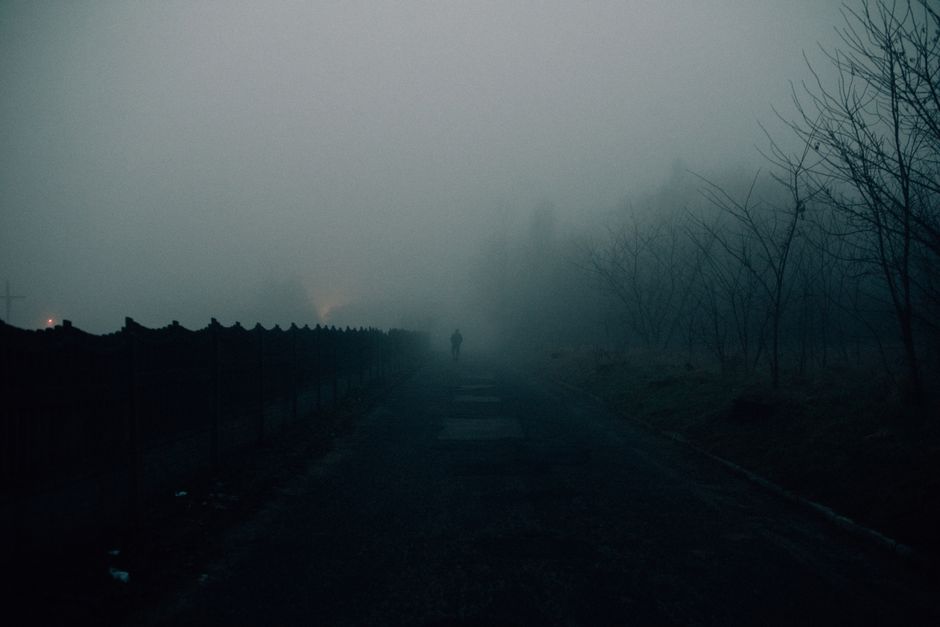
The 23:40
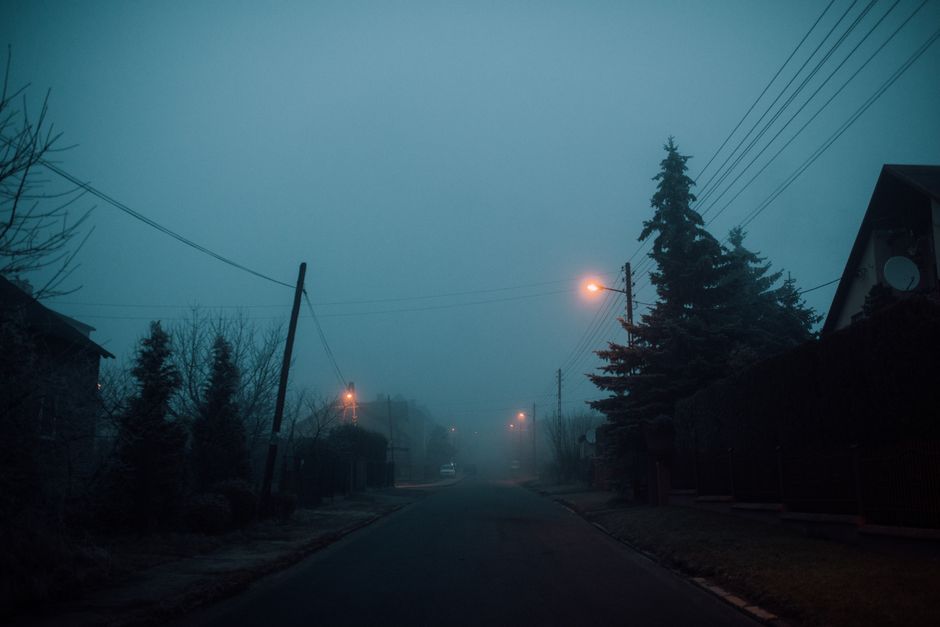
The tunnel closed in September, and the railway put buses on the coast road. Mine was the last one, the 23:40 out of Wrenford, seven stops to Harrow Bay, back empty at ten past midnight. Thirty-one years on that coast, the last nine on nights, and night teaches you a road differently: every gate, every blind bend, which porches keep a light burning past one o’clock, and whose they are.
The depot rule was fixed stops only. Painted poles, nothing in between. It came in with the timetable of 1979, after what the old men still called the March flood, and by my time nobody could tell you what the March flood had been — only that the request stops had gone out along with the conductors, and you set nobody down where a pole wasn’t painted.
I’ll be honest about what I wanted. Two clean months to the reopening, my logbook signed off with nothing in it I couldn’t account for, a cake in the canteen, done. Thirty-one years without one incident entry. I was proud of that the way you’re proud of a wall you’ve never had to lean on.
On the twenty-seventh of November, Mr. Hollis rang the bell past Laycock.
He was the oldest regular on the run, a thin man in a good coat. For forty-seven years he had ridden the last train past his own gate, and since September he had ridden my bus, and every night he watched the farm track with the broken second gate go by, and then he looked at his hands. That night the wind was shoving the bus sideways on the open stretch and rain came off the sea in curtains, and he stood at the front holding the rail and asked me, quietly, the way a man asks when he is already sure of the answer, whether I’d set him down at the track.
“It’s not a stop, Mr. Hollis.”
“Two hundred meters past Laycock. My porch is lit.” He looked at the road, not at me. “She leaves it on for me. She won’t wave from the road.”
The rule says no. He was eighty-odd. Laycock’s shelter is a sheet of Perspex nailed to a post, and it was coming down stair-rods. I stopped at the track with my hazards on and opened the doors.
He thanked me twice and went up the dark between the gates.
In the mirror the porch at the top of the track didn’t come on. It went out — a yellow square, then nothing — while he was still fifty meters short of it. Timing, I told myself. Salt in the wiring. Old houses on that coast eat lightbulbs the way the sea eats the road budget.
He was not on the bus again, that winter or since.
The Wet Ones
The woman boarded at Wrenford with the last bell, cardigan wringing wet on a night when the sky was clean from horizon to horizon. She took the seat the door mirror gives me, and at the farm track she rang.
“It’s not a stop, love.”
“The track, please. Past the second gate.” Water ticked off her sleeve onto the sill. A plumber from Harrow Bay I’d carried for years leaned into the aisle and said let her off, Meg, it’s her road, she knows her own road, and pressed the bell for her himself.
I set her down. She went up between the gates without a torch, steady, as if the ground were lit.
On the empty return I counted porches out of habit. The Kellaways’ was out. It had burned every night for forty years, all the years their son was at sea. Out.
Two nights after came a man in overalls pressed like church clothes, smelling of diesel and river, asking for the track, past the second gate, please. The Baxters’ porch went dark. Then a girl of nineteen with a school satchel in the middle of the holidays, hair flat to her skull, and when I told her it wasn’t a stop she smiled at me in the mirror with the patience you give a timetable you’ve outgrown. Mr. Reynolds from the chicken farm pulled the cord for her before I could argue. Let her off, he said. Poor little thing is soaked through.
By the tenth of December I had set down seven.
Every porch that went out stayed out. Bulbs changed, fuses changed, the electricity man up a ladder in the drizzle — dark again by evening, and the households in them quiet about it, or not quite quiet: asking each other whose idea the light had been in the first place, and not being able to say.
The Flood Book
I asked Dennis at the depot, roundabout, whether the track past Laycock had ever been a stop. He stopped writing. Then he fetched the keys to the old office, brought out a ledger with a spine like tide-worn rock, and turned it to March.
SERVICE 6 — NIGHT OF 12 MARCH 1979. 23:40 WRENFOORD–HARROW BAY.
Vehicle recovered from the quarry pool, 04:10. Empty.
PAX NOT ARRIVED: T. Aldous, M. Crane, P. Edevane, J. Fewtrell, S. Garlick, W. Harkness, E. Lobb, D. Mennear, A. Pascoe, F. Rowe, R. Tresidder.
DRIVER — NOT ARRIVED.
Eleven passengers, and under them, in a hand pressed hard enough to tear the paper, the driver.
“There’s a second page,” Dennis said. “We don’t read it out.”
23:55, at the unmade halt by Laycock track: female, waiting in the roadway to meet the vehicle, struck by goods traffic. Hurricane lamp recovered from beneath the vehicle, still lit. At the petition of the widower the halt was withdrawn from the working timetable.
Her name had been Hollis, before it was anything else. She went out with the lamp because the bus was late and her husband was on it, and she stood in the road so he would see her. The widower rode past his own gate for forty-seven years, because he had asked for the halt to be struck off — and the road, which is older than the company and keeps its own minutes, had agreed, and held him to it. Every night. Until I broke the agreement out of kindness, one wet Tuesday, for the price of two hundred meters.
“Hollis came in this morning,” Dennis said. “First time since. He wants you to have this.” A hurricane lamp, wick trimmed, glass clean. “He said to tell you: settle the list before the last run, or the road settles it at the stops.”
The Last Run
I never asked Dennis to write any of it up, and he never offered. He’d driven the 6 before me. Some rules are the company’s. Some are older.
The thirteenth of December was the last 23:40 there will ever be. I had carried eight and nine on the nights before — an old woman with a market basket, then a boy carrying his shoes. On the last run, at Harrow Bay, when I should have been turning the vehicle for the dead run home, a man in a greatcoat uniform with brass on it boarded. Cap under his arm. Water sheeted off him onto my floor in a tide that never lost height.
He sat in the front seat the whole way out and watched me work the road, and touched nothing. At Laycock he stood and put his cap on.
“Would you mind, missus,” he said, “if I took her up the last two hundred meters? It’s the only stretch I never finished.”
Thirty-one years. My last bus, my clean book, one courtesy left in the account on a road that runs on them.
I got out of the seat.
He took her up the track with every light on, smooth as a christening party, no lurch at the crown of the hill, and the red lights went over the crest, and then it was quiet — the particular quiet of a road with nothing owed on it. I set Hollis’s lamp down at the second gate and walked home the long way. The vehicle was never recovered. The company, which has its own reasons not to quarrel with that road, entered it in the fleet book as withdrawn from service.
The logbook came back on Dennis’s desk, closed and signed off. The last entry reads: ALL PASSENGERS DELIVERED. And beneath it, in a hand pressed hard enough to tear the paper, one word. Home.
In January the tunnel reopened, and I rode the first through train at night, as a passenger, for the novelty. Below us, on the coast road, a bus was working the old route at the old time, saloon lit, every seat taken, holding a steady thirty past Laycock. Eleven porches on that road are dark to this day, whatever anyone pays to change the bulbs. But at the second gate, where the track leaves the road, a hurricane lamp is burning.
It has not gone out once.